Organizer: SALL & Escuela Hispánica
Date: April 18, 2026
Location: Lisbon, Portugal
Panel: Defending Western Civilisation
Writing three years after the end of the Second World War, the American philosopher Richard M. Weaver published a book that would be responsible for relaunching conservative, or liberal-conservative, Western thought. In Ideas Have Consequences, Weaver issued several warnings. First, and perhaps most importantly, he argued that modern society, by replacing the idea that absolute values exist with the religion of relativism, is walking towards its inevitable dissolution. To believe that the only absolute truth is the absence of absolute truths is a mortal prescription. In this sense, the American thinker left open the following possibility: the West seems to be waiting for a catastrophe before it can finally emerge from this moral and intellectual confusion, and before the differences between good and evil, between virtue and vice, become clear again in our mental framework. "If that is the most we can hope for," wrote Richard Weaver, "something that will contribute to that rebirth may be prepared through acts of thought and will, in this time of the West's decline."
In the world of ideas, there ought to be, today, no nobler or more necessary cause than the defence of Western civilisation. After all, it is to this tradition that we belong, and from it we have inherited values, customs and ideas that revolutionised the world and transformed the West into the best — because freest — and most prosperous — also because freest — civilisation in human history. It is in this sense of historical duty that the Escuela Hispánica finds its founding pillar.
And because Portugal was a key piece of this complex puzzle we call late scholasticism, or the second scholastic, it plays an unavoidable role in preserving a flame that was lit some five centuries ago at the Colegio de San Gregorio in Valladolid. A civilisation of debate that, trusting in the force of truth, consigns the censorship and suppression of dissenting opinions to the dustbin of history.
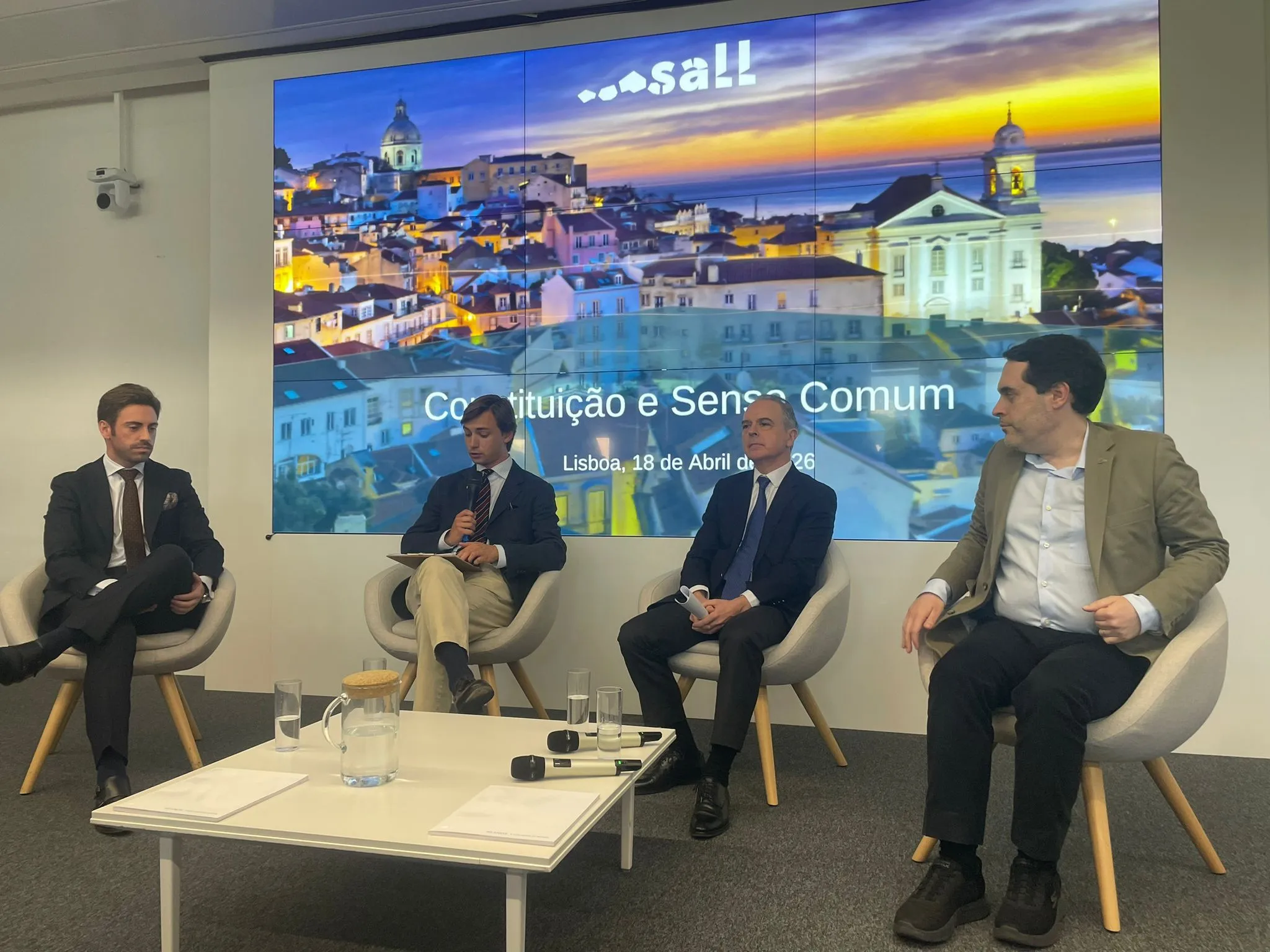
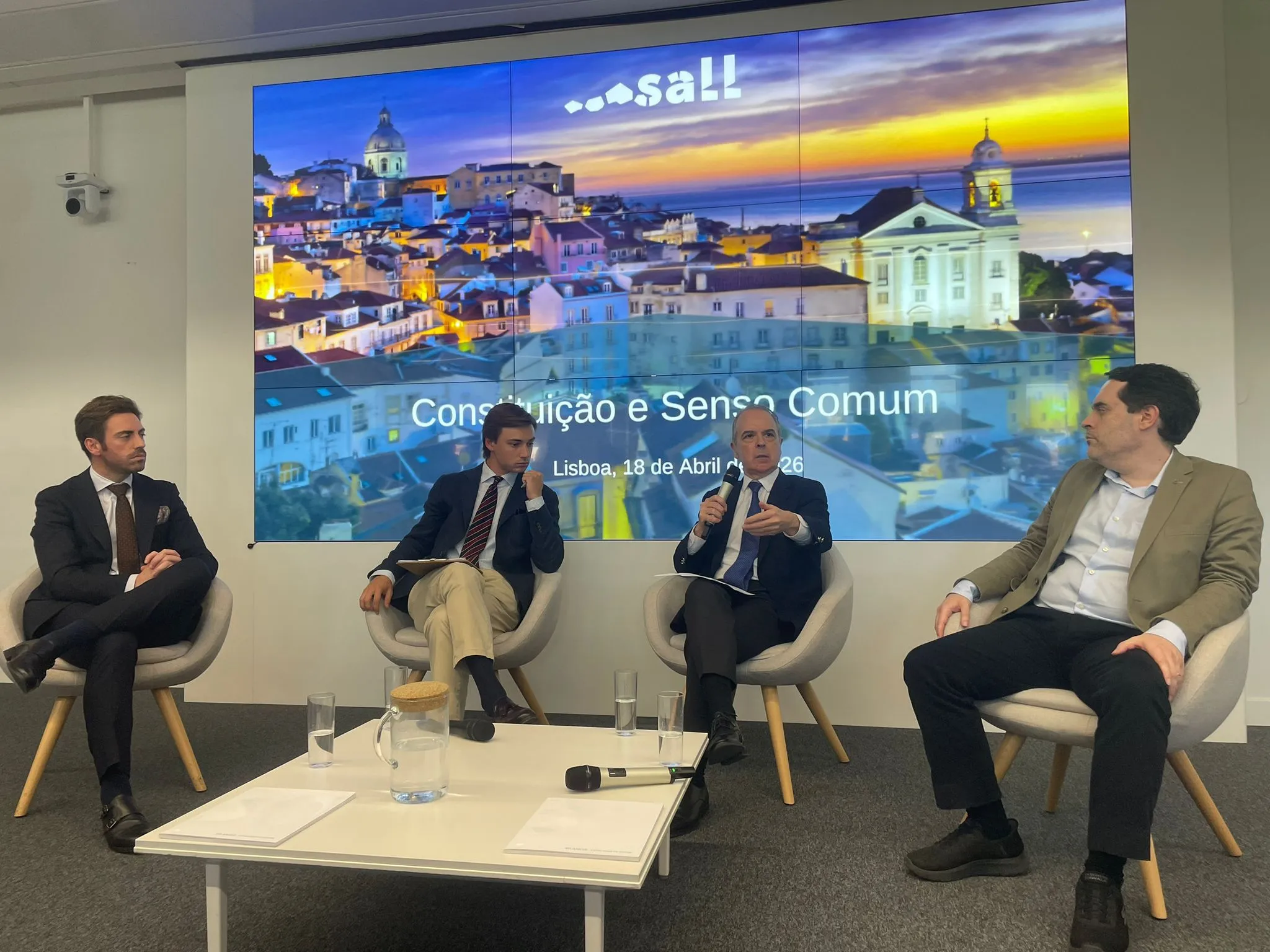
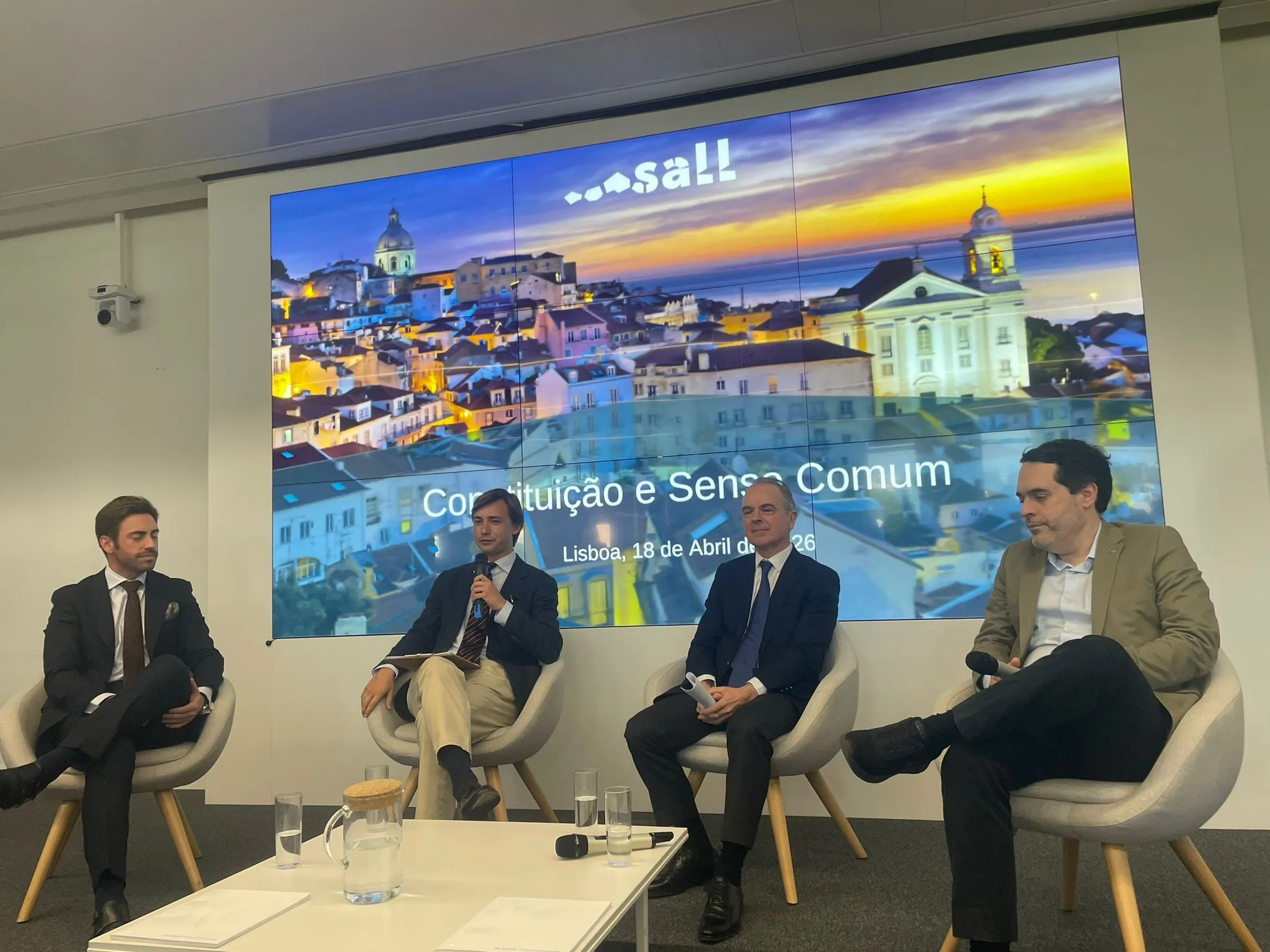
This last point was the anchor of the Escuela Hispánica's round table at the III SALL Symposium, held on 18 April in Lisbon. And no better event could have been chosen for the Escuela Hispánica's debut on Portuguese soil. The SALL, to whom we once again extend our most sincere and heartfelt gratitude, organised a symposium worthy of the institution and its leitmotif: defending freedom.
On a sunny Saturday in the Portuguese capital, around a hundred people gathered to speak, listen and think about the fundamental questions of our time. A group of people with ideas — and conscious that ideas have consequences — who refuse to succumb to the comfortable appeal of defeatism in the face of a progressive cultural hegemony that seizes every opportunity to dynamite the foundations of the civilisation we have the good fortune and pride to claim as our own, and who wish to press deeper at a moment when floating on the surface has become the new normal.
With high-calibre speakers — from politics to academia, from journalism to civil society — the discussion turned on the defence of life, family, conscience and Western civilisation. Anyone wishing to find more important topics would have a torturous task ahead of them. The panel entrusted to us — "Defending Western Civilisation" — turns out to be a summary of the entire event, for what is this civilisation if not the defence of life, family, conscience and freedom? The contributions of Professors André Azevedo Alves, Academic Vice-President of the Escuela Hispánica, Rui Ramos, and Juan Ángel Soto, our Secretary-General, made one thing clear: we are heirs to a civilisation worth fighting for. Not to suppress others, as I have written before, but because we hold an unshakeable confidence that through ideas, dialogue and debate, truth will prevail. And the victory of truth is, in the last analysis, a victory for all. And if this Symposium was anything, it was, without doubt, a great act of thought and will.