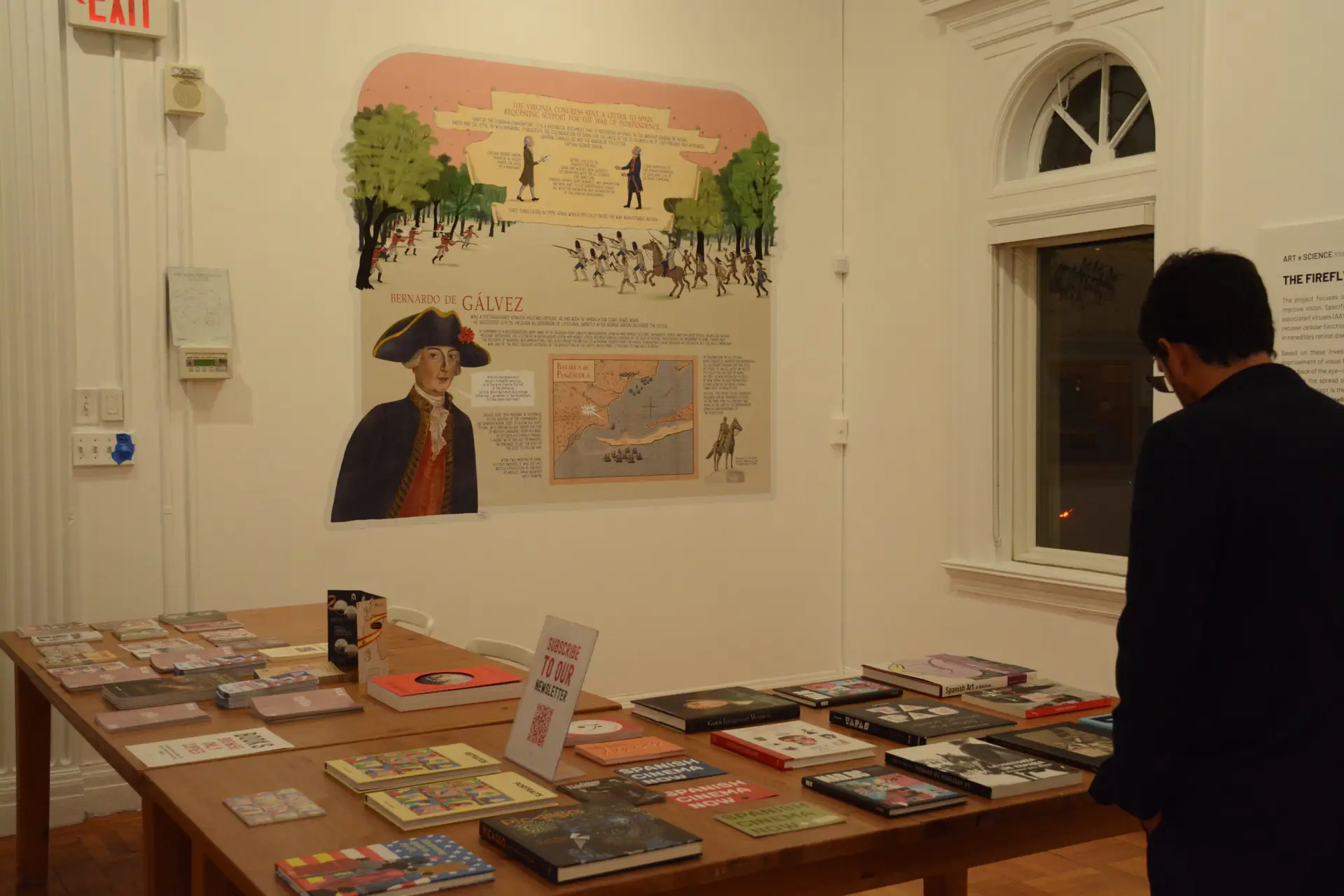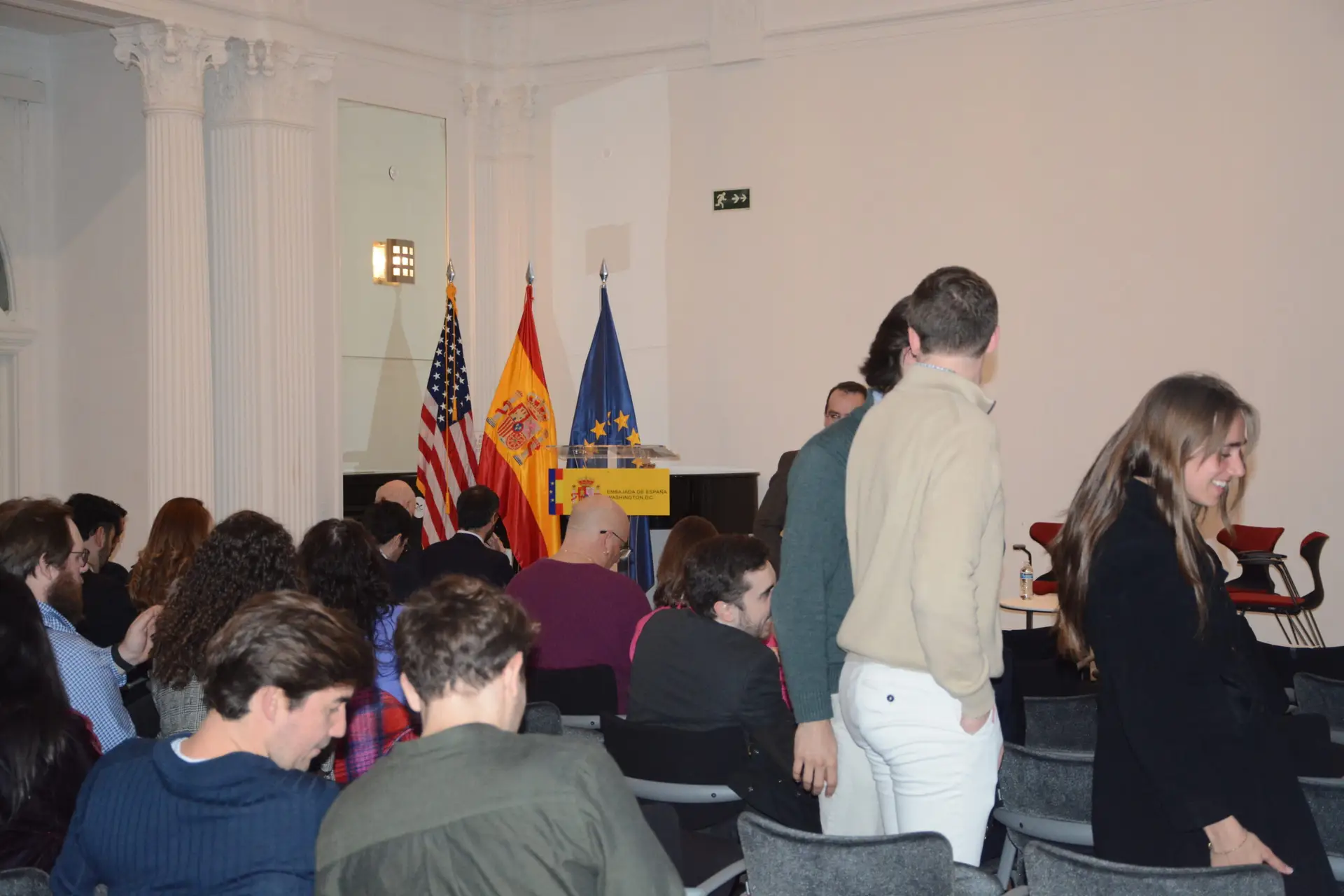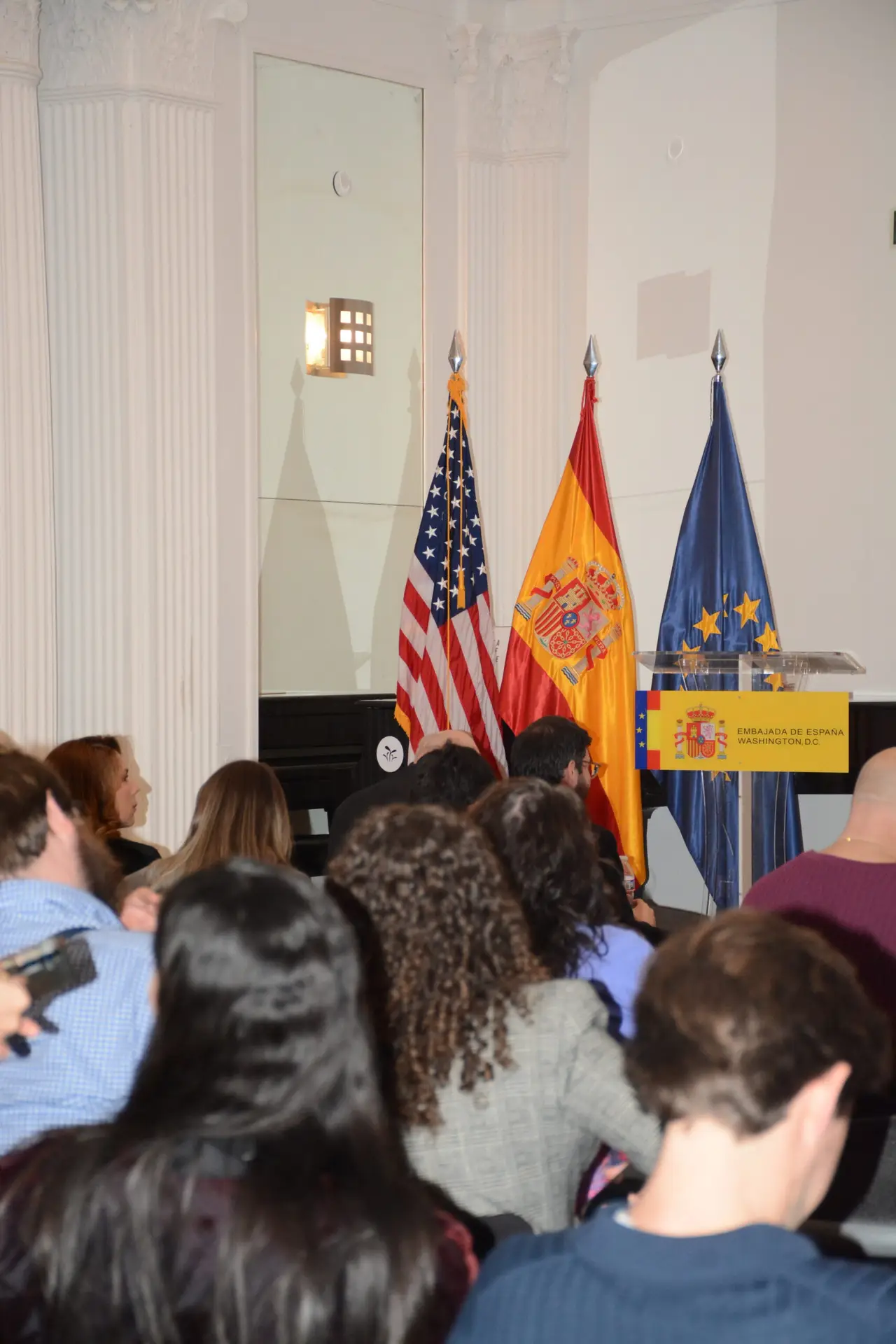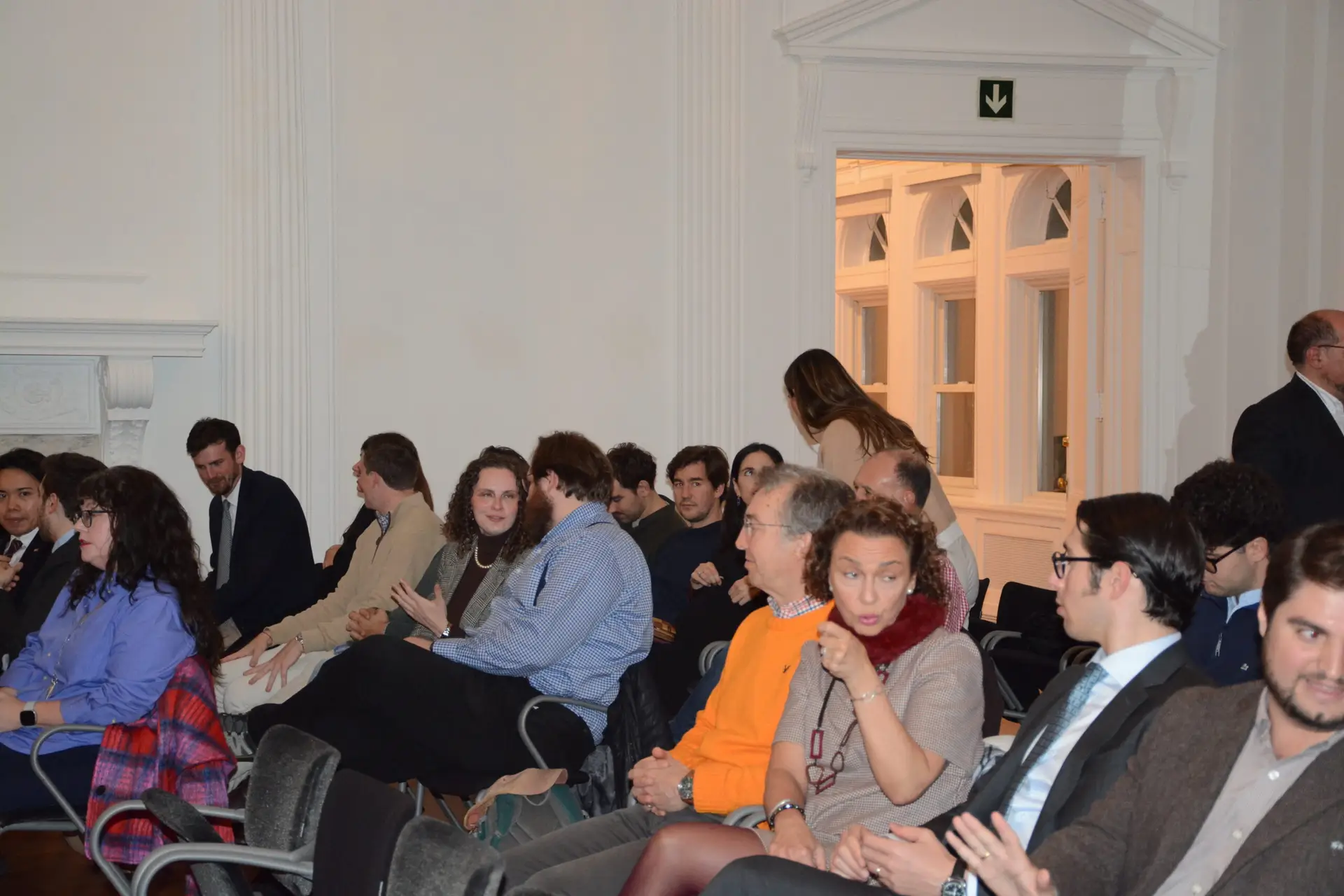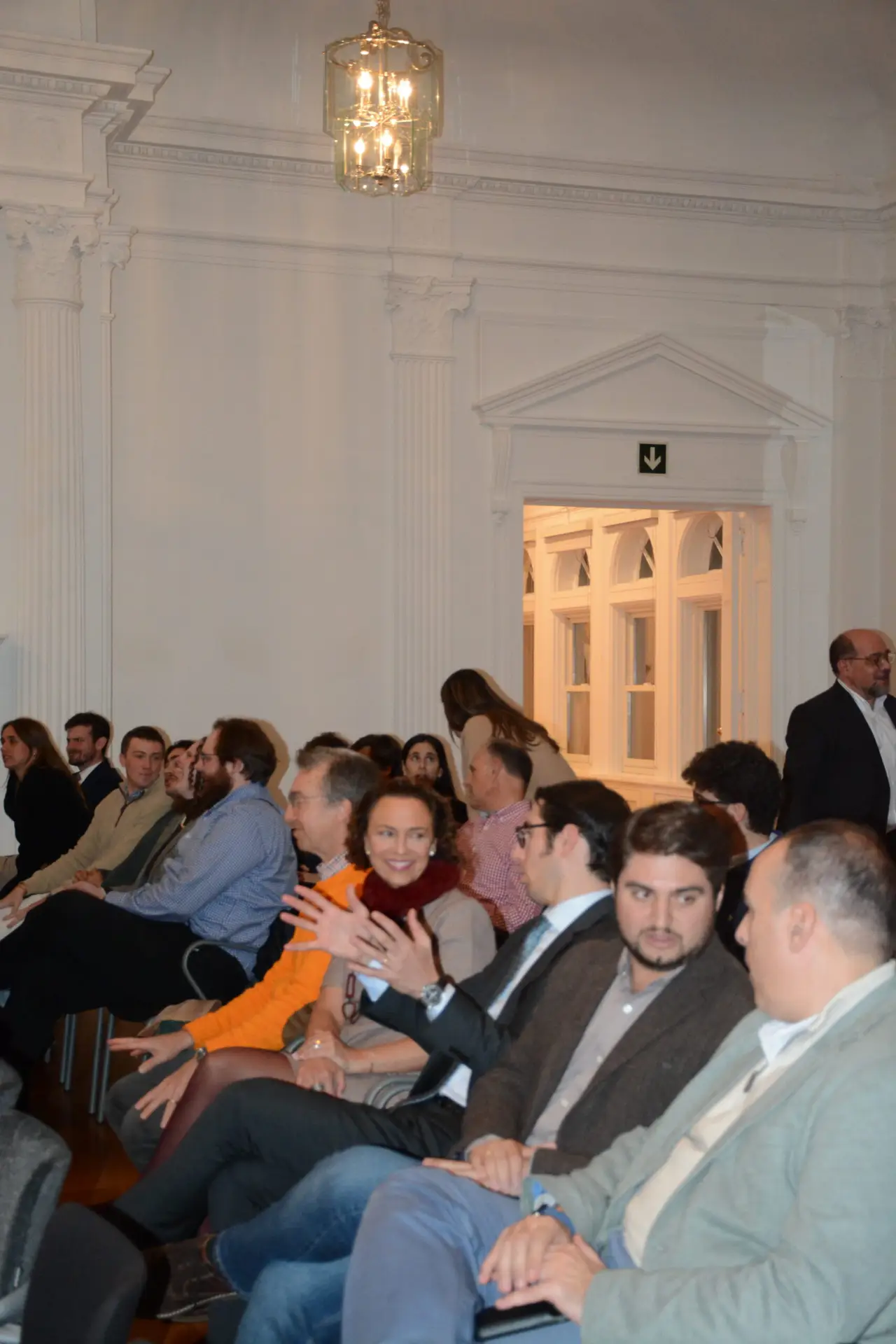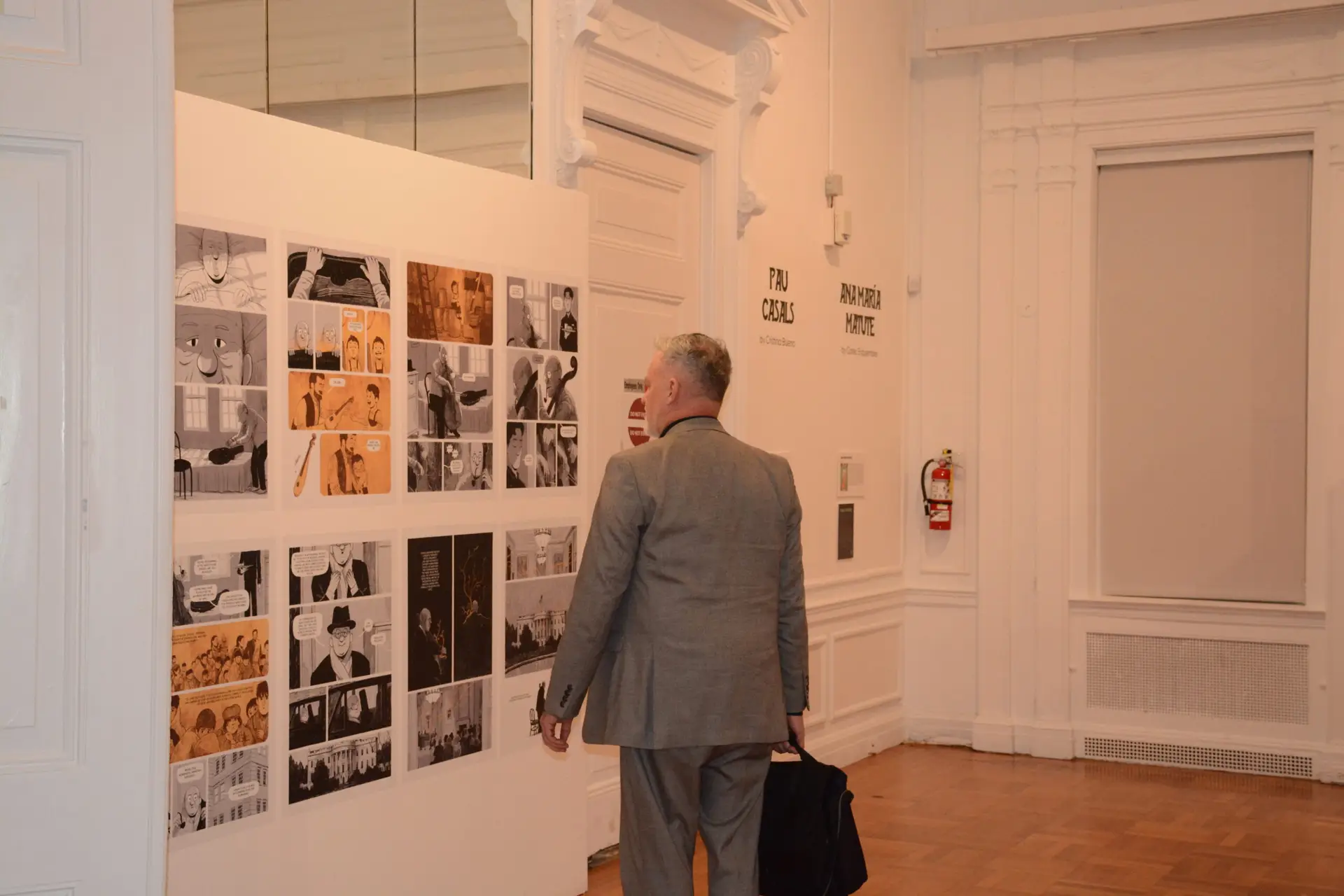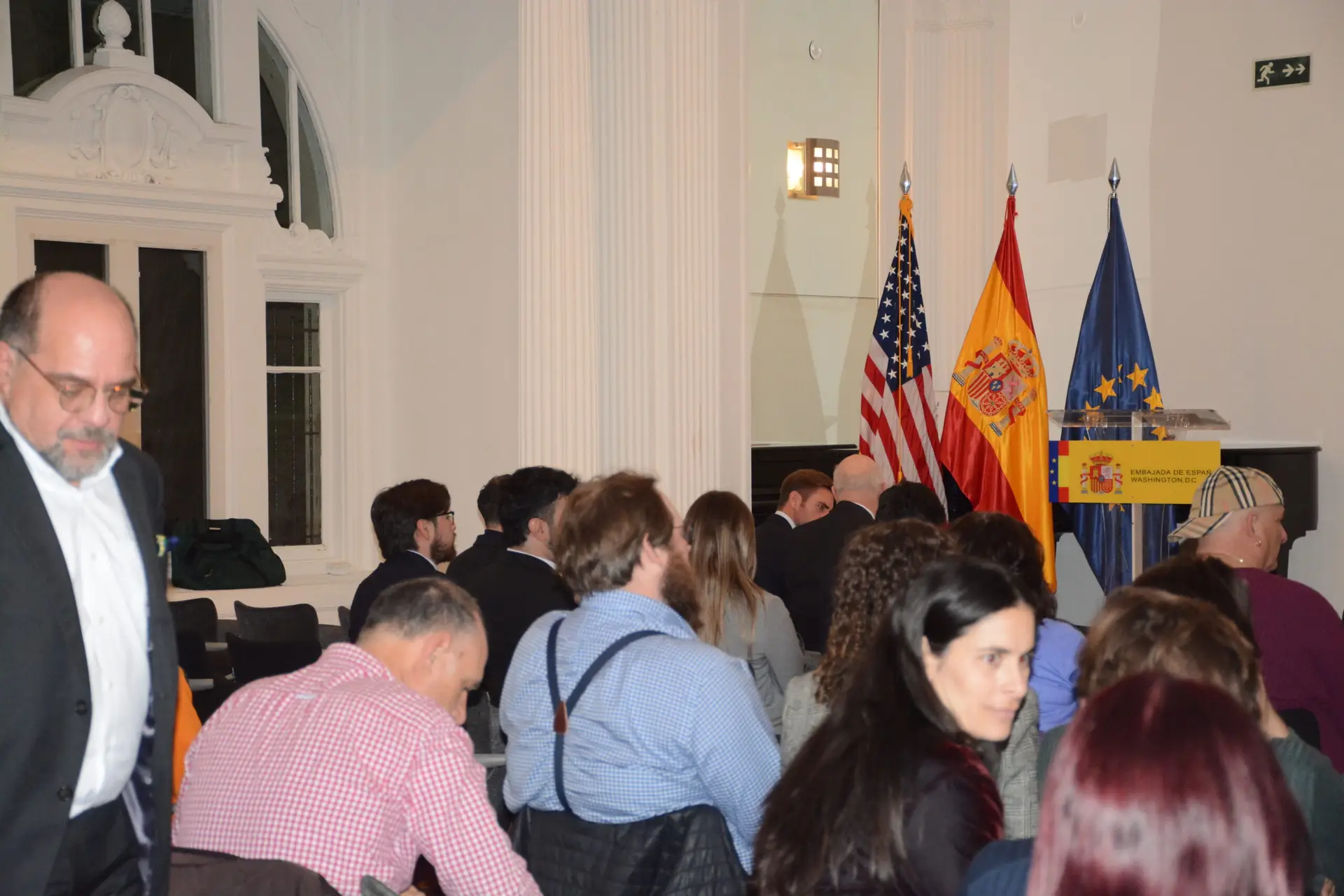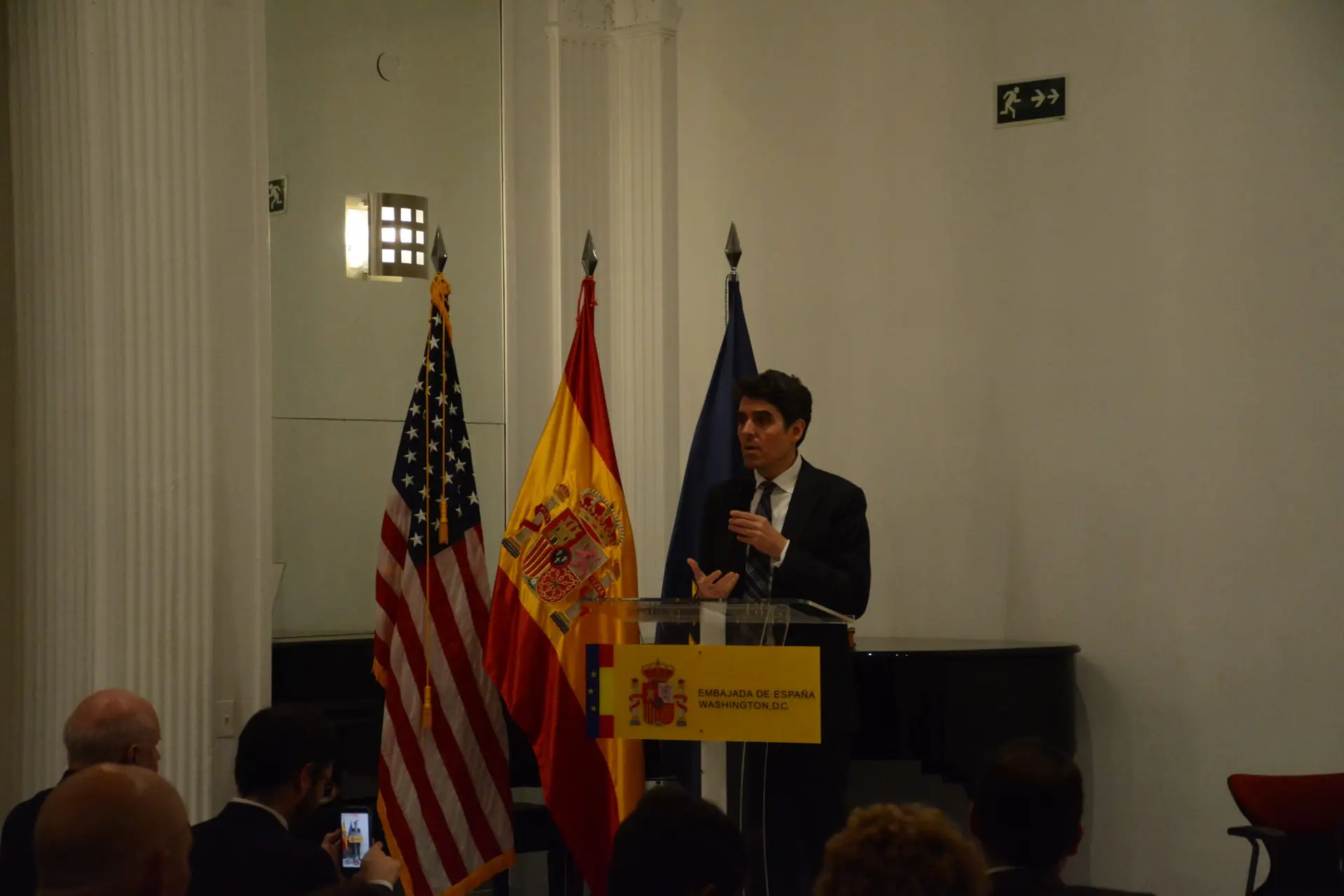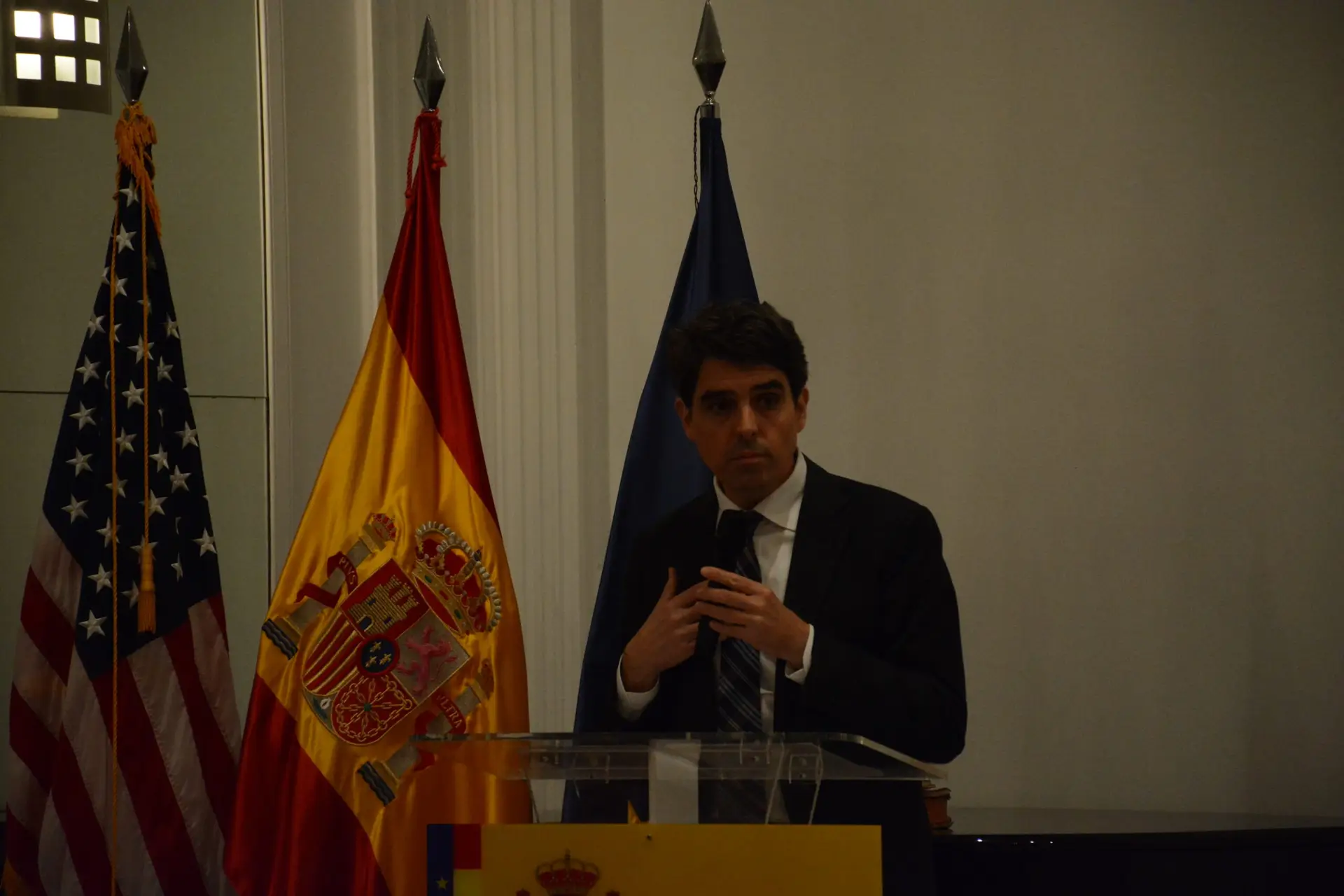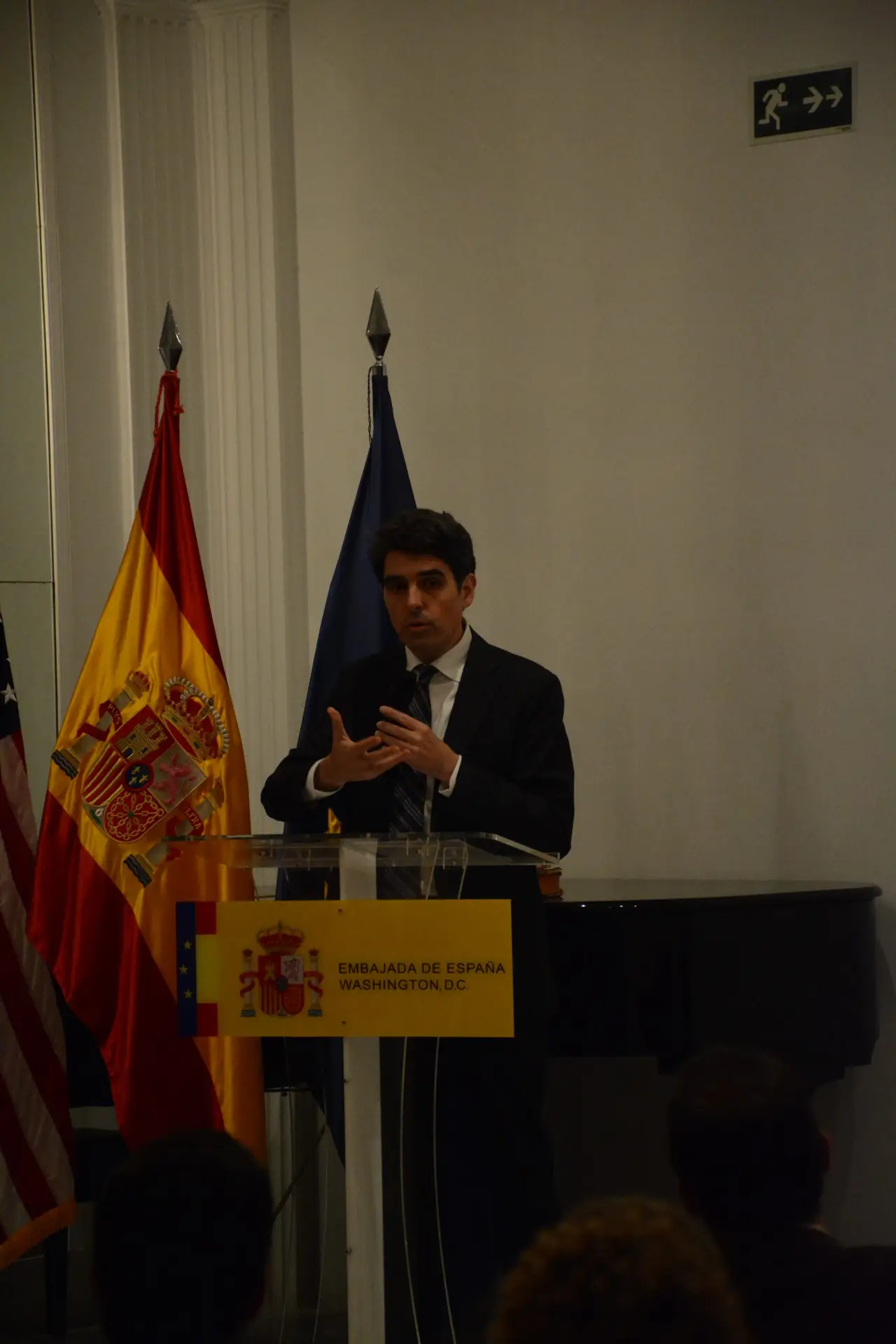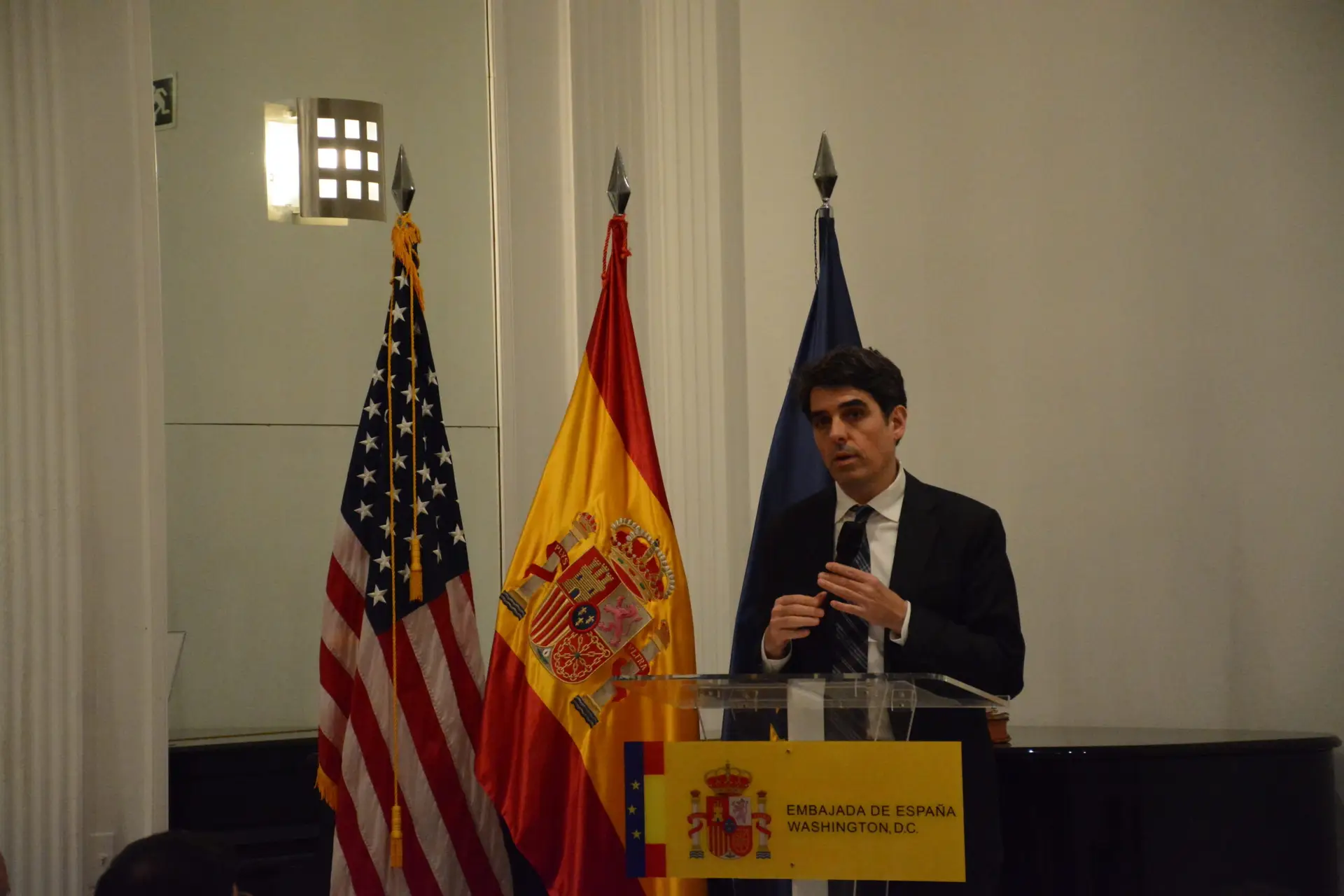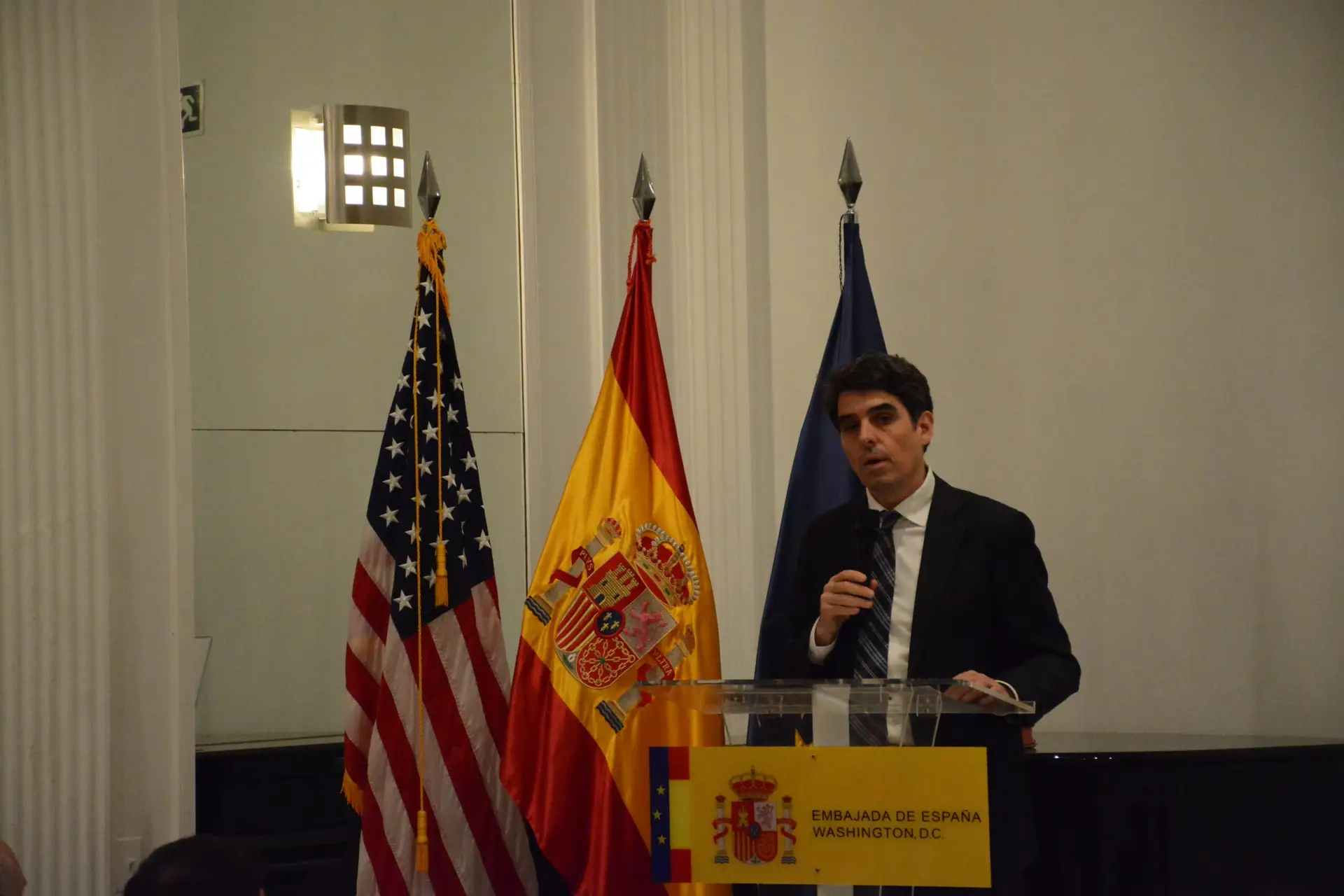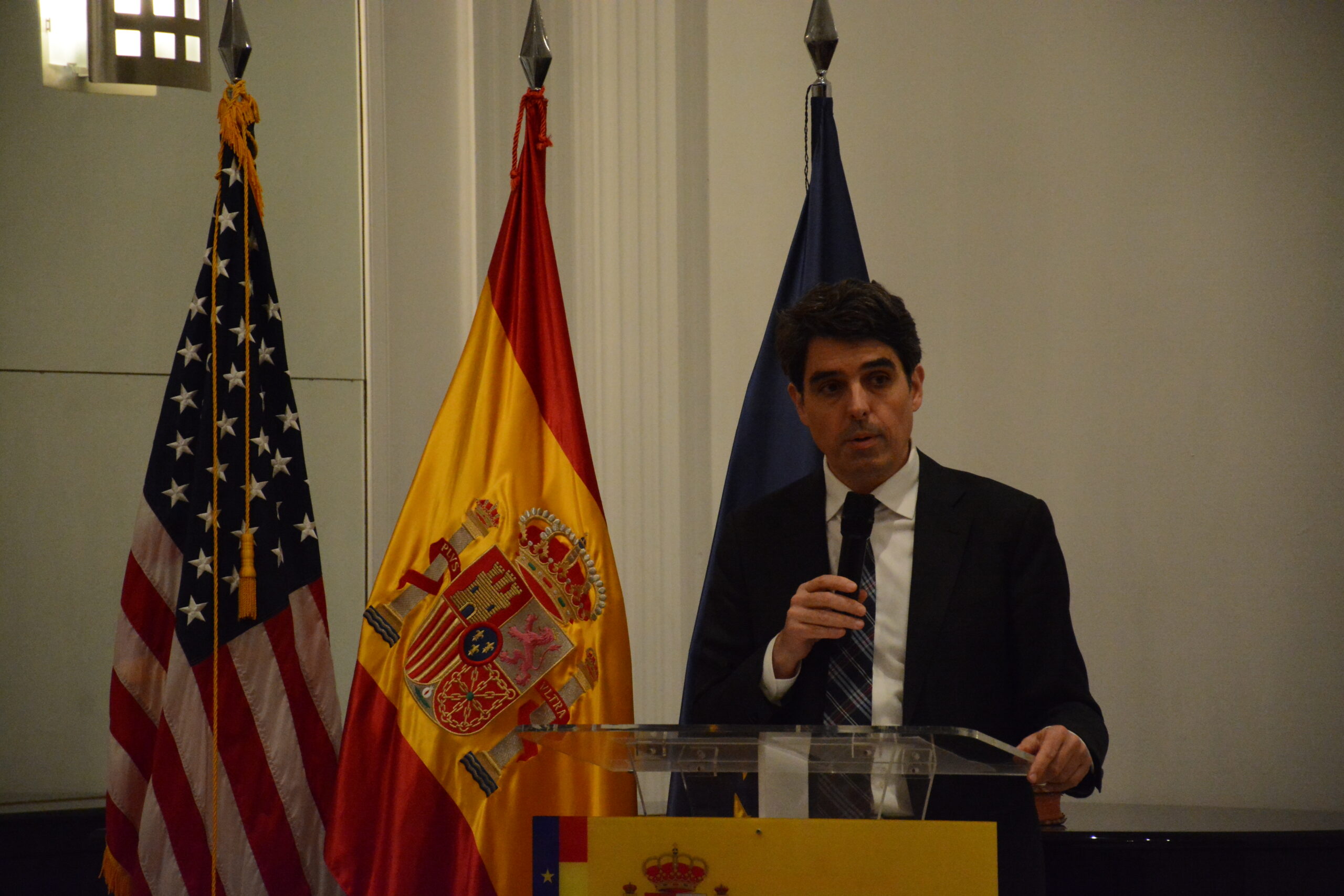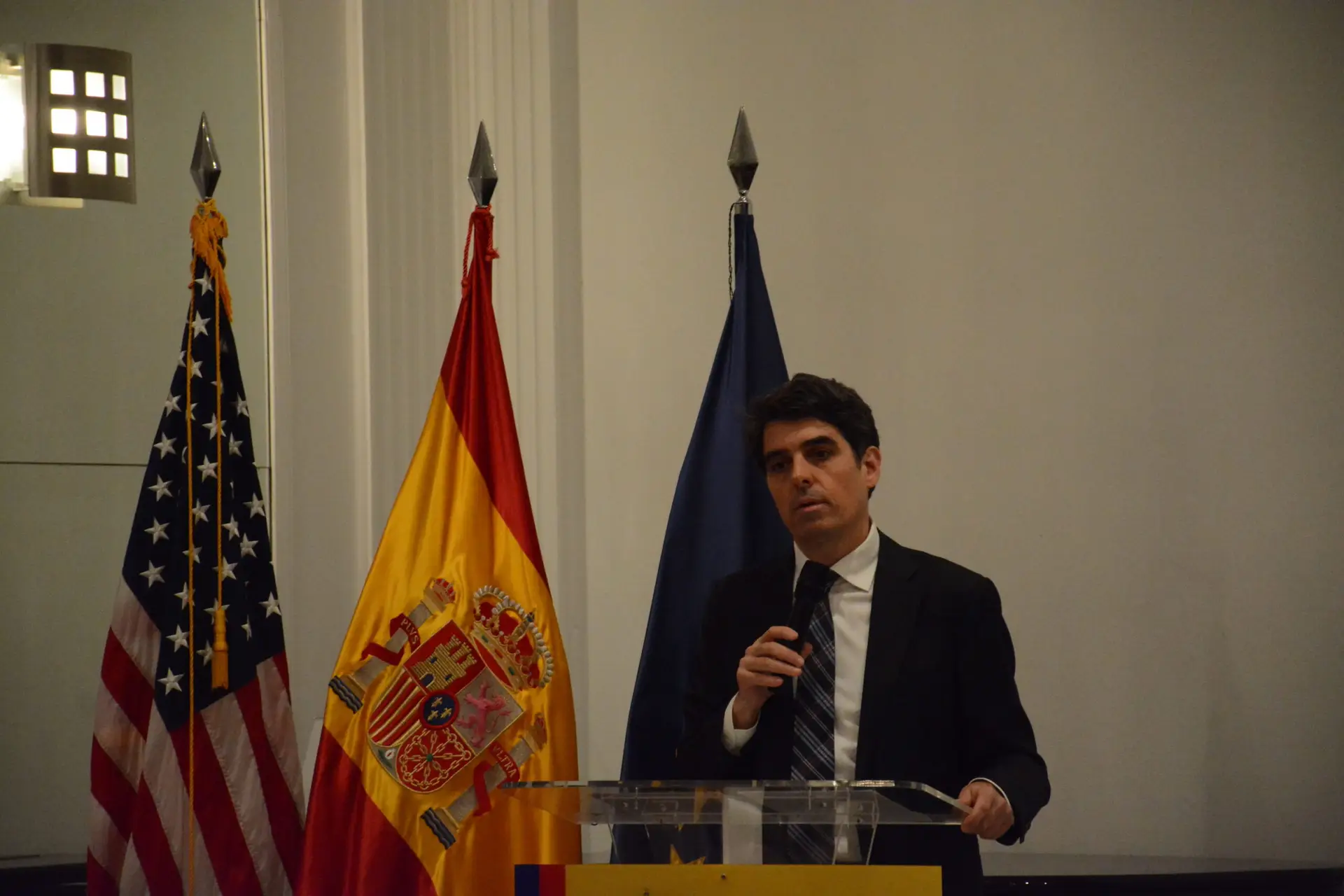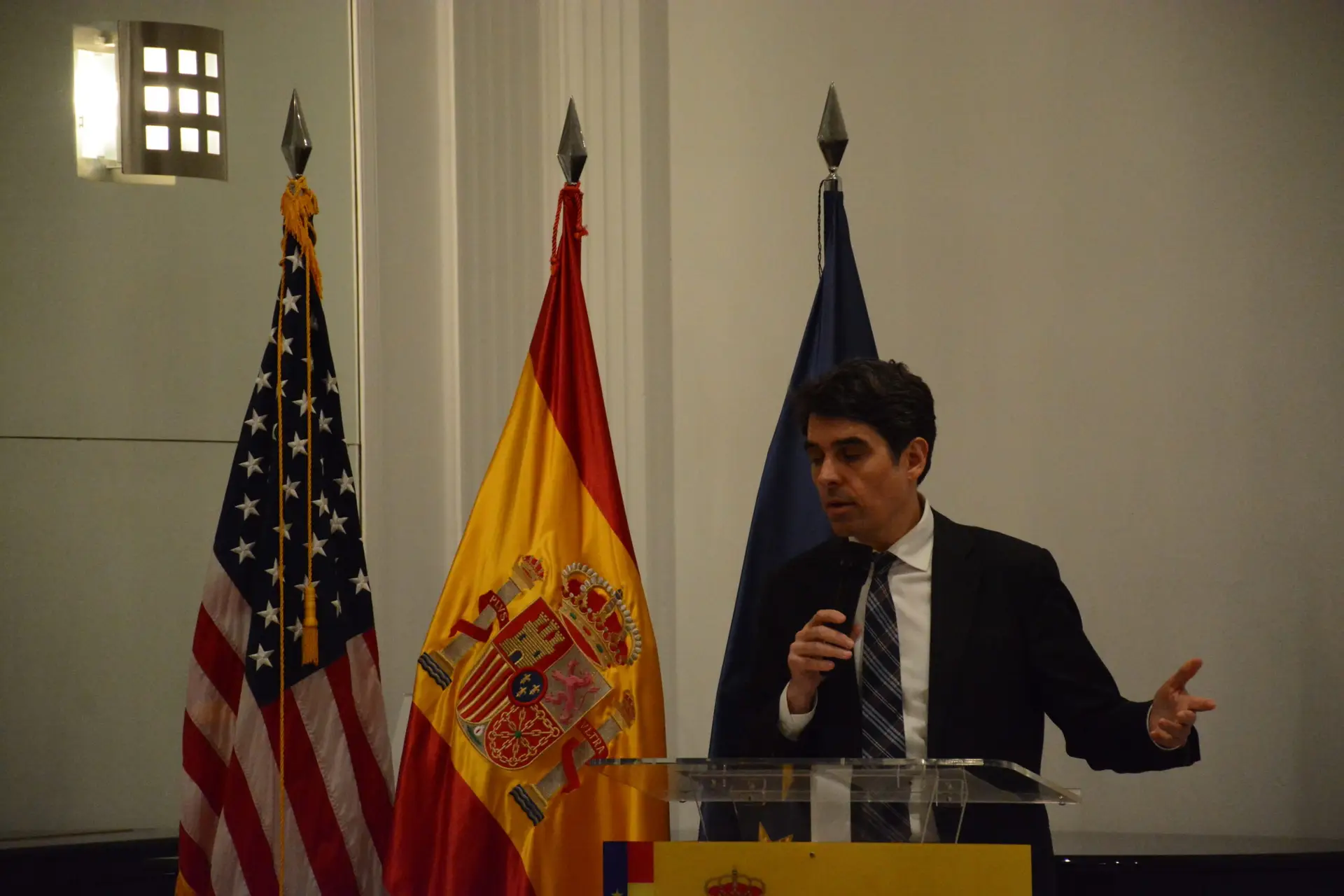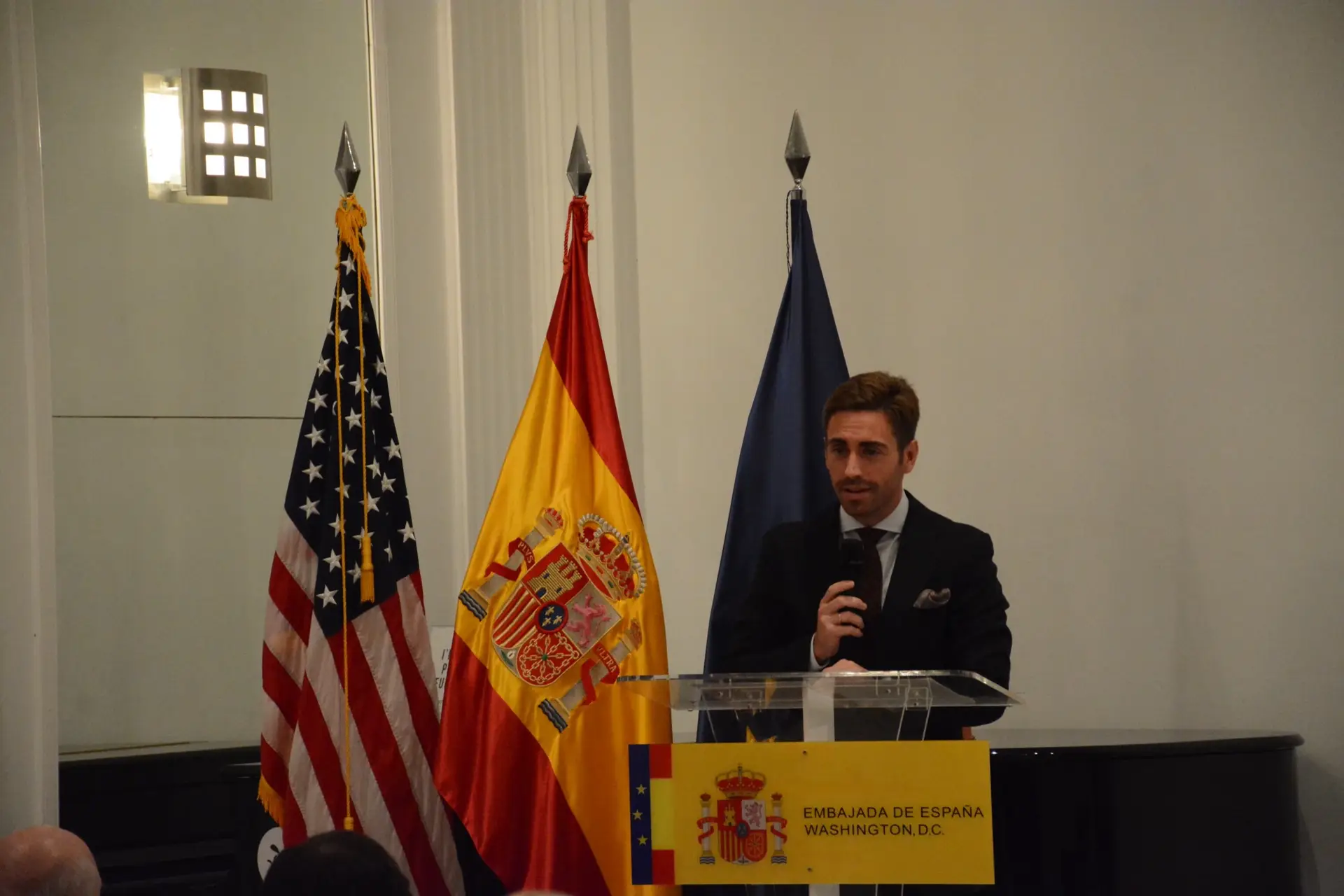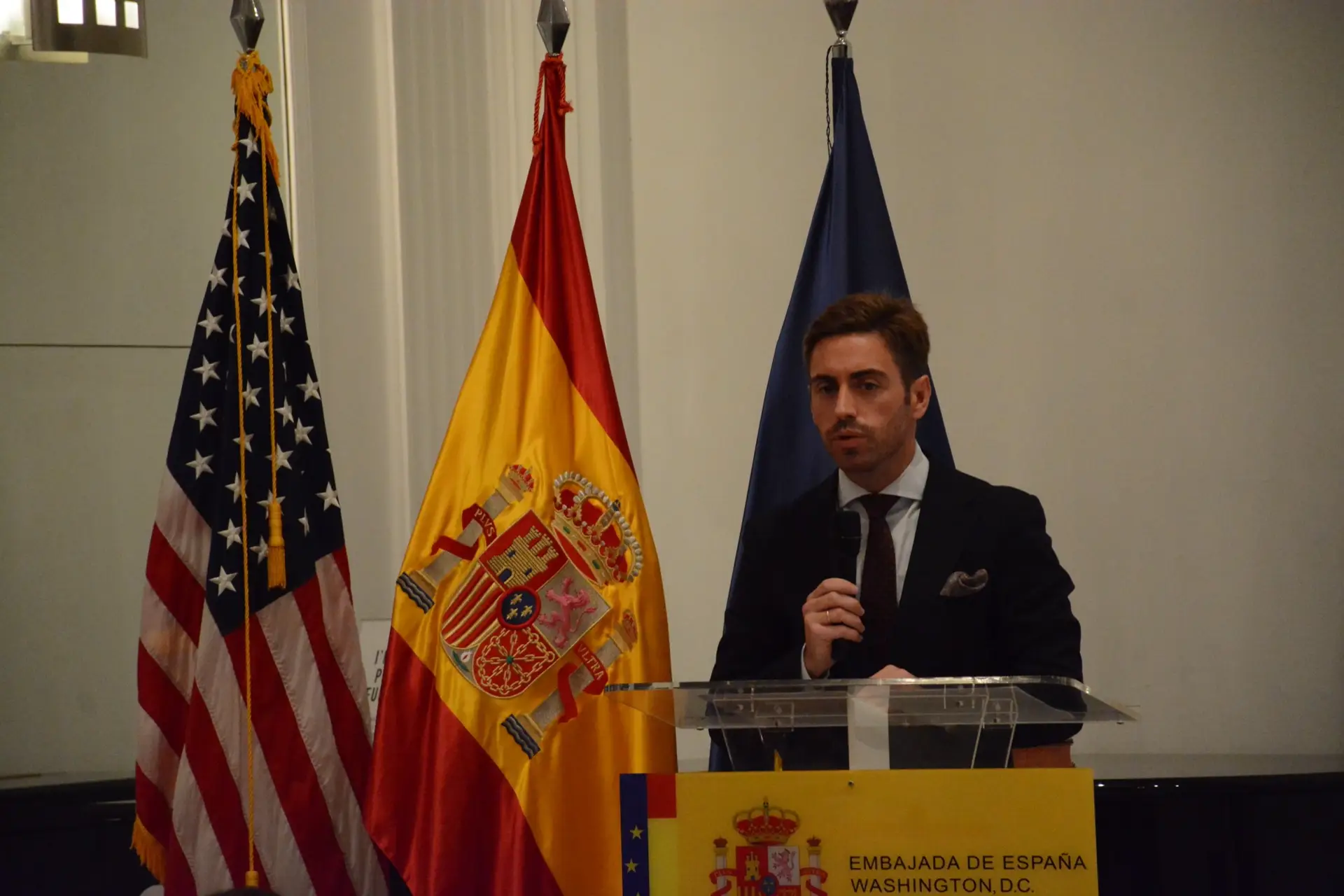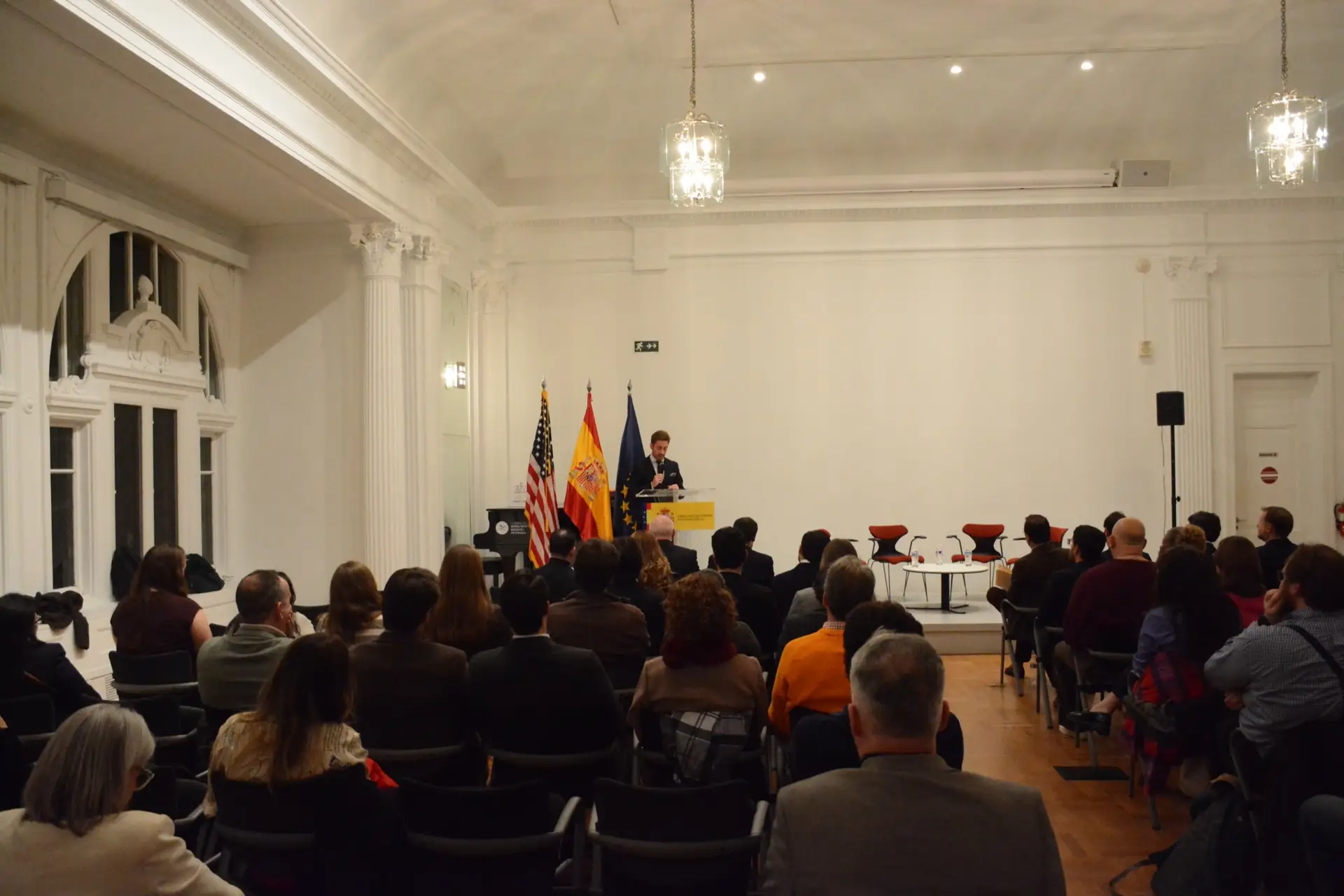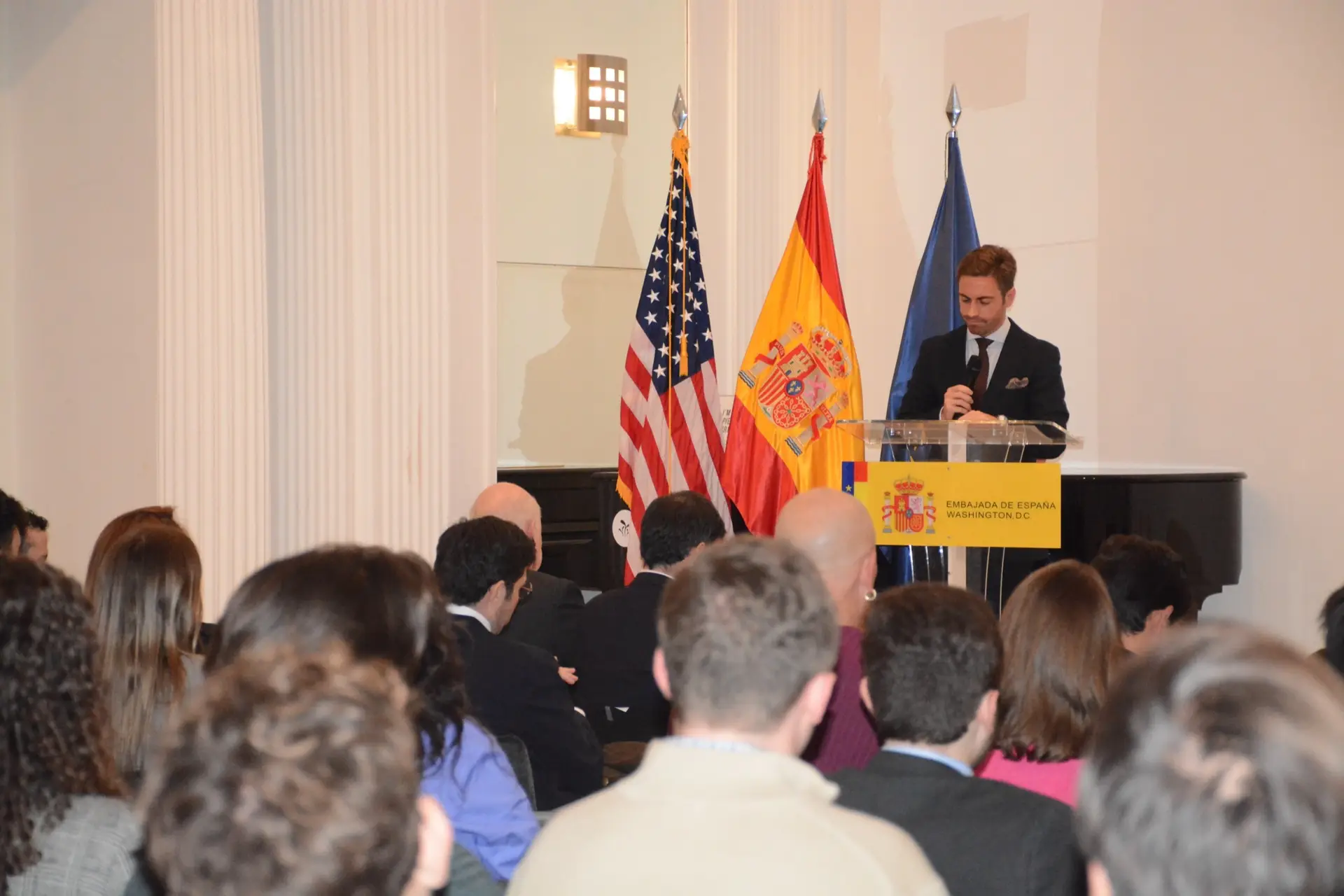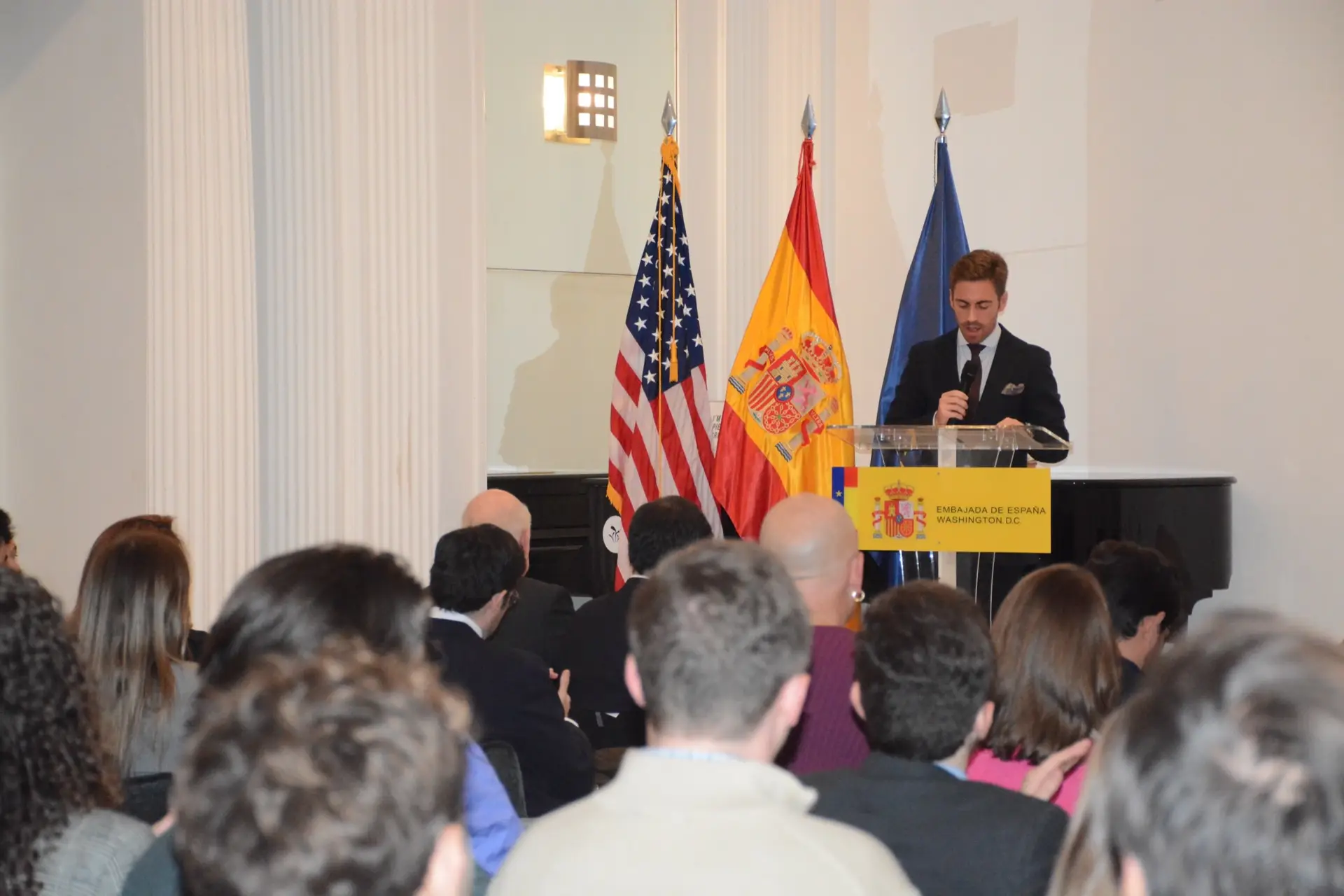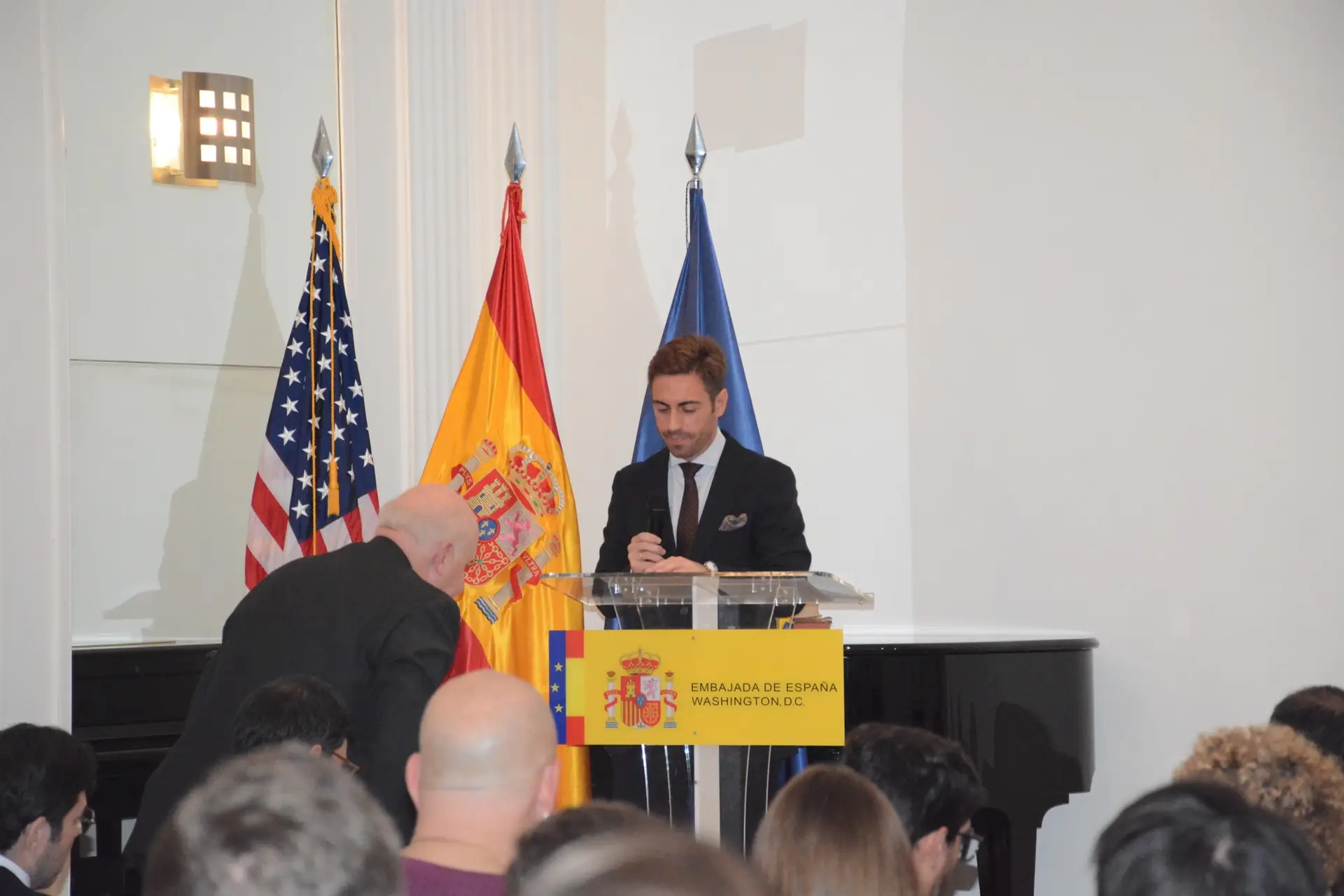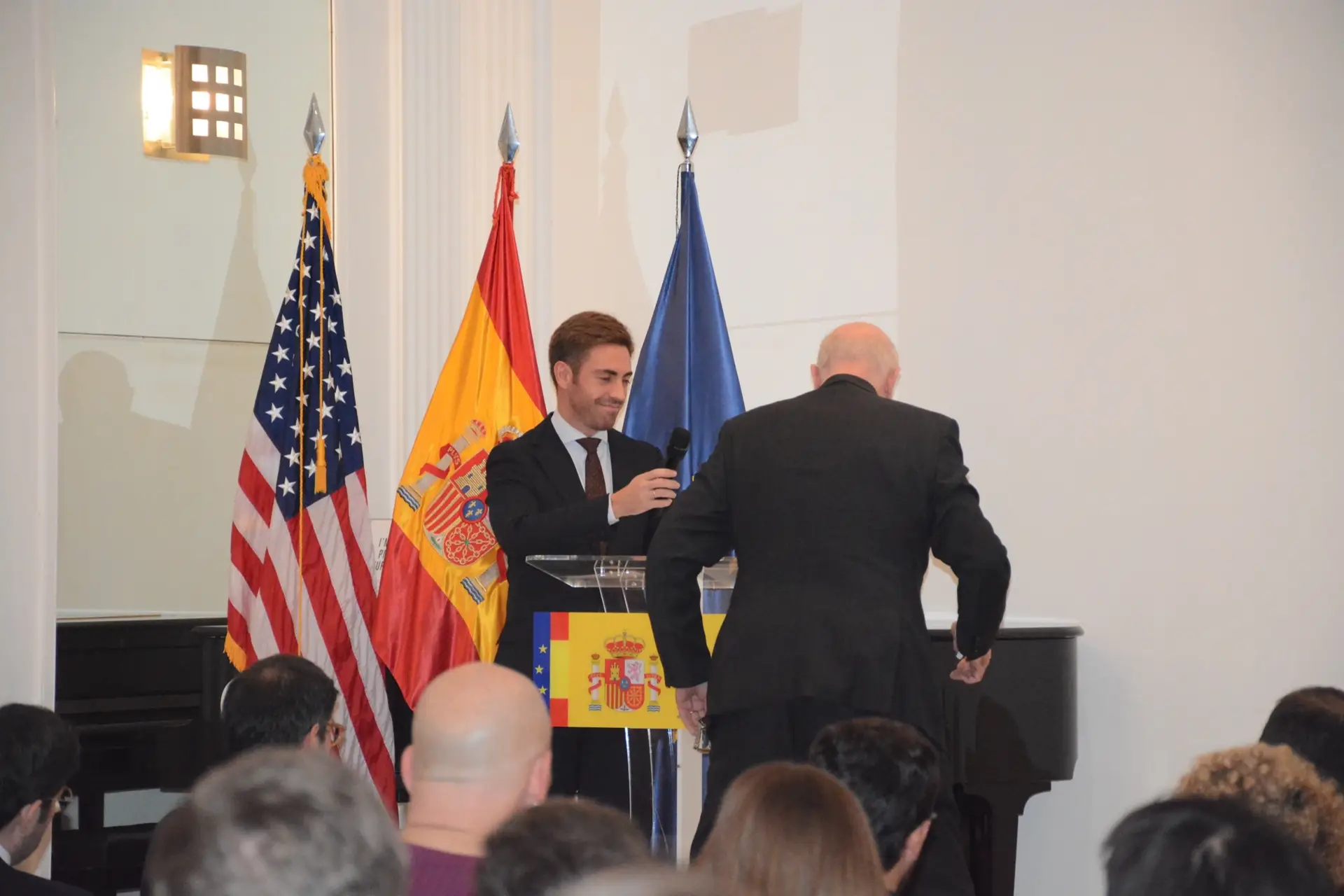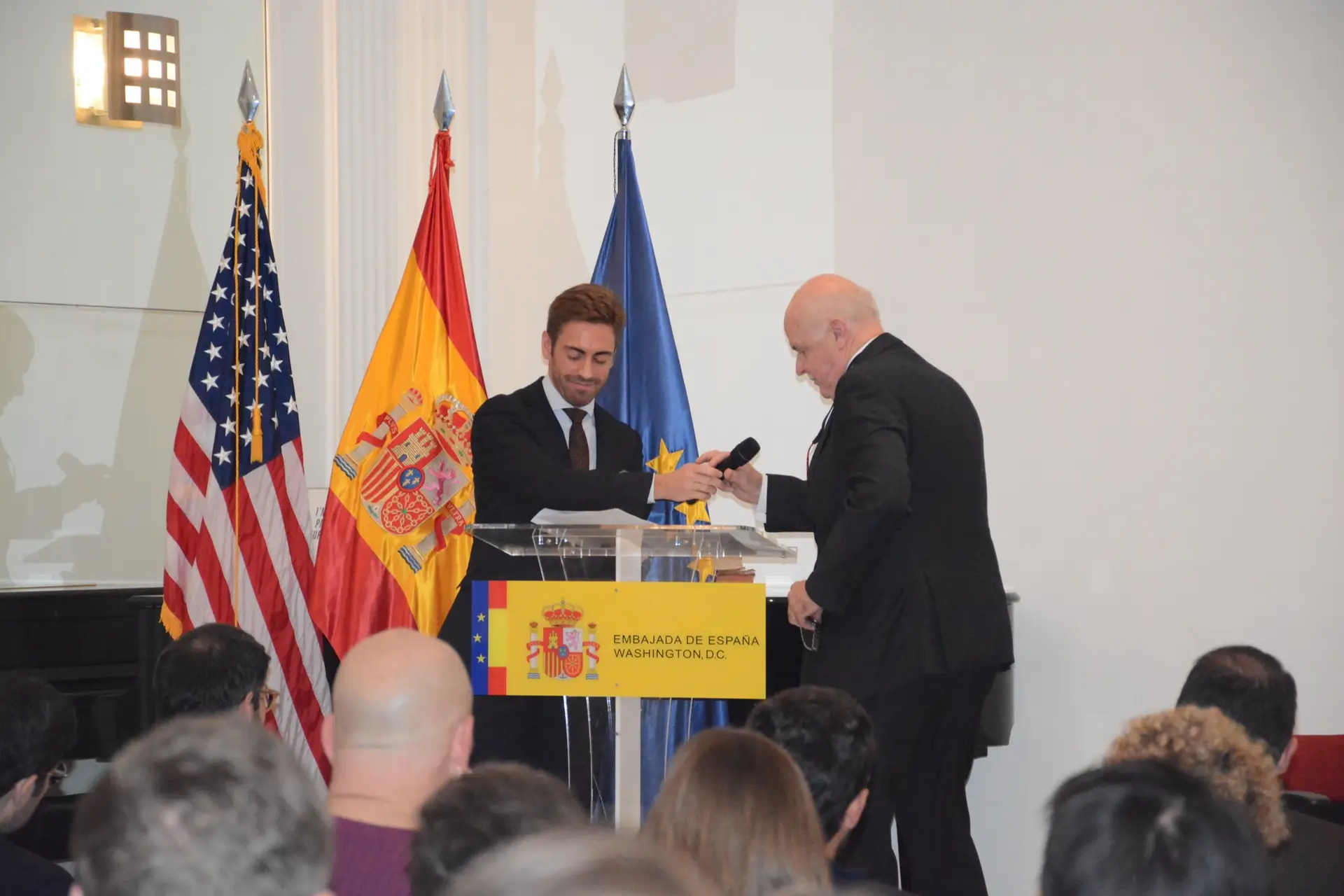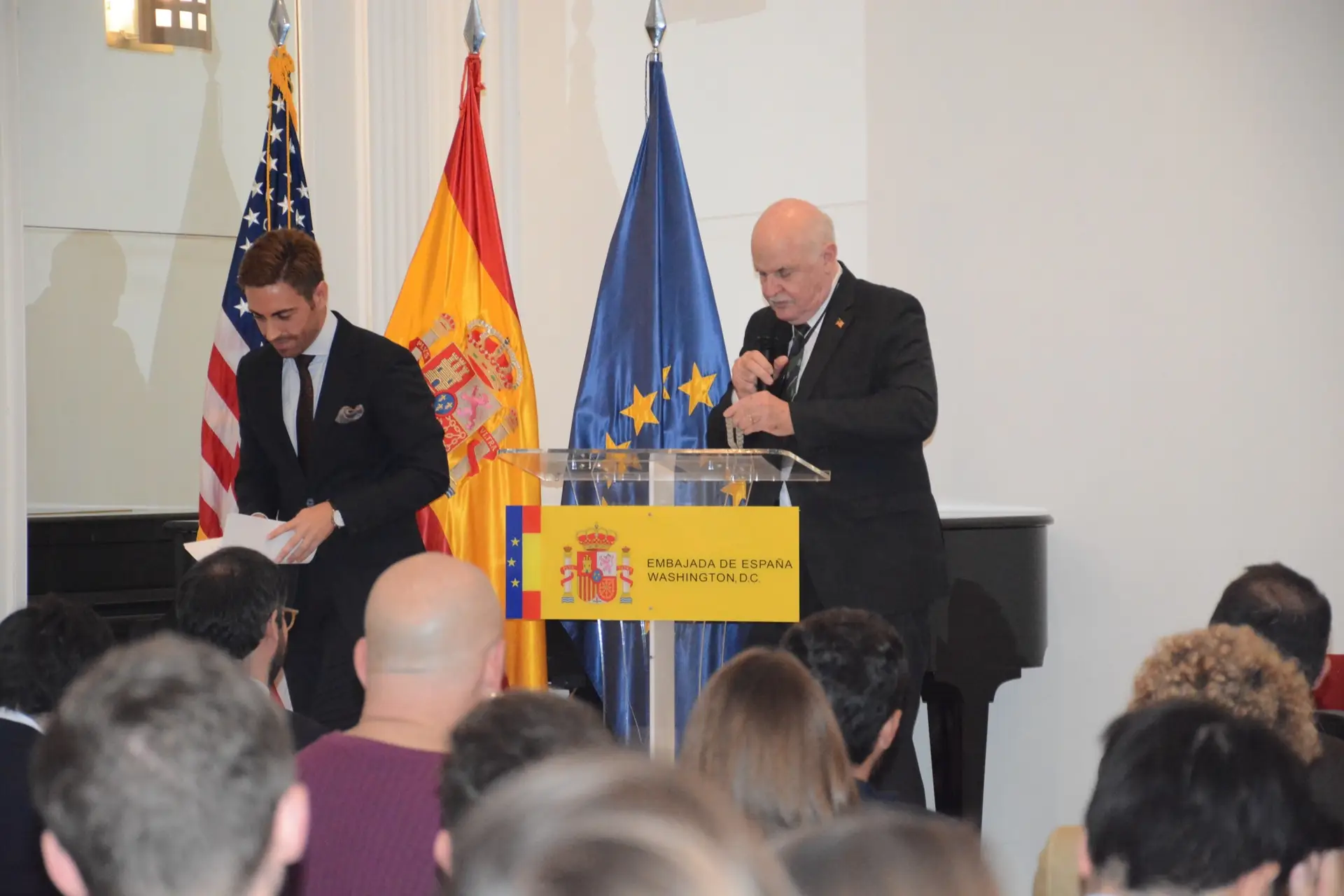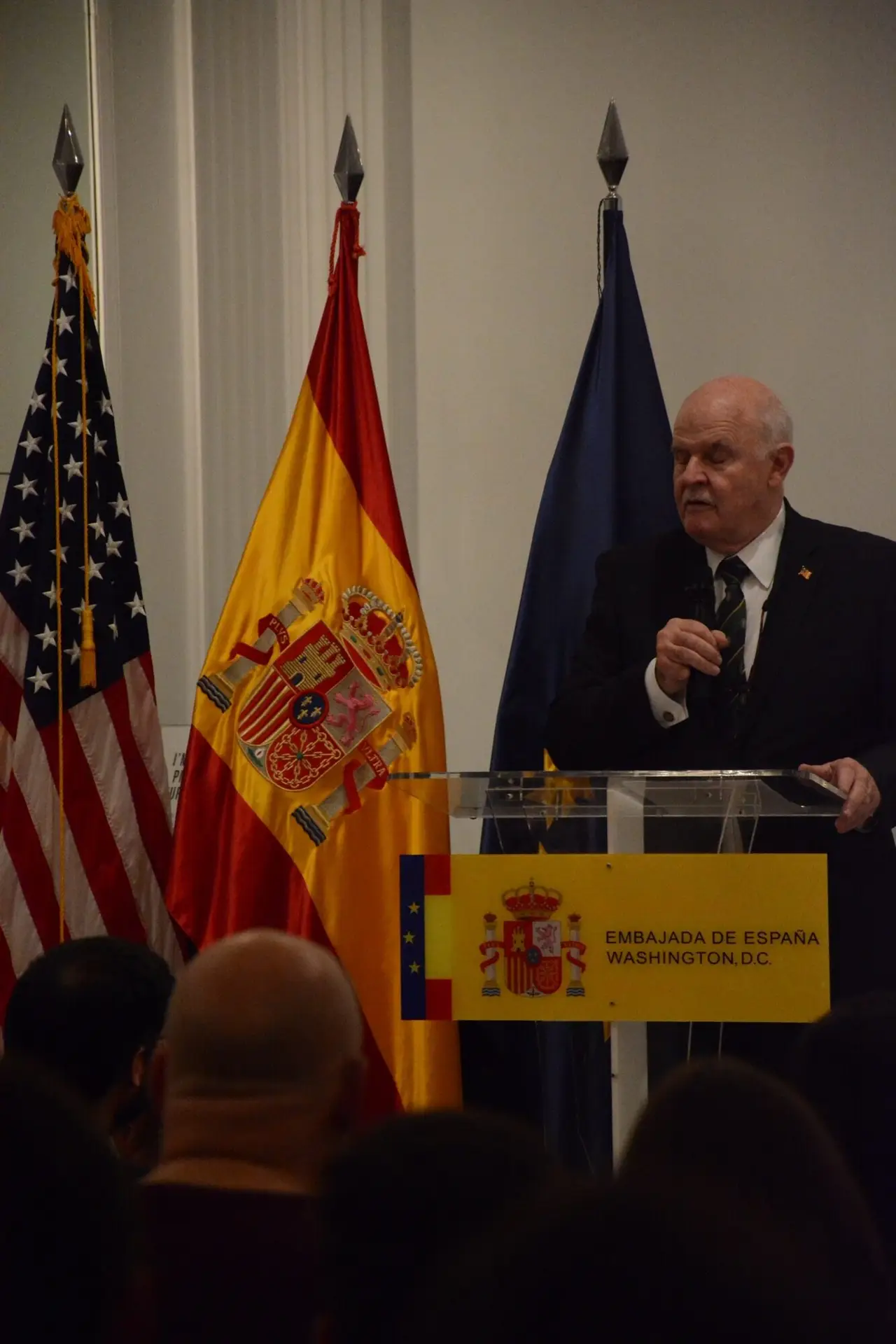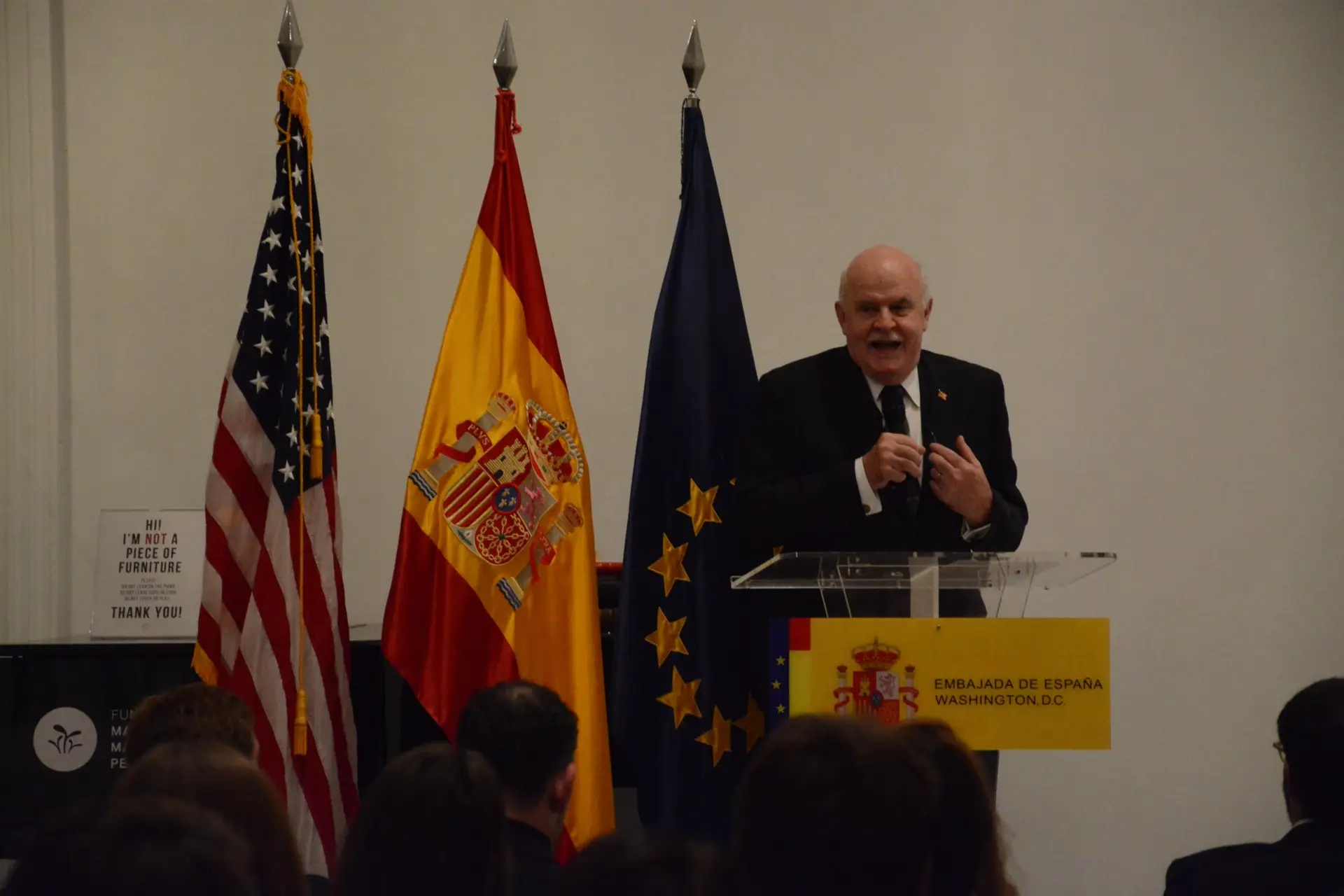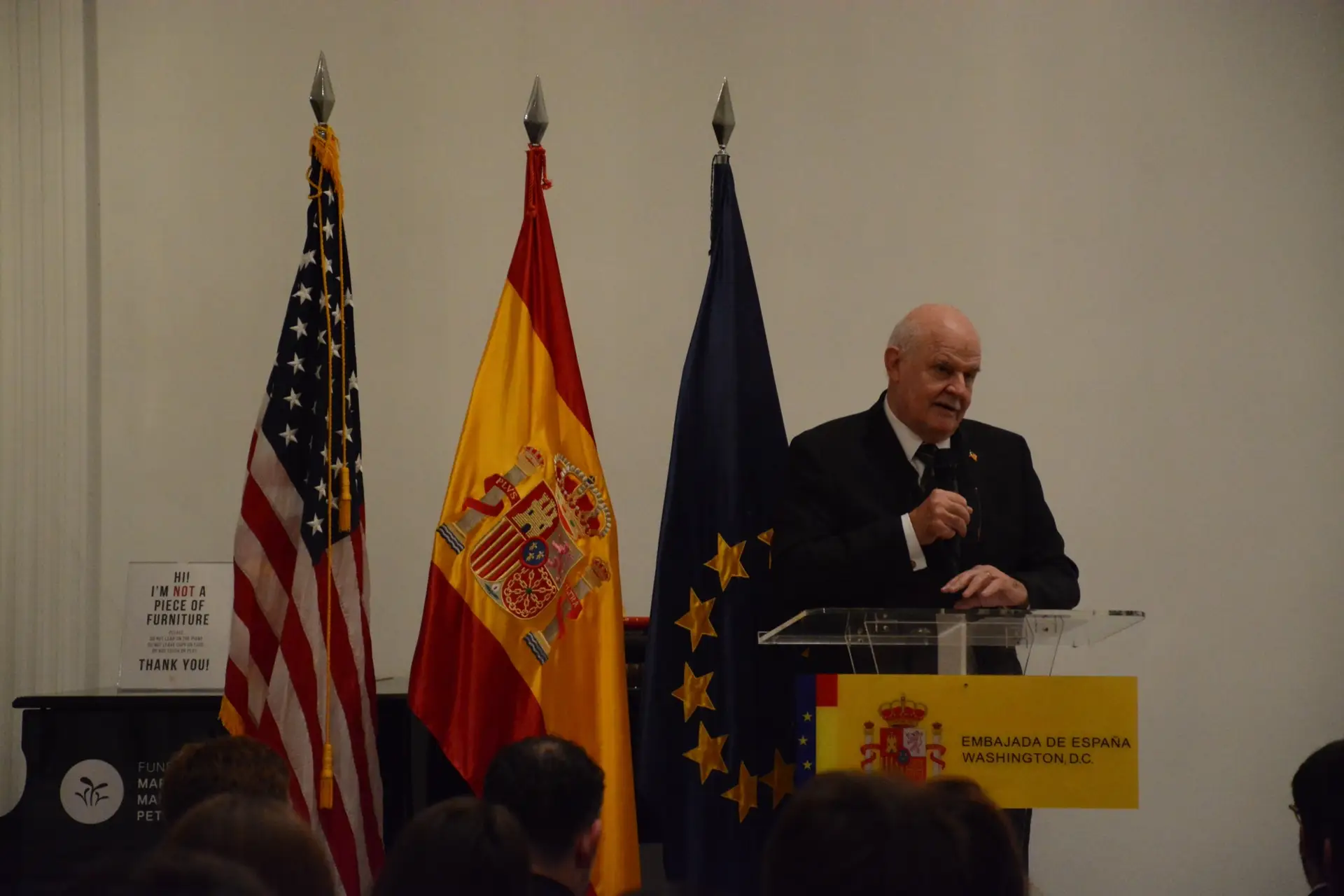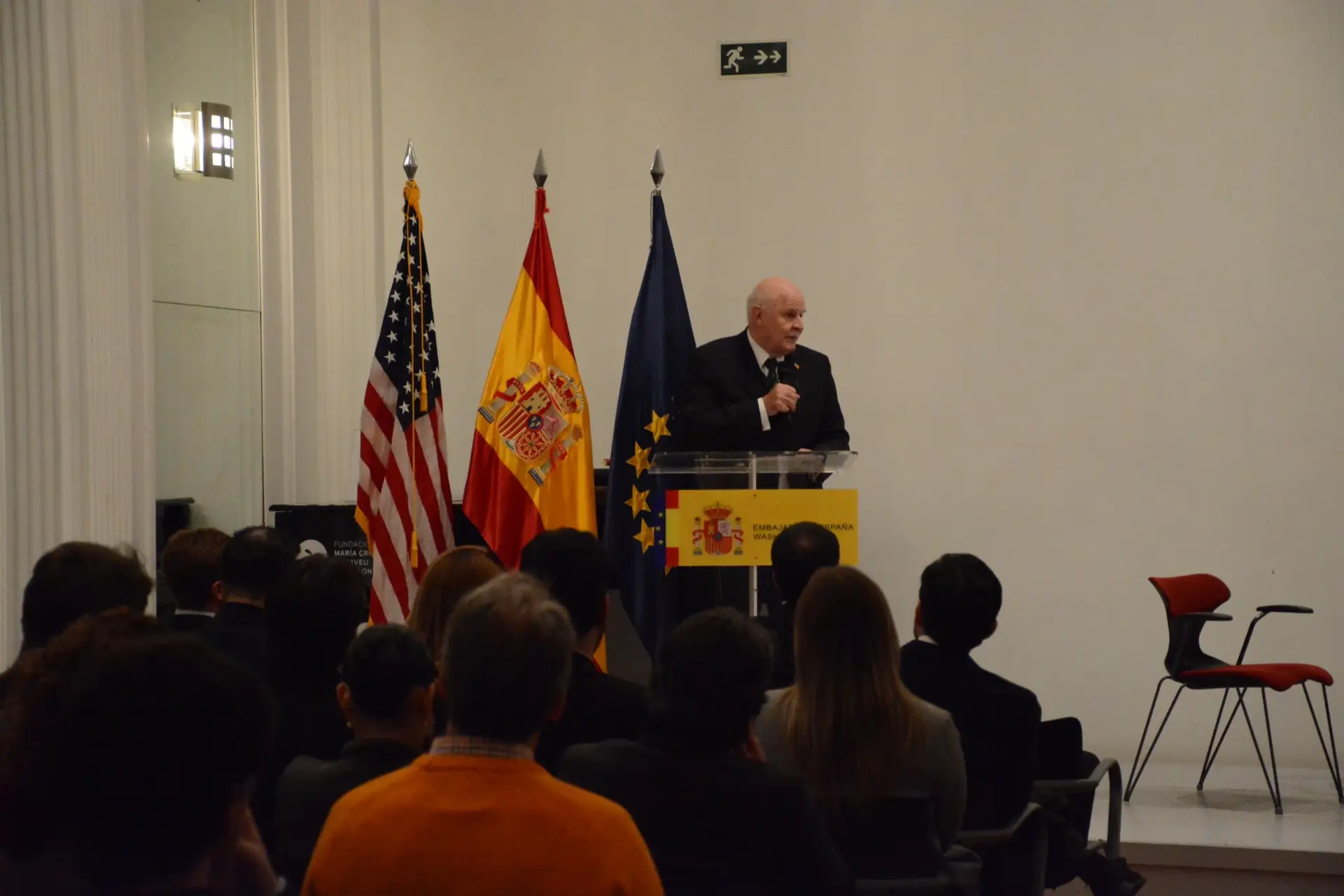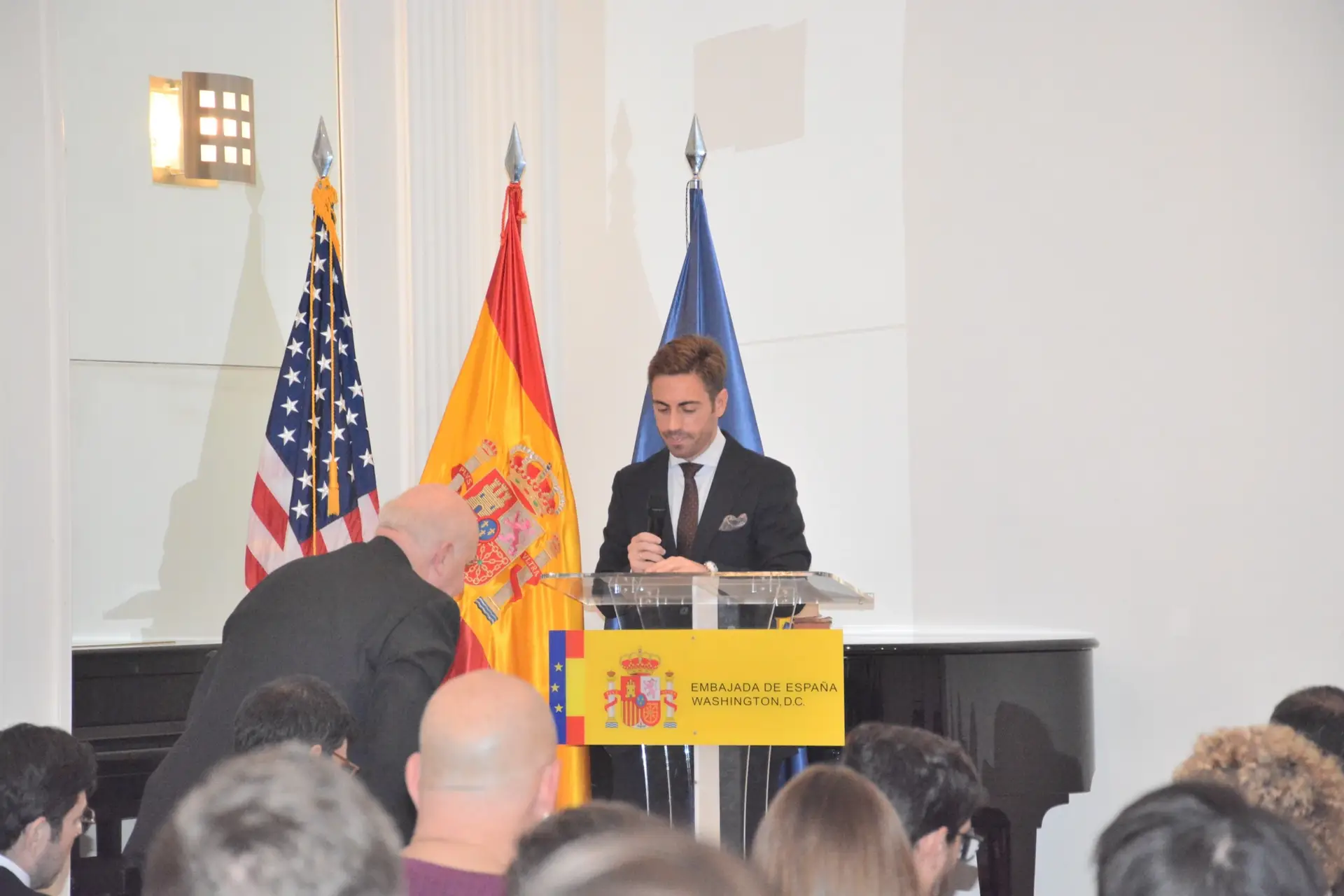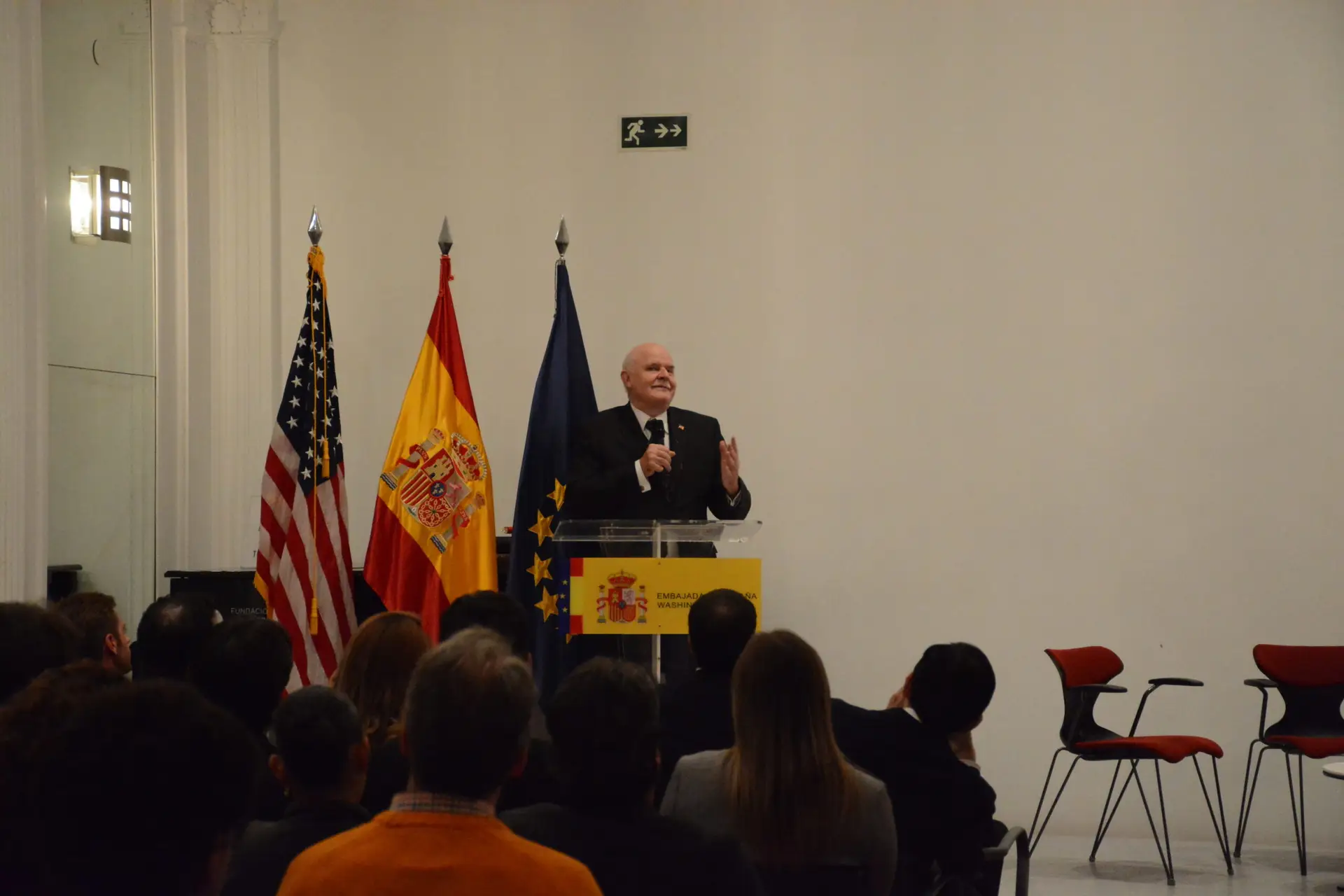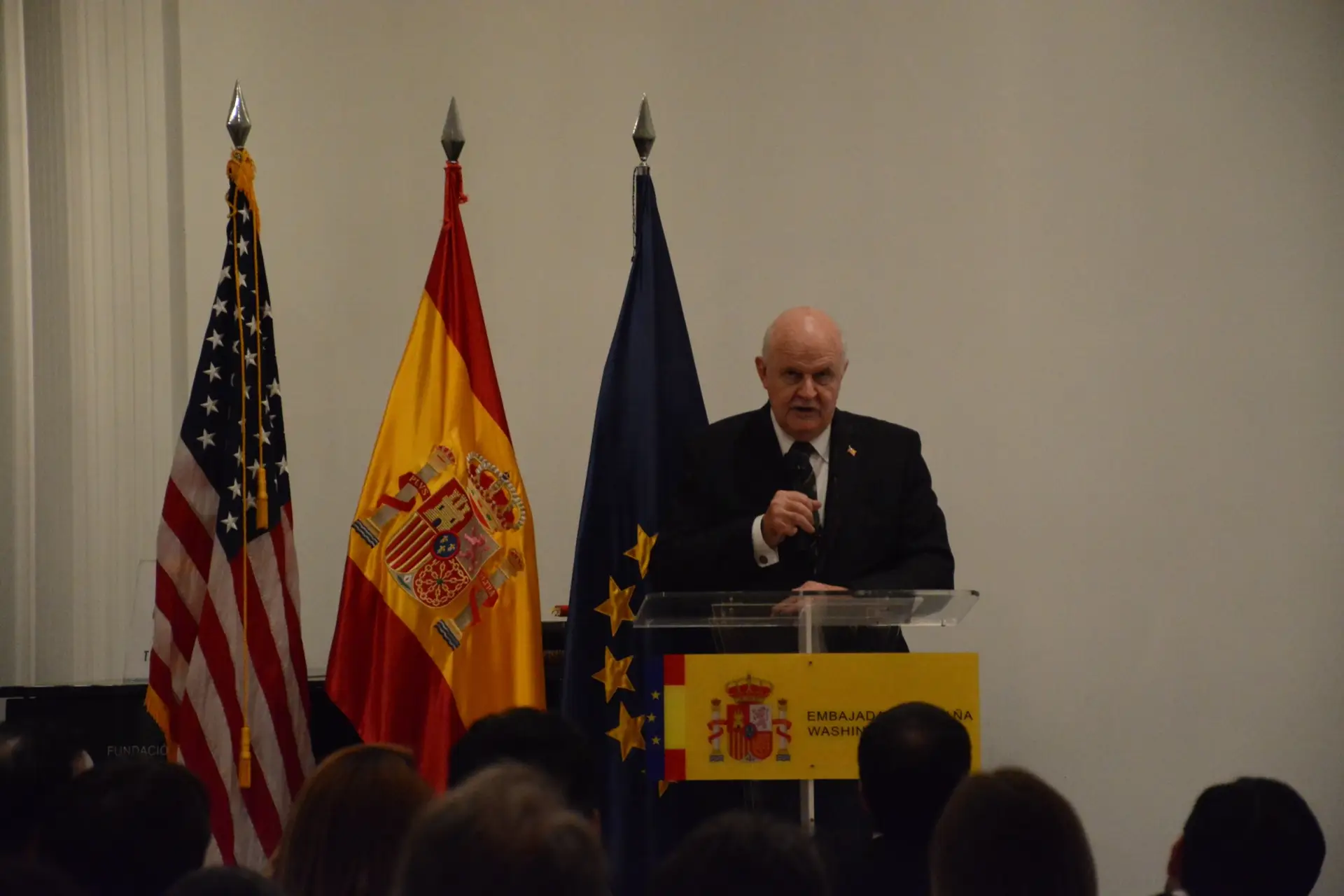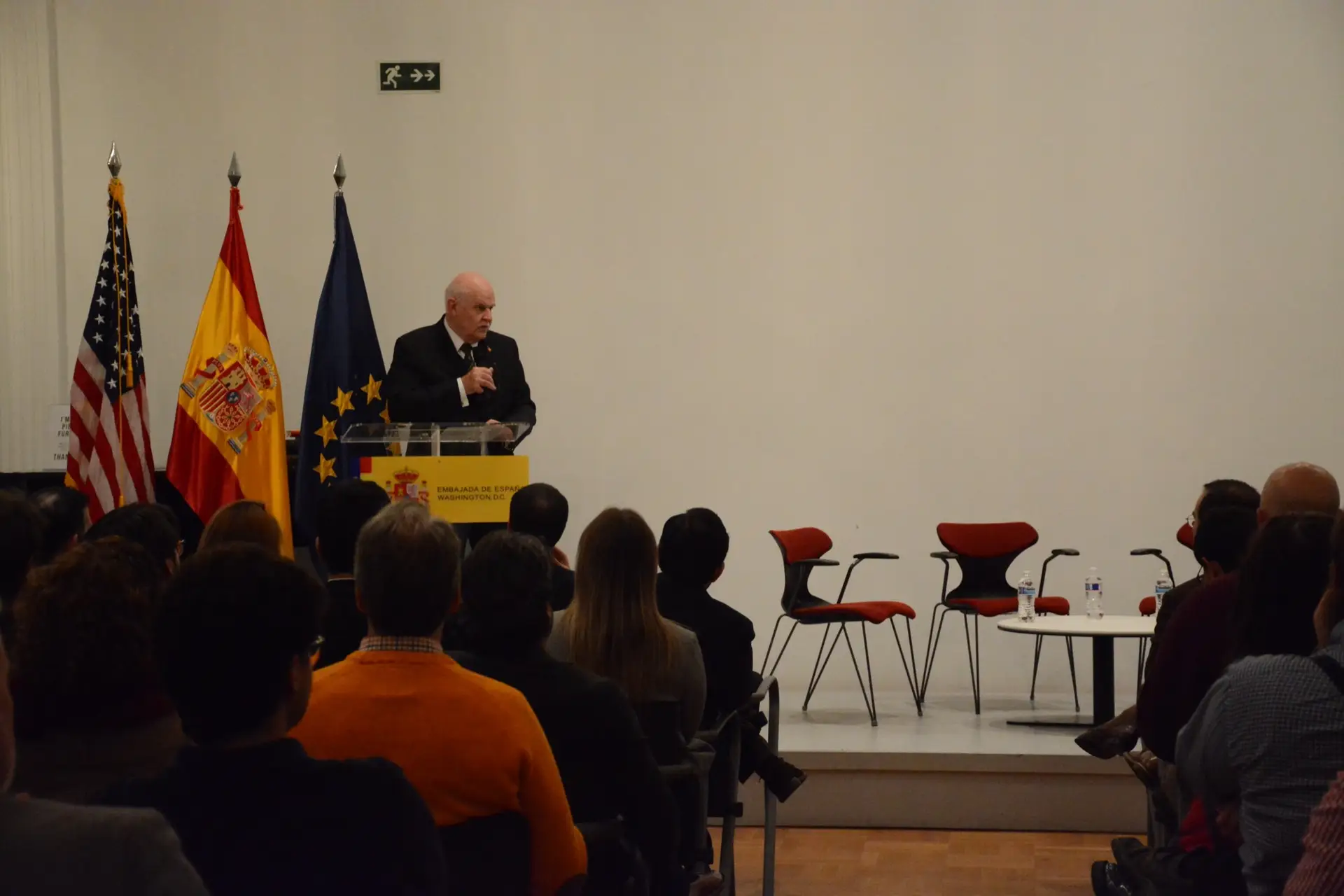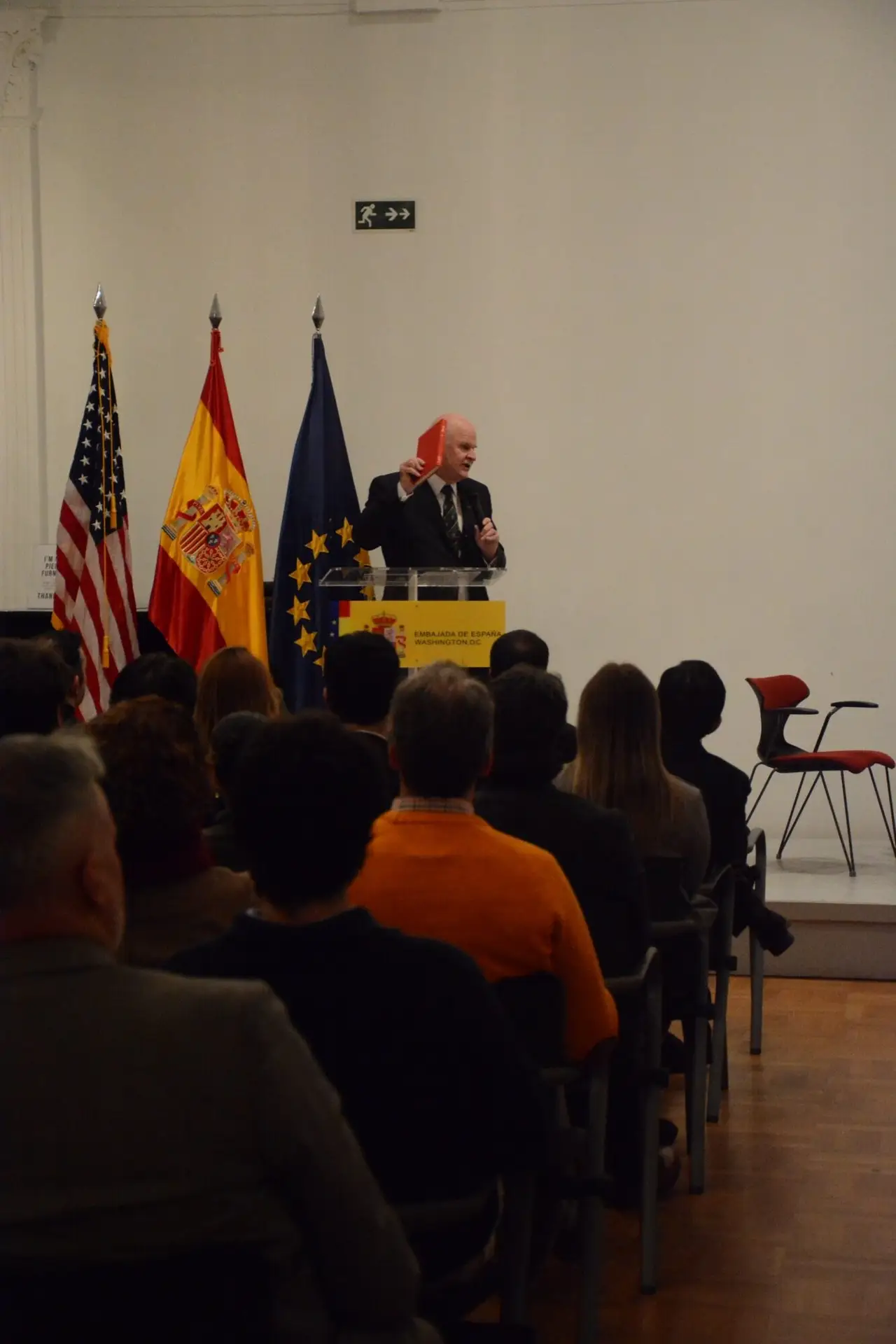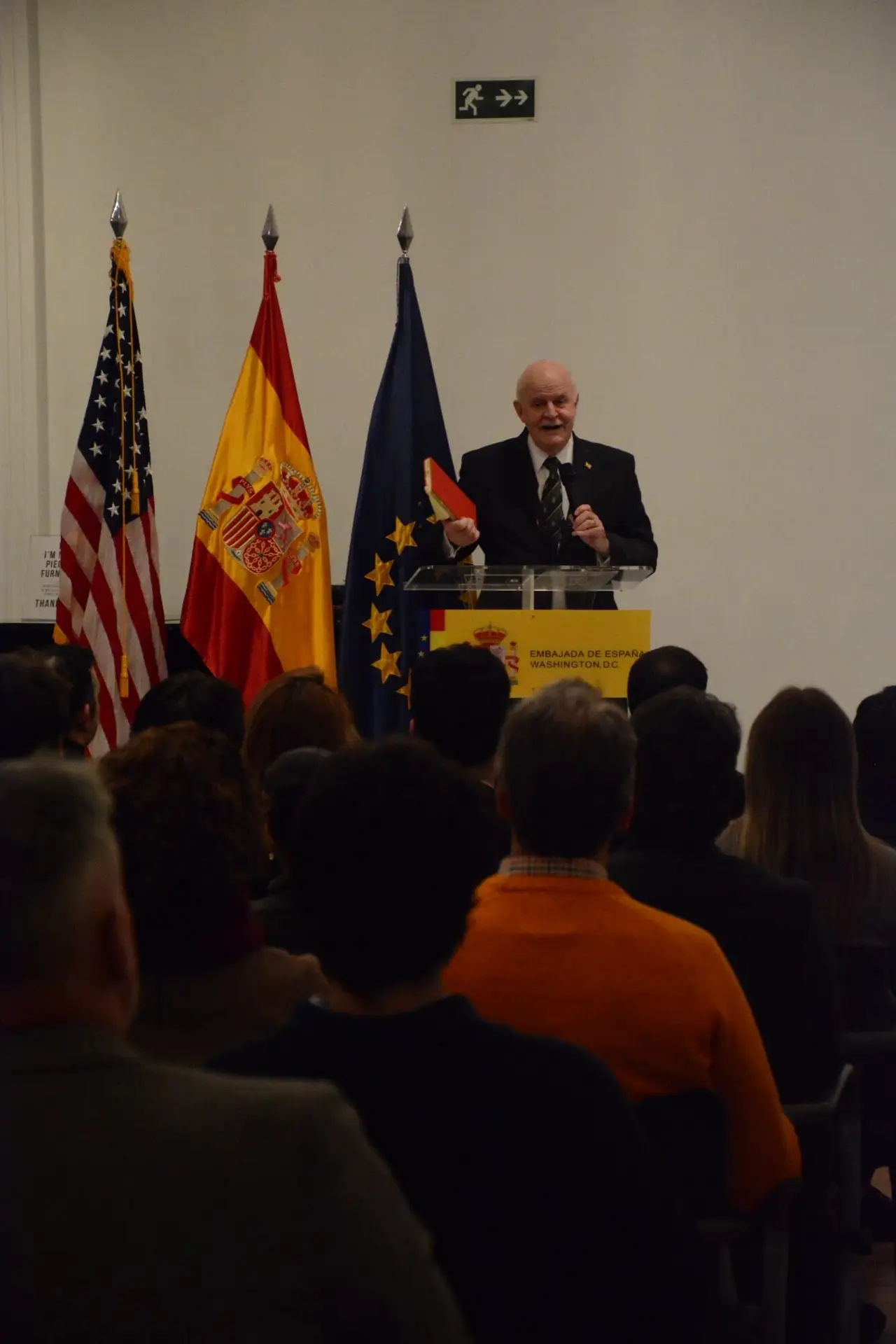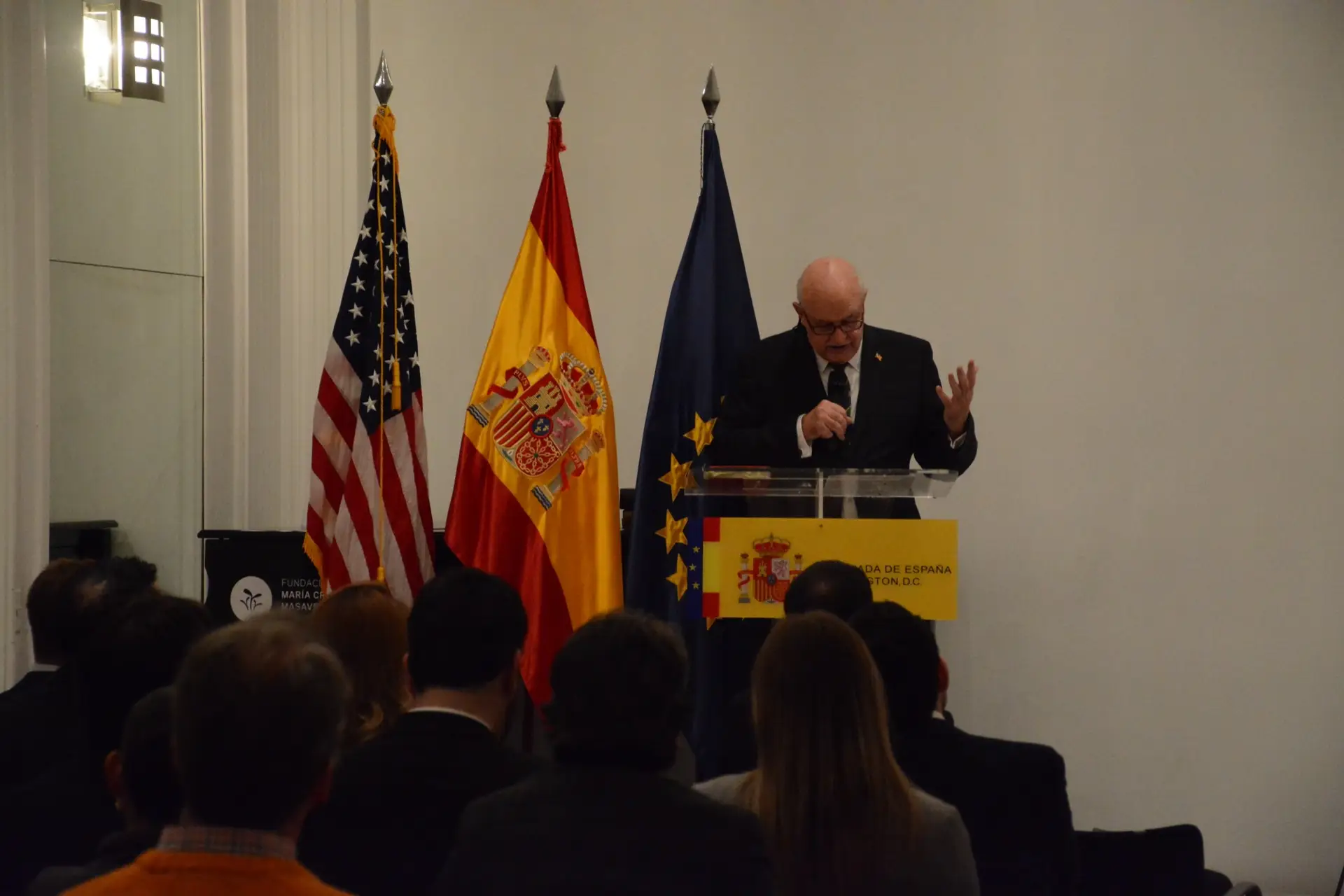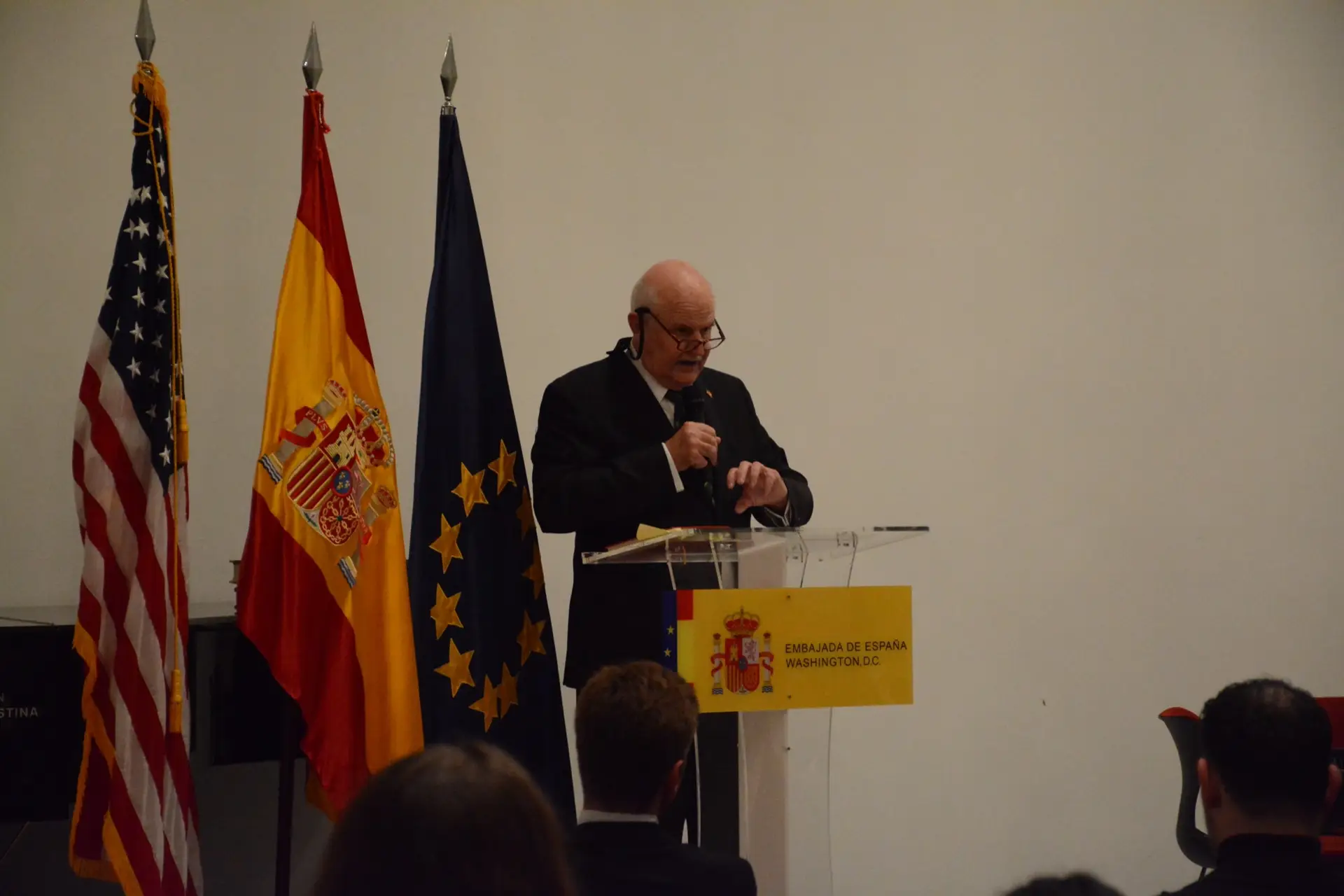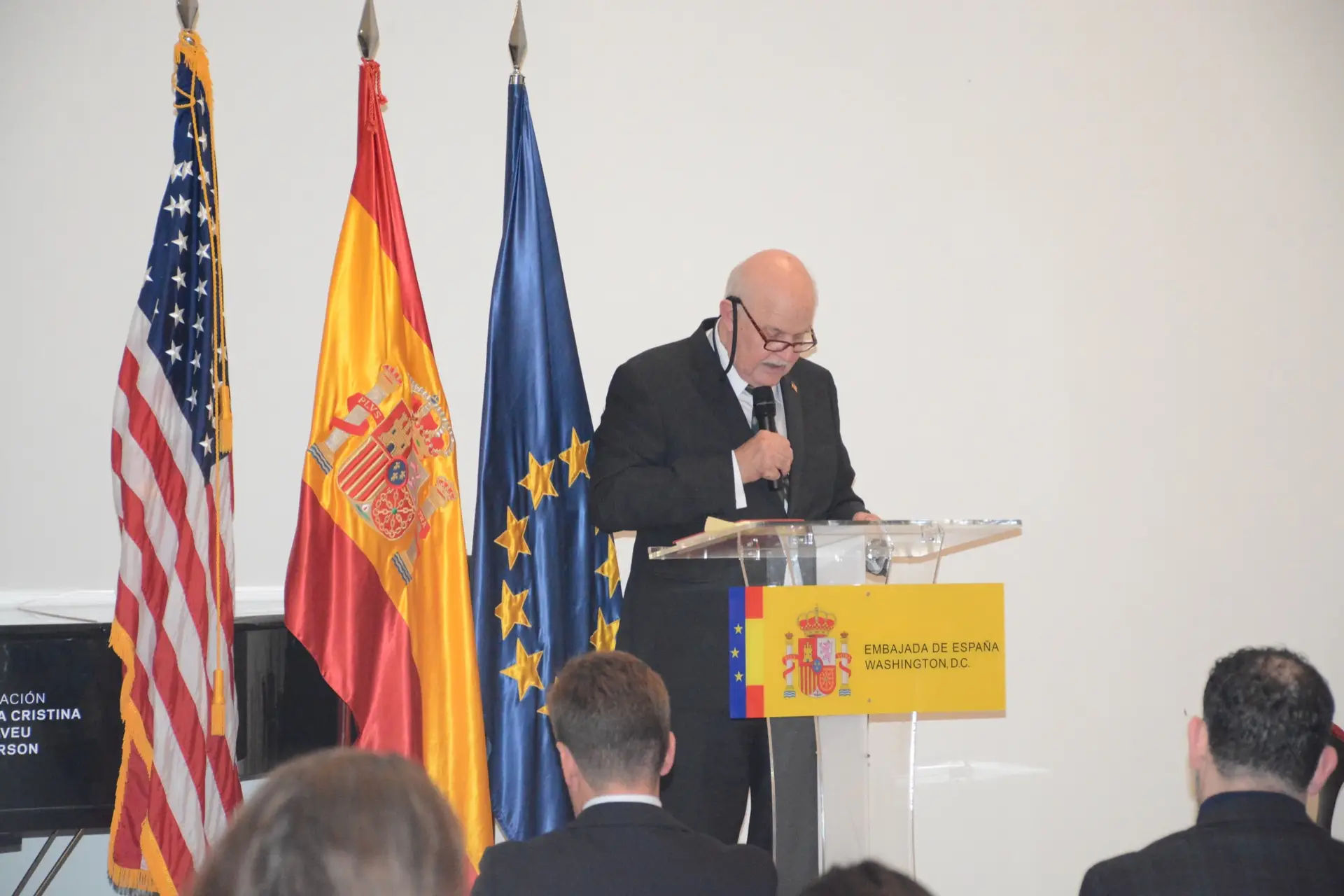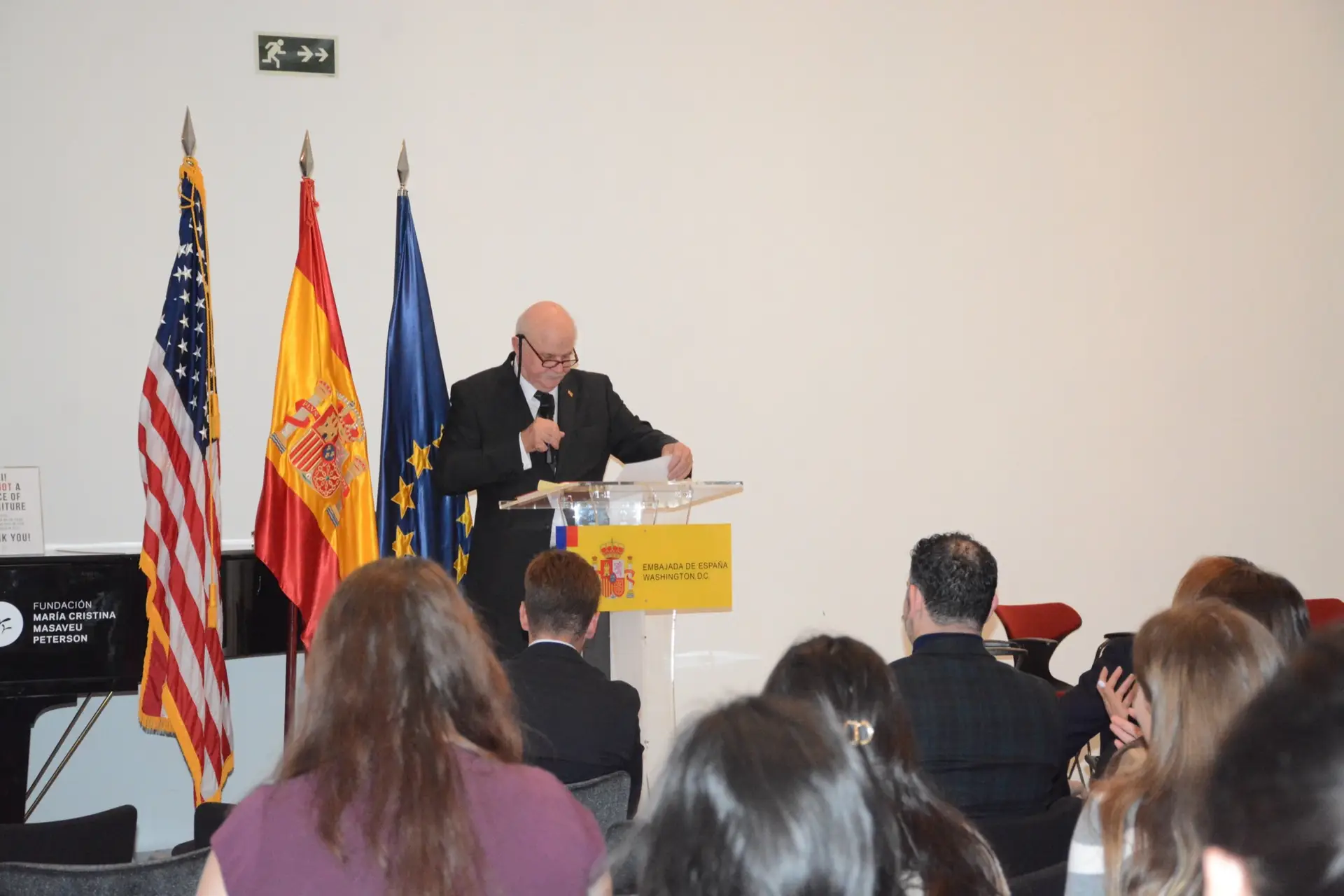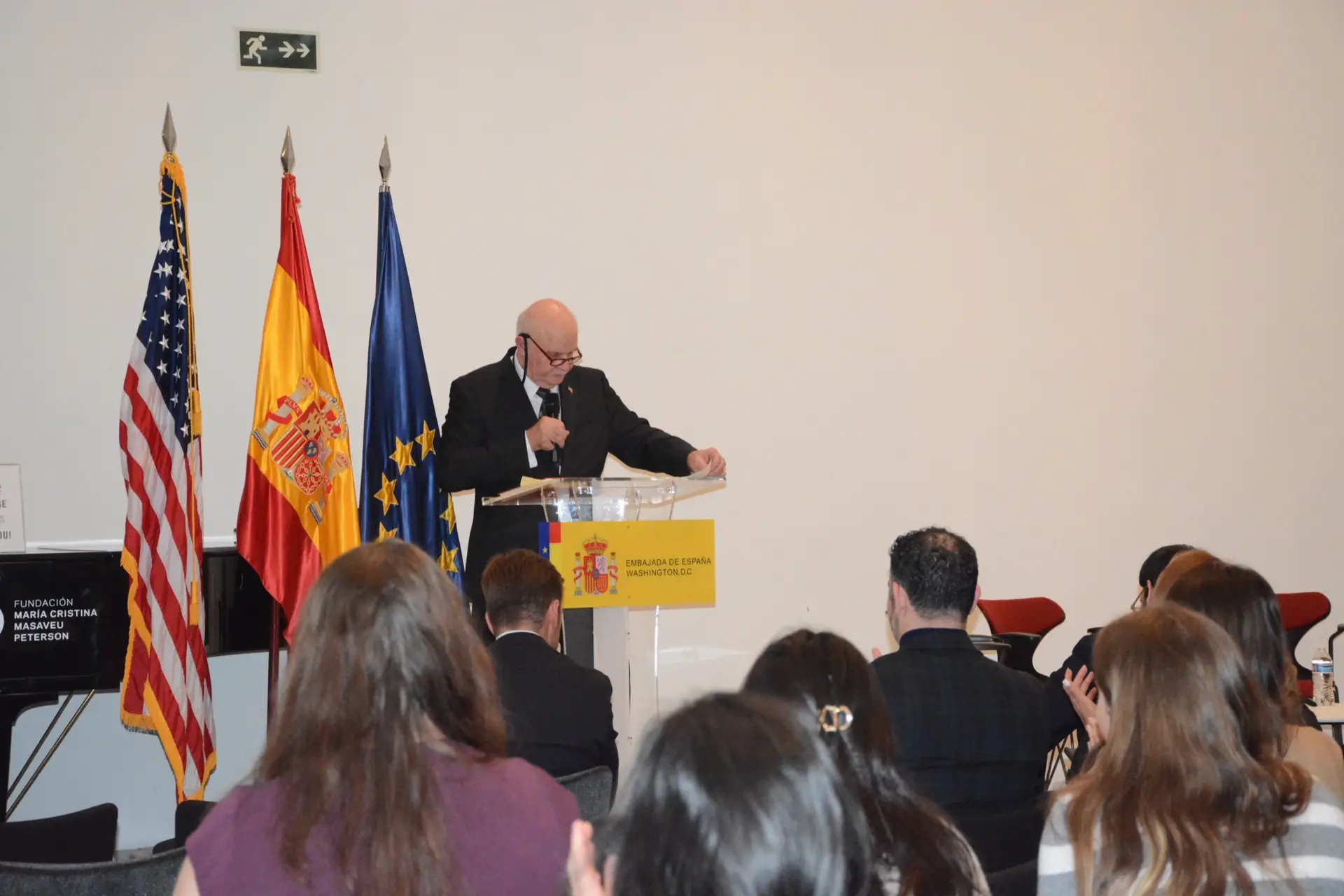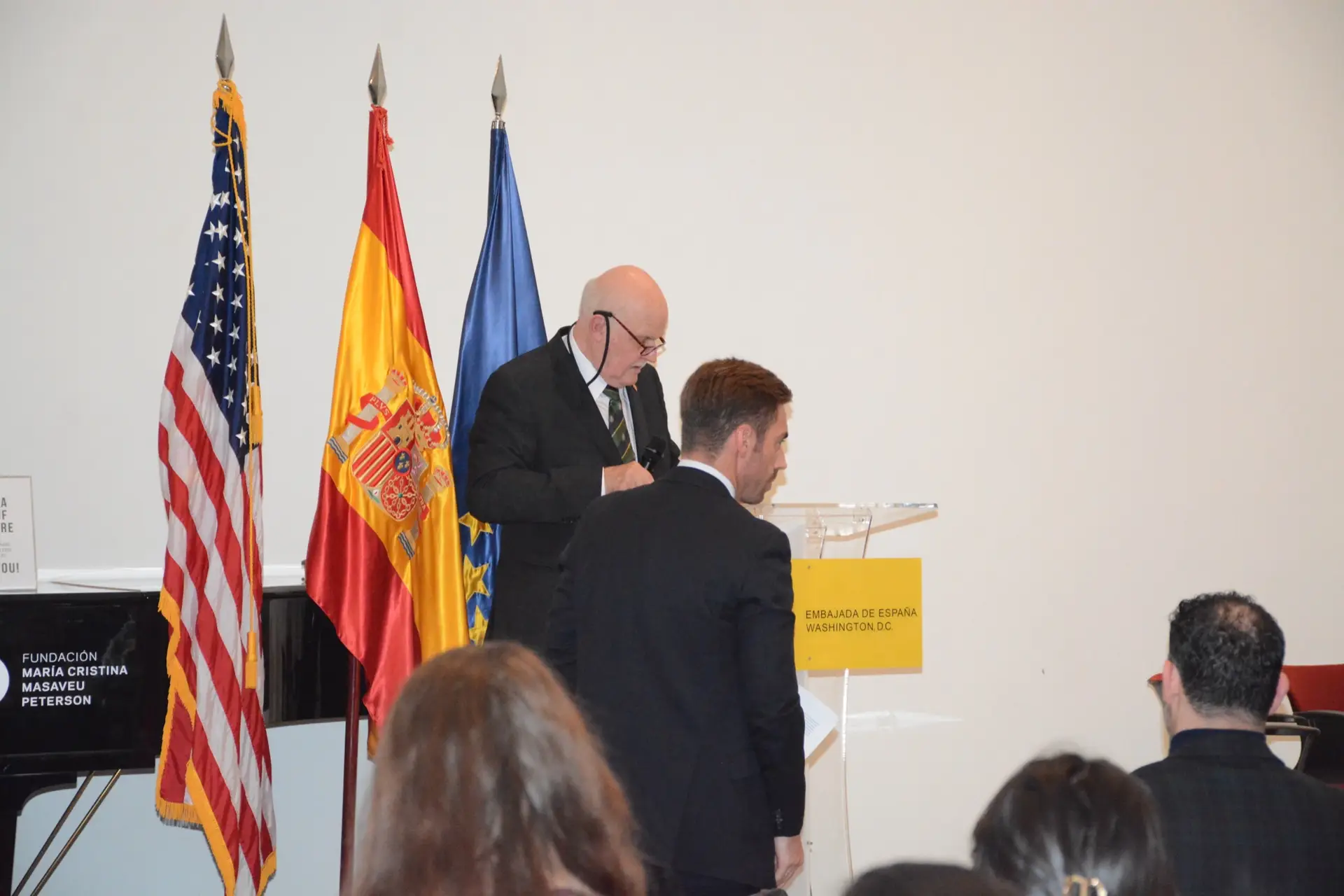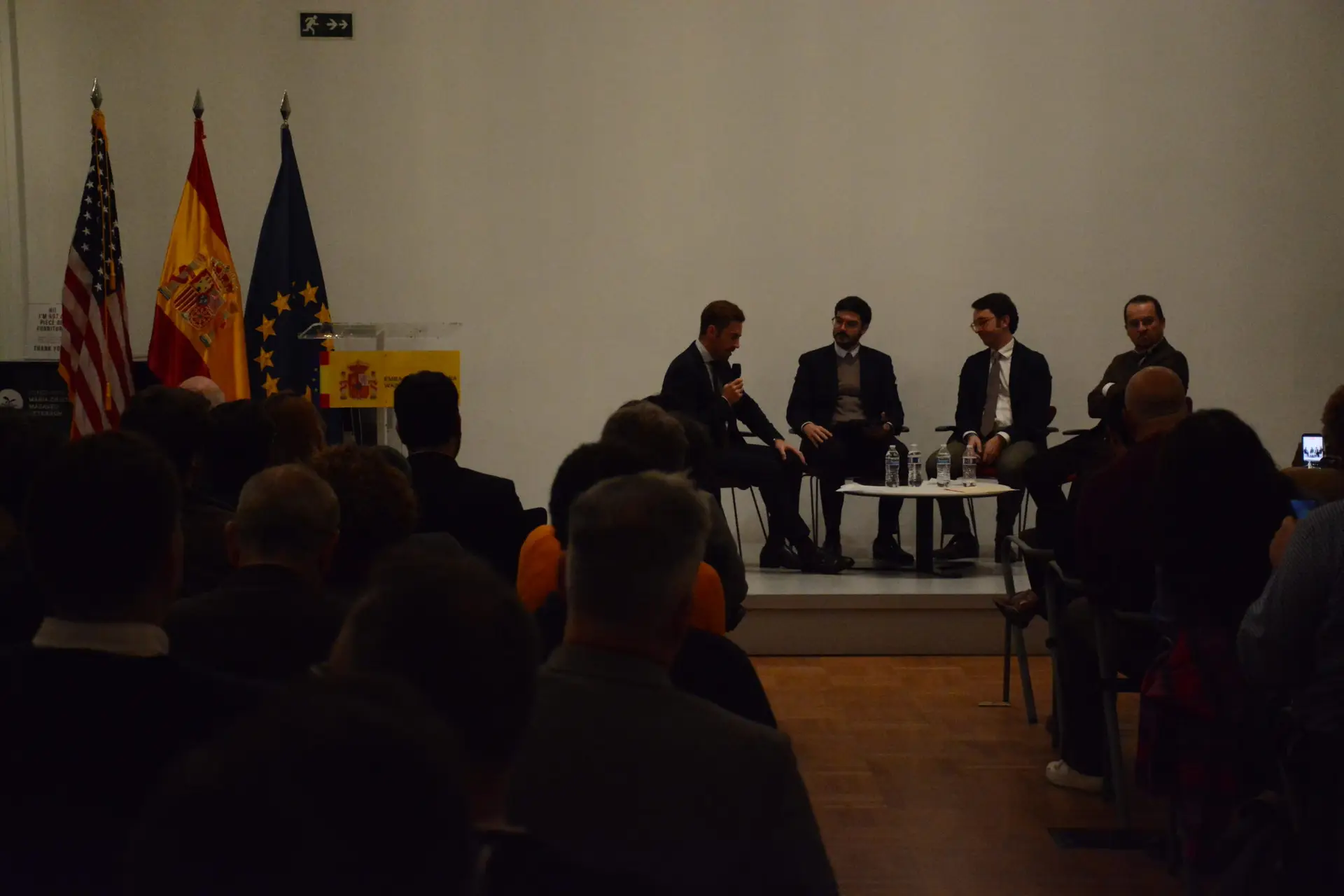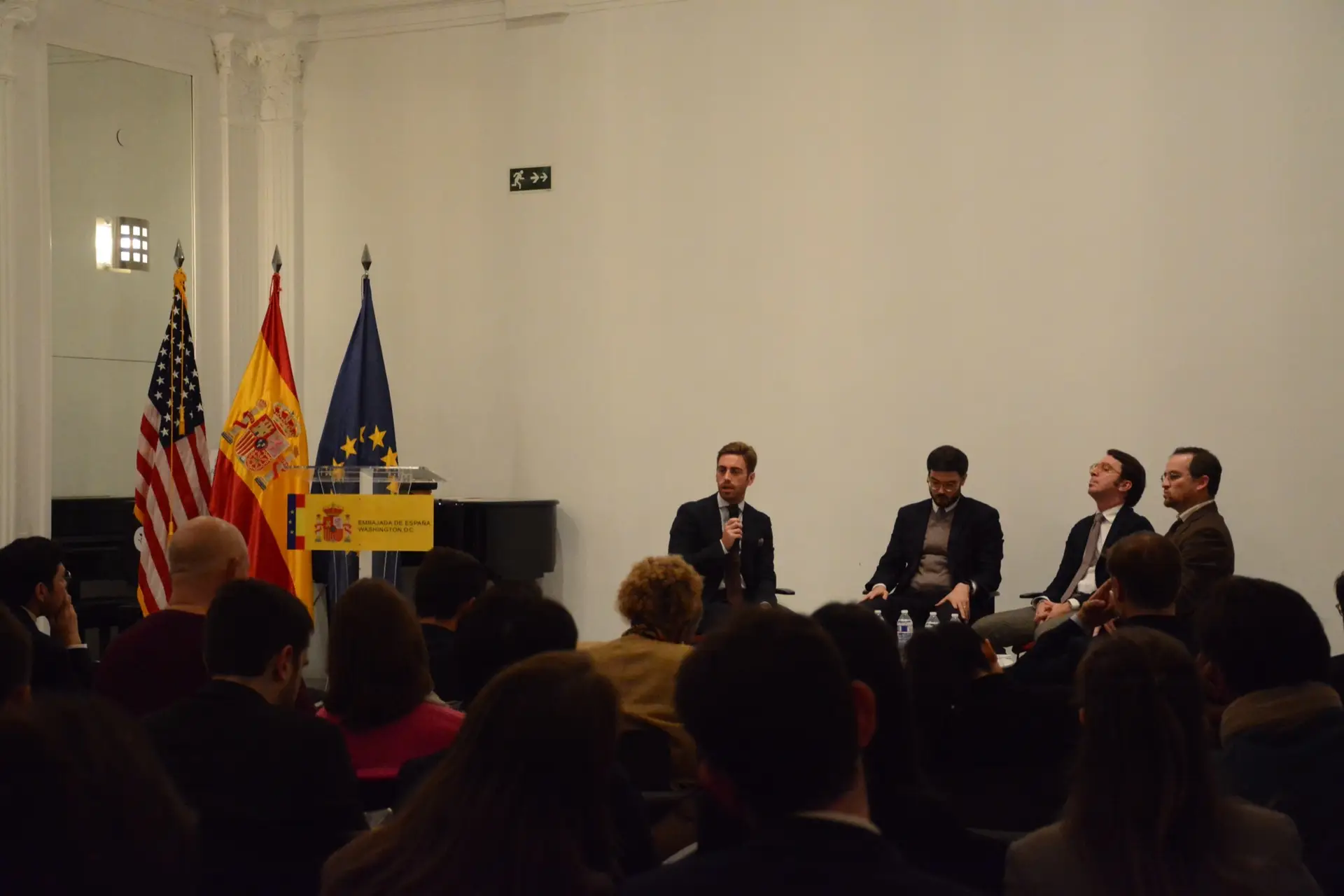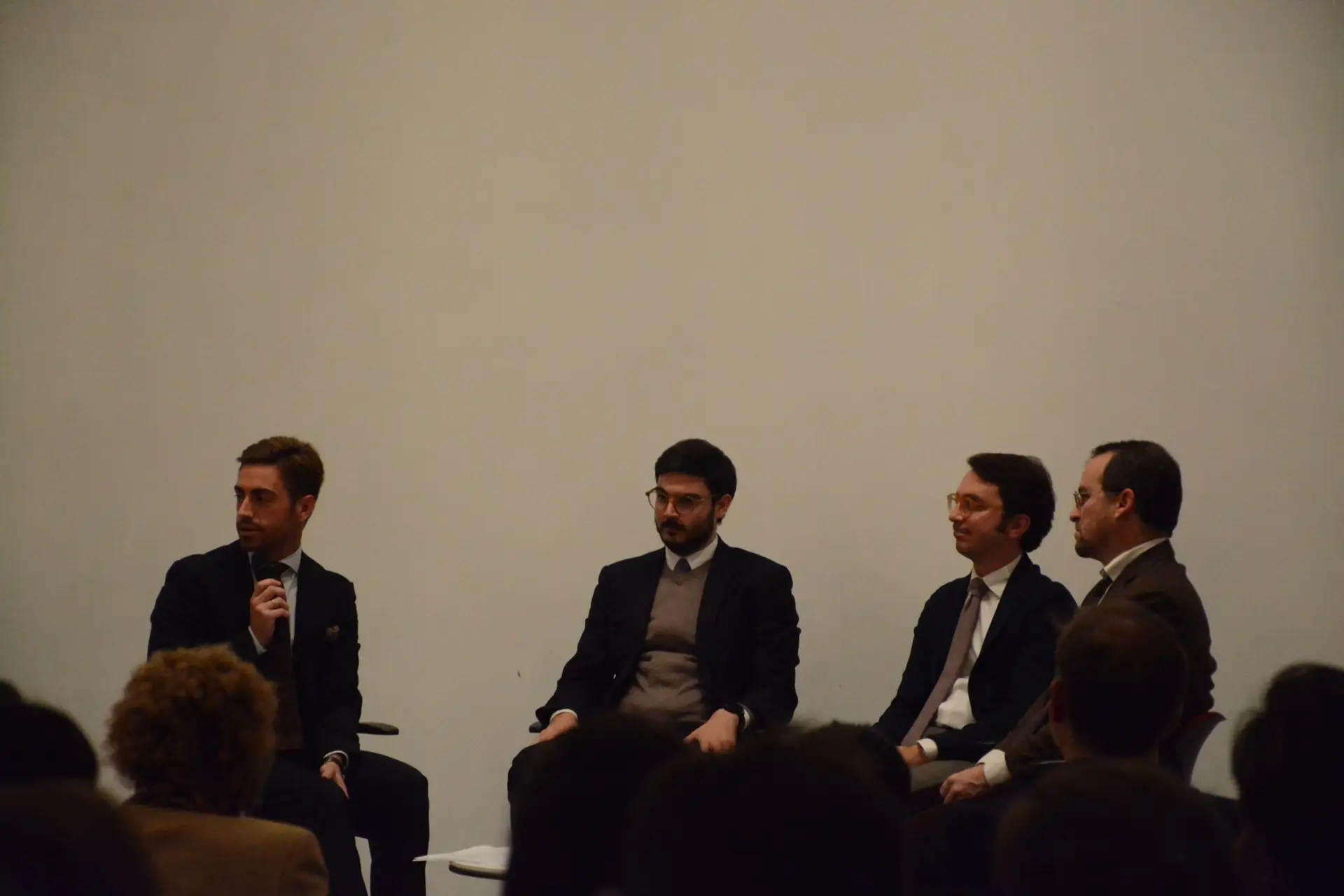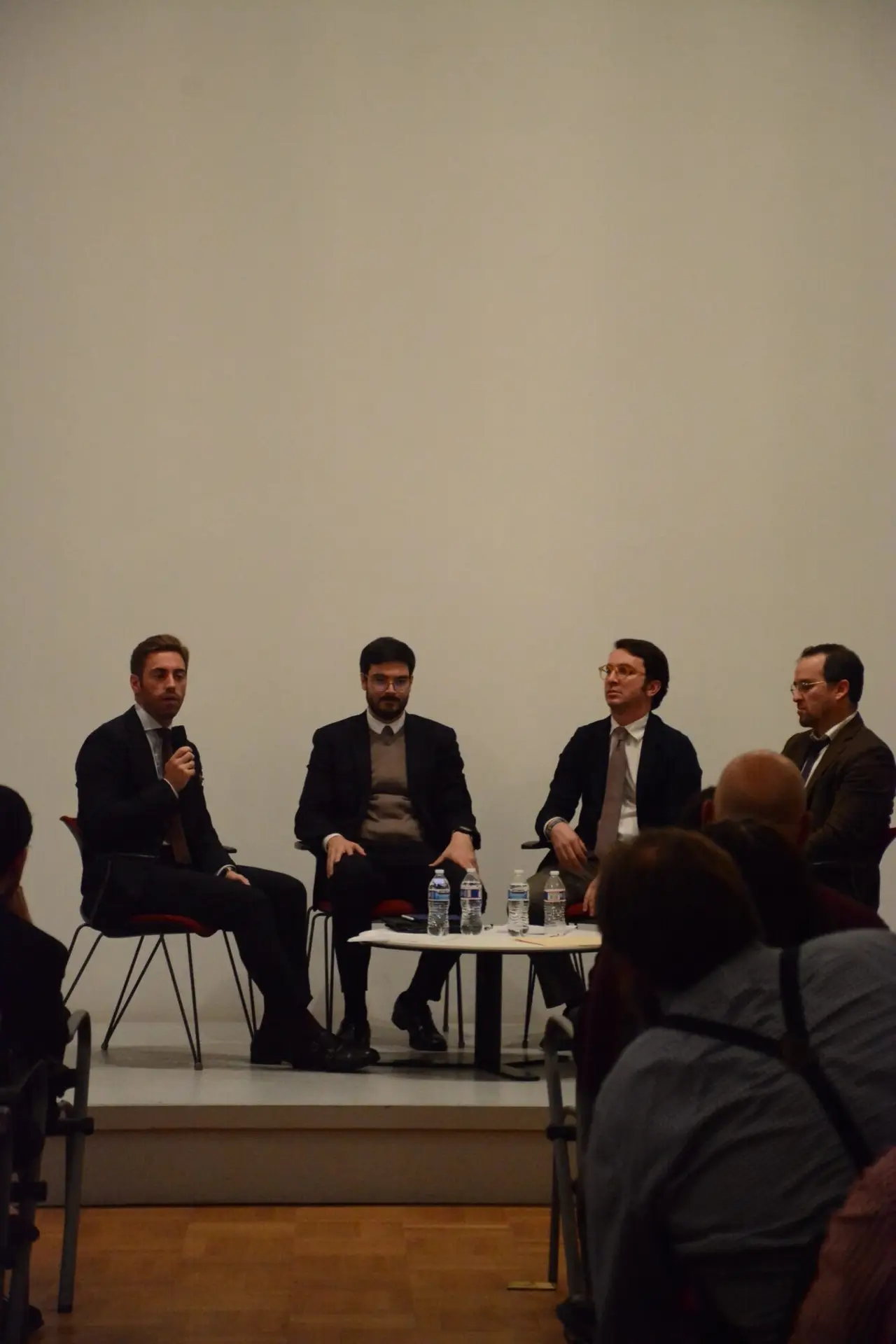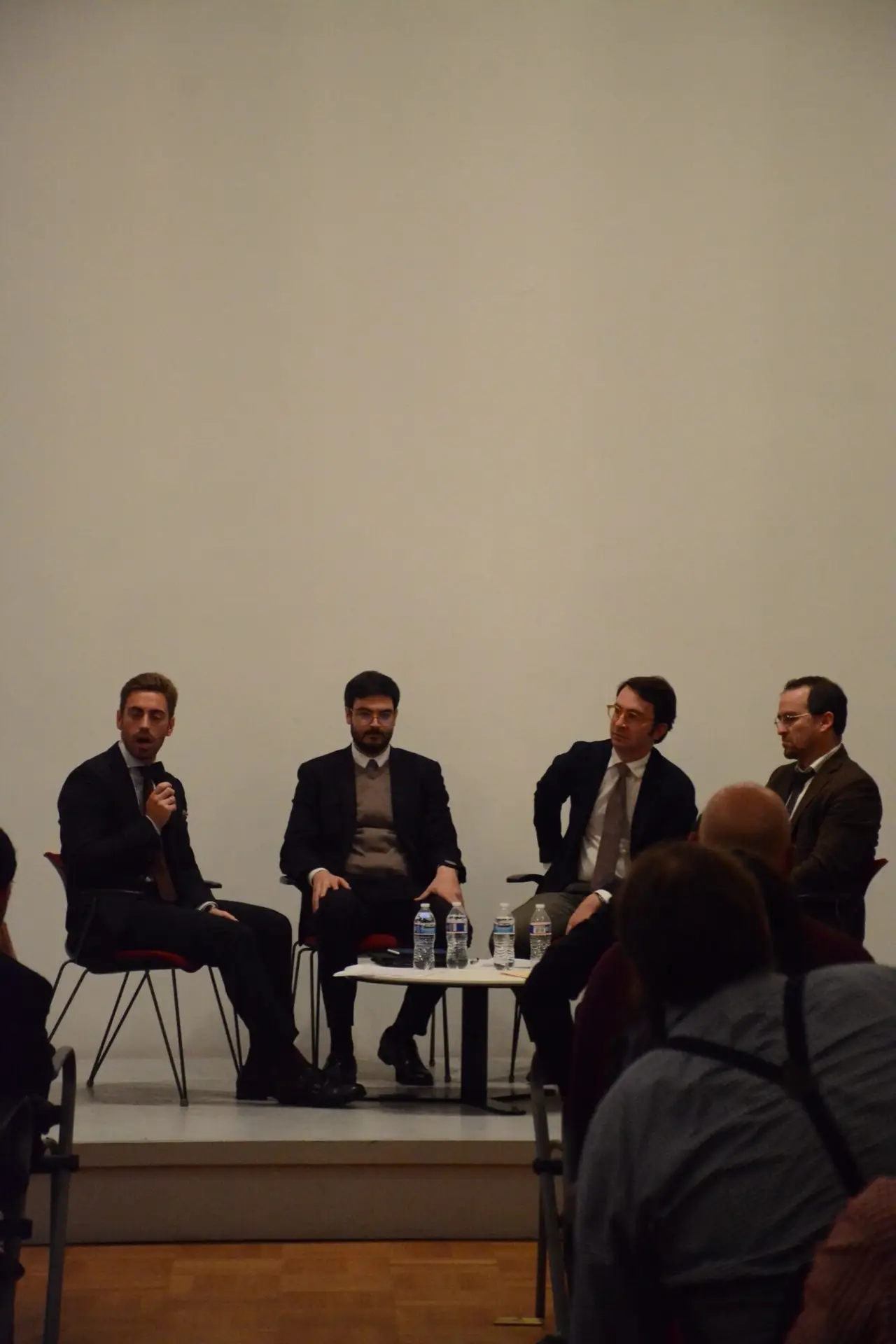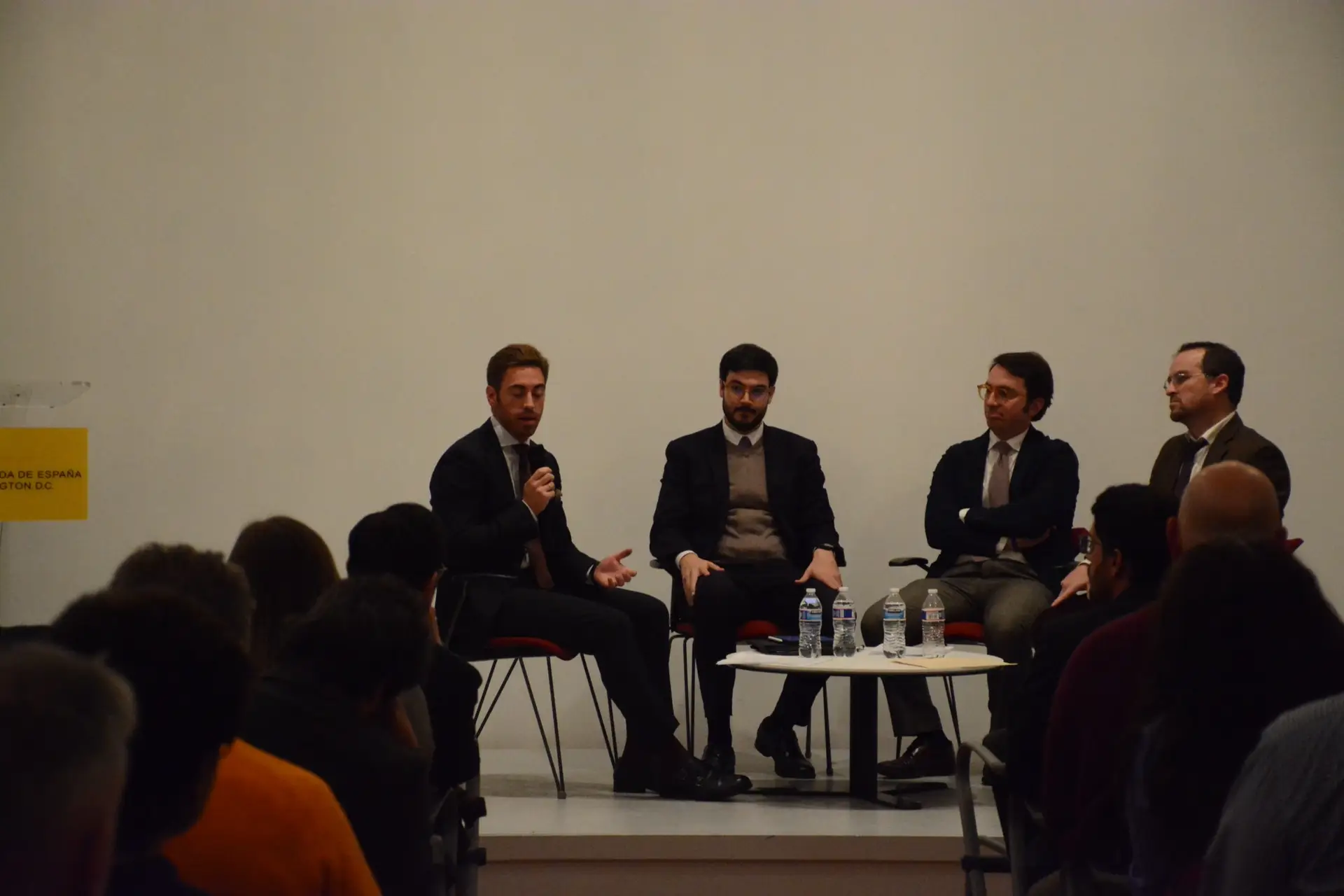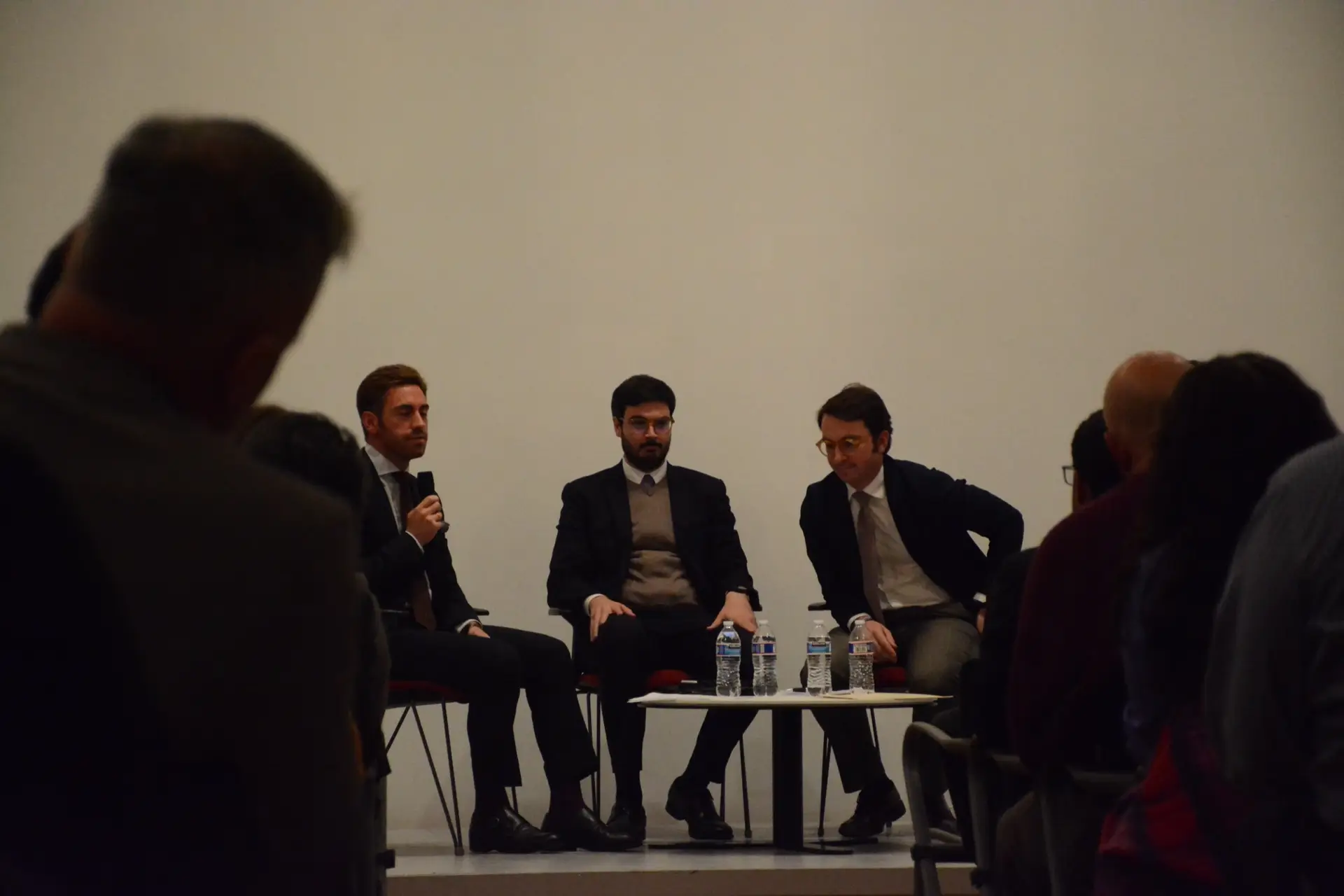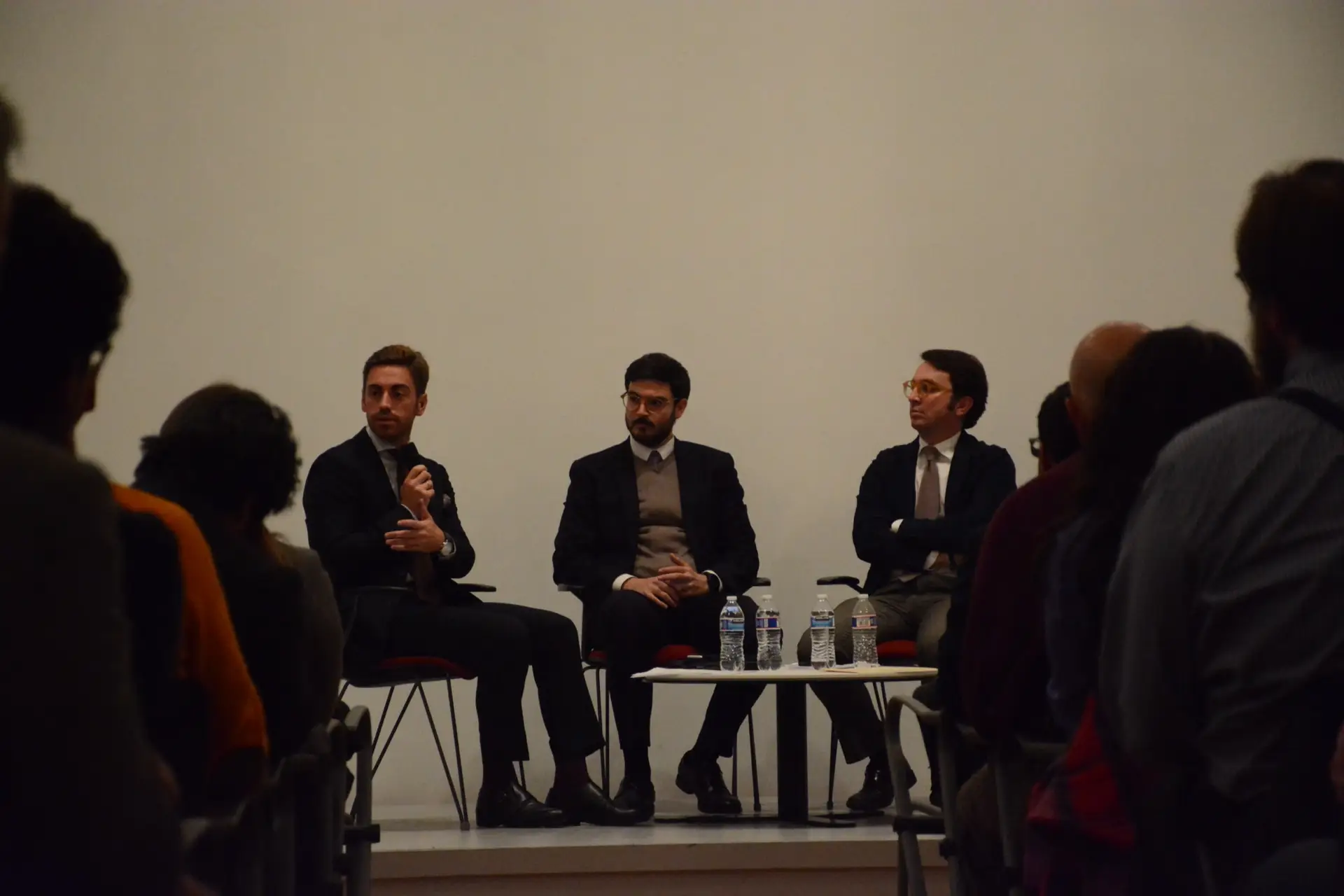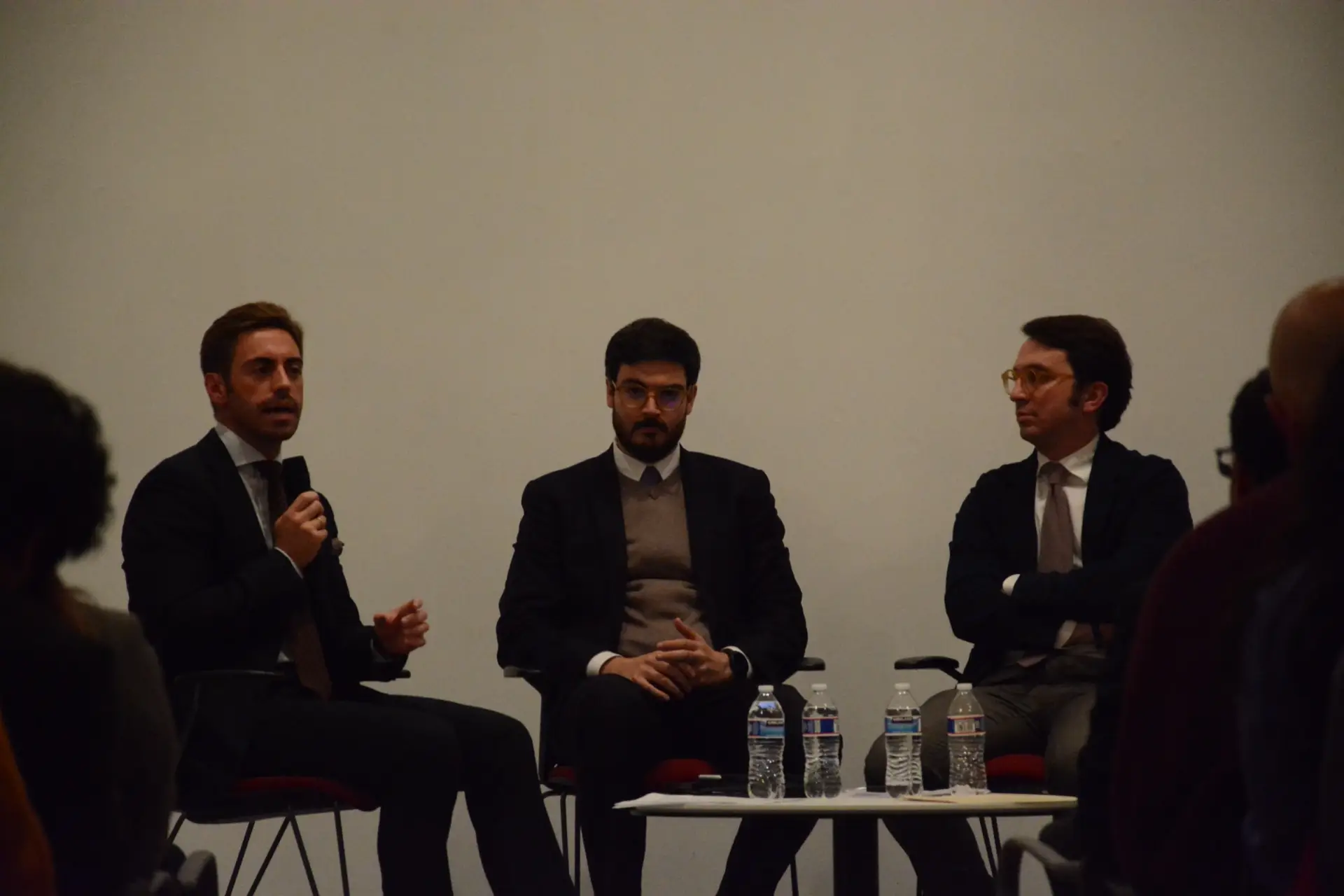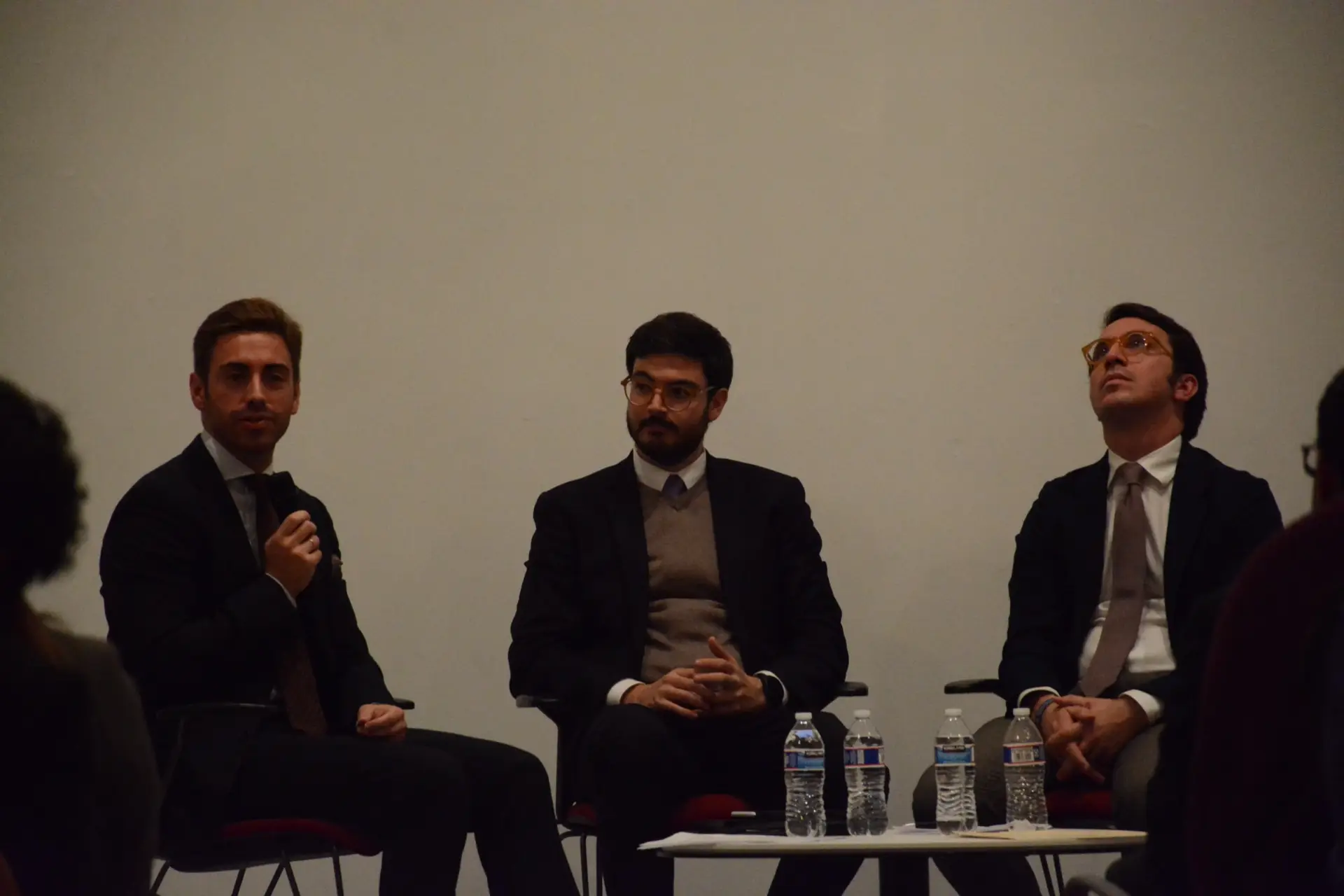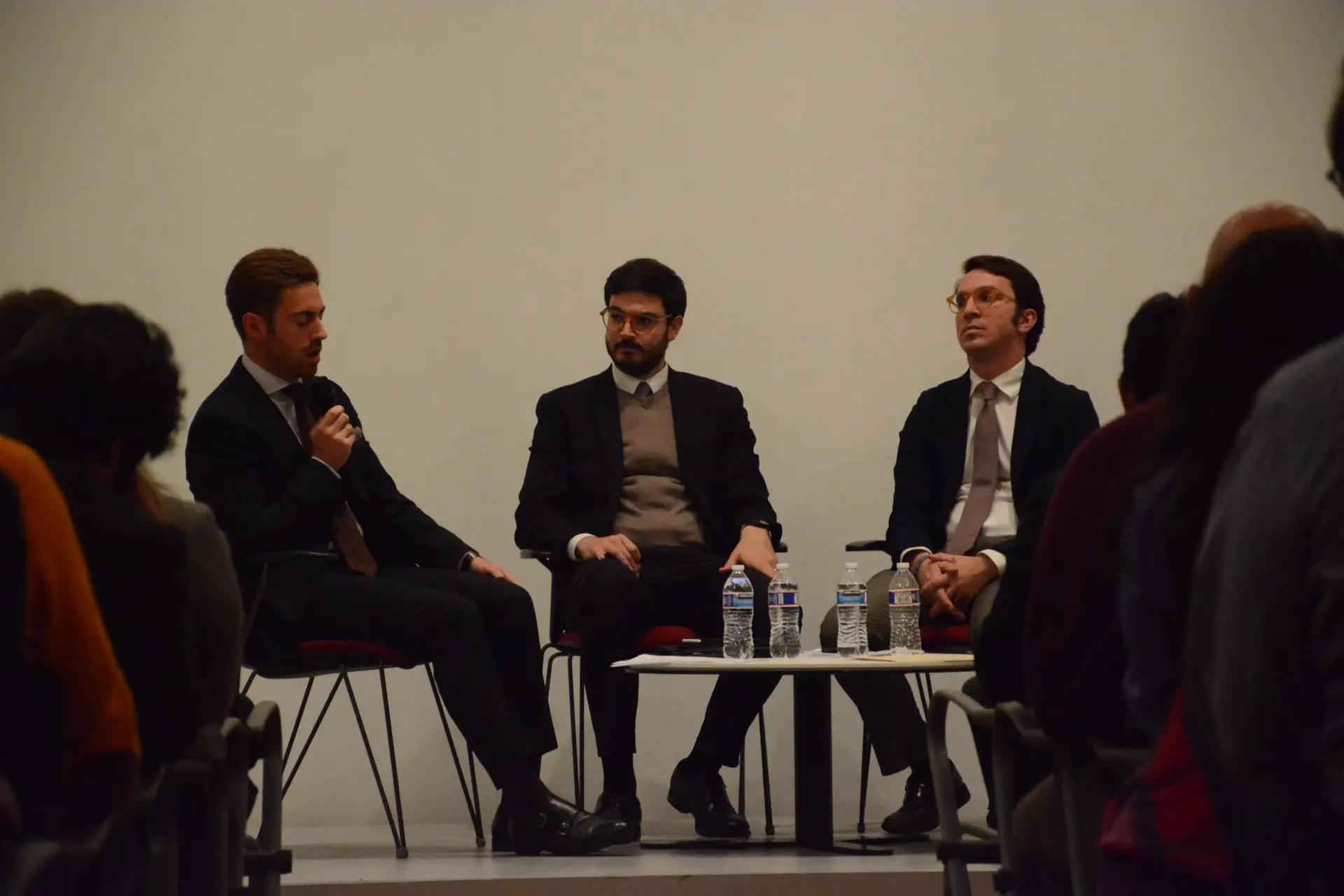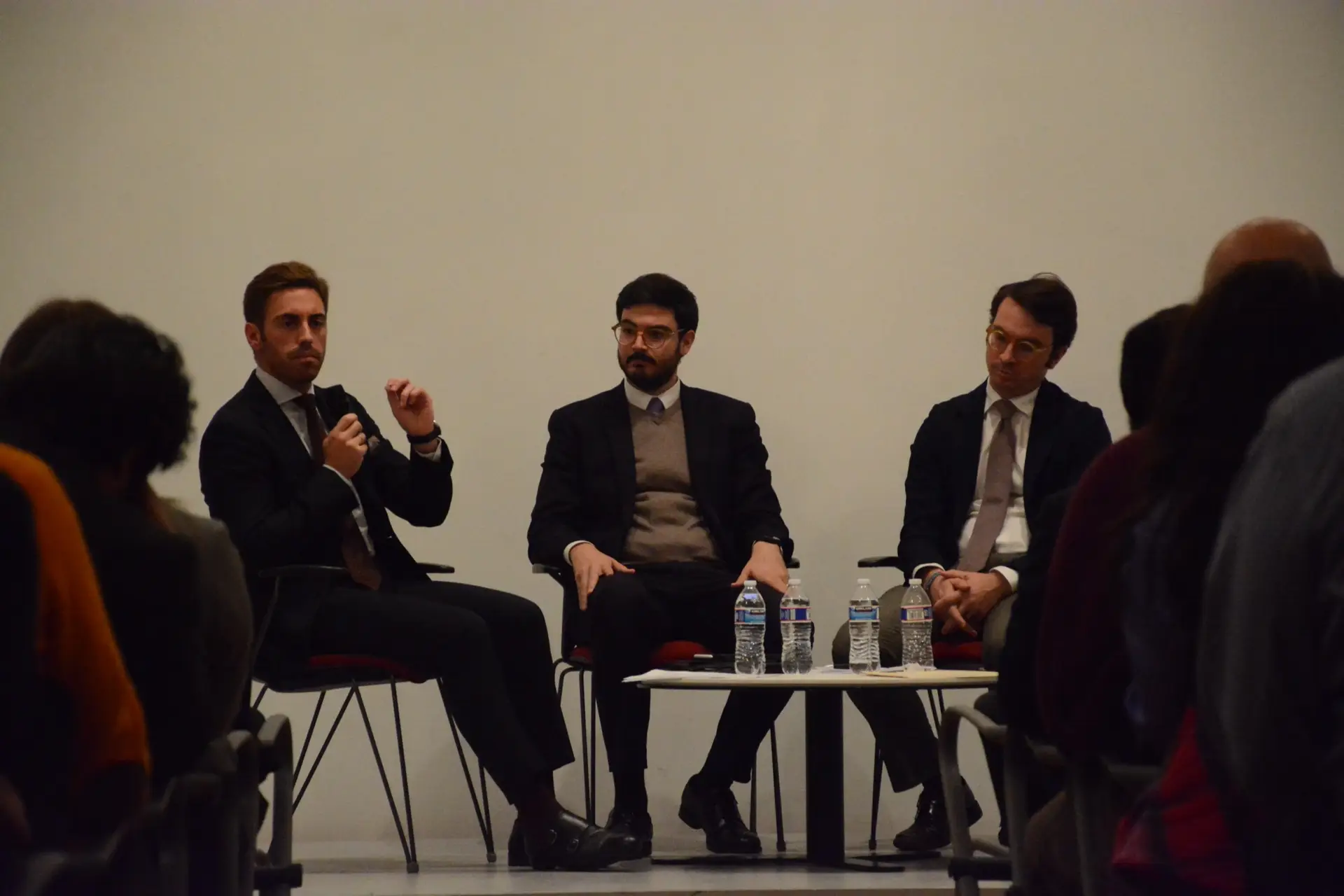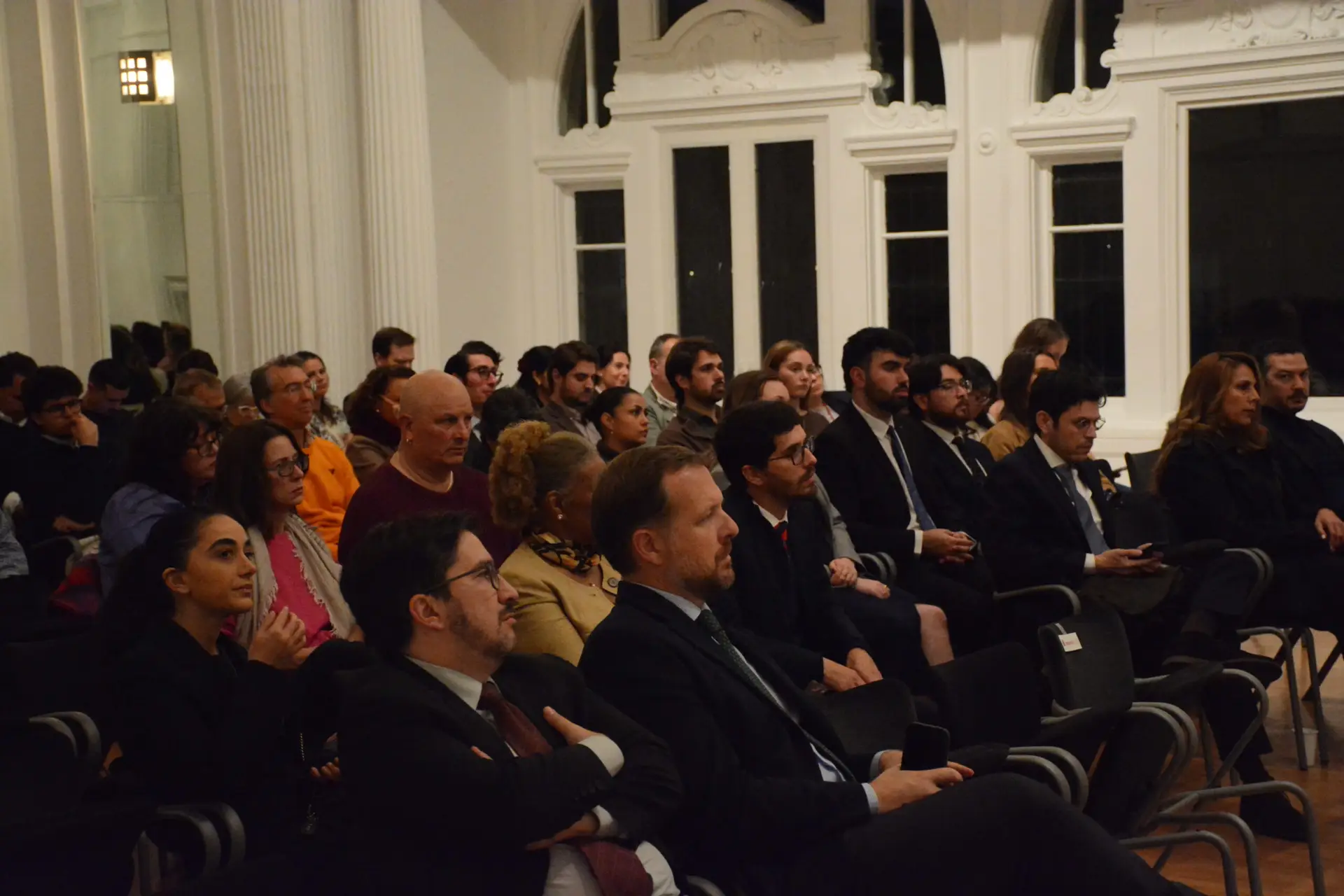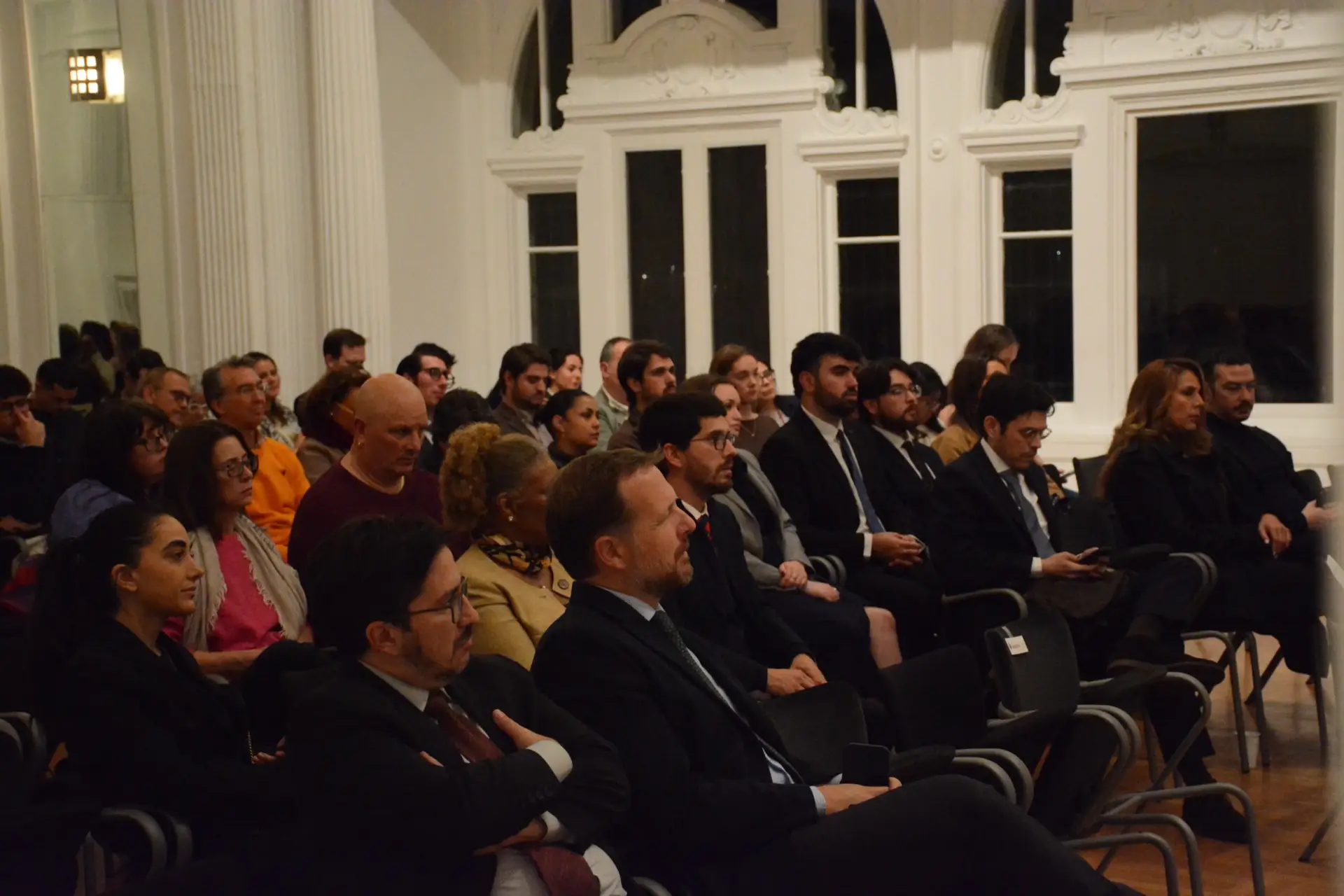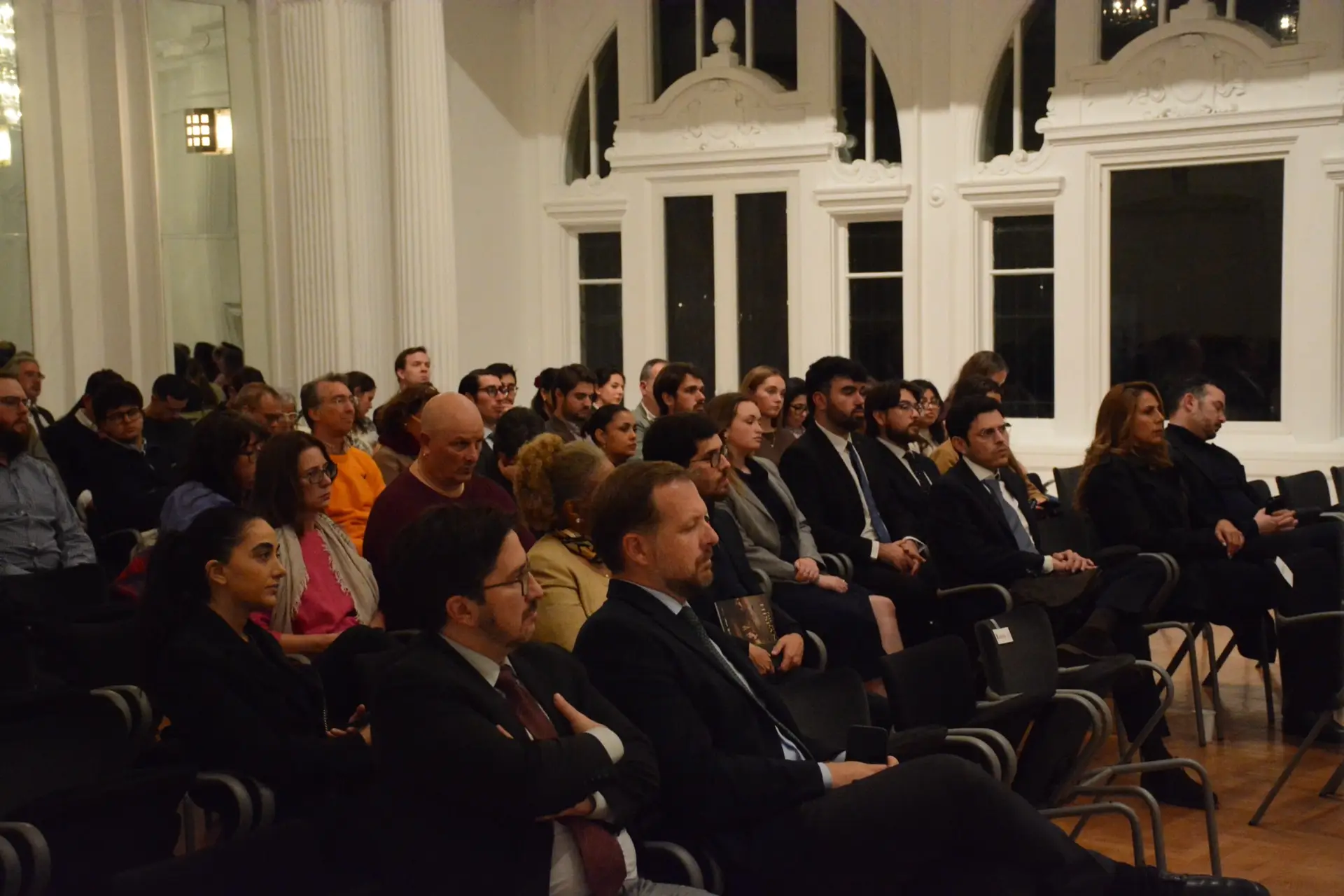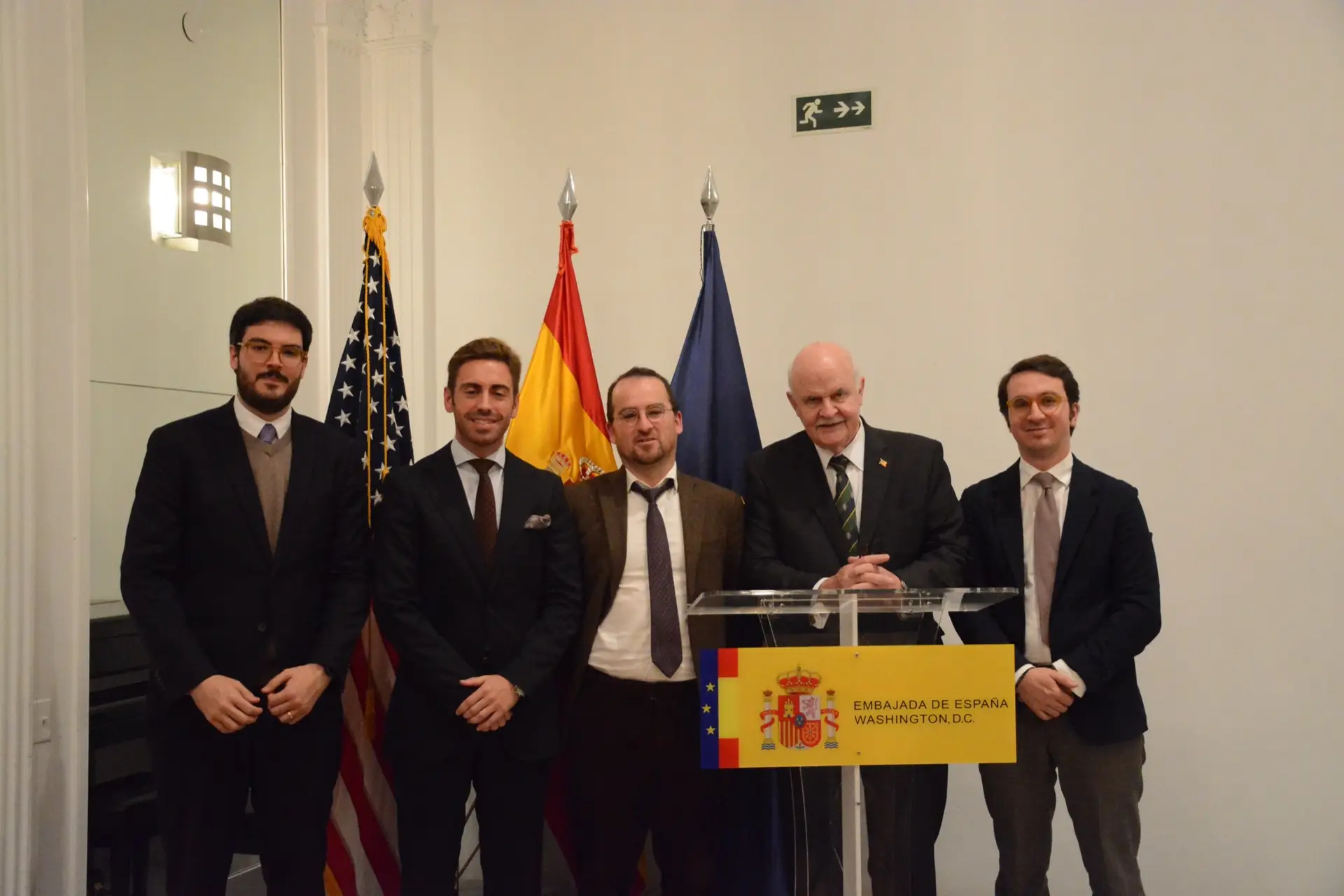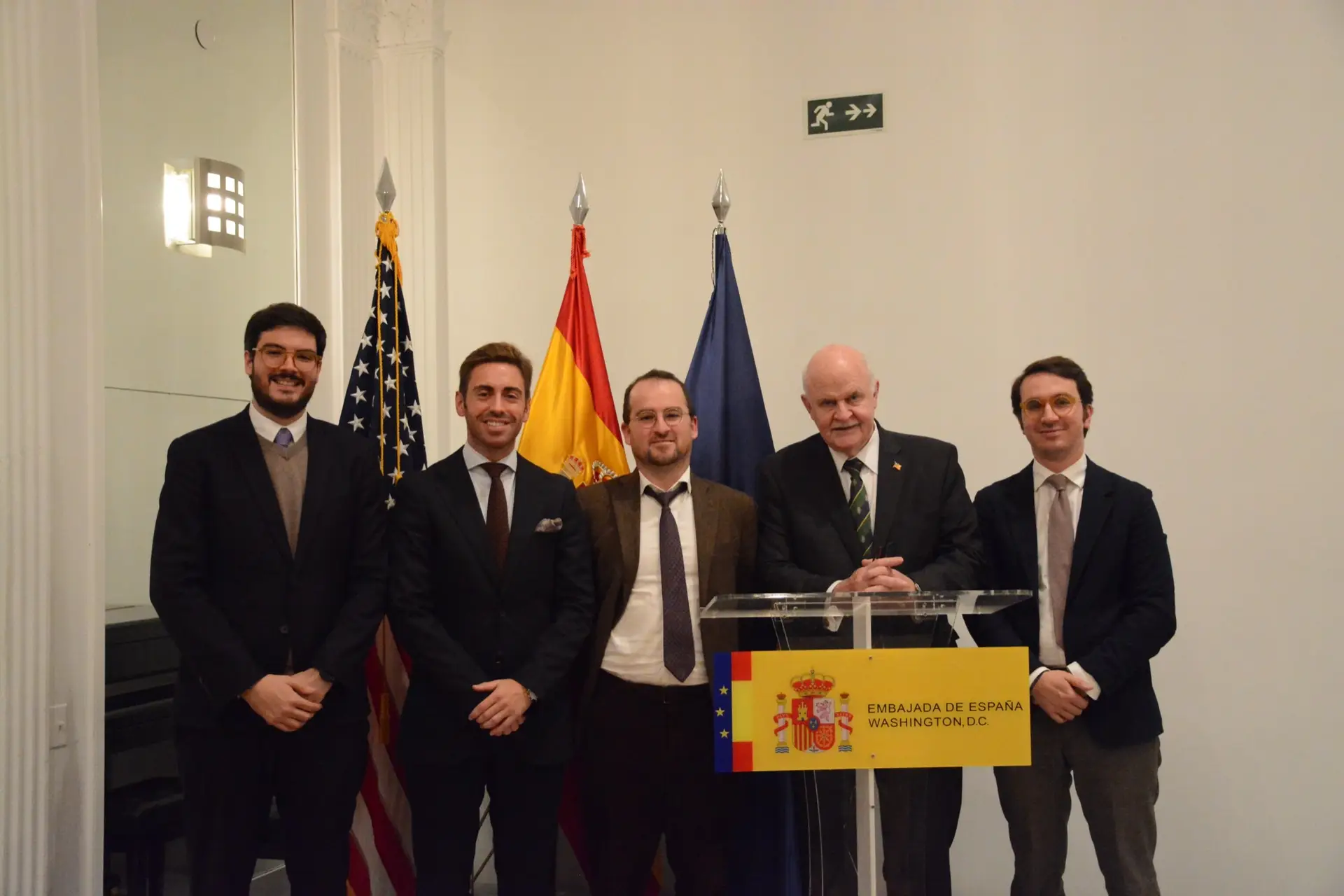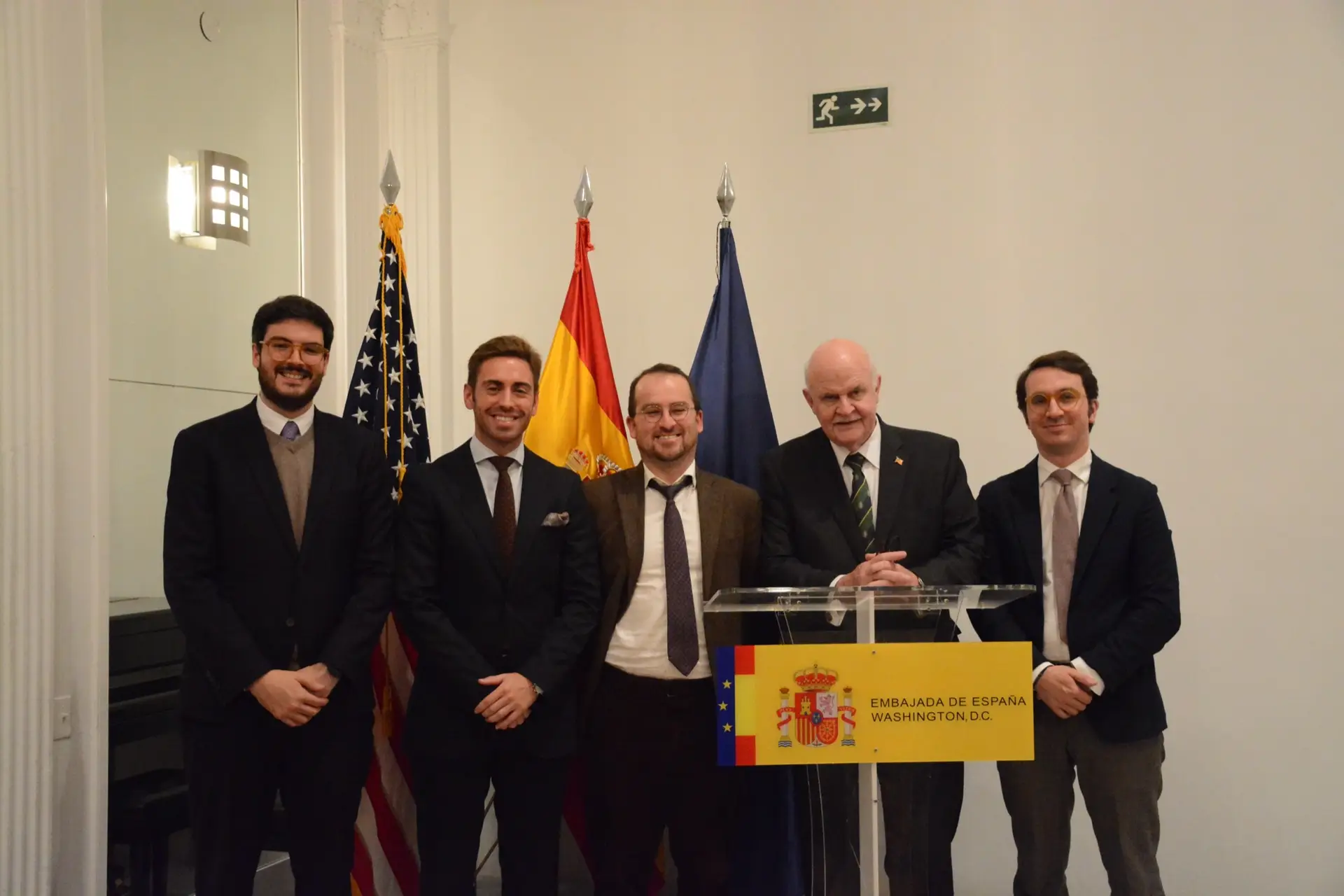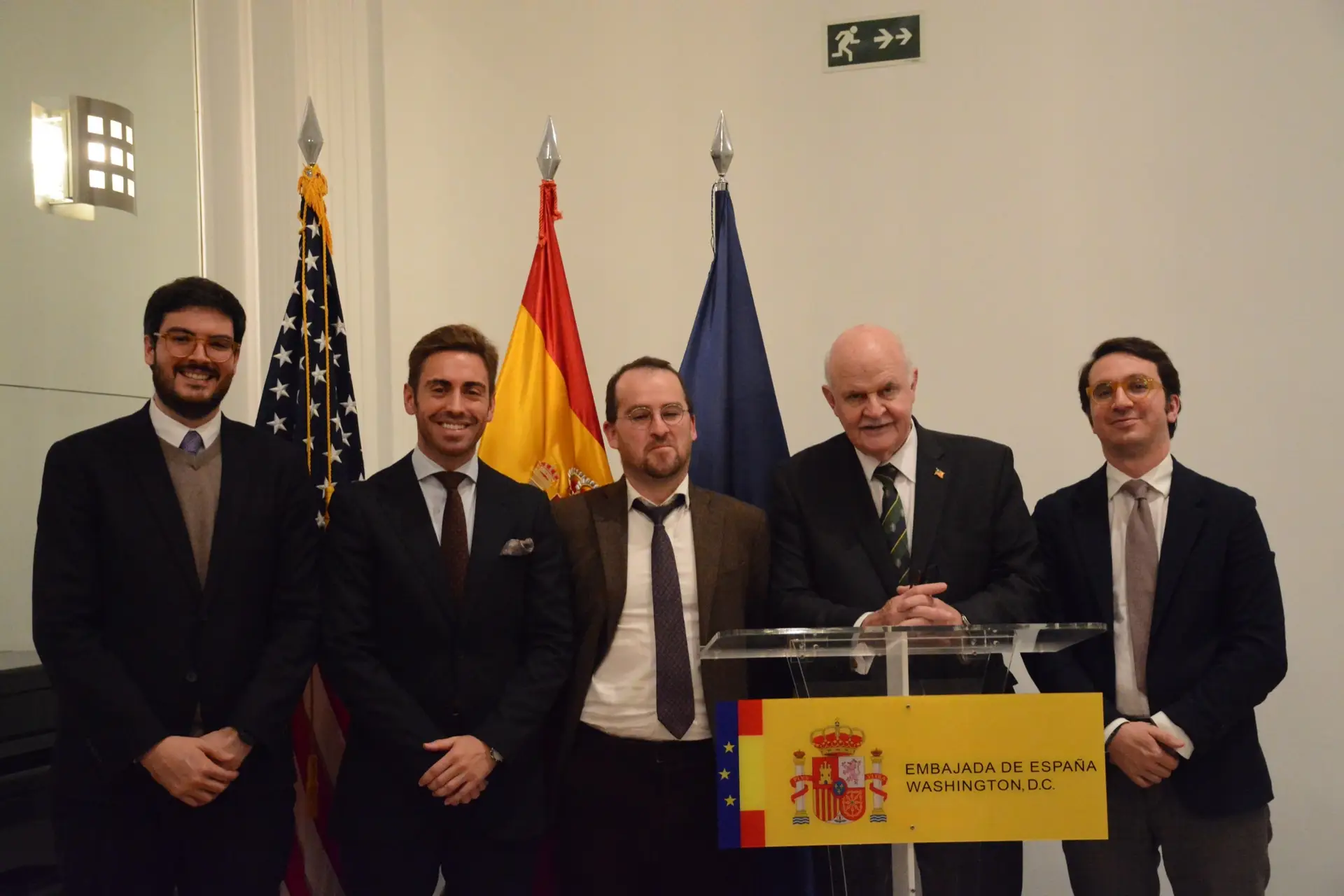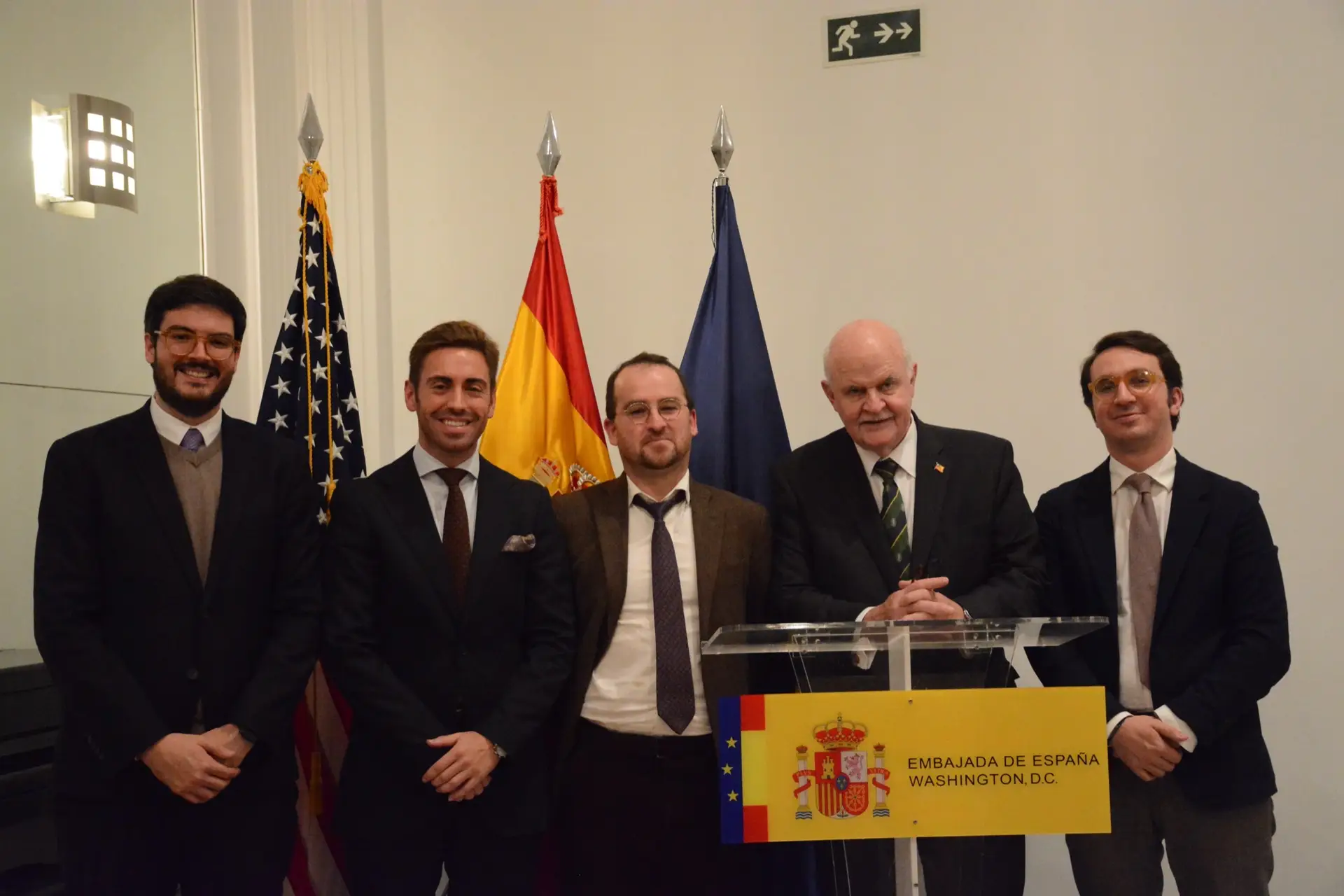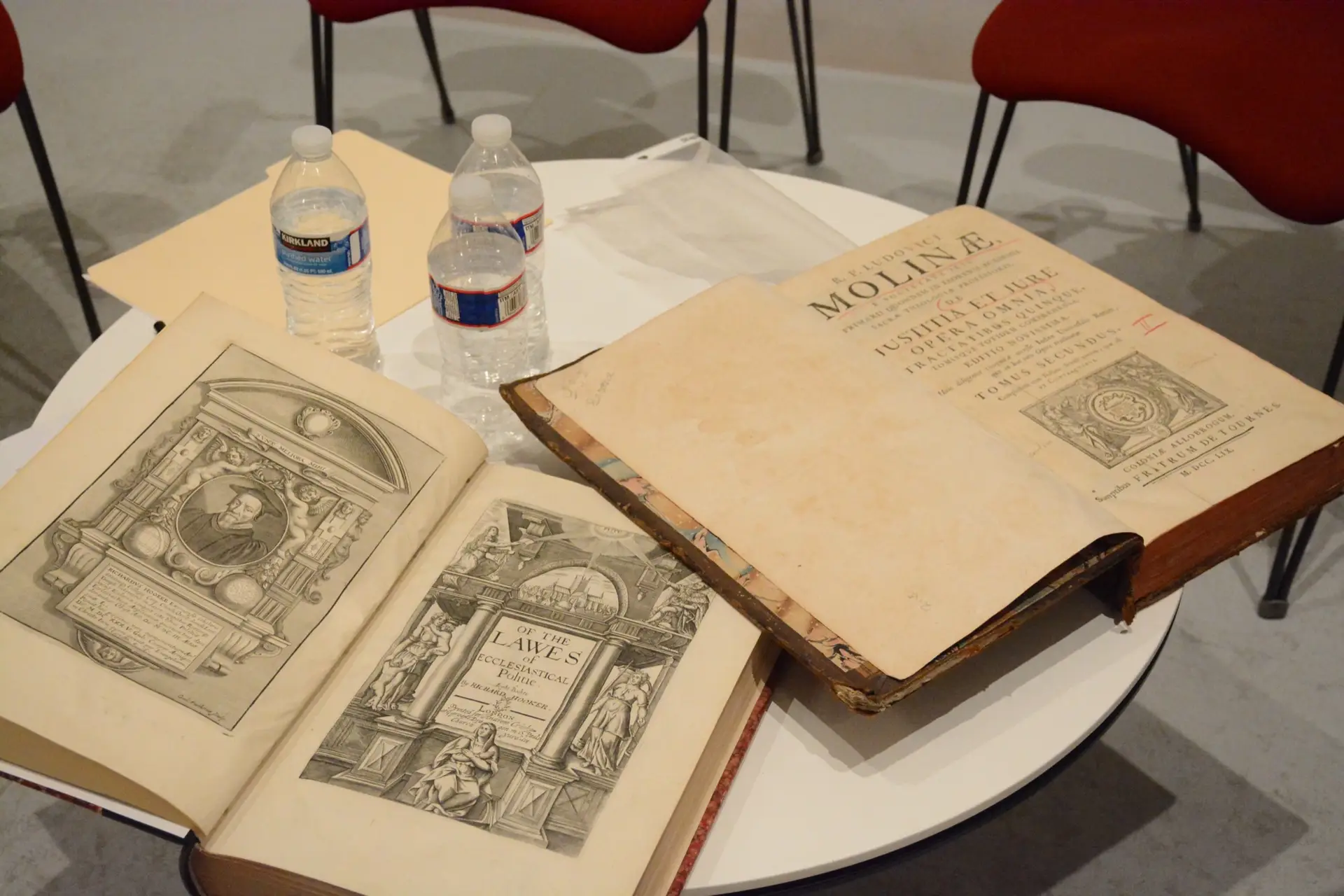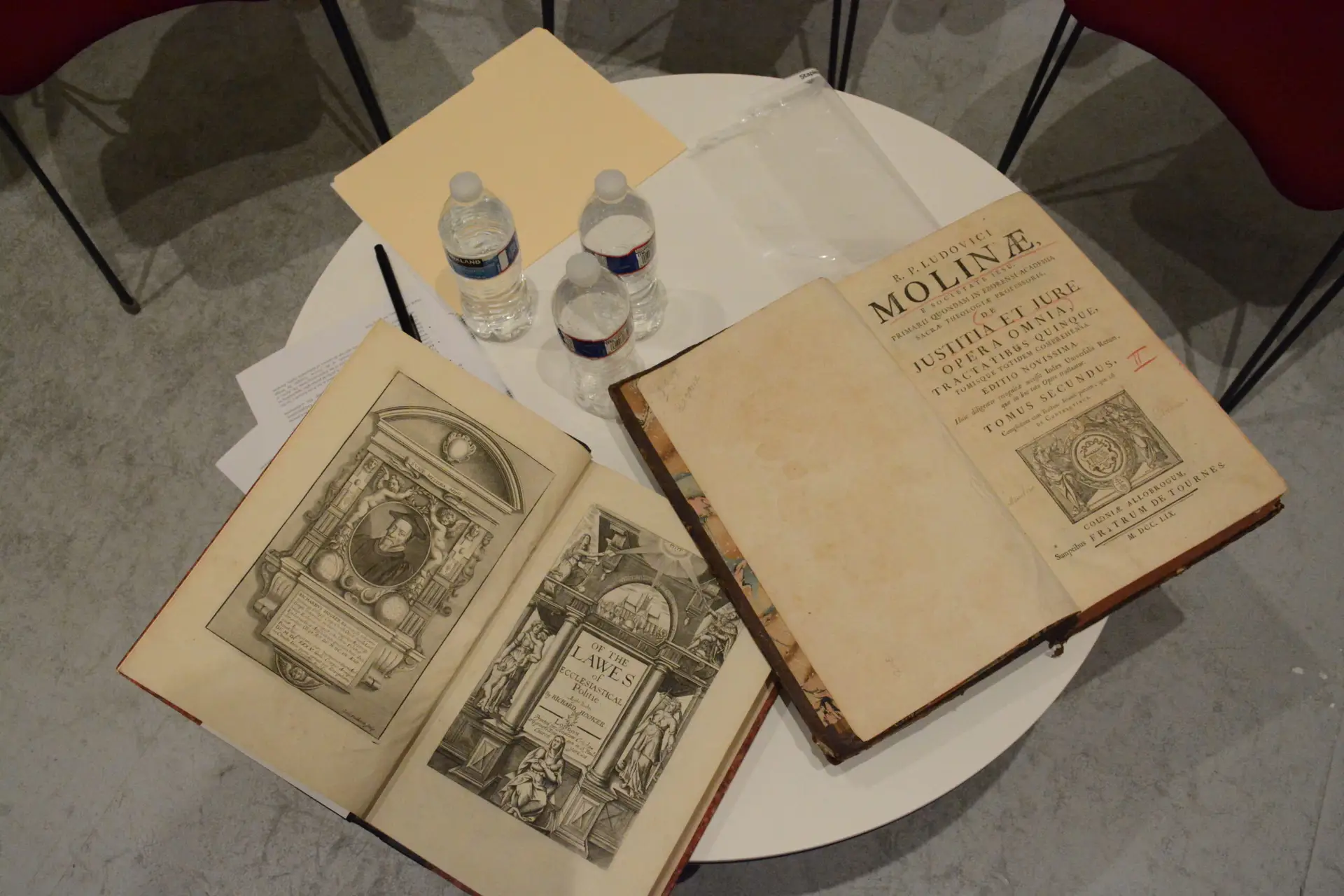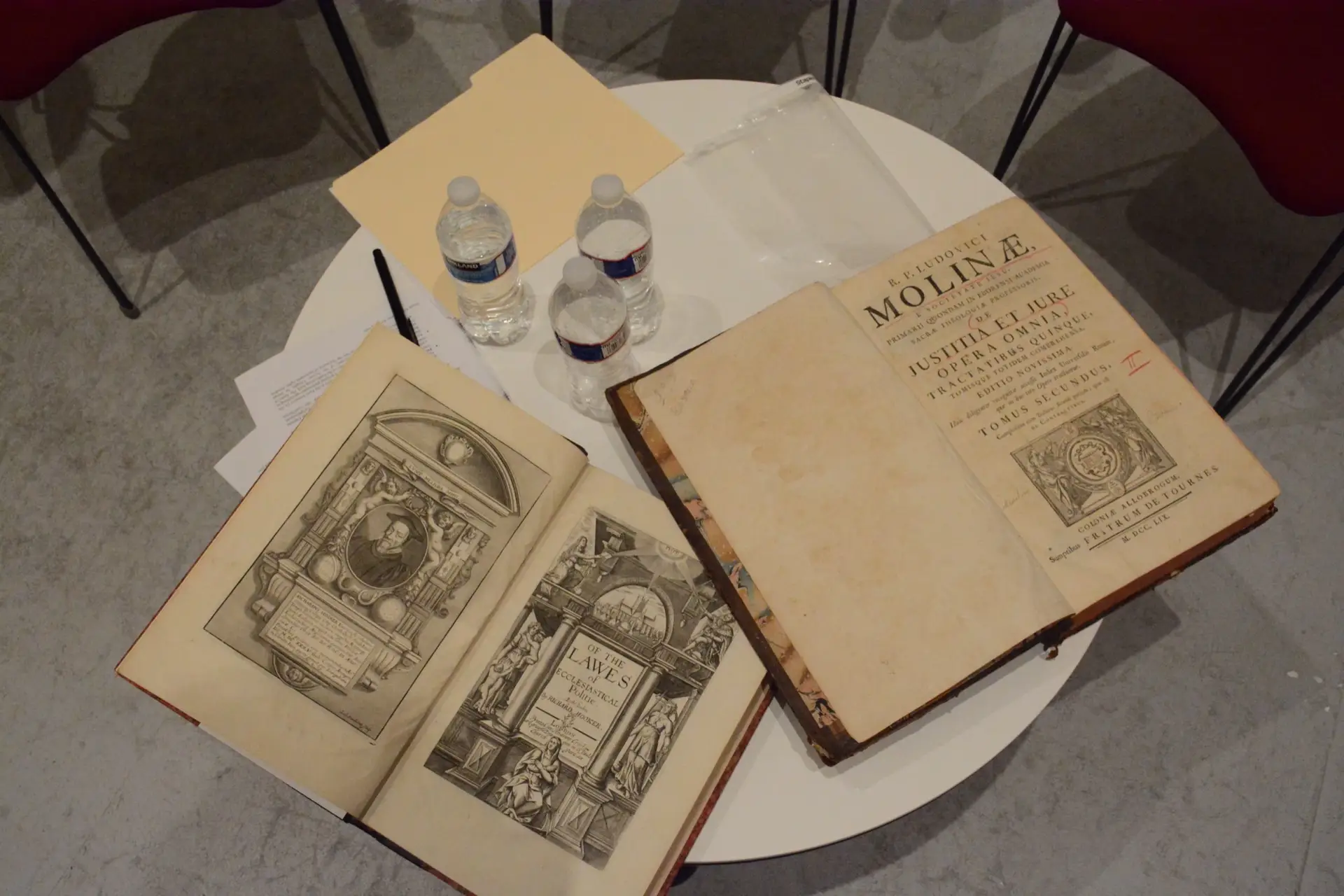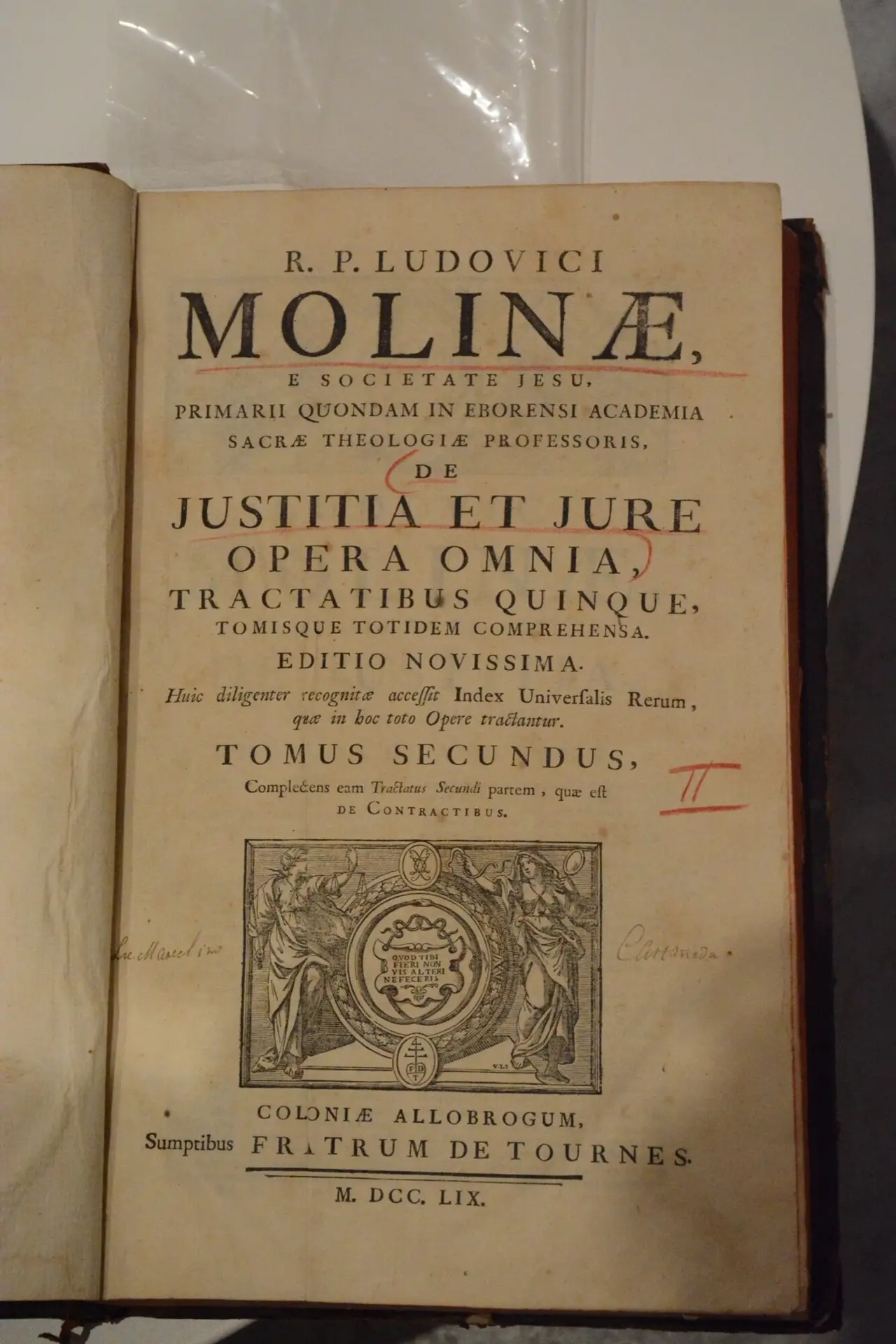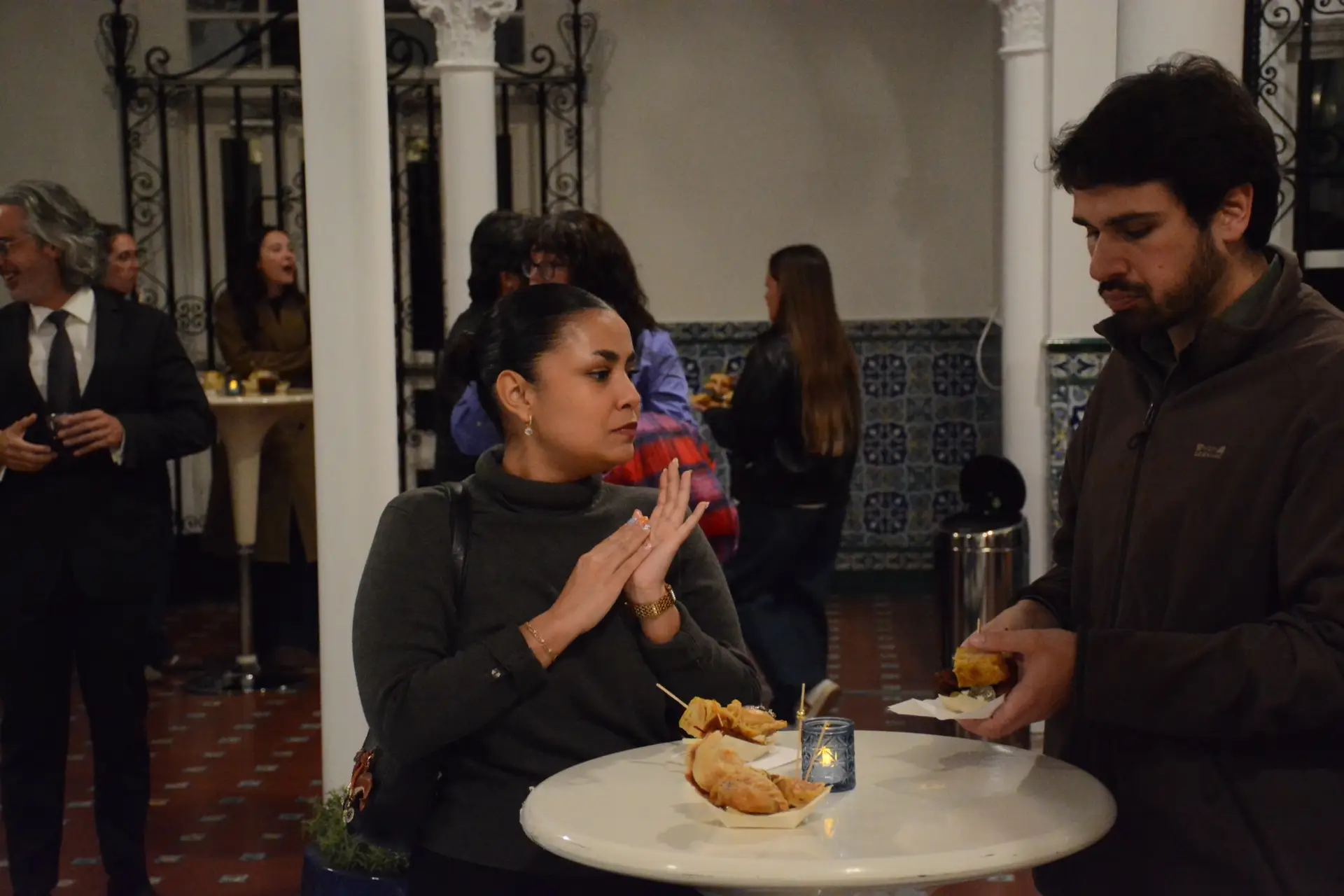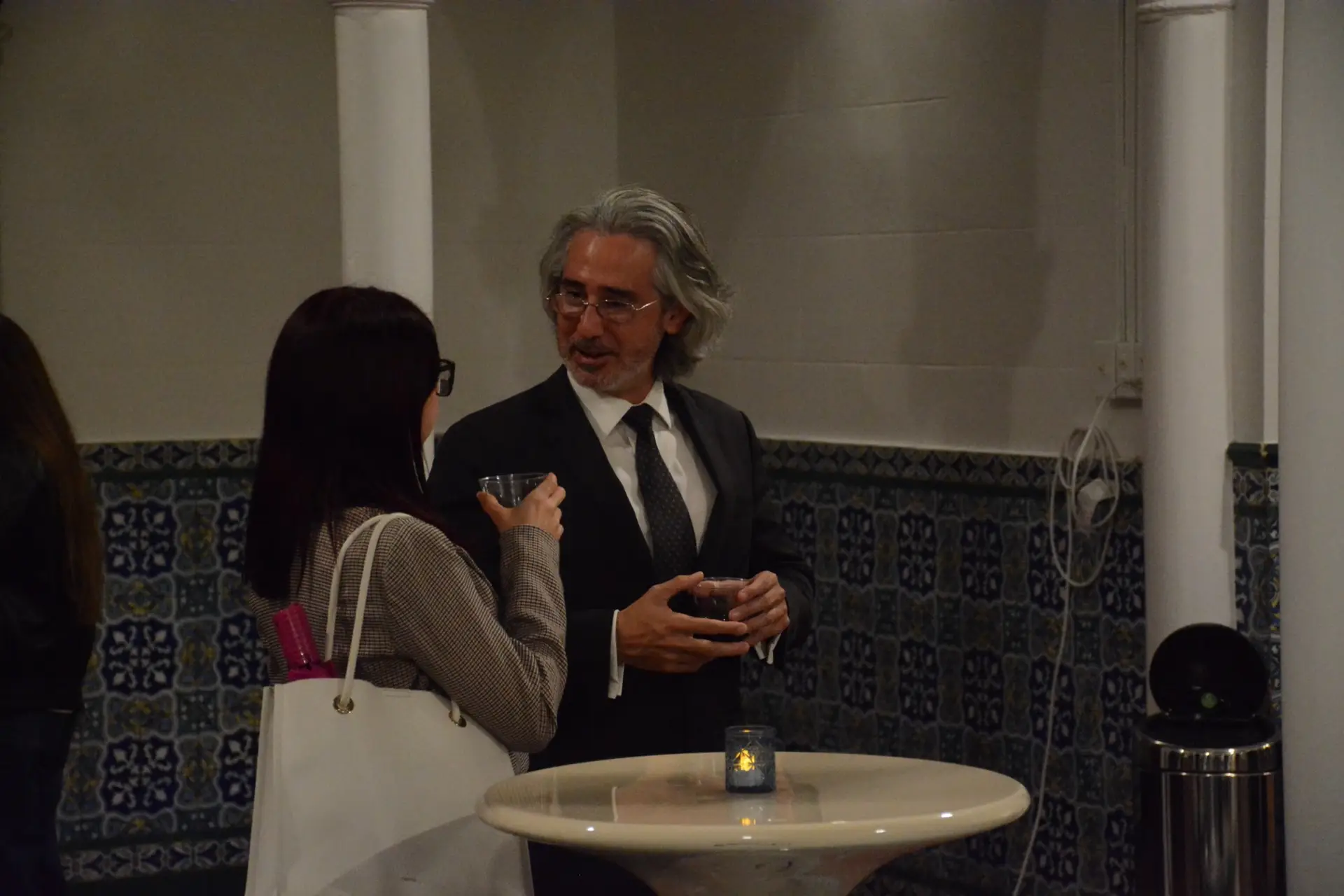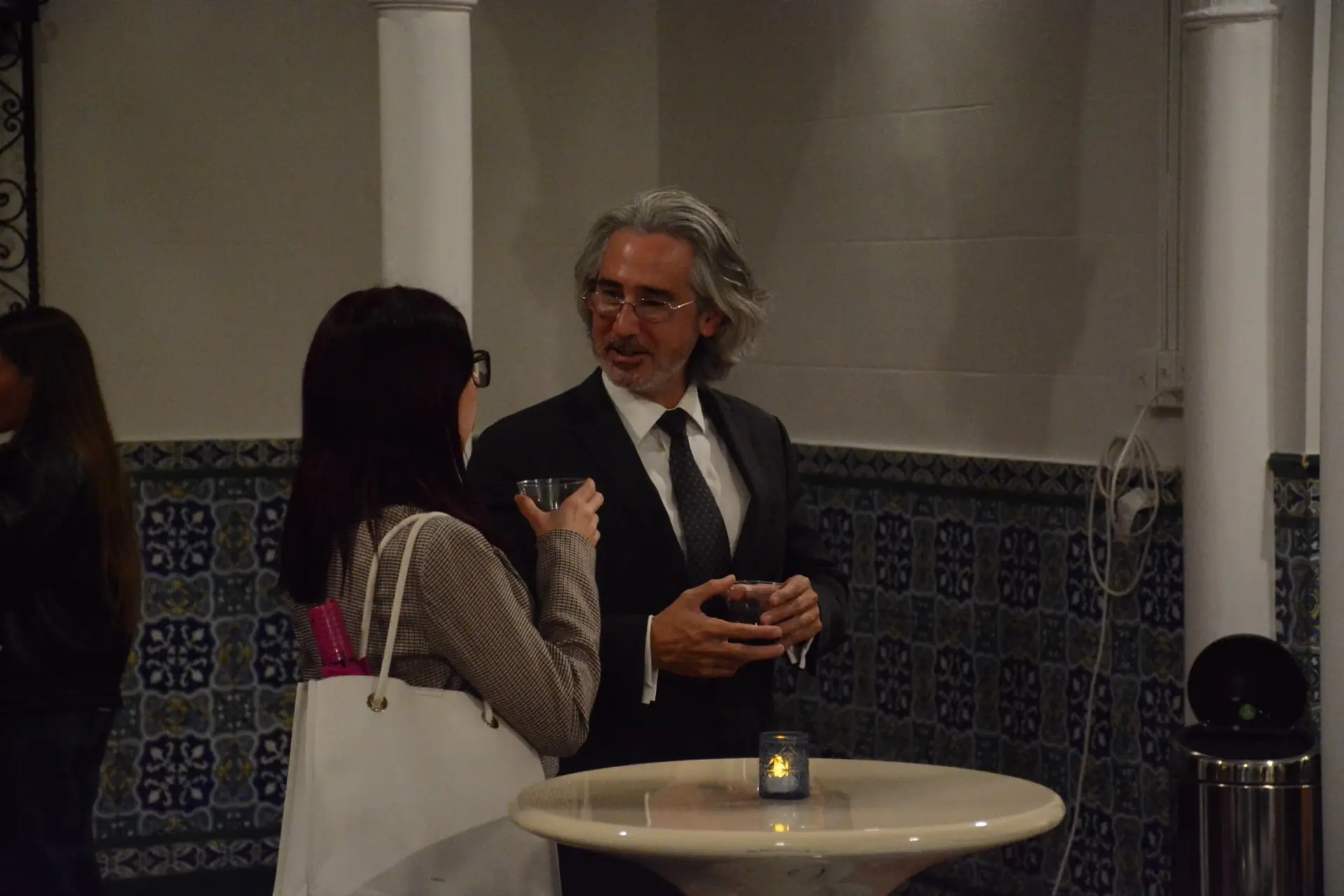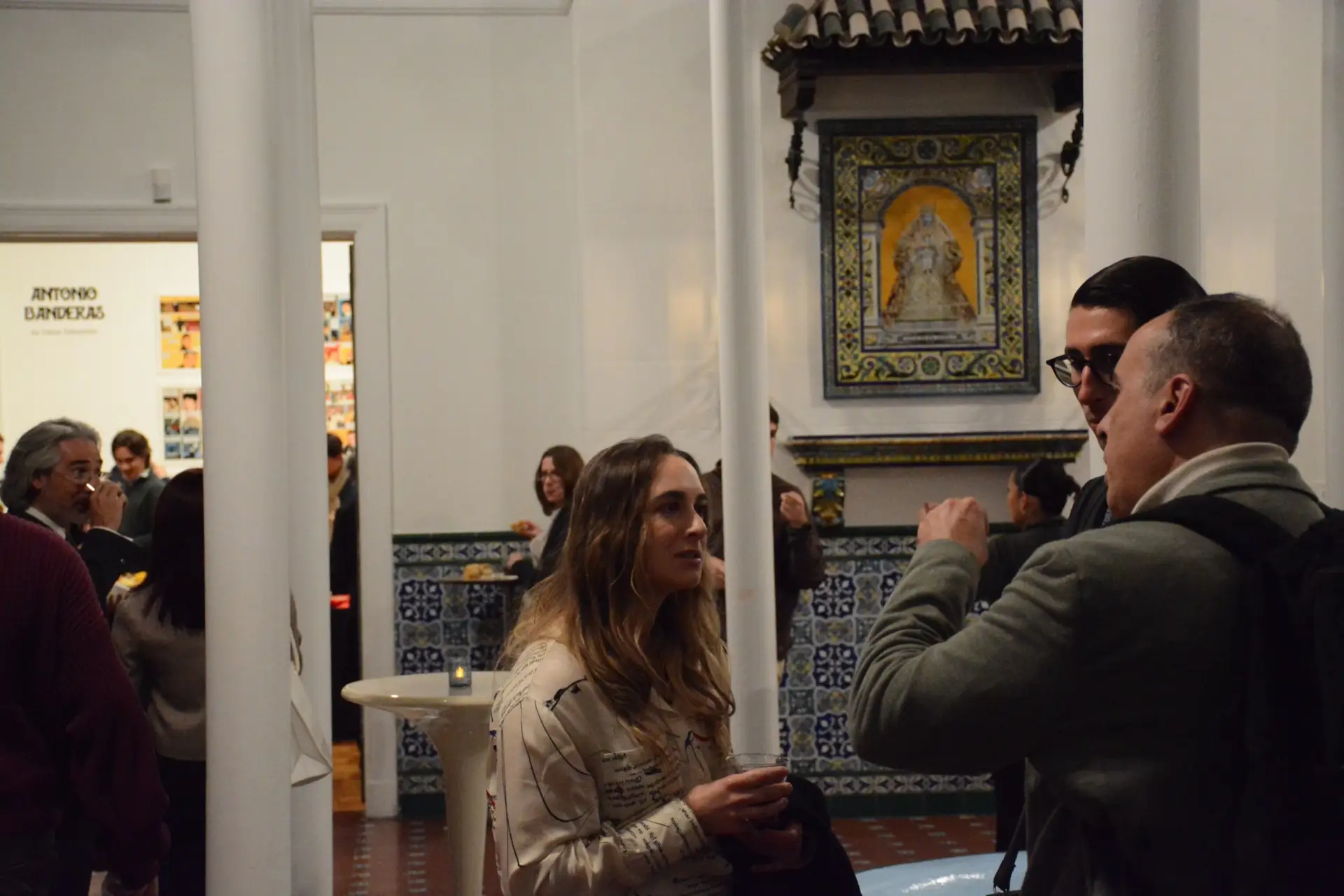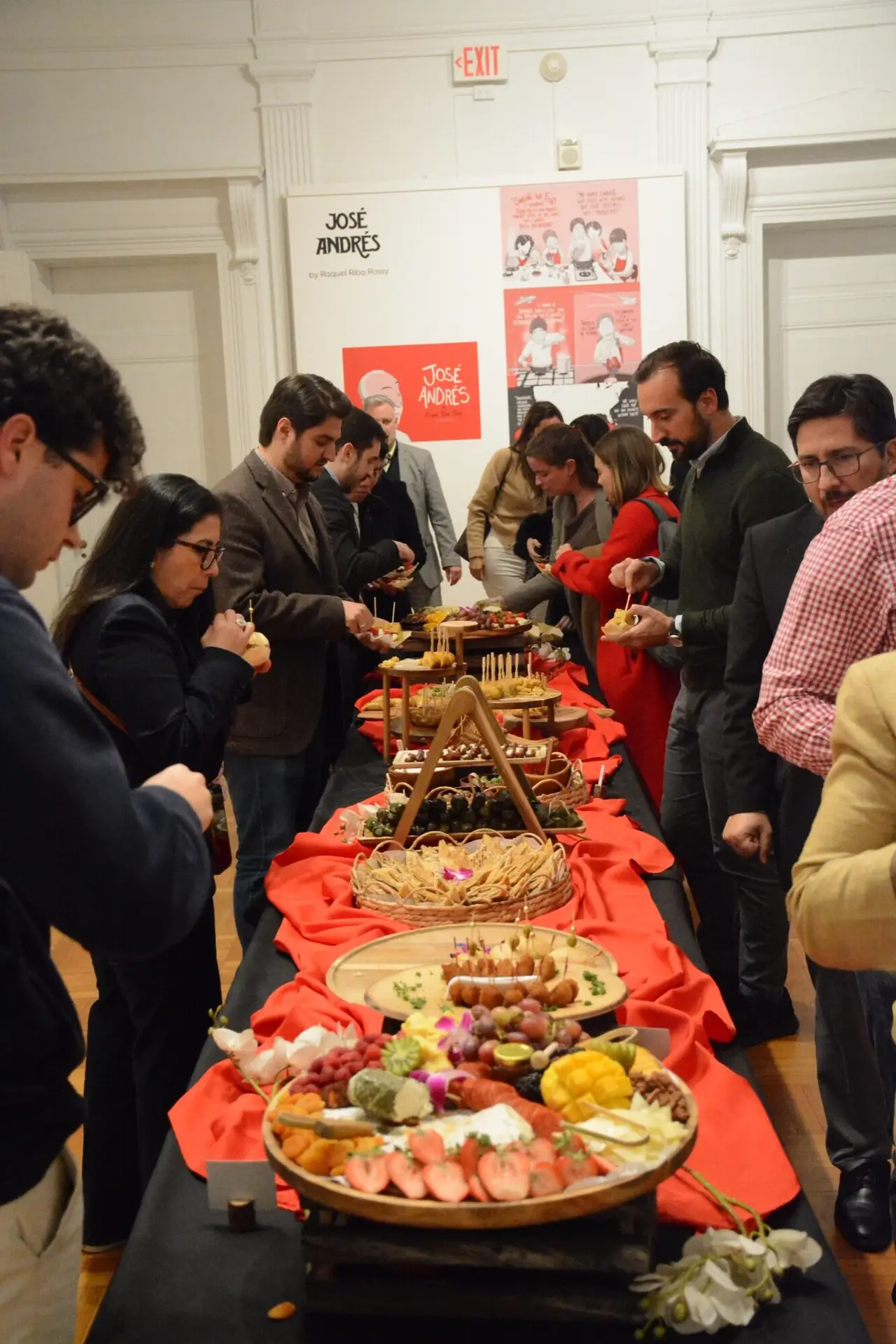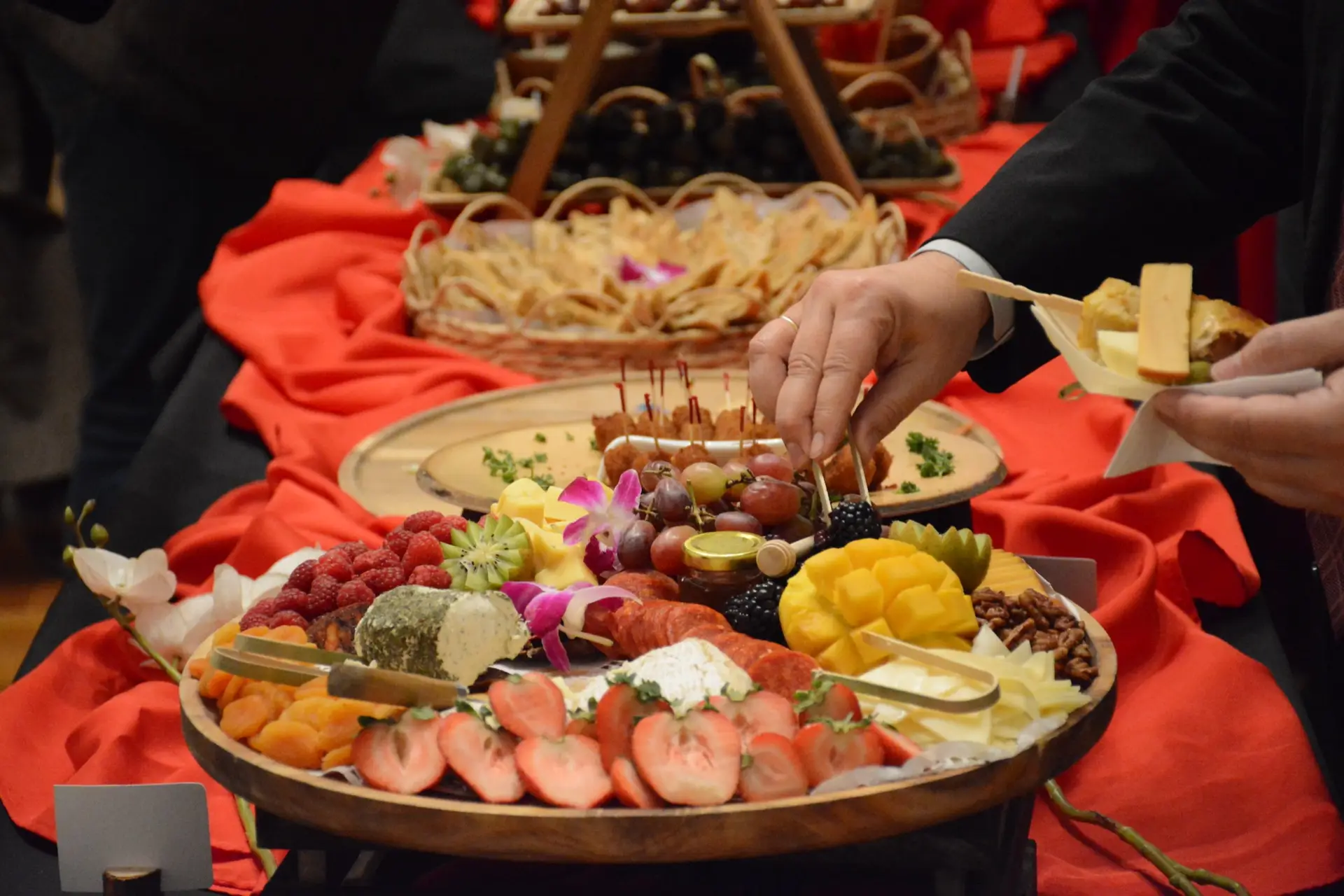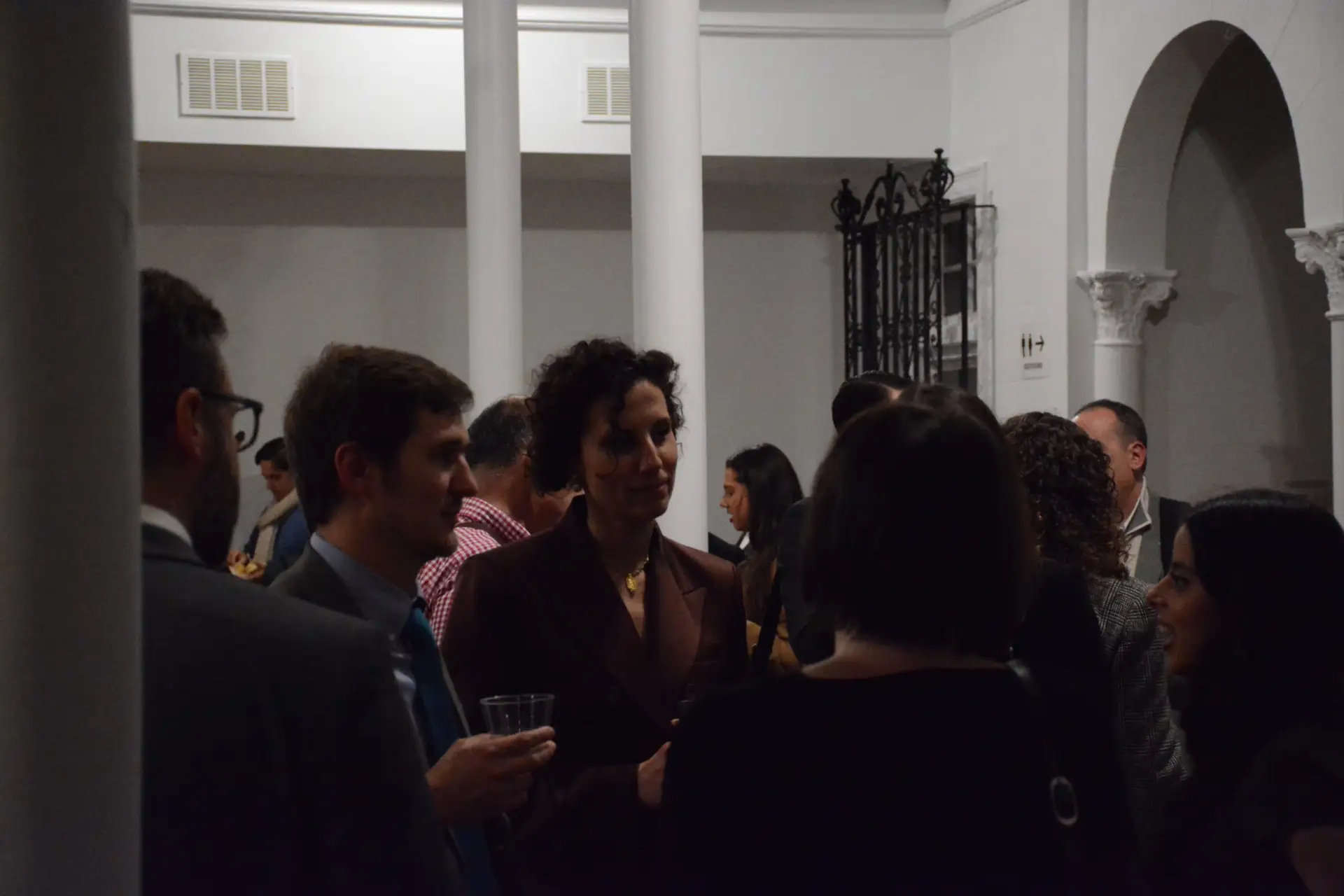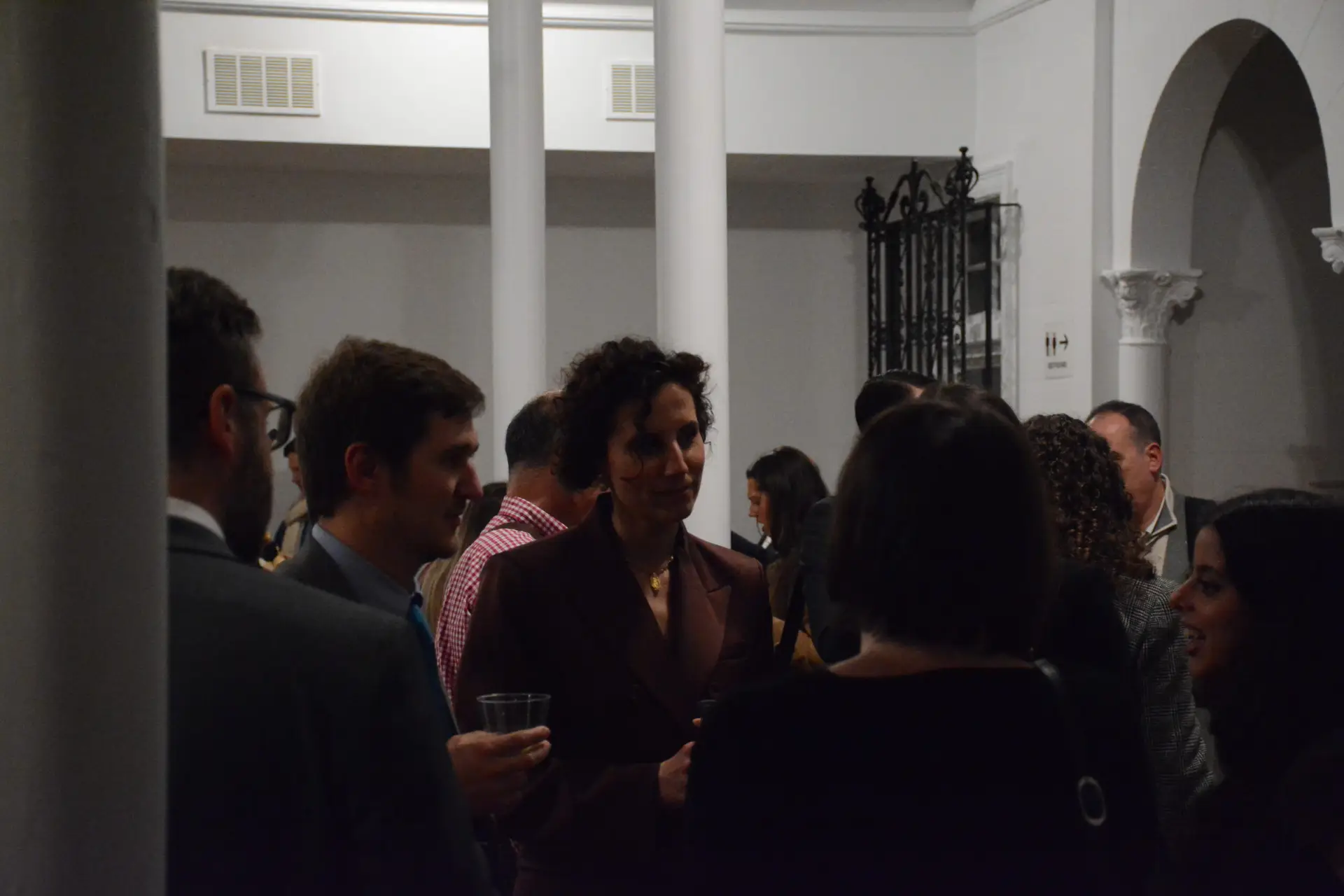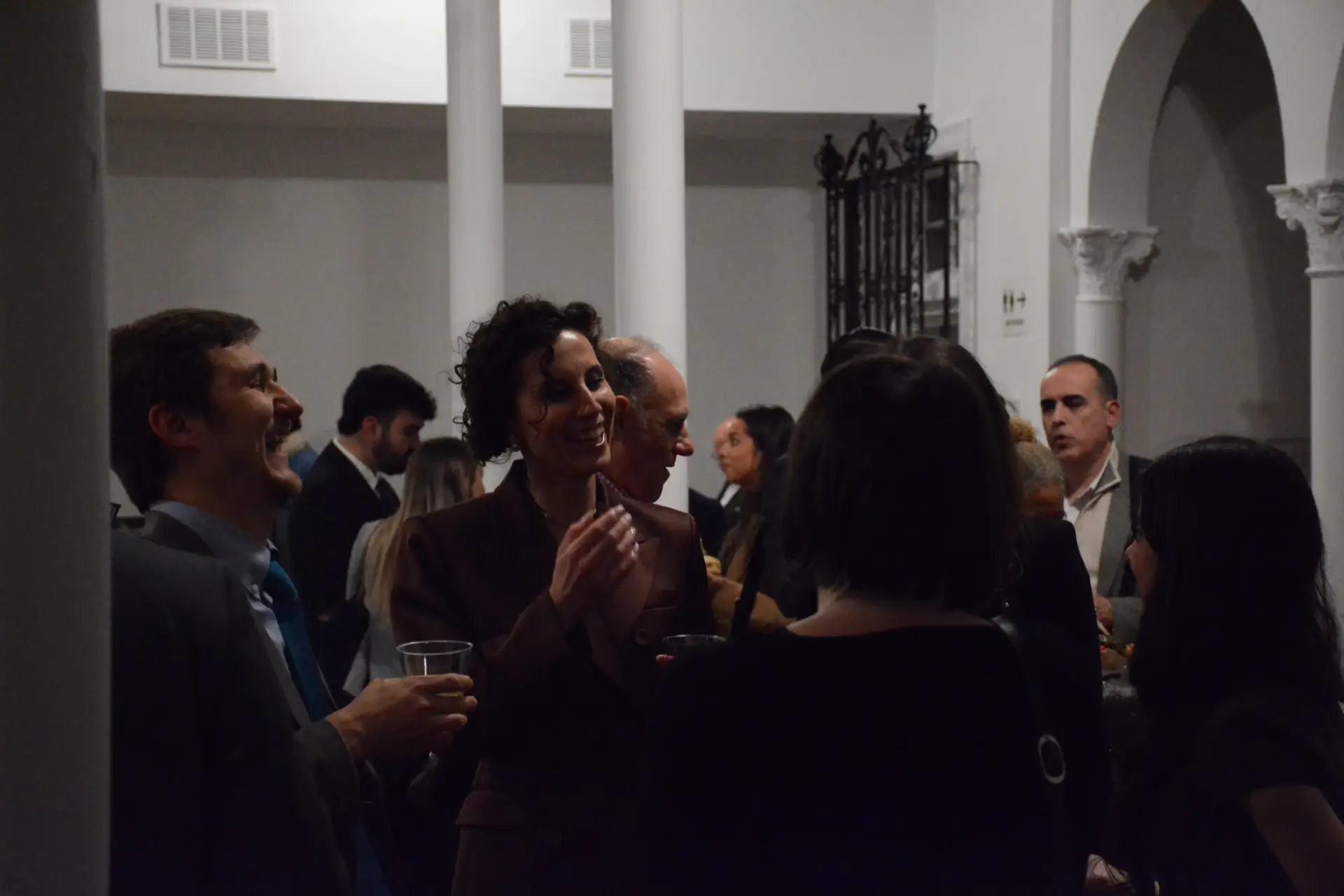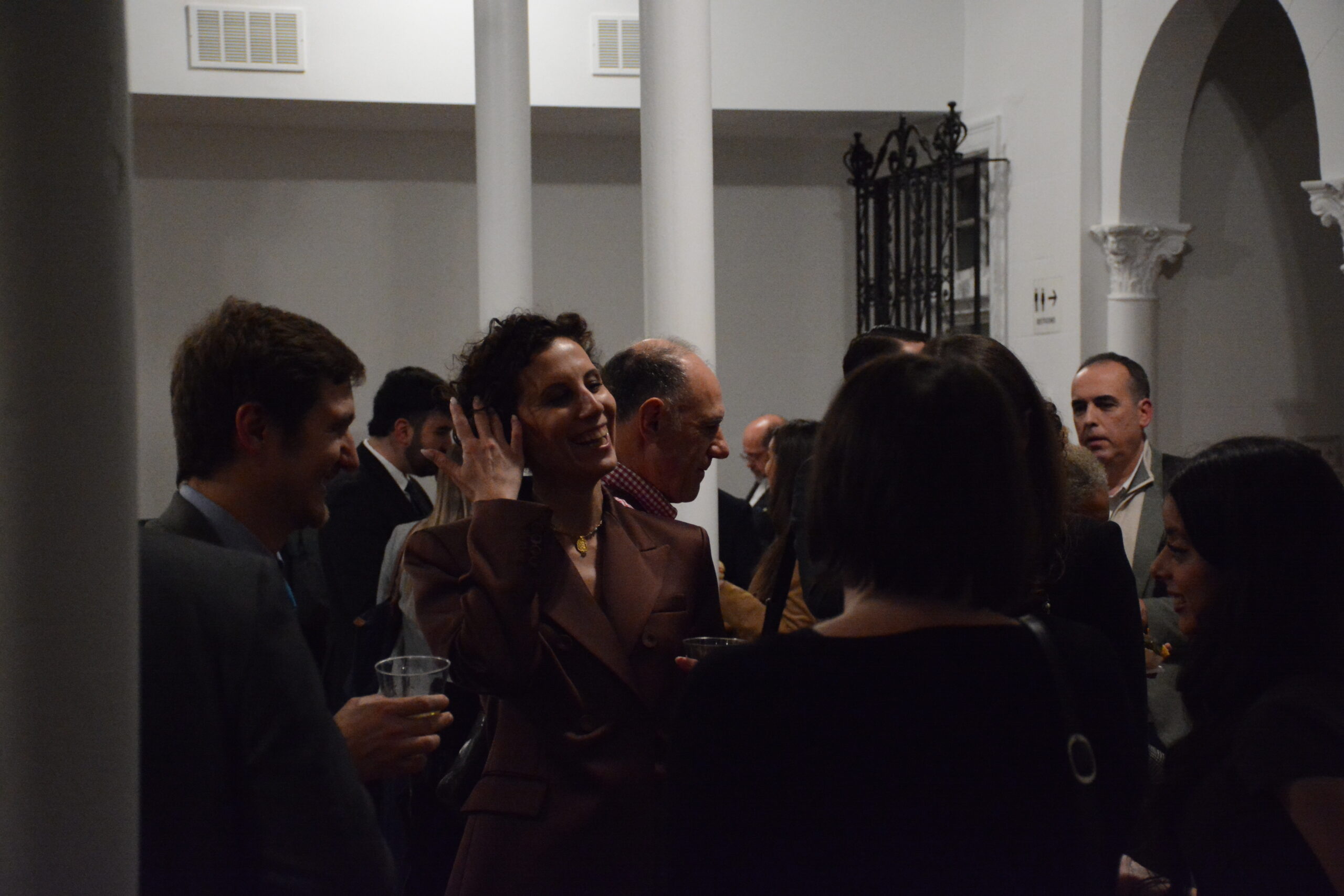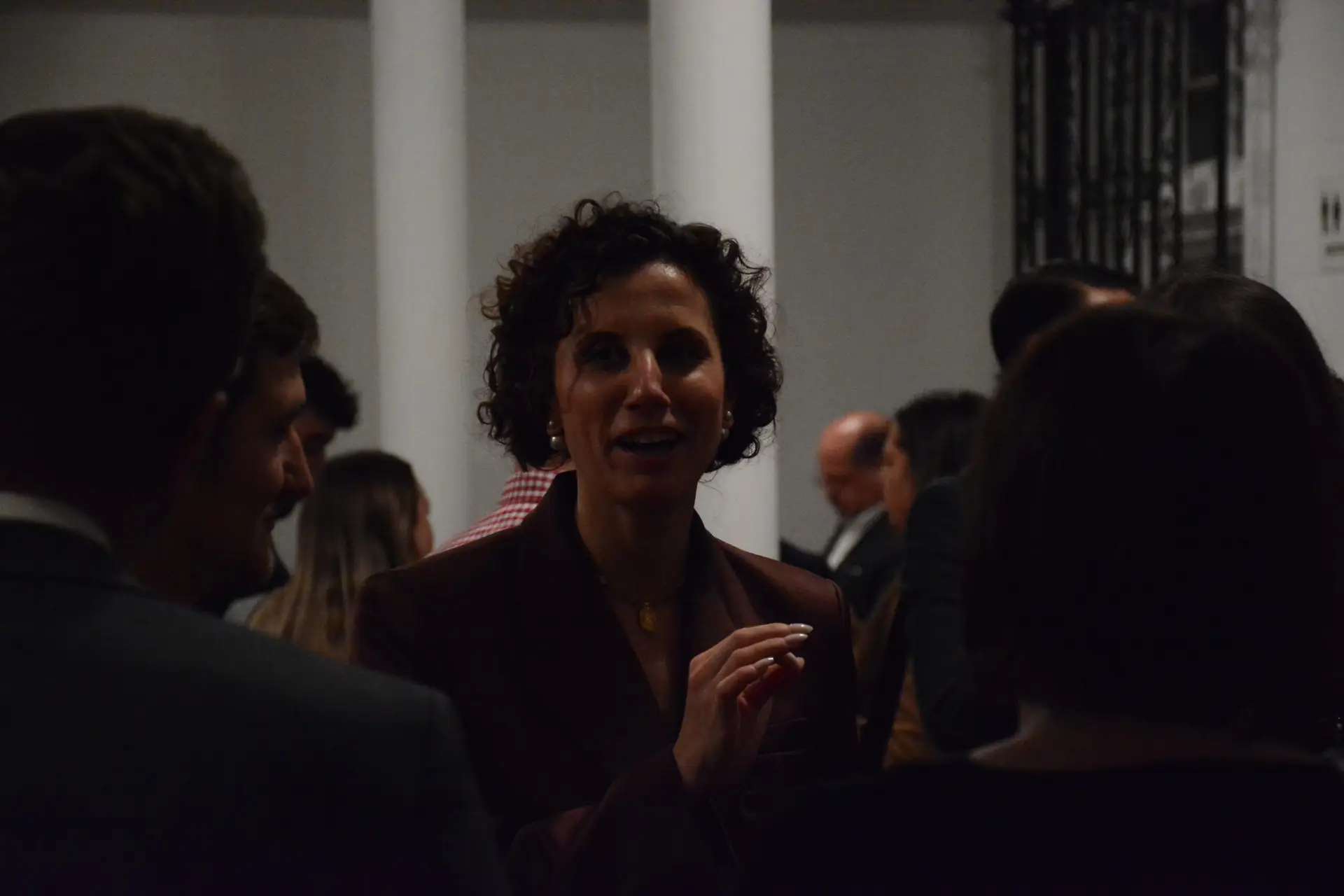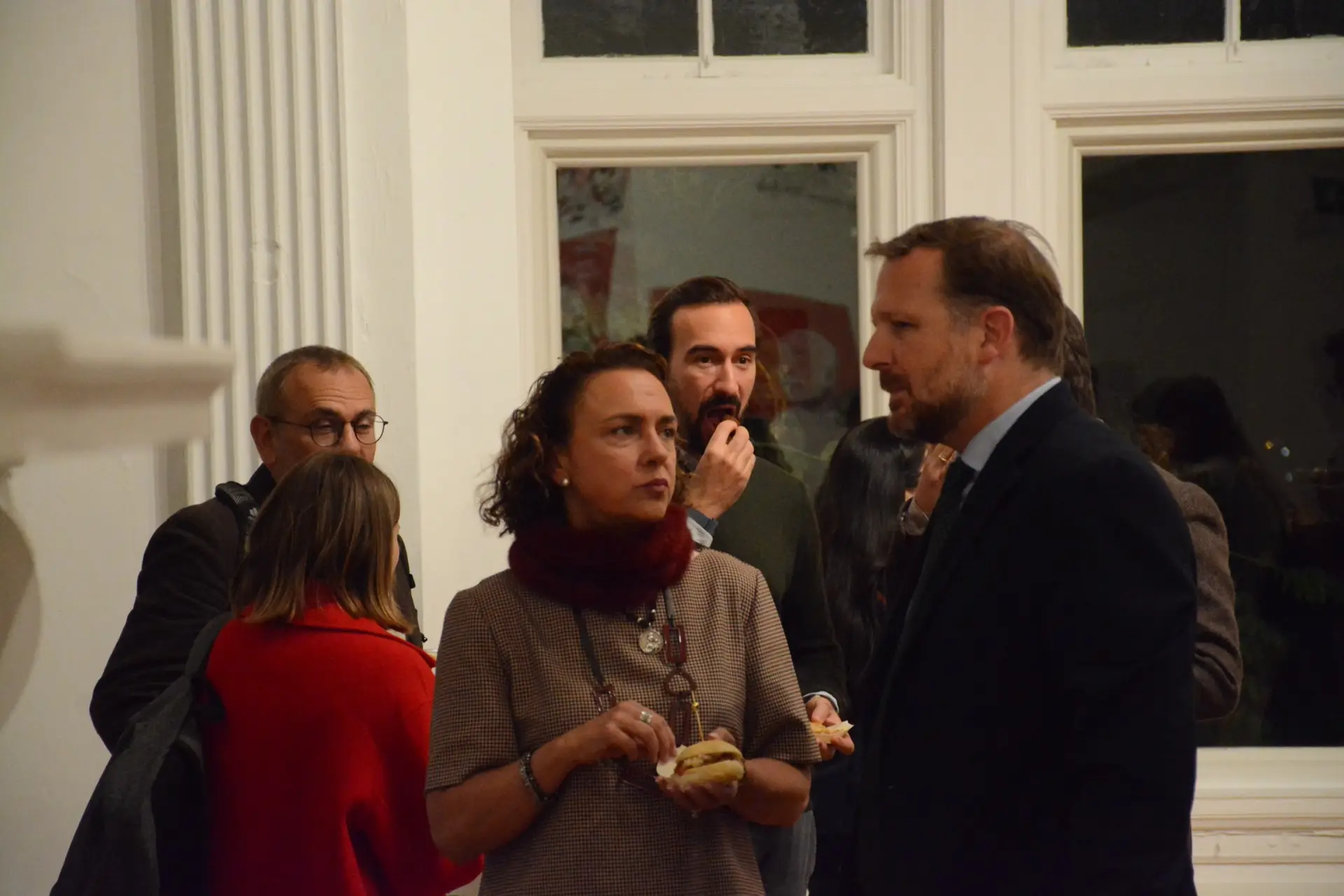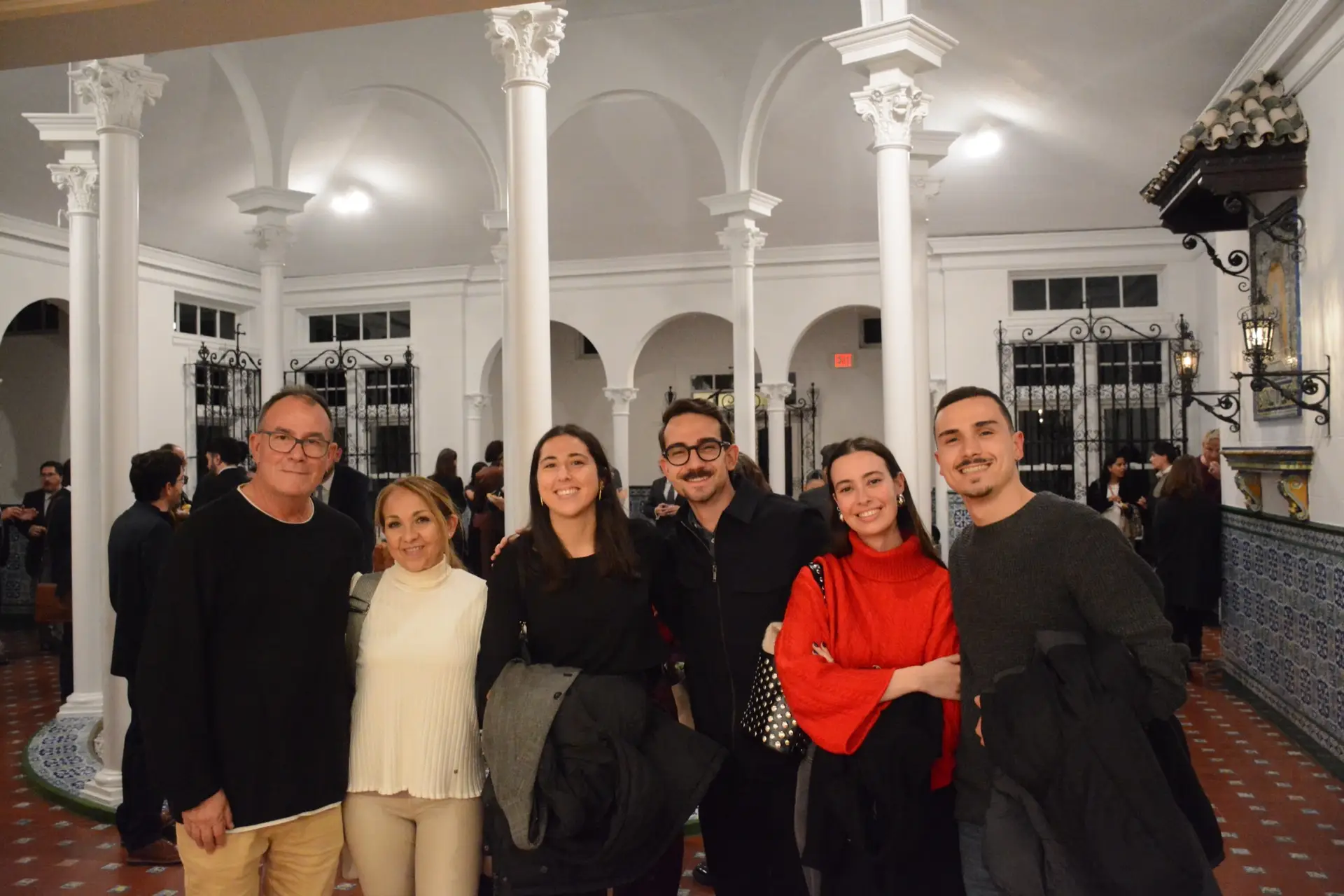
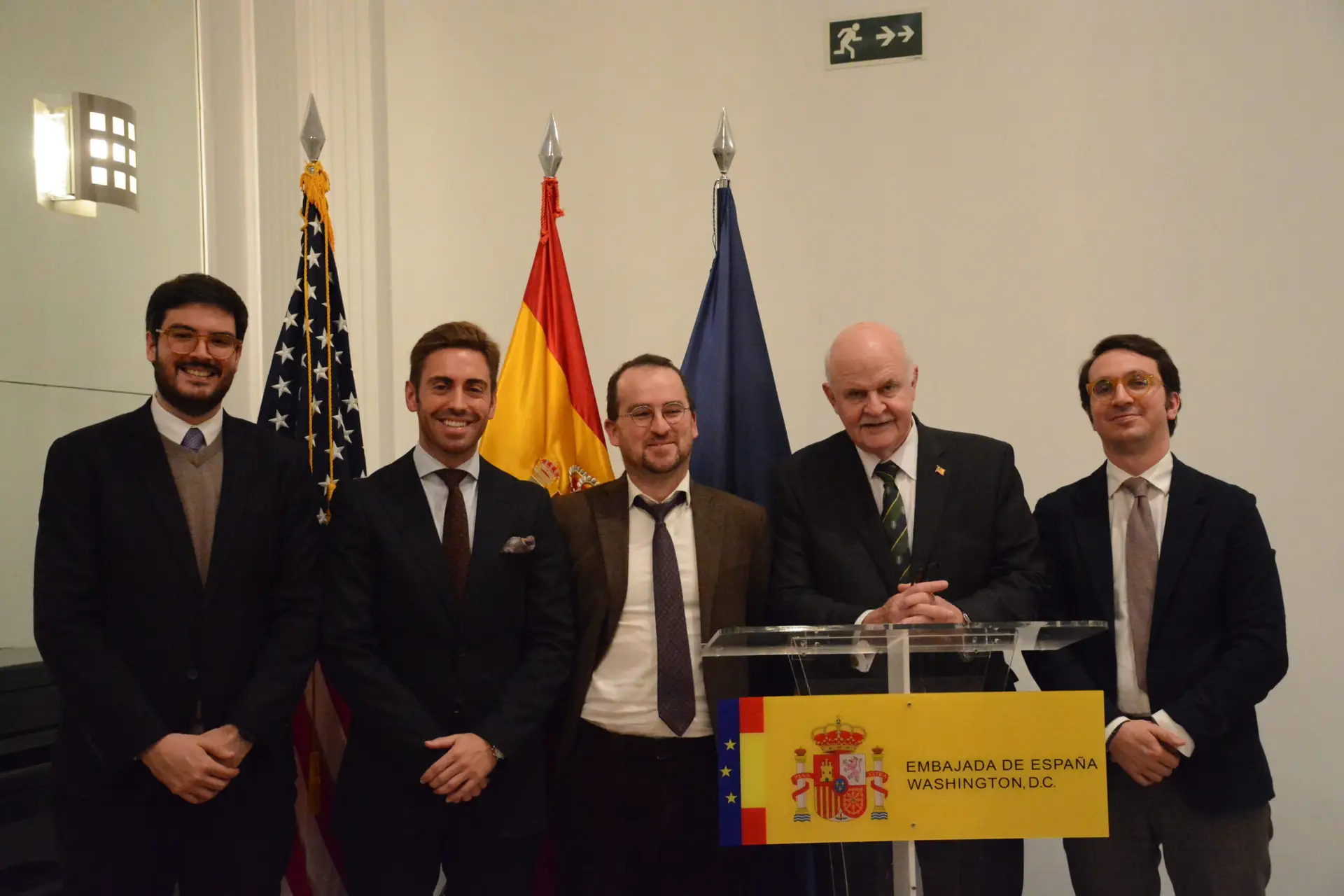
On 12 November 2026, Escuela Hispánica brought together researchers and people interested in the intellectual history of liberty at the Cultural Center of the Embassy of Spain in Washington to address a question that crosses the Atlantic: what place does the Hispanic tradition occupy in the political conversation that led to the founding of the United States?
Held within the framework of 1776, the gathering connected two anniversaries: 250 years since the American Declaration of Independence and 500 years since Francisco de Vitoria took up the chair of theology at the University of Salamanca. This coincidence offered an opportunity to study the circulation of ideas between different periods and societies, considering their authors, readers and the controversies that helped transmit them.
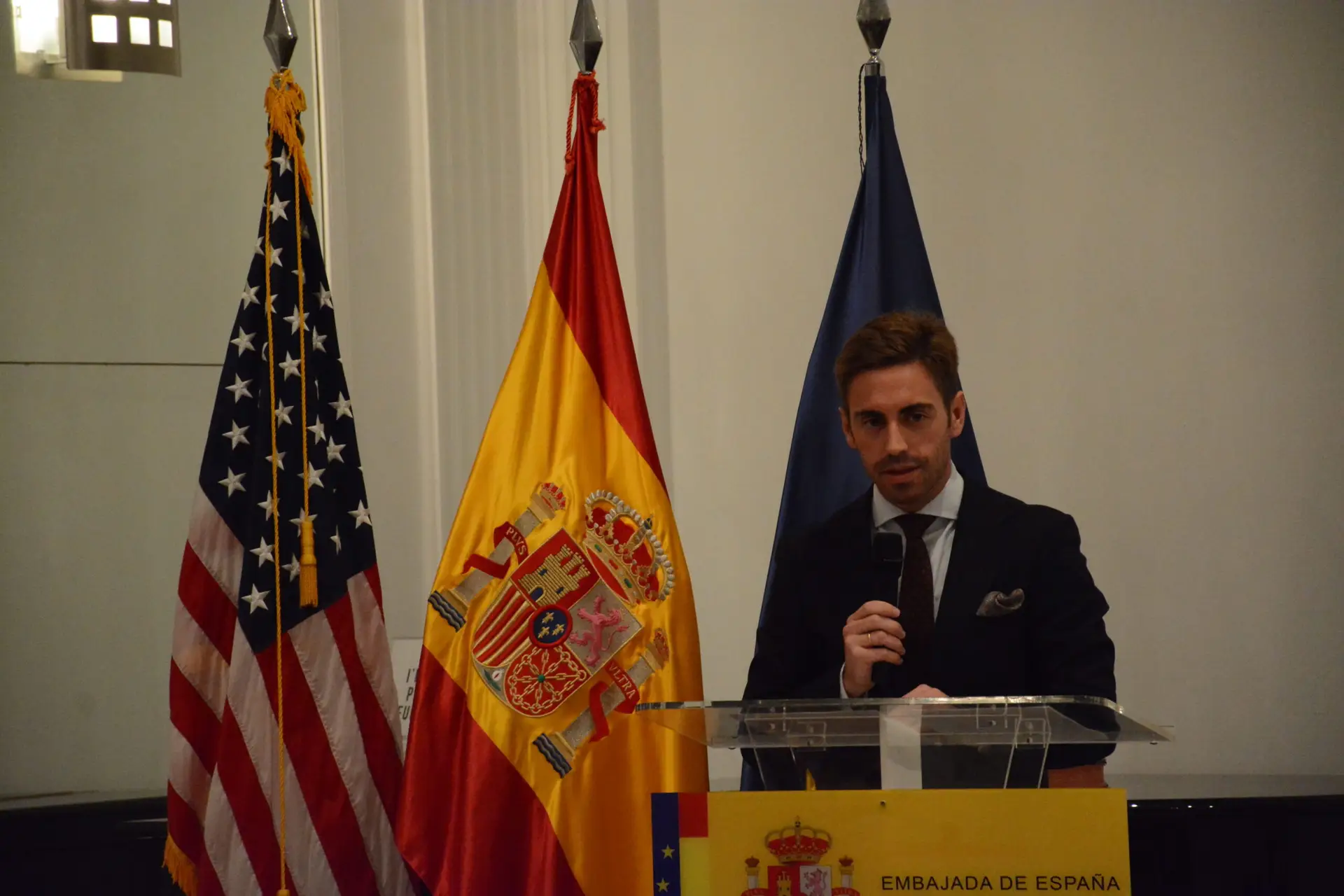
Juan Ángel Soto’s welcome placed the gathering within Escuela Hispánica’s mission: to recover, study and renew an intellectual inheritance shared by Spain, Portugal and the societies of the Americas. A tradition remains alive when its works are read, its arguments understood and its contribution to present-day problems examined.
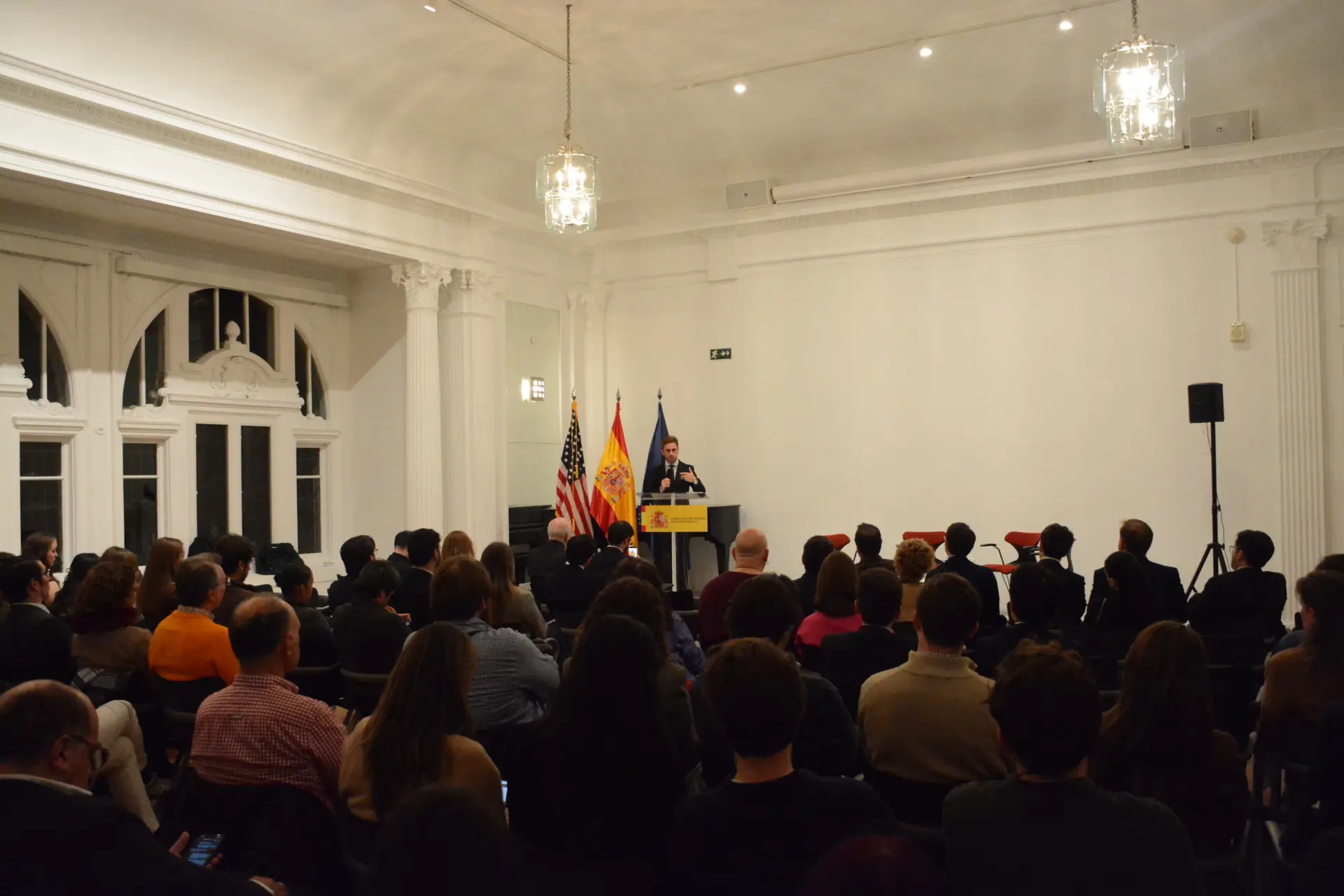
This task requires research, dialogue and transmission. Escuela Hispánica seeks to bring together an intellectual community able to work in all three areas, making academic research accessible to those who wish to understand the foundations of a free society. Preserving the texts is a starting point; the aim is to make them once again a subject of reading, discussion and public reflection.
From this perspective, the Washington gathering invited participants to consider relations between Spain and the United States through the history of ideas as well. Recognizing the Hispanic contribution broadens our understanding of an American inheritance in which different traditions converge, and offers a shared field of work on both sides of the Atlantic.
One of the central themes of the welcome address was Salamanca’s place at the heart of a wider intellectual network. Alcalá, Valladolid, Coimbra and Évora belonged to a university world in which teachers, students, books and arguments circulated. That conversation spread across Europe and reached the Americas, changing as it encountered new circumstances.
The thinkers of this tradition revitalized the medieval inheritance to address the problems of an expanding society. Growing trade, monetary changes, encounters between peoples and the exercise of power on an unfamiliar scale raised concrete questions with profound moral and political consequences.
Could power make an unjust act just? Did religious difference annul another person’s rights? Was a community’s wealth at the disposal of its ruler? These questions reveal the practical dimension of a body of thought that connected theology, moral philosophy, law and economic life.
Their answers were neither identical nor free from controversy. Studying them therefore requires attention to arguments and disagreements. These debates developed a particularly fruitful language for maintaining that political authority is subject to justice, that the community participates in constituting power and that human dignity does not depend on the convenience of the state.
The 1776 project continues this research by studying the presence of the Hispanic intellectual tradition in the conversation that reached the American founding. Its method follows works, authors, readers and disputes to reconstruct specific connections and understand how arguments move from one context to another.
The circulation of ideas includes both acceptance and refutation. An opponent can transmit an argument by challenging it, and a controversy can give a work a new life far from its place of origin. Attention to these debates makes it possible to study connections between different religious and political traditions without reducing them to a simple succession of teachers and pupils.
In Washington, this perspective provided a framework for addressing the intellectual inheritance of American independence. The question of the Hispanic contribution thus becomes part of a wider history of liberty, consent and the limits of power: a history shaped by reading, appropriation and debate across generations.
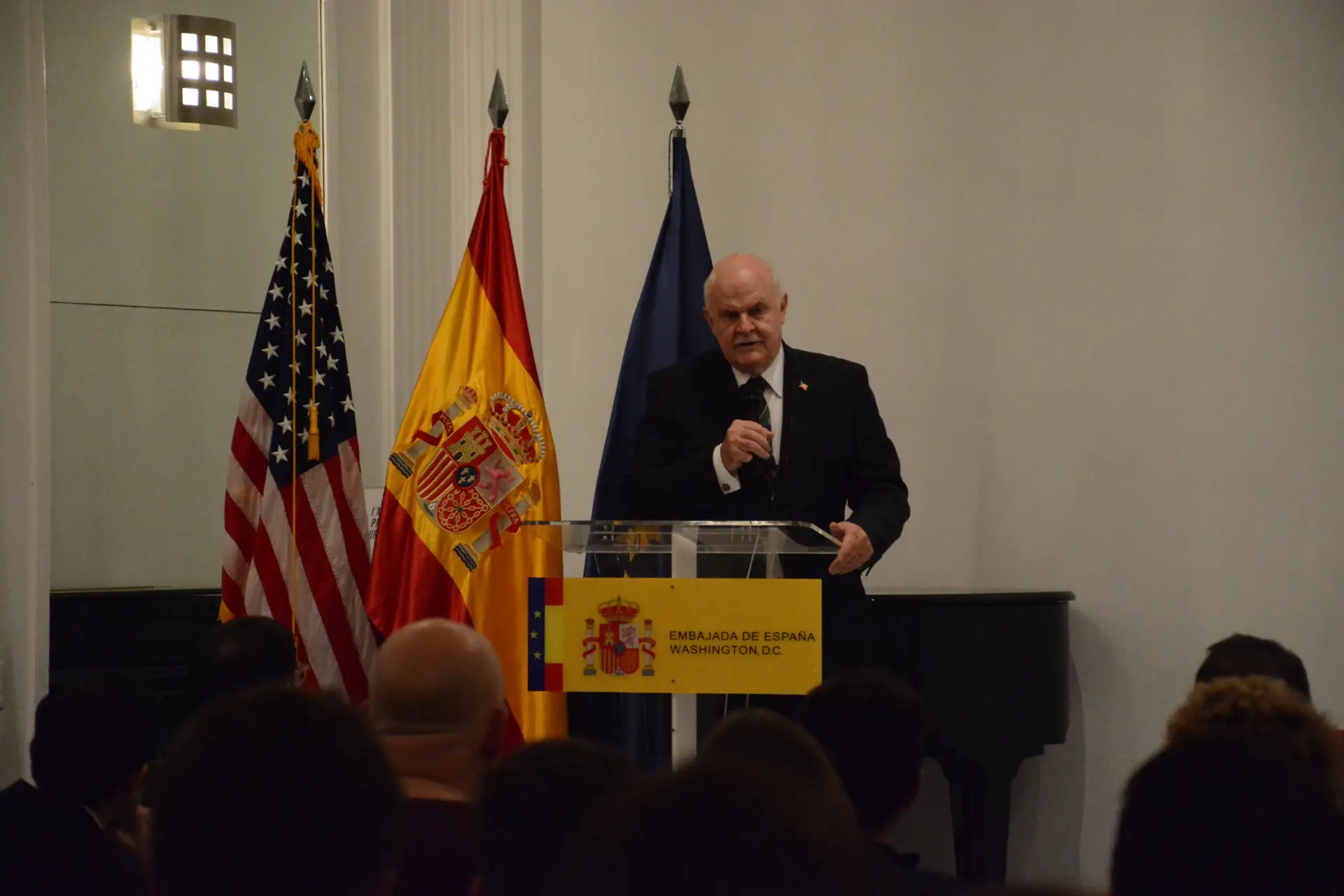
The keynote lecture by Alejandro Chafuen, honorary president of Escuela Hispánica, was entitled “Salamanca: the Forgotten City between Athens and Rome, and London and Philadelphia.” This approach placed the need to incorporate Hispanic scholasticism into the genealogy of Western thought at the center of the gathering.
Chafuen’s work on the ethics and economics of the scholastics provides a particularly relevant framework for this recovery. His participation situated the gathering within a research and public education effort seeking to understand the scope of that tradition and its relationship with later debates on liberty and economic life.
The framework Juan Ángel Soto prepared for the roundtable brought together three closely related questions: the dignity of the person, the role of the community and the justification of power. Asking where authority comes from leads to another equally decisive question: what limits govern its exercise?
Consent matters in understanding political legitimacy, but judging the justice of government acts also requires examining their substance. An authority does not make every decision just simply because it can enforce it. Reflection on law, the responsibility of rulers and individual rights therefore remains fully relevant.
This perspective connects historical study with contemporary questions: what rulers may demand of a community, what must remain beyond their reach and how liberty can be preserved against arbitrary power. Personal dignity emerges as a foundation prior to political utility, requiring institutions to be assessed by the service they render to people.
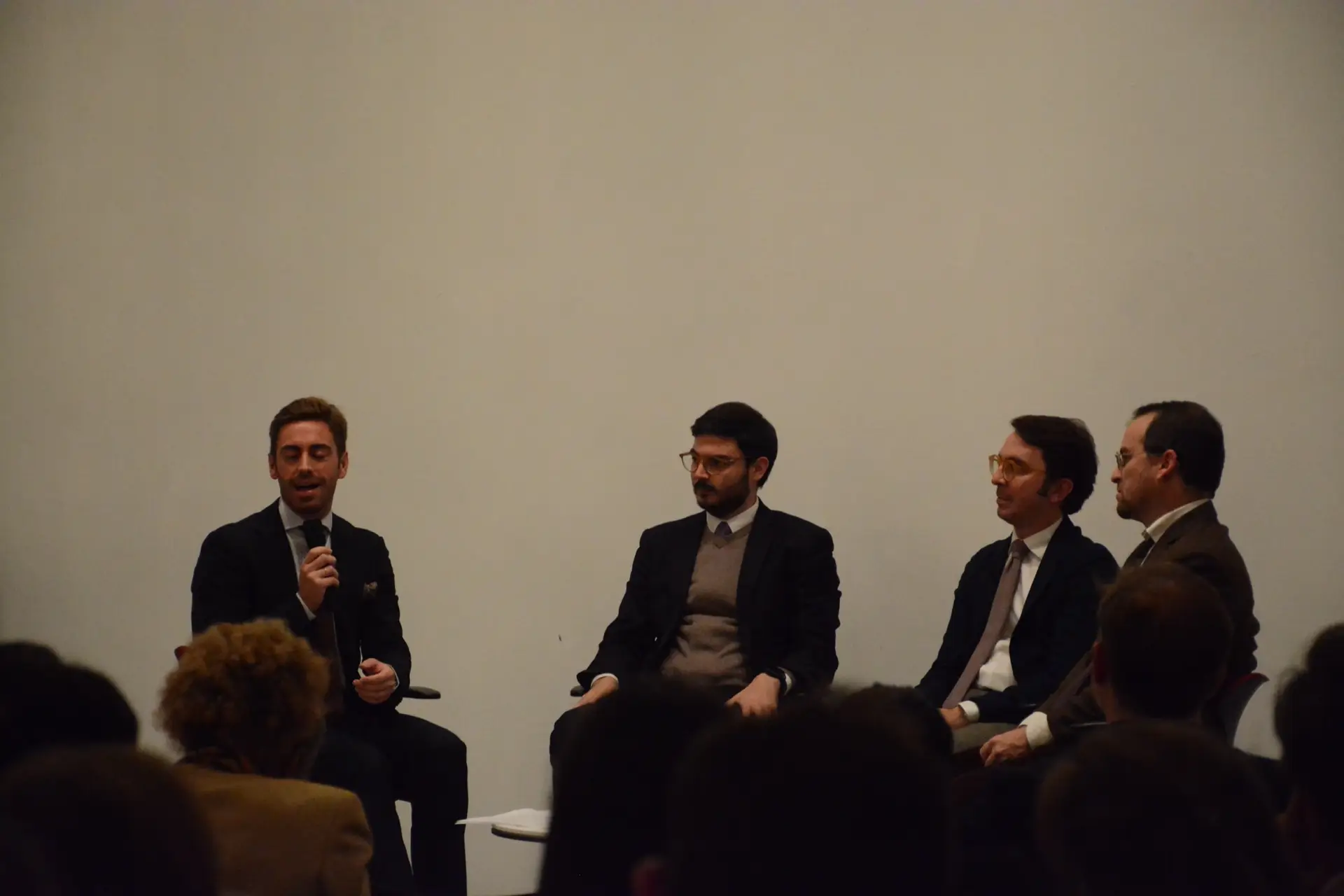
The panel brought together Jorge Machín Mezher, director of Escuela Hispánica; Felipe Julián Mosquera Blanco, a doctoral researcher in political theory at the Catholic University of America; and Enrique Pallarés, research director and lecturer at the University of Pennsylvania’s Penn Initiative for the Study of Markets, with Juan Ángel Soto as moderator and participant.
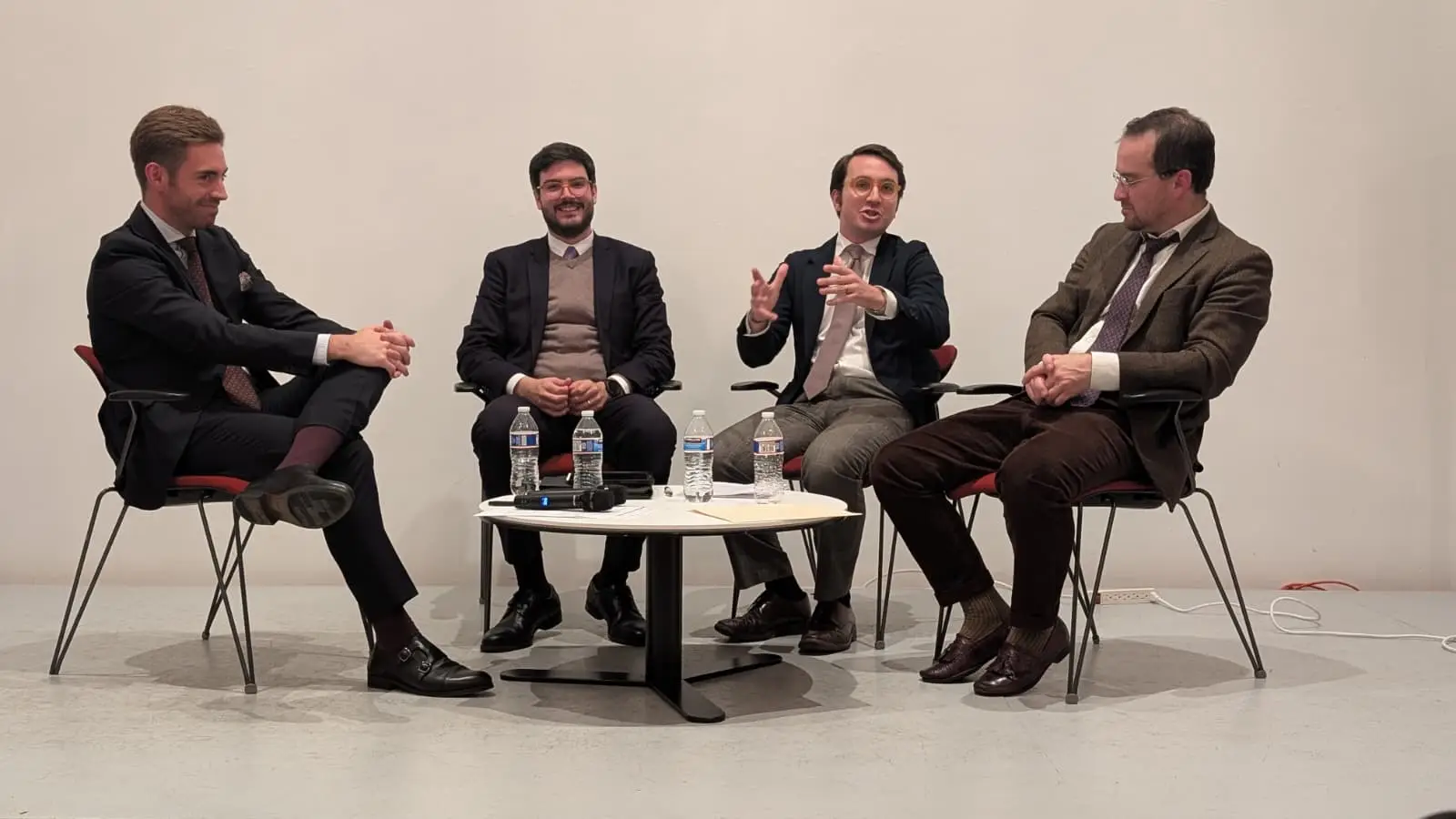
Jorge Machín’s specialization in legal philosophy, constitutional theory and human rights brought the legal and moral foundations of authority into the discussion. His field connects directly with the questions that shaped the gathering: the relationship between liberty and the common good, the origin of power and the criteria by which its exercise can be judged.
Felipe Mosquera’s announced contribution, “John Adams and Gaspar Melchor de Jovellanos on the Hispanic Historical Constitution,” proposed examining Adams’s encounter with the historical liberties of Biscay during his journey through Spain in 1779–1780 and placing it in dialogue with Jovellanos. His approach connected historical experience, institutional reform and the protection of personal liberty within a political community.
Enrique Pallarés presented “The Real Brother: Unamuno, quijotismo, and Inalienable Rights” as the focus of his contribution. The reference to Miguel de Unamuno extended the conversation’s chronological horizon and turned attention to the anthropology underpinning rights: the concrete person, the human being of flesh and blood, as a subject of liberty and a limit to reducing political life to an abstraction.
Both approaches connected constitutional history with the philosophy of the person. Adams and Jovellanos offered a field for examining institutions and historical experience; Unamuno, a path toward understanding the human meaning of rights and resistance to tyranny. Taken together, the program showed the breadth of a tradition whose study extends beyond the sixteenth century.
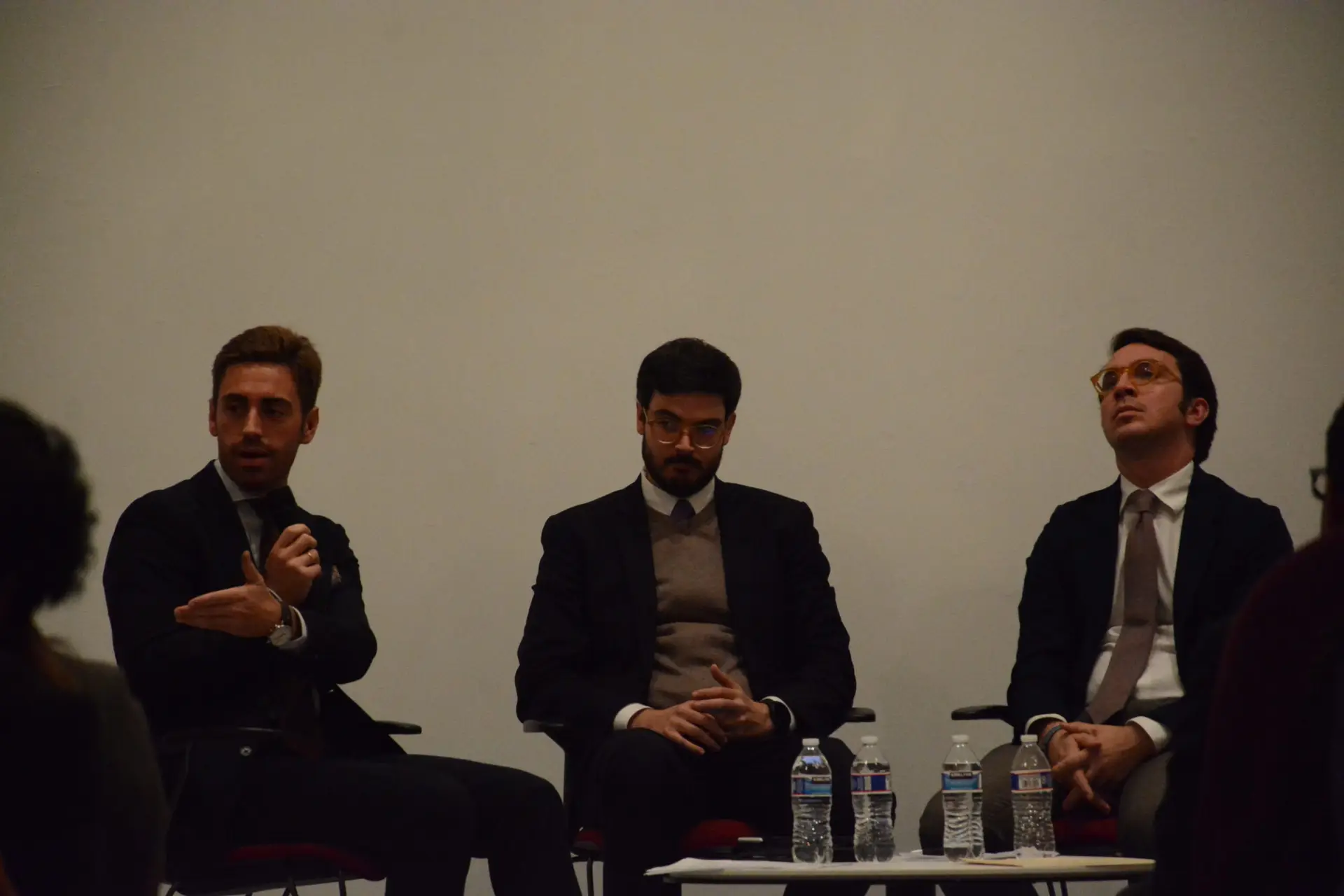
The Washington gathering presented Project 1776 as an invitation to pursue further research and strengthen collaboration between scholars, institutions and citizens. Understanding the principles that sustain a free society requires knowing their history and accepting responsibility for transmitting them.
Escuela Hispánica seeks to contribute to this task through a community connecting Spain, Portugal and the Americas. The gathering opened a space for studying a shared inheritance, discussing its arguments and bringing its questions to bear on the present. Liberty, human dignity and the limits of power remain living questions; recovering the conversation in which they were formulated allows us to address them in greater depth.
Escuela Hispánica extends its thanks to the Cultural Center and the Embassy of Spain in Washington for their hospitality and for making this gathering possible. Their collaboration helped create a space for dialogue and reflection on the intellectual inheritance shared by Spain and the United States.
We would also like to extend our special thanks to Enrique Huesca, a member of Escuela Hispánica’s Business Committee and a partner at Tower Strategy, for his support for this initiative, which we hope will be the first of many in Washington, D.C.