
PROJECT 1776
The footprint of Hispanic Scholasticism in the US Declaration of Independence.
Agreement with Instituto de Fe y Libertad

Escuela Hispánica has begun working jointly with the Instituto Fe y Libertad on various initiatives aimed at the research and dissemination of Hispanic thought on liberty. In this context, we would like to announce the open call for submissions to the Institute's academic journal, whose next edition will be dedicated to topics related to Project 1776 and the influence of the Hispanic tradition on the development of modern political thought.
The initiative seeks to continue expanding the study of the Hispanic tradition and its influence on the development of modern political thought, while promoting new spaces for academic dialogue and international intellectual cooperation. We invite all those interested in contributing articles or research related to this topic to contact the Instituto Fe y Libertad for more information on the publication process.
Introduction
“It is undeniable that Thomas Jefferson, author of the Declaration of Independence, and George Mason, author of the Virginia Declaration of Rights, were well acquainted with the great classical and contemporary thinkers since Aristotle. And it is not unreasonable to conclude that they were also familiar with writers who defended popular sovereignty and opposed the absolute power of kings.”
Source: Catholic Culture"THE MARCH OF GÁLVEZ" - AUGUSTO FERRER-DALMAU
This painting represents General Bernardo de Gálvez leading his troops through a swamp during the American Revolutionary War campaign. Carrying both a Spanish and an American flag, Gálvez on horseback guides his men as they advance with difficulty through water and vegetation. Soldiers of different races, including Native Americans, participate in the march, reflecting the diversity and determination of the army fighting for freedom.
Milestones of Thought
Iberian university network and the birth of modern economics
Read moreRead less+
Francisco de Vitoria: Relectio de Indis
Read moreRead less+
Domingo de Soto: just price and the market
Read moreRead less+
Martín de Azpilcueta: quantity theory of money
Read moreRead less+
Tomás de Mercado: trade and credit
Read moreRead less+
Juan de Mariana: De Rege et Regis Institutione
Read moreRead less+
The trial of Juan de Mariana: money, taxation and tyranny
Read moreRead less+
Robert Bellarmine: De Laicis
Read moreRead less+
Francisco Suárez: Defensio Fidei
Read moreRead less+
Marchamont Nedham: The Excellencie of a Free-State
Read moreRead less+
Robert Filmer: Patriarcha
Read moreRead less+
The Glorious Revolution and John Locke: Two Treatises of Government
Read moreRead less+
Fundamental Orders of Connecticut
Read moreRead less+
American reception of scholastic thought
Read moreRead less+
Declaration of Independence
Read moreRead less+
Virginia Declaration of Rights
Read moreRead less+
United States Constitution
Read moreRead less+
Bill of Rights
Read moreRead less+
Founding Fathers
Key figures of the American Revolution whose intellectual training and personal library reveal a significant connection with the scholastic tradition.

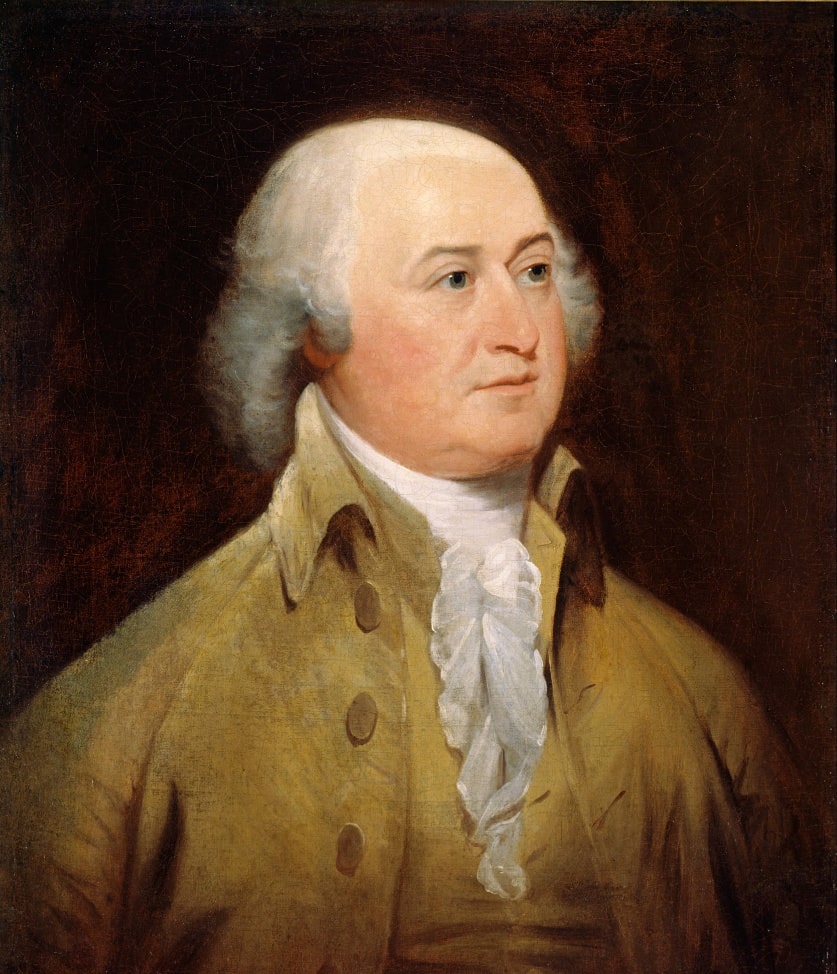
John Adams
Adams read and cited Juan de Mariana, incorporating him into his constitutional reflection alongside the English republican tradition. Through these readings, Adams assumed the superiority of natural law over arbitrary power, incorporating into American thought the idea of a fiduciary power, limited and subordinated to the common good, typical of Iberian scholasticism.
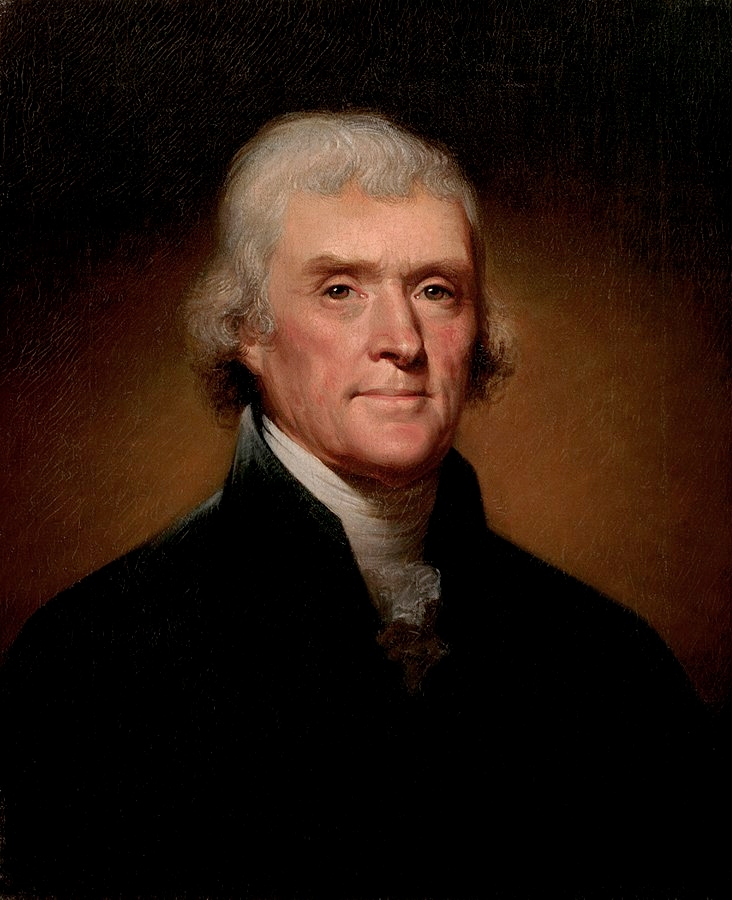
Thomas Jefferson
Jefferson showed a sustained interest in Hispanic culture: he acquired and read Don Quixote. During his diplomatic stay in Europe, he expanded his political library—including works by Juan de Mariana—and also took interest in Juan de Palafox y Mendoza. In Jefferson's library, there is a look toward Spain not only literary but also political, connecting natural law, human dignity, and the limitation of power with American republicanism.
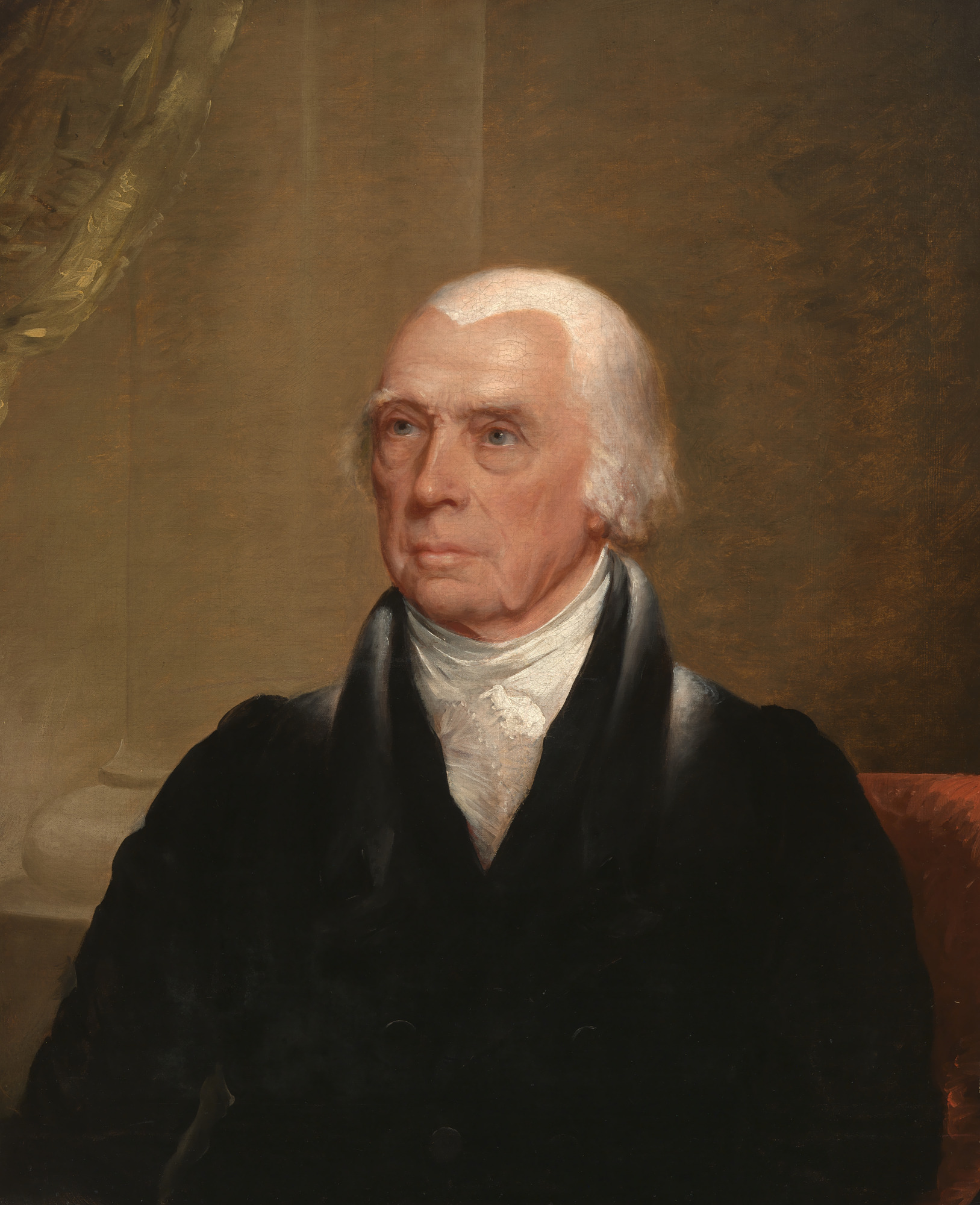
James Madison
In The Federalist Papers, Madison develops the idea that sovereignty resides in the people but must be exercised through institutions that channel and limit political power. His defense of representative government reproduces—although without explicit citation—the scholastic tradition of a prudential mixed order. The Constitution appears as the stable institutional form of popular sovereignty, an indirect heir to Iberian political theory.
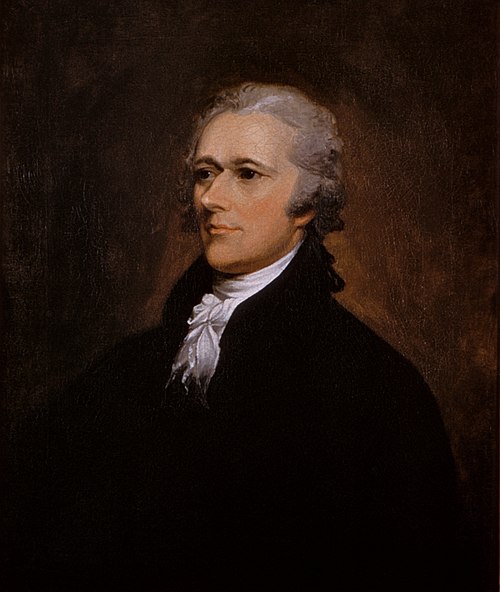
Alexander Hamilton
In the Report on Public Credit (1790) and the Report on a National Bank (1790), Hamilton links monetary stability, public trust, and political liberty. This concern connects with Juan de Mariana's critique in De Monetae Mutatione (1609), where currency manipulation is described as a hidden tax contrary to political consent. The economic architecture of the young republic incorporated debates originated two centuries earlier in Iberian moral theory.
Reception and Rediscovery
Orestes Brownson
(1803–1876)
The American Catholic political thinker defended that the Constitution is not an artificial contract but the juridical form of a prior political community. In The American Republic (1865) he maintains that sovereignty belongs to the people as a moral community and not to isolated individuals, a formulation extraordinarily close to Francisco Suárez.
John Courtney Murray
1960
In We Hold These Truths (1960), Murray interprets the First Amendment in light of the natural law tradition and recognizes the heritage of Suárez and Bellarmine in limited popular sovereignty.
Heinrich A. Rommen
1967
In The Natural Law (1947), Rommen presents the School of Salamanca as the origin of modern constitutionalism. His work becomes a manual in American law schools.
Carlos Stoetzer
1986
In The Scholastic Roots of the American Constitution (1986), Stoetzer systematically documents the influence of Vitoria, Suárez, and Mariana on the intellectual formation of American constitutionalism.
Project Axes
Comparative studies between Hispanic American and United States emancipations.
Studies on the influence of the Hispanic tradition on the Founding Fathers of the United States.
Publications on the influence of the Hispanic tradition on the Anglo-American political tradition.
In-person and virtual events on the previous points.

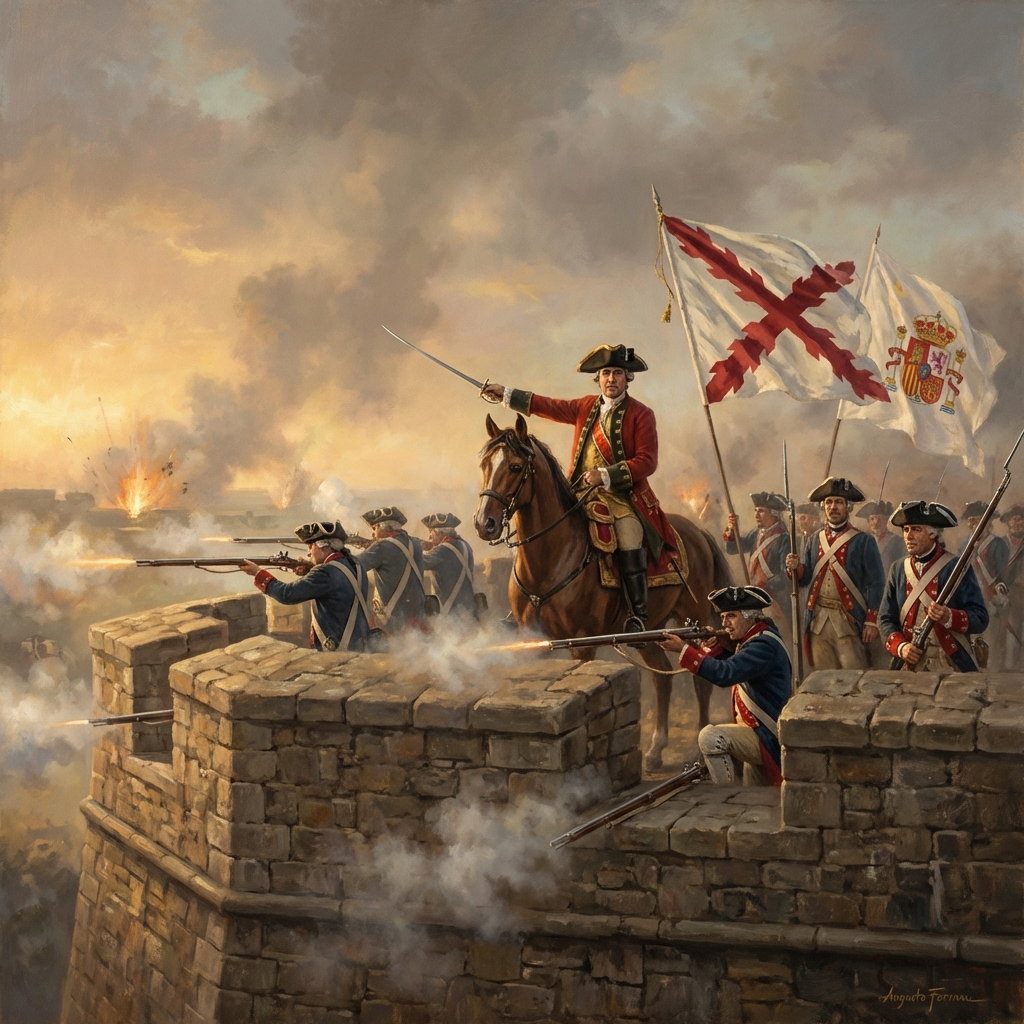
"FOR SPAIN AND FOR THE KING" - AUGUSTO FERRER-DALMAU
The painting portrays a battle scene during the American Revolutionary War, highlighting Spanish participation.
Vision and Foundations
Project 1776 seeks to dust off the Hispanic tradition, unknown or forgotten by many, update it, and place it at the service of our societies and the West, as a complementary and necessary vision to the Anglo-American one.

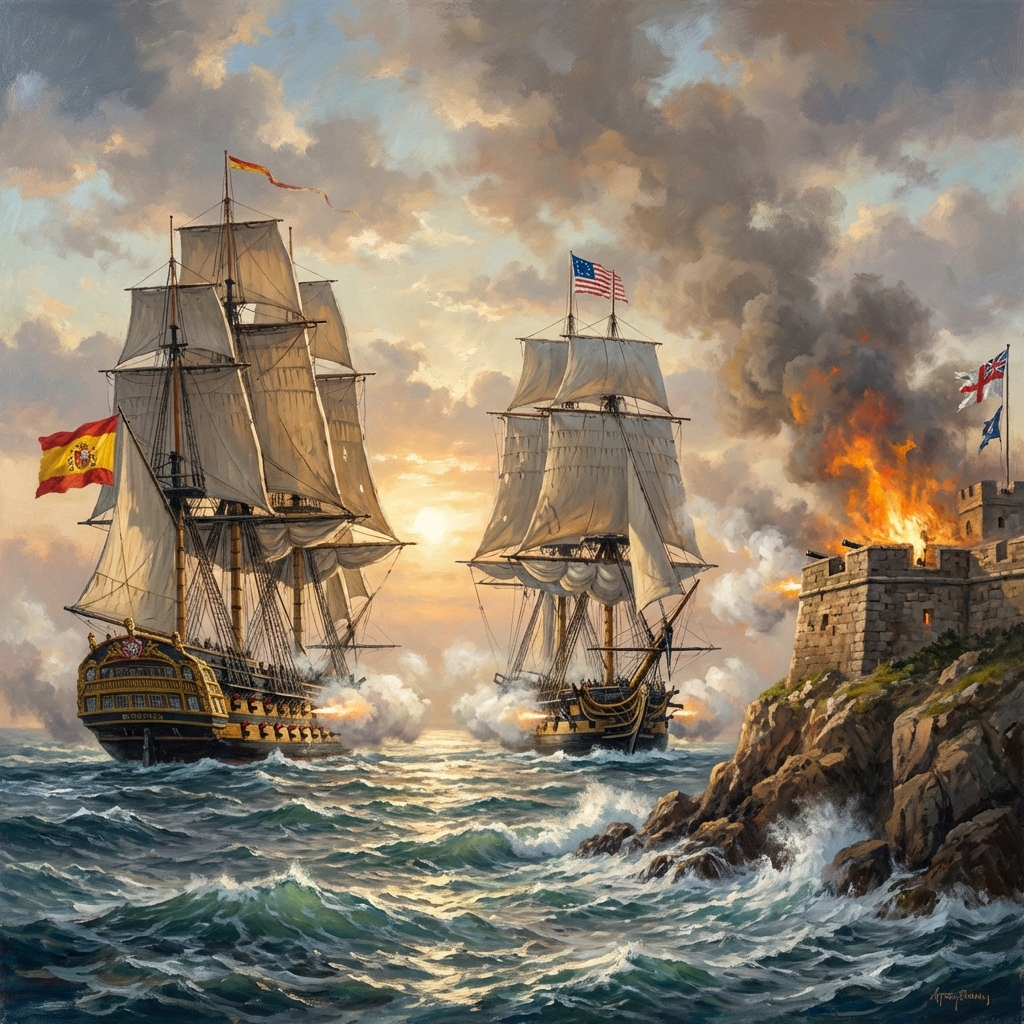
"SISTER FLAGS" - AUGUSTO FERRER-DALMAU
This painting shows two majestic ships, one Spanish and one American, sailing together.
Bibliographic References
Gómez Rivas, L. (2026). ‘Orígenes escolásticos de la libertad individual en los EE. UU. en el aniversario de la Declaración de Independencia (1776-2026)’. Instituto Fe y Libertad
Graf, E.-C. (2019). ‘Escolásticos: Francisco Suárez, Juan de Mariana y las revoluciones en América. Bicentenario de la independencia 1810-30’. Credencial Historia, Bogotá, pp. 42-51
Gómez Rivas, L. (2017). ‘¿Conoció George Mason a los escolásticos españoles?’. Instituto Juan de Mariana
Gómez Rivas, L. (2021). ‘Escolástica e independencia: Las bibliotecas jesuitas al tiempo de la emancipación’.
Rager, J.C. (1925). ‘The Blessed Cardinal Bellarmine’s Defense of Popular Government in the Sixteenth Century’. The Catholic Historical Review, Vol. 10, No. 4
Stoetzer, C. (1981). ‘Las raíces escolásticas de la Revolución Americana’. Ponencia en las XV Jornadas de la Asociación Argentina de Estudios Americanos
Stoetzer, C. (1986). ‘The Scholastic Roots of the American Constitution’. Washington D.C.
Termes, R. (2000). ‘Francisco Suárez y The Fundamental Orders de Connecticut’. Cuadernos de Ciencias Económicas y Empresariales, 37 pp. 161-168
Termes, R. (2005). ‘La tradición hispana de libertad’. Conferencia en el Instituto Acton, Orlando
PARTICIPATE IN THE PROJECT
If you are a researcher, academic or wish to support this line of research for the 250th anniversary of the United States, contact us.