Biographies
Over the centuries, the cultural space formed by the Hispanic Monarchy and the Iberian world developed a singular intellectual tradition: a reflection on freedom that was not born from revolutionary rupture, but from the legal and moral elaboration of power. Since the 16th century, the universities of Salamanca, Coimbra, and Évora articulated a community that thought about politics based on natural law and the structural limitation of authority.
This political language crossed the Atlantic and was transformed in America. Hispanic American independences did not mean the abandonment of that tradition, but its evolution toward republican constitutionalism. Unity ceased to be territorial and became civilizational: a language, a law, and a shared conception of power as service to the common good remained shared on both sides of the ocean.
The Hispanic tradition of freedom is not a marginal current, but one of the pillars of the West. It is a different path from contractualist enlightenment, but convergent in its results: the affirmation that freedom is a moral order prior to political power.
Below, we present a continuous temporal horizon where ideas appear, are transmitted, and are transformed, from the 16th-century Iberian School to contemporary thought.
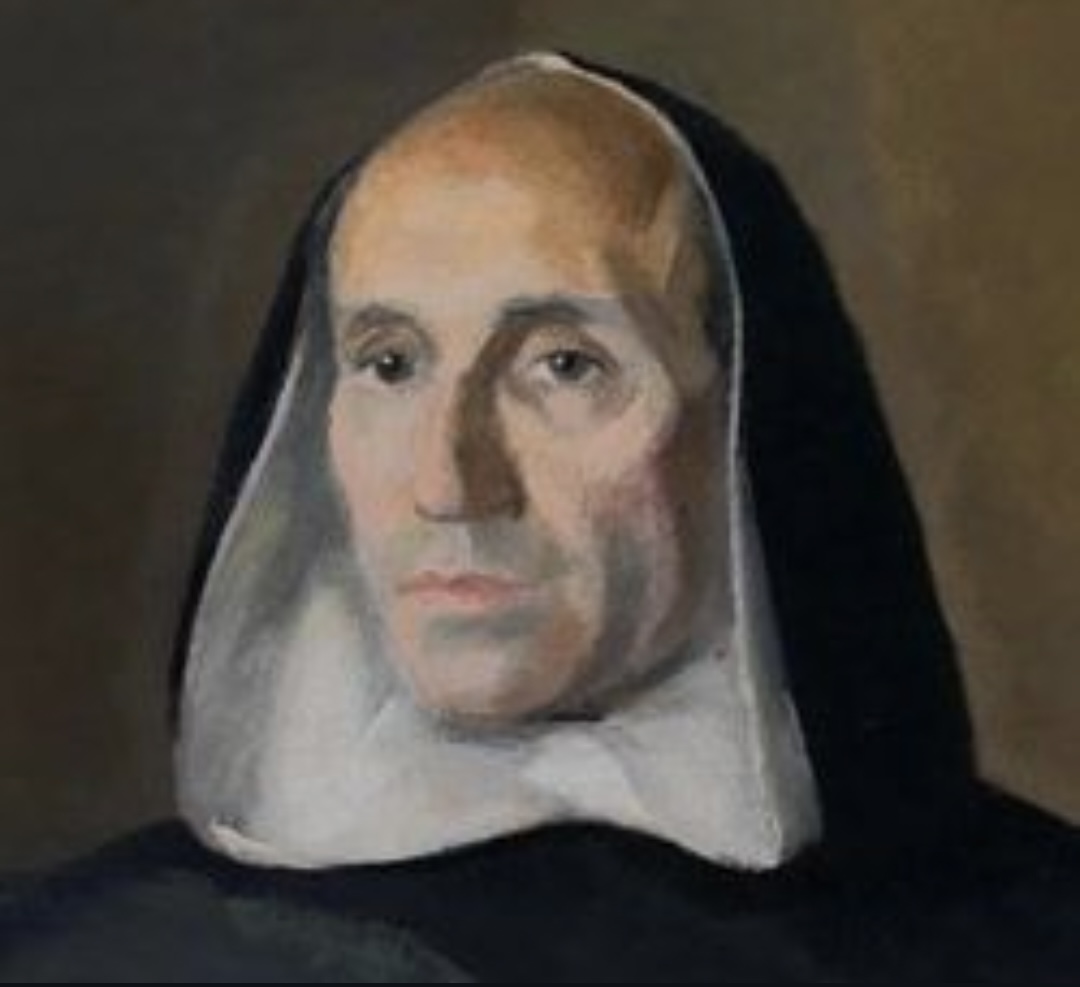
Francisco de Vitoria
SpainBiografía
Francisco de Vitoria was born in Burgos around 1483 and died in Salamanca on August 12, 1546. He entered the Order of Preachers (Dominicans) and was intellectually trained at the University of Paris, the main European theological center of his time, where he studied Thomas Aquinas in depth. Upon his return to Spain he was appointed Professor of Theology at the University of Salamanca, from where he promoted an intellectual renewal that would mark European thought for centuries and would give rise to the so-called Second Scholasticism.
The historical context of his work was decisive: the discovery of America posed a radically new problem to Europe for the first time. What legitimacy did a Christian power have to dominate non-Christian peoples? The medieval tradition did not offer clear answers for a truly global reality. Vitoria turned this practical question into a universal philosophical problem.
His teachings are preserved in the Relectiones, academic lectures given between 1537 and 1540 and published posthumously, among which De Indis (1539) and De iure belli (1539) stand out. In them he rejects two dominant ideas of his time: the universal authority of the Pope over all humanity and the automatic right of conquest through religious or cultural superiority. No nation, he maintains, can legitimately appropriate the political dominion of another simply because it is pagan or less civilized.
His argument is based on a revolutionary premise for the 16th century: all human beings share the same rational nature and, therefore, possess natural political rights. The indigenous American peoples have legitimate sovereignty over their territories, their laws and their rulers. Religious conversion cannot be imposed by force, and war can only be justified under strict criteria of justice.
With this, Vitoria transformed moral theology into universal political theory. The political community is not born of power, but of human sociability. Power is legitimate only if it protects the common good and respects a prior moral order. Thus the notion of modern ius gentium arises: there is a law of nations prior to any empire.
This idea inaugurates contemporary international law. Relations between peoples are not based on religious or imperial hierarchies, but on common norms derived from natural reason: freedom of trade, the right of communication between peoples, protection of innocents in war and limits on the use of force. War ceases to be a normal instrument of political expansion and becomes an exceptional resource subject to legal conditions.
The philosophical scope is profound. Vitoria introduces the notion of rights prior to the State: political authority does not create human dignity, it recognizes it. Power is subordinated to justice. This principle, first applied to the relationship between empires and indigenous peoples, will end up influencing the modern idea of human rights and the conditional legitimacy of government.
In this way, Francisco de Vitoria establishes the remote foundation of constitutionalism: if there are rights prior to power, the government must be limited by higher norms. Politics stops being mere domination and becomes a legal order. His thought opens the way towards a universalist conception of the human community, where no authority can claim absolute legitimacy without reference to natural law.
Aportación Filosófica
Founder of modern international law; defended the natural rights of indigenous people and sovereignty based on reason.
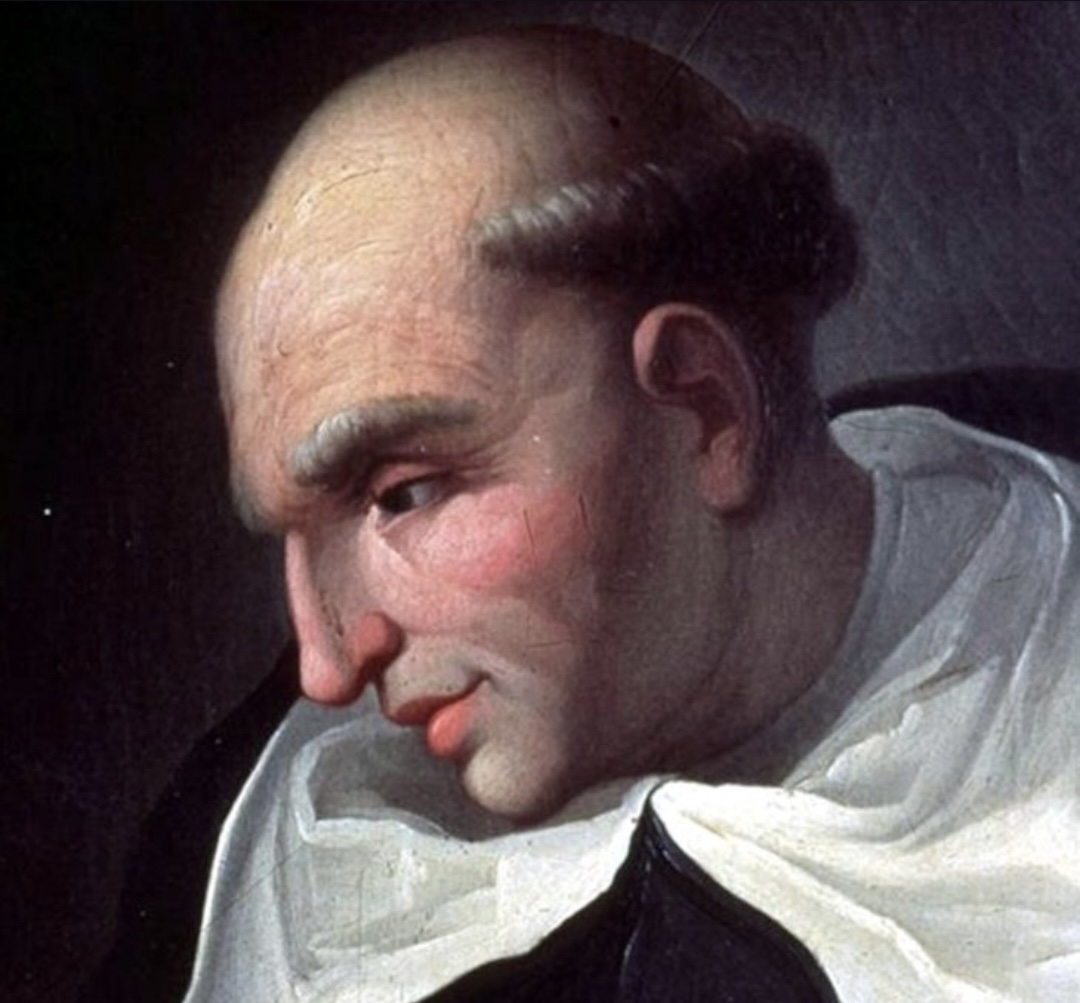
Bartolomé de las Casas
SpainBiografía
Bartolomé de las Casas was born in Seville in 1484, the son of a merchant who had participated in Columbus's second voyage. He came to America as a young man and received encomiendas, but his direct experience with the colonial system led him to a profound moral conversion. He entered the Dominican order and dedicated his life to the legal defense of indigenous people.
His activity was both intellectual and political: he participated in imperial debates, influenced legislation, and was a protagonist in the famous Valladolid controversy (1550–1551). He was not simply a humanitarian; He developed a complete legal theory.
In the Apologetics summary history and other writings he maintains that indigenous peoples possess full political reason. They have cities, laws and legitimate authority. Therefore, no war of conquest is just without real prior aggression.
Las Casas goes beyond Vitoria: he affirms that evangelization does not grant political dominance. Conversion must be free and civil power remains in the hands of the people.
His doctrine introduces universal legal equality as an operating principle. This is not just about spiritual dignity: it involves institutional consequences, including local self-government and limits on imperial authority.
He died in Madrid in 1566. His thoughts influenced Indian legislation and later European debates on human rights and colonization.
Aportación Filosófica
Proposed universal legal equality and argued that civil power belongs to the people, regardless of their religion.
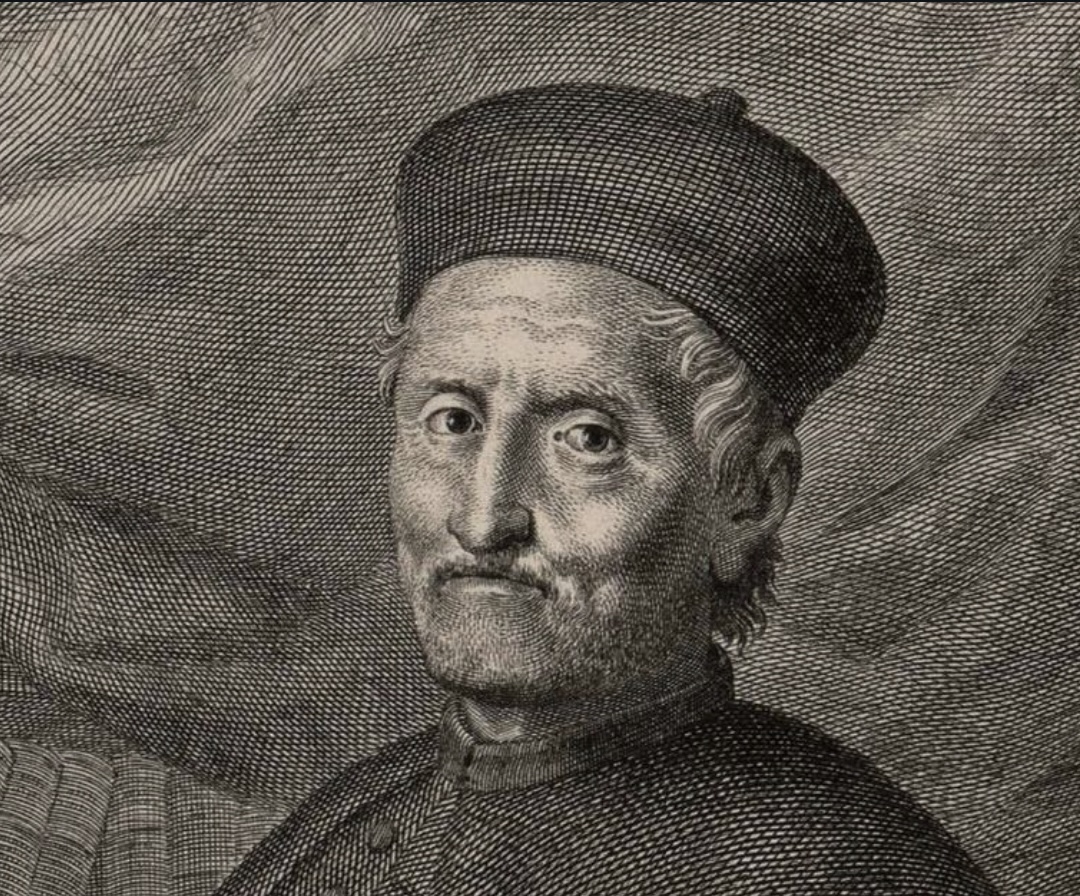
Martín de Azpilcueta
Kingdom of NavarreBiografía
Martín de Azpilcueta was born in Barásoain (Navarra) in 1492, the same year of the discovery of America, and died in Rome on June 21, 1586. A canon and theologian trained in Alcalá and Toulouse, he developed most of his academic career as a professor at the universities of Salamanca and Coimbra, becoming one of the most influential legal figures of the European Renaissance. He was known in his time as Doctor Navarrus, a name under which his works were widely circulated throughout Europe.
Although he wrote numerous treatises on canon and moral law—among them the influential Manual of Confessors and Penitents (1553)—his decisive contribution to the history of economic thought can be found in the Resolutory Commentary on Changes (1556). This short text, initially written to provide moral guidance to merchants and bankers, contains a revolutionary intuition: the value of money depends on its relative abundance or scarcity in society.
Azpilcueta empirically observed a new phenomenon in 16th century Castile: the massive arrival of American silver had not really enriched the population, but rather had raised prices across the board. That is, money had lost purchasing power. From this observation he concluded that the currency is not valid by decree of the sovereign or by its materiality, but by its relationship with the available goods and with social demand.
This was the first clear formulation of the quantity theory of money: when the quantity of currency increases, its value decreases.
The philosophical scope of this idea is enormous. Until then, currency was conceived mainly as a legal instrument of political power; Azpilcueta turns it into a social phenomenon. Money comes to be understood as an institution that emerges from human relationships, not as a sovereign creation capable of generating wealth by itself.
A moral consequence derives from this premise: if altering the quantity of money reduces its value, then monetary manipulation unfairly harms citizens. Inflation is equivalent to a non-consensual transfer of wealth. Therefore, authority cannot enrich itself through devaluations without violating distributive justice. Monetary policy is subject to the moral law.
Azpilcueta thus introduces an idea that centuries later will be central to modern political philosophy: power cannot indirectly appropriate private property through invisible technical mechanisms. Wealth is not created by decree; it can only arise from work, exchange and production. The State does not control the economic value, but must respect a prior order.
His thinking anticipates later debates about fiat money, inflation as a hidden tax, and constitutional limits on fiscal power. In the Anglo-Saxon world these issues would later appear linked to the protection of property and distrust of monetary manipulation by political authority.
In this way, Azpilcueta not only inaugurates modern monetary theory, but also introduces an ethical dimension to economics: monetary stability is a question of justice. The economic order, like the political one, cannot be based on the arbitrariness of power but on general rules respectful of human freedom. His reflection turns currency into a moral phenomenon rather than an administrative one, thus preparing one of the conceptual pillars of later economic thought.
Aportación Filosófica
First formulated the quantity theory of money, linking its value to scarcity and criticizing monetary manipulation.
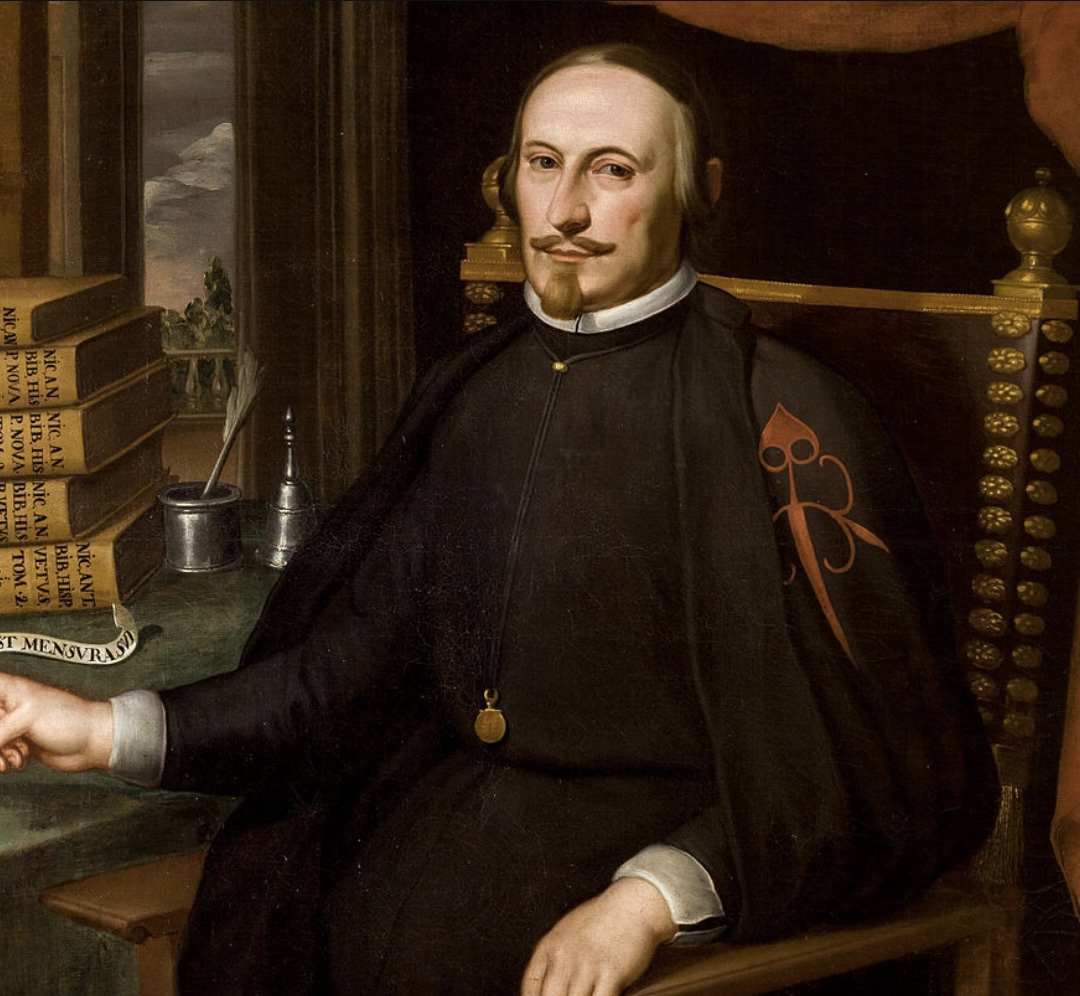
Domingo de Soto
SpainBiografía
Domingo de Soto was born in Segovia in 1494 and died in Salamanca on November 15, 1560. He entered the Order of Preachers (Dominicans) and trained at the University of Alcalá before moving to Salamanca, where he was a direct disciple of Francisco de Vitoria and became one of the central figures of the so-called Second Scholasticism. His intellectual prestige was such that Charles V appointed him imperial theologian at the Council of Trent, where he participated in the decisive doctrinal debates of 16th century Europe. However, its historical importance is not limited to theology: Soto is one of the great architects of modern legal and economic thought.
His most influential work, De Iustitia et Iure (1553–1554), constitutes one of the most complete expositions of natural law philosophy of the Renaissance. In it he systematically addresses issues of property, commerce, contracts, poverty, work, taxes and political power. It is not an economic treatise in the technical sense, but rather a moral theory of the social order, where the economy appears integrated within justice.
His most innovative contribution is the formulation of the theory of fair price. Faced with the medieval conception that identified the fair price with an objective value determined by authority or by a supposed moral essence of the good, Soto maintains that the economic value depends on the common estimation of the community. That is, the fair price is the price that arises in the market when exchanges are carried out freely.
The market is, therefore, neither a morally suspect environment nor a chaotic space, but a social mechanism of rational coordination. Prices are not set from outside, but emerge from the interaction of needs, scarcity and human preferences. Soto thus introduces an idea that centuries later will be central to modern economics: the economic order can emerge spontaneously without political planning.
This conclusion has decisive political implications. If the price arises from social interaction, the public power cannot determine it arbitrarily without generating injustice. Forced price fixing breaks the equity of exchanges because it replaces social reality with the will of the ruler. The State does not create economic value; it can only protect the legal framework in which it arises.
In this way, Soto links economy and civil liberty: justice in exchanges depends on freedom of contract. The economy ceases to be an area subordinate to power and becomes a dimension of the human natural order. Political authority is structurally limited, since it cannot alter the spontaneous coordination of society without consequences.
His thinking anticipates fundamental elements of classical economics—especially the notion of market price as an indicator of social information—and prepares the later idea of spontaneous order. But, unlike modern economists, Soto reaches these conclusions from moral philosophy: economic freedom is required by justice, not just efficiency.
Thus, Domingo de Soto contributes to a profound intellectual transformation: the recognition that society has internal organizational mechanisms prior to the State. Political authority must not direct economic life, but respect an order that precedes it. This limitation of power in economic matters would become centuries later one of the pillars of liberal constitutionalism.
Aportación Filosófica
Architect of natural law; formulated the theory of just price based on common market estimation.
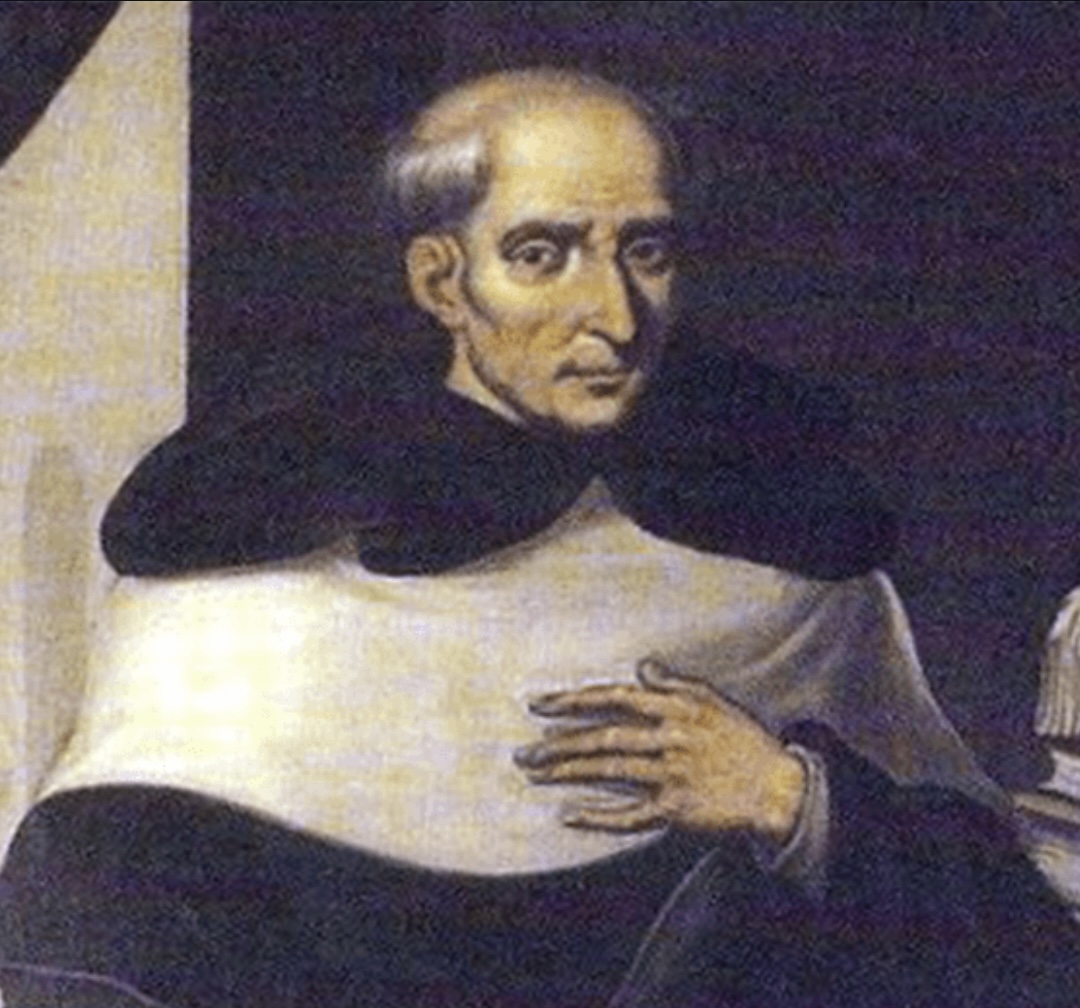
Alonso de la Vera Cruz
Viceroyalty of New SpainBiografía
Alonso Gutiérrez, known as Alonso de la Vera Cruz, was born around 1507 in Caspueñas, near Guadalajara. He studied in Alcalá and Salamanca at the height of Salamanca thought, under the indirect influence of Francisco de Vitoria. He entered the Order of Saint Augustine and left for New Spain in 1536, where he participated in the founding of the University of Mexico.
He was the first systematic philosopher of the American continent. His work covers logic, Aristotelian physics, metaphysics, and political philosophy, but his historical importance lies in his treatises on the legitimacy of Spanish rule.
In De dominio infidelium et iusto bello (1553) and other legal texts he maintains that indigenous peoples possess legitimate political sovereignty by natural right. They are not moral minors or imperfect societies; They are complete political communities. Therefore, conquest does not automatically create a dominion title.
Vera Cruz examines specific indigenous institutions—communal property, local authority, judicial organization—and concludes that the Spanish crown can only legitimately govern through legal agreements and not by civilizational superiority.
The radicality of his thought consists in universalizing politics: any rational society has the right to govern itself. This statement turns European expansion into a legal problem, not a simple power enterprise.
He died in Mexico in 1584, leaving behind his own American philosophical school. His work anticipates modern self-determination theory and constitutes one of the first attempts at intercultural comparative political philosophy.
Aportación Filosófica
Defended the legitimate sovereignty of indigenous peoples by natural law and political self-determination.
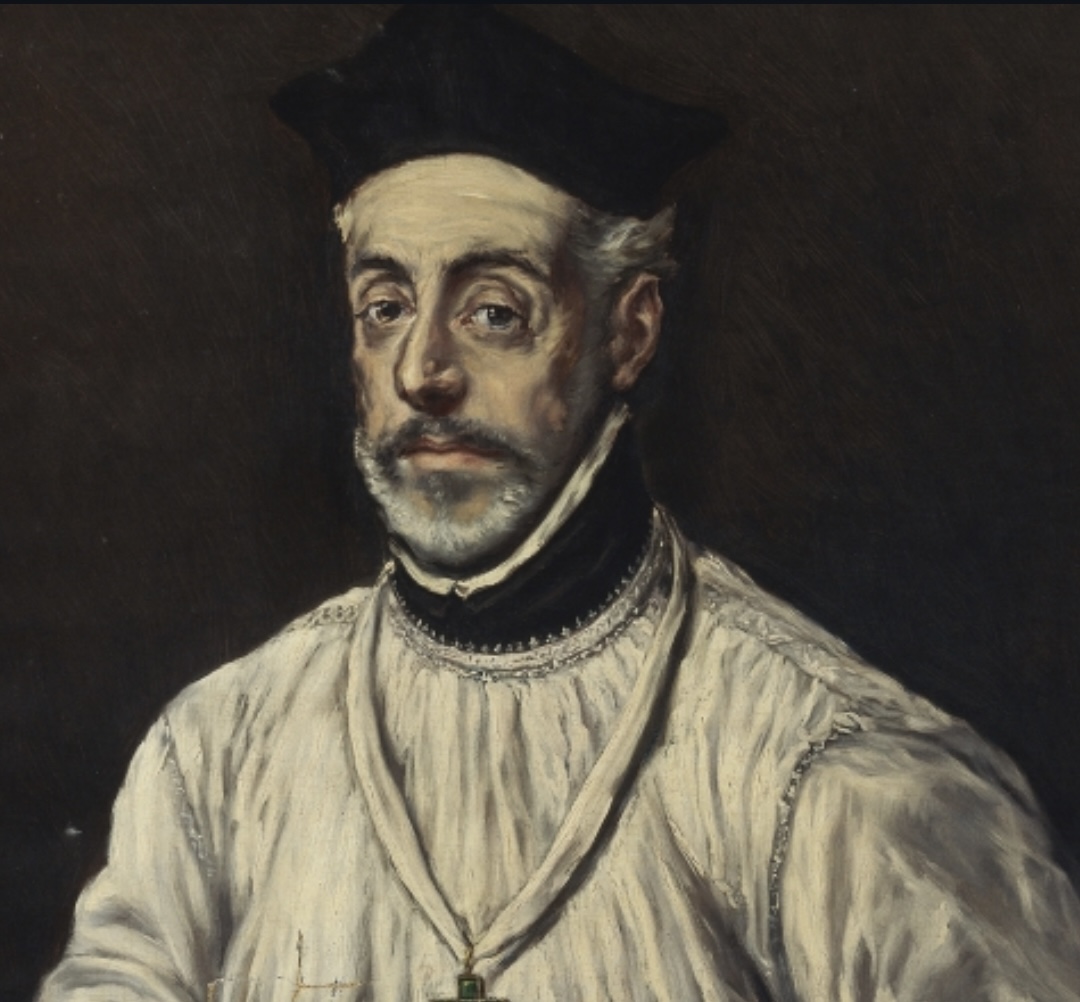
Diego de Covarrubias y Leyva
SpainBiografía
Diego de Covarrubias y Leyva was born in Toledo in 1512 and died in Segovia in 1577. He was one of the great jurists of the Spanish Renaissance, member of the Council of Castile and later bishop of Segovia. Unlike many purely academic scholastics, his thinking developed simultaneously in the university classroom and in the State administration, which gave his work a particularly institutional orientation.
Trained in Salamanca under the influence of Francisco de Vitoria, Covarrubias applied natural law to specific problems of property, commerce, and legislation. His most important work, Variarum Resolutionum ex Iure Pontificio, Regio et Caesareo Libri IV (1552), analyzes real legal cases and resolves them based on general rational principles.
His most notable philosophical contribution is the early formulation of a subjective theory of value. Covarrubias affirms that the fair price of a good depends on the common estimation of men (communis aestimatio), not on the intrinsic nature of the object or the cost of production. This statement breaks with the classical tradition that linked value and essence. Economic value becomes dependent on human perception within a social context.
The political consequence is profound: if value depends on social valuation, power cannot legitimately set it. The market appears as a collective cognitive process in which individuals coordinate dispersed information. The economy is no longer an area regulated from above to become an emerging dimension of social life.
Covarrubias also defended the relative autonomy of the civil sphere against absolute power. The right is not pure will of the sovereign; It must reflect natural reason. The unjust law loses legitimacy. Thus he contributed to transforming law from an instrument of power to a limit of power.
His thinking anticipates central elements of modern economics and constitutionalism: political authority must respect preexisting social structures—ownership, exchange and valuation—because it does not create them. In this sense, Covarrubias represents one of the transition points between the medieval legal world and the modern conception of social order.
Aportación Filosófica
Developed the subjective theory of value based on human perception and defended the autonomy of the civil sphere.
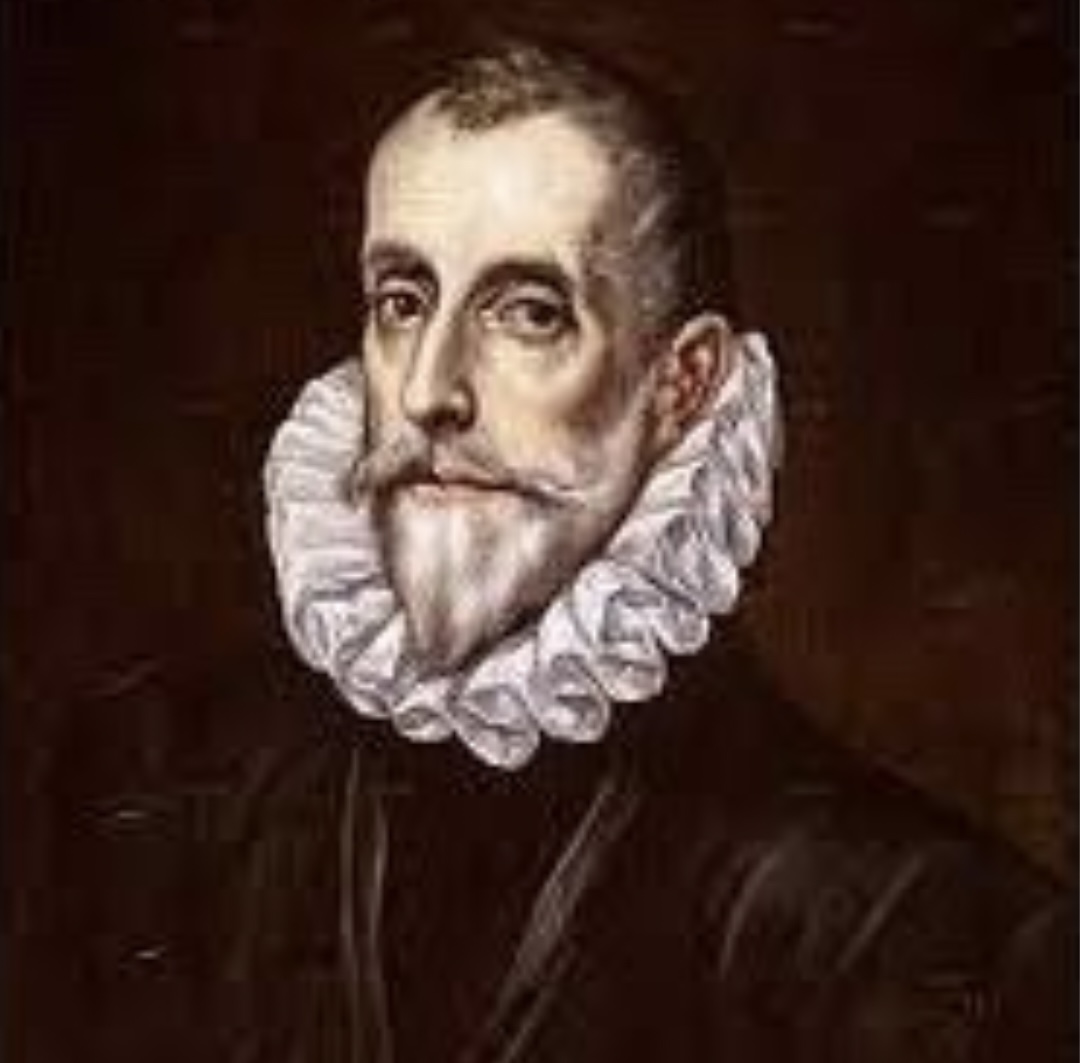
Fernando Vázquez de Menchaca
SpainBiografía
Fernando Vázquez de Menchaca was born in Valladolid in 1512 and died in Seville in 1569. A secular jurist, not a theologian, he is one of the most radical authors of the Iberian legal tradition and probably one of the most modern political thinkers of the 16th century. His work was widely read in Europe and influenced later Protestant political theory.
His main treatise, Controversiarum illustrium aliarumque usu frequentium libri tres (1564), develops a systematic theory of natural law based on the original freedom of all men. For Vázquez, political authority does not derive from the hierarchical nature of the world or from inherited privileges, but from a rational pact between free individuals.
It affirms that all men are born equally free and independent. No one has the natural right to govern another. Power arises exclusively by consent. This idea, formulated before modern contractarian theories, constitutes one of the first complete expressions of the principle of popular sovereignty in Europe.
From this principle derives an explosive conclusion for its time: if the community grants power, it can withdraw it. Political obedience is conditional. Authority is not a personal attribute of the ruler, but a delegated function.
Vázquez de Menchaca thus introduces a language that directly anticipates modern contractualism. The State ceases to be a natural extension of the cosmic order and becomes an artificial institution based on human agreements. His theory will be known outside of Spain and will contribute to the evolution of European political thought towards constitutionalism.
In philosophical terms, it transforms medieval natural law into modern political theory: the foundation of power is human freedom, not hierarchy.
Aportación Filosófica
Affirmed that power is born from a rational pact among free individuals, anticipating popular sovereignty.
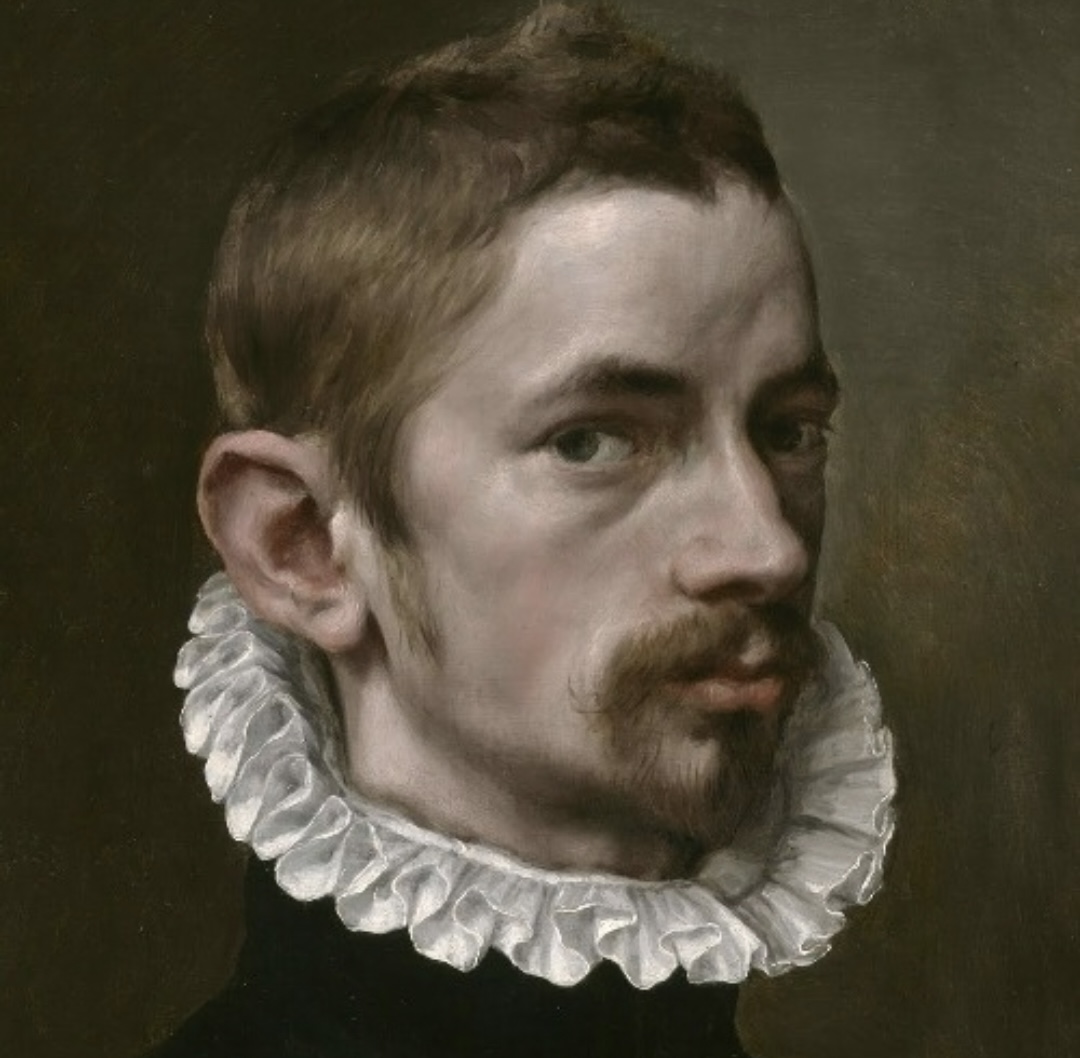
Tomás de Mercado
Spain / Viceroyalty of New SpainBiografía
Tomás de Mercado was born in Seville around 1525, within a city that at that time was the great economic node of the Atlantic world after the opening of the American routes. He entered the Order of Preachers (Dominicans) and trained between Andalusia and New Spain, later moving to Mexico, where he died in 1575. His intellectual life took place, therefore, between two continents: Europe and America. That experience is decisive for understanding his work, because it does not reflect on a local medieval economy, but on the first truly global economy.
His main work, Sum of Deals and Contracts (1569, expanded in 1571), is one of the most sophisticated economic treatises of the 16th century. Written as a manual for confessors and merchants, it systematically analyzes specific commercial operations: maritime loans, bills of exchange, banking, insurance, monetary exchanges, international credit, speculation and intercontinental trade. This is not an abstract morality, but a practical study of the workings of early capitalism.
Mercado starts from a central question: how to integrate commercial expansion—increasingly complex—within the Christian moral order without condemning economic activity. Faced with medieval suspicion towards commerce, he maintains that commercial activity is legitimate if it respects the freedom of the parties and real knowledge of the contract. Economic justice does not depend on political control or a price set by authority, but on transparency and informed consent.
This principle has profound consequences: the free contract becomes the criterion of economic legitimacy. The moral value of a transaction does not depend on the benefit obtained, but on whether there is deception, coercion or serious asymmetry of information. Mercado thus introduces an early notion of contractual equity that anticipates the modern theory of contract and trust as the basis of the market.
Particularly innovative was his analysis of banking and credit. He observed the activity of Sevillian bankers linked to American commerce and studied how monetary circulation, bills of exchange and distance loans transformed the economy. He understood that money was not simply a metal, but a social instrument based on trust and future expectation. For this reason, he condemned practices that distorted that trust - exchange fraud, monetary manipulation or misleading information - more than commercial benefit itself.
In this way he transferred moral freedom to the economic sphere: to trade is to cooperate rationally. The market ceases to be morally suspect and begins to be understood as a form of natural human interaction within society. The economy appears integrated into natural law: voluntary exchanges coordinate interests and generate social order without the need for constant political direction.
This conception anticipates central elements of later economic thought: the importance of information, institutional trust, decentralized coordination and the legitimacy of benefit within a framework of general rules. Centuries later, liberal economics will consider the market as a system of spontaneous cooperation; Mercado had already established his moral foundations.
His contribution also represents the Atlantic dimension of Scholasticism: European philosophical reflection adapts to an expanding world economy. In its pages a coherent moral theory of early capitalism appears for the first time: international trade is not an ethical anomaly, but a manifestation of human sociability ordered by norms of justice.
Thus, Tomás de Mercado contributes to a decisive turn in intellectual history: philosophically legitimizing the market economy without separating it from ethics. Economic freedom is neither amoral nor autonomous, but a concrete application of human freedom within a legal and moral framework. With this, he prepares the conceptual ground on which centuries later modern political economy will be based.
Aportación Filosófica
Legitimized trade based on transparency and informed consent; precursor of modern contractual ethics.
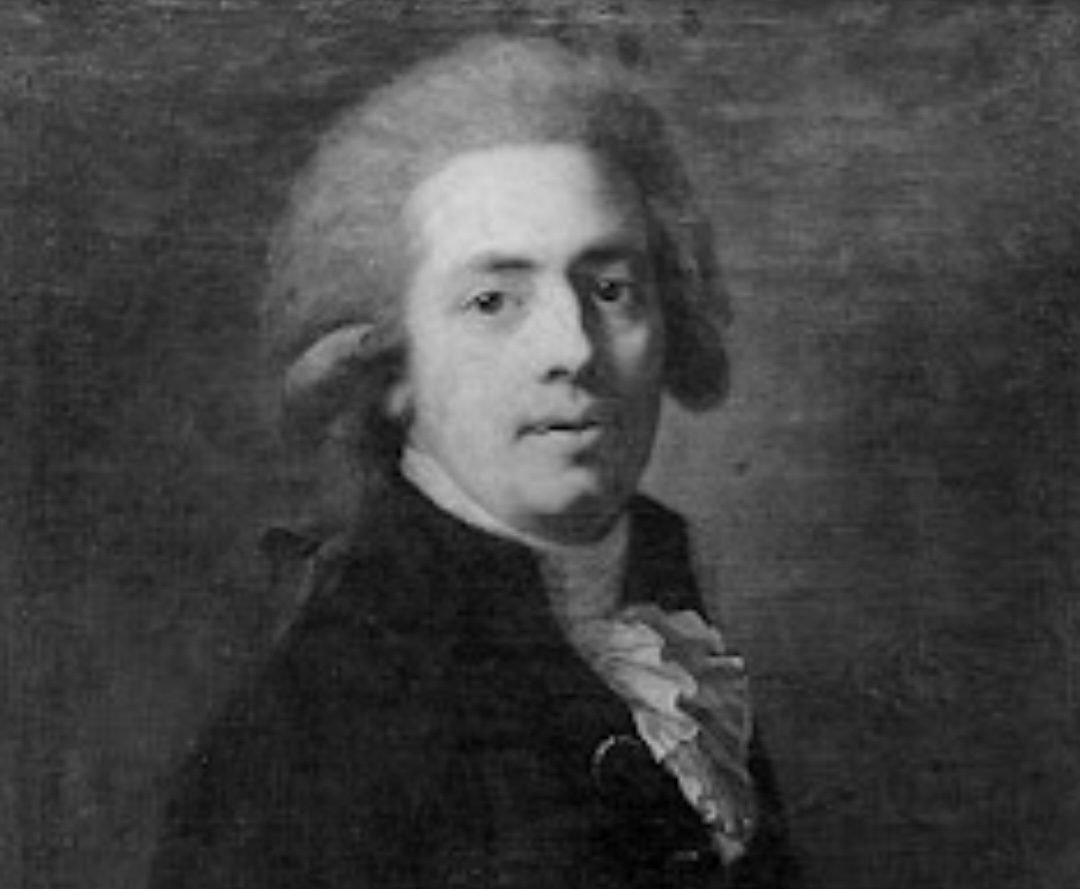
Bartolomé de Medina
SpainBiografía
Bartolomé de Medina was born in Medina de Rioseco in 1527 and died in Salamanca in 1581. A Dominican and professor at the University of Salamanca, he was one of the most influential theologians in 16th century Europe, although today he is better known in specialized circles than in general historiography.
His fundamental contribution was not directly political or economic, but methodological: he formulated moral probabilism. According to this doctrine, when there are divergent reasonable opinions on a moral issue, it is permissible to follow any of the solidly defensible options, even if another seems more likely.
This principle had enormous consequences for modern political philosophy. Individual conscience acquires autonomy from authority. Morality ceases to be a mechanical application of imposed rules and becomes rational deliberation under uncertainty.
In political terms, it implies that power cannot claim an absolute monopoly on practical truth. Human law regulates, but does not replace prudential judgment. Thus emerges an inner space of freedom that later will be fundamental for the notion of freedom of conscience.
Salamanca probabilism will indirectly influence the modern tradition of tolerance and the idea that political obedience does not eliminate personal moral responsibility. Medina, without writing constitutional theory, contributed decisively to the philosophical basis of individual freedom.
Aportación Filosófica
Formulated moral probabilism, granting autonomy to individual conscience against authority.
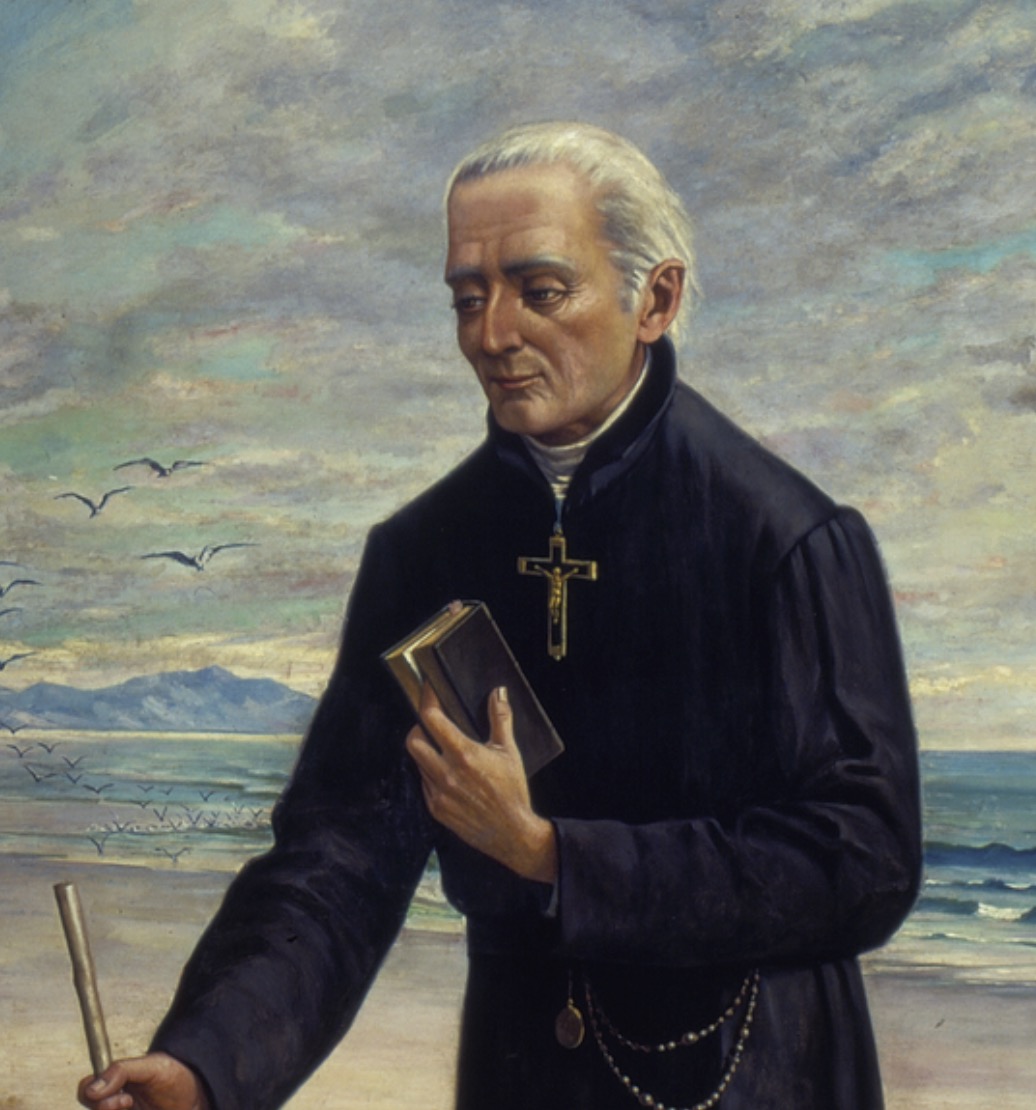
José de Anchieta
Spain / State of BrazilBiografía
José de Anchieta was born in La Laguna (Tenerife) in 1534 and entered the Society of Jesus when he was very young. He was sent to Brazil, where he spent most of his life among indigenous people.
He learned local languages, wrote grammars and catechisms, and organized autonomous communities called reductions. These communities were not simple missions: they were hybrid political structures where indigenous authority and Christian organization coexisted.
Anchieta understood politics as a gradual social order. Legitimate authority had to emerge from existing cultural forms and not be imposed violently. This idea reflects the scholastic notion of natural law applied anthropologically.
His epistolary work shows a practical conception of power: governing consists of harmonizing community, morality and custom. Anticipates the modern principle of subsidiarity.
He died in 1597 in Brazil. He is considered the intellectual founder of colonial Brazilian society.
Aportación Filosófica
Implemented subsidiary political structures and organized communities respecting local cultural forms.
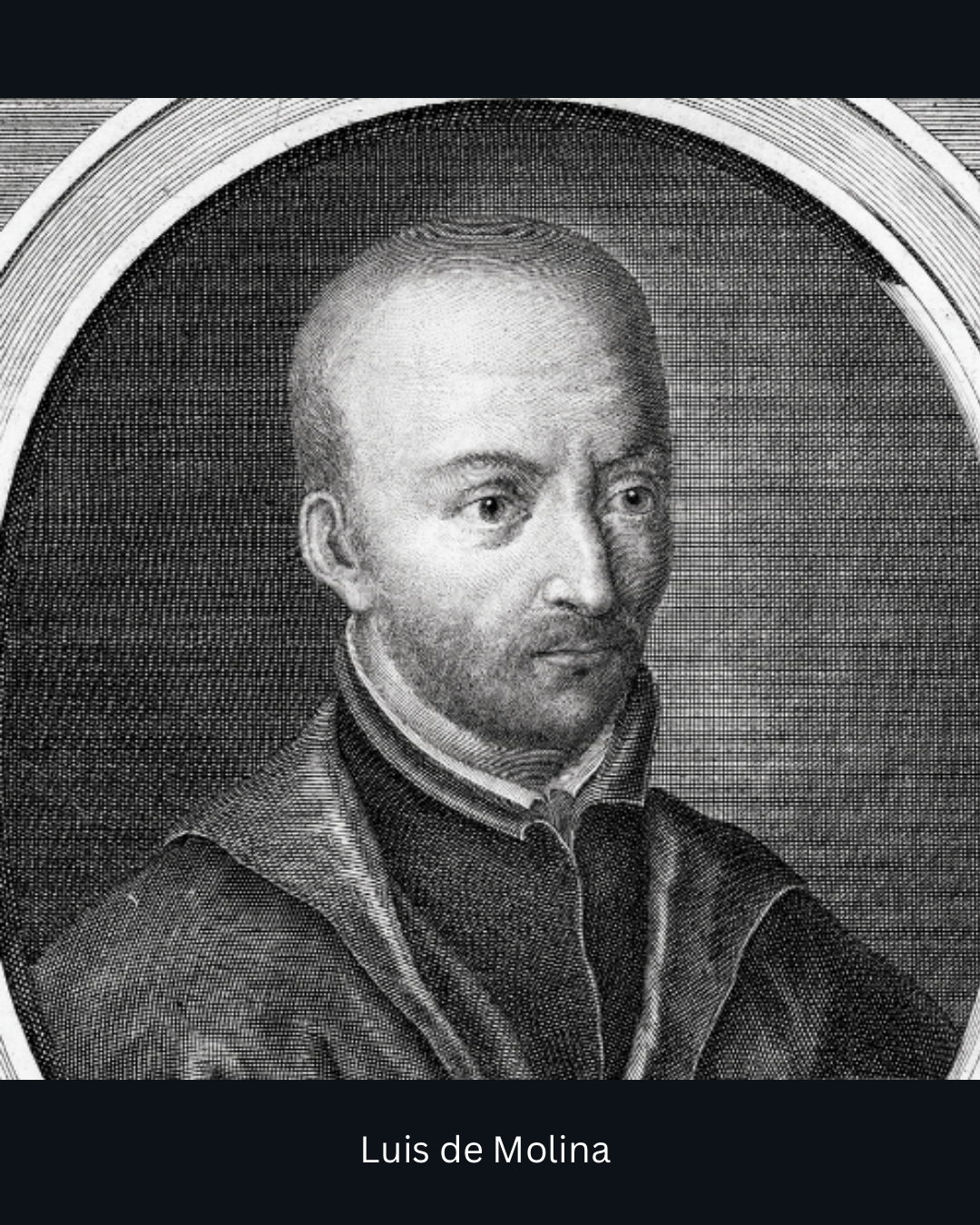
Luis de Molina
SpainBiografía
Luis de Molina was born in Cuenca in 1535 and died in Madrid in 1600. A Jesuit and professor in Coimbra, he was one of the most influential intellectual figures in 16th century Europe. His fame comes primarily from the controversy over human freedom and divine grace, but his thought also encompasses economics, law, and political theory.
His monumental work, De Iustitia et Iure (1593–1609), constitutes one of the most extensive treatises on natural law and economic justice. In it he develops a detailed theory of property, contracts, trade and price.
Molina deepens the Salamancan idea of market value: the fair price arises from the free agreement between buyers and sellers within normal conditions of competition. Even if the result seems unequal, it is fair if it comes from free consent without fraud or coercion.
His key philosophical contribution is to transfer personal freedom – defended in his theory of grace – to the social sphere. Economic cooperation is an extension of human freedom. Society is organized through free interactions coordinated by general rules.
He also analyzed the legitimacy of slavery, international trade, and private property in terms of natural law, not political tradition. The positive law must respect that prior rational order.
With Molina, scholasticism reaches an almost complete formulation of the market economy as a legitimate moral institution. Commerce is no longer tolerated and becomes an expression of rational sociability.
Aportación Filosófica
Defined the market as a moral institution where price arises from free agreement, linking economy and freedom.
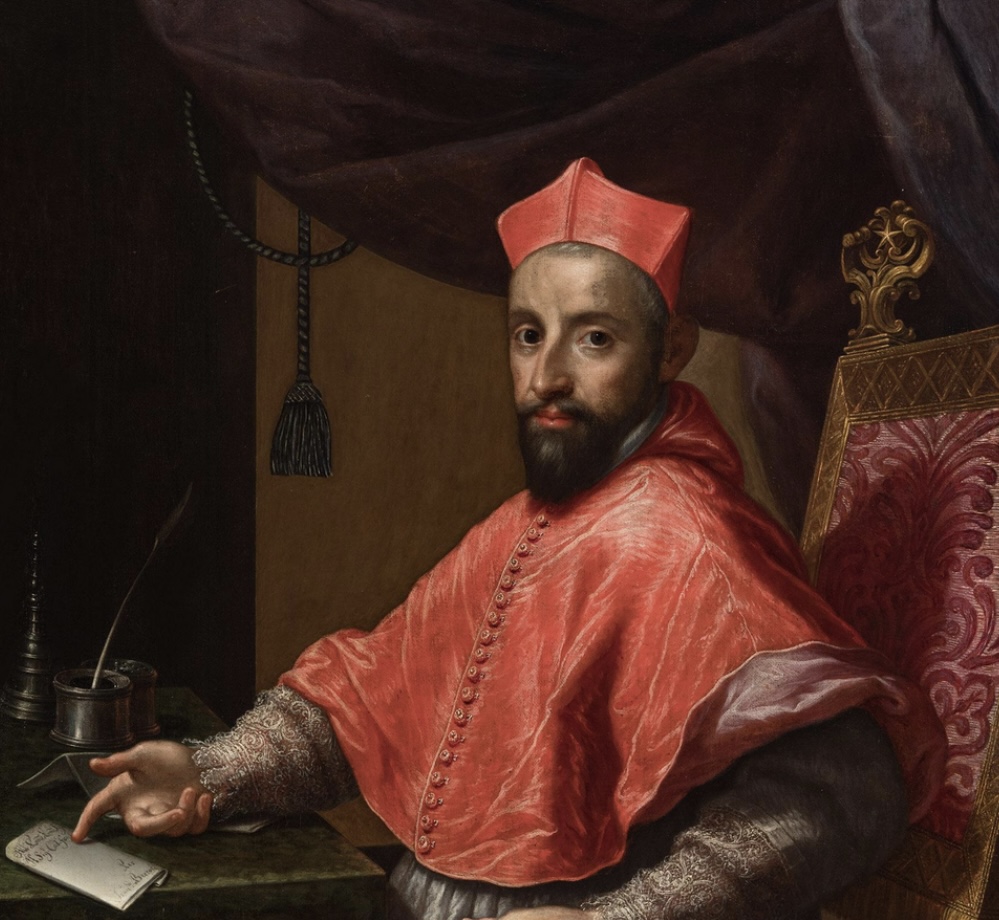
Pedro da Fonseca
PortugalBiografía
Pedro da Fonseca was born in Cortiçada (Portugal) in 1528 and entered the Society of Jesus at a very young age, training at the University of Coimbra, one of the great intellectual centers of the Hispanic monarchy. There he developed his entire academic career and became the central figure of Iberian Aristotelianism of the 16th century. His contemporaries called him “the Portuguese Aristotle” not because of simple philological erudition, but because he managed to systematically reconstruct Aristotelian metaphysics and logic as an operational foundation for theology and practical philosophy.
His most influential work, Institutionum Dialecticarum Libri Octo (1564), was for decades a university manual in much of Europe—including Protestant universities. The importance of this work exceeds formal logic: Fonseca intended to offer a theory of knowledge capable of substantiating the objective intelligibility of reality. Against late medieval nominalism, he defended that universal concepts are not mere mental conventions, but rather rational captures of a real common nature.
This metaphysical statement had profound political consequences. If there is a shared objective human nature, there is also a knowable objective morality: natural law. And if natural law is rationally knowable, political power cannot be founded on the mere will of the sovereign. Thus, even before Vitoria, Suárez or Mariana, Fonseca established the philosophical condition that makes all subsequent scholastic political theory possible: politics belongs to the rational order of nature, not to the voluntarist order of power.
He died in Lisbon in 1599, leaving the metaphysical basis on which the entire legal and political architecture of the Second Scholasticism would be built.
Aportación Filosófica
Established the metaphysical basis of natural law, subordinating politics to the rational order of nature.
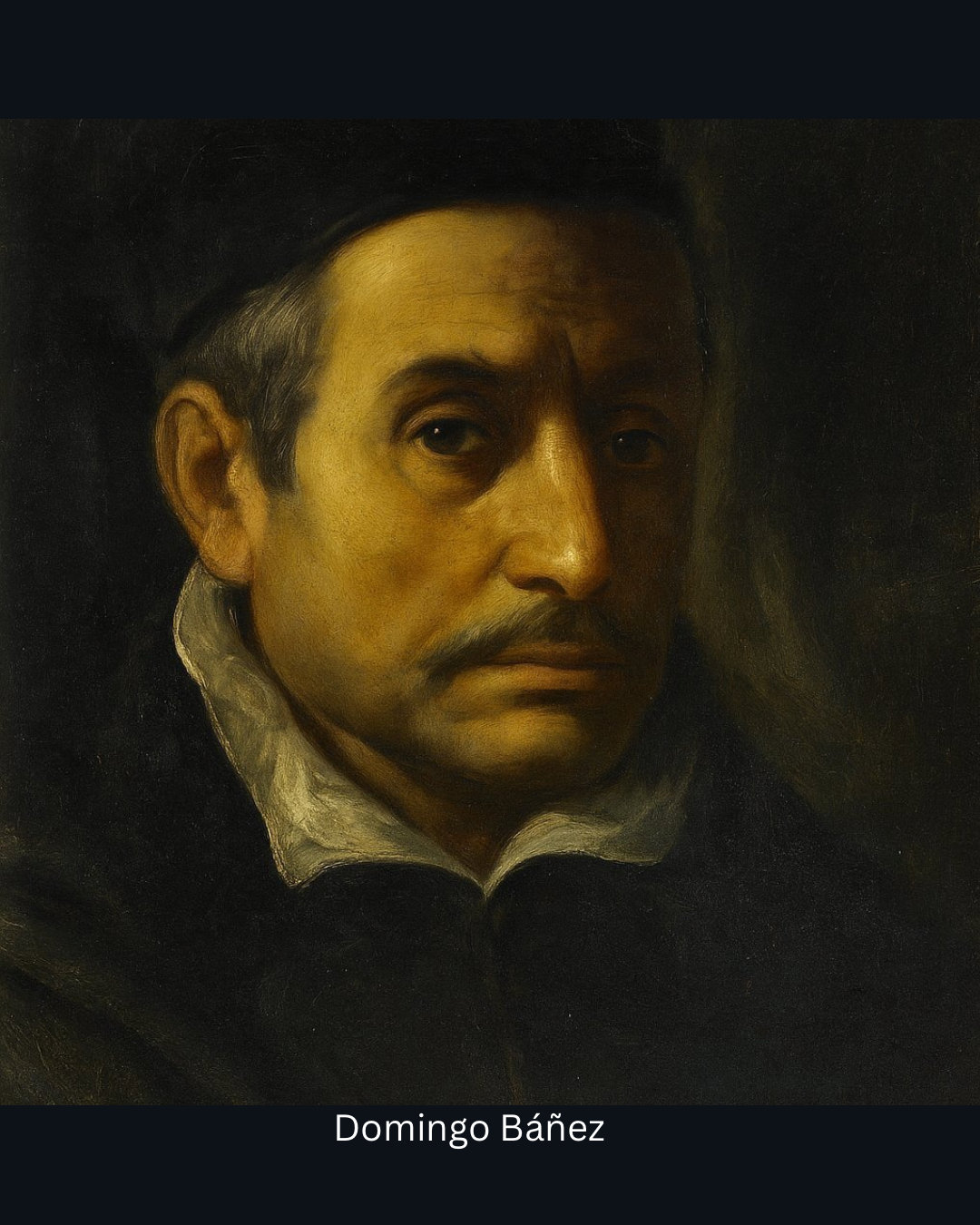
Domingo Báñez
SpainBiografía
Domingo Báñez was born in Valladolid in 1528 and died in Medina del Campo in 1604. Dominic, an intellectual disciple of the school of Vitoria, was one of the great theologians of the Counter-Reformation and Molina's main intellectual opponent in the famous auxiliis controversy over freedom and grace.
His main work consists of Commentaries on the Summa Theologiae published between 1584 and 1604. Although apparently theological, they contain profound philosophical and political implications.
Báñez defended a robust conception of causality and natural law: the moral world has a rational objective structure that the human will cannot arbitrarily alter. Freedom does not consist in the absence of order, but in acting in accordance with reason.
This has political consequences: human authority is subordinate to natural law. The ruler does not create good and evil by decree. The unjust law does not bind conscience.
Although less directly economic than other people from Salamanca, Báñez contributed decisively to the idea of objective limits on political power. Authority is not the ultimate source of normativity. There is a prior moral order that the law must reflect.
His thought reinforces the metaphysical basis of constitutionalism: legitimate power is power in accordance with reason, not mere dominant will.
Aportación Filosófica
Defended the objective limits of political power; authority does not create law, but must reflect it.
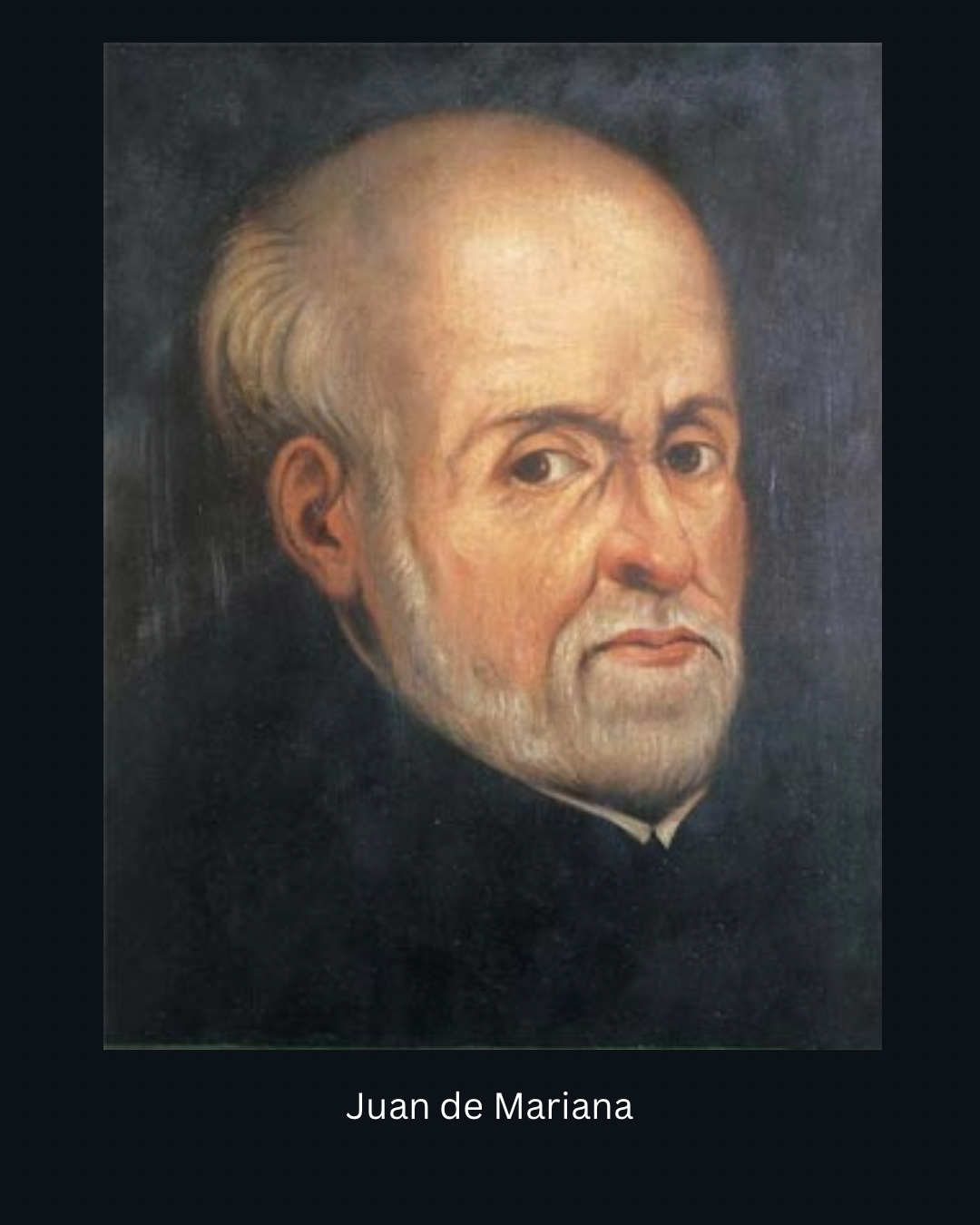
Juan de Mariana
SpainBiografía
Juan de Mariana was born in Talavera de la Reina (Crown of Castile) on April 2, 1536 and died in Toledo on February 17, 1624. He entered the Company of Jesus at a very young age and was trained in Alcalá de Henares and Rome. During his youth he taught theology at the Roman College and at the Sorbonne in Paris, a decisive experience because it put him in direct contact with the French religious wars, the problem of tyrannicide, and European debates on political legitimacy. Upon his definitive return to Spain he settled in Toledo, where he wrote most of his historical, economic and political work.
Although he was an extremely prolific author—his Historiae de rebus Hispaniae (1592) was for centuries the official history of Spain—his philosophical relevance is concentrated in three fields: theory of political power, right of resistance, and monetary criticism.
His most influential work, *De Rege et Regis Institutione* (1599), constitutes one of the most radical texts of European political philosophy before the Enlightenment. In it Mariana develops a complete theory of political legitimacy based on natural law. It states that power belongs neither to the king by nature nor by direct divine right, but originally to the political community, which delegates it to the ruler for the common good. The monarch is therefore a fiduciary magistrate, not an owner of the State.
From this premise he derives his most famous thesis: if the ruler violates natural law—oppresses freedom, confiscates property, or rules arbitrarily—he becomes a tyrant and can be deposed. In certain extreme circumstances, it even justifies tyrannicide. This is not a defense of indiscriminate political violence, but rather a logical consequence: if authority derives from the people, it loses legitimacy when it destroys the moral order it was supposed to protect.
Mariana also formulates a surprisingly modern tax theory: taxes require consent. Taxation without social approval is morally equivalent to expropriation. This idea directly anticipates the later constitutional principle of political representation.
Even more novel was his financial contribution. In De Monetae Mutatione (1609) he criticized the Crown's manipulation of currency—the reduction of the metallic content of coins—as a form of covert theft. He argued that the inflation generated by the authority is an illegitimate tax because it reduces purchasing power without the consent of citizens. Here appears for the first time a moral formulation of the modern monetary problem: political power cannot indirectly appropriate private property through devaluation.
These theses cost him a legal process for lese majeste in 1609–1610. He was arrested, interrogated by the Inquisition and his work was banned and burned in Paris in 1610 following the assassination of Henry IV, which some attributed to the spread of his ideas about tyranny. Although he was not ultimately convicted, the episode reveals the extent to which his theories were perceived as politically explosive in absolutist Europe.
The historical importance of Mariana lies in the fact that it connects three planes that until then had remained partially separated: moral theology, public law and economics. For him, political freedom does not depend only on the form of government, but also on respect for property, a healthy currency and fiscal consent. The State is thus subordinated to a prior moral order.
His ideas circulated widely in England during the 17th century, amidst the polemics against absolutism, and many of his arguments later reappeared in Locke: popular sovereignty, the right of resistance, the protective function of government, and the centrality of property. Indirectly, these principles passed into American constitutionalism. It is no coincidence that John Adams owned a copy of De Rege and that Jefferson knew his work.
Mariana thus represents one of the culminating points of the Second Scholasticism: a thought that, starting from Thomism, manages to formulate a fully modern theory of limited power. In his philosophy, the State ceases to be an almost natural reality and becomes a morally conditioned institution. His conclusion can be summarized in a simple but revolutionary idea for its time: political power exists to protect human freedom and loses legitimacy when it stops doing so.
Aportación Filosófica
Affirmed that power resides in the community; criticized inflation as theft and justified the deposition of the tyrant.
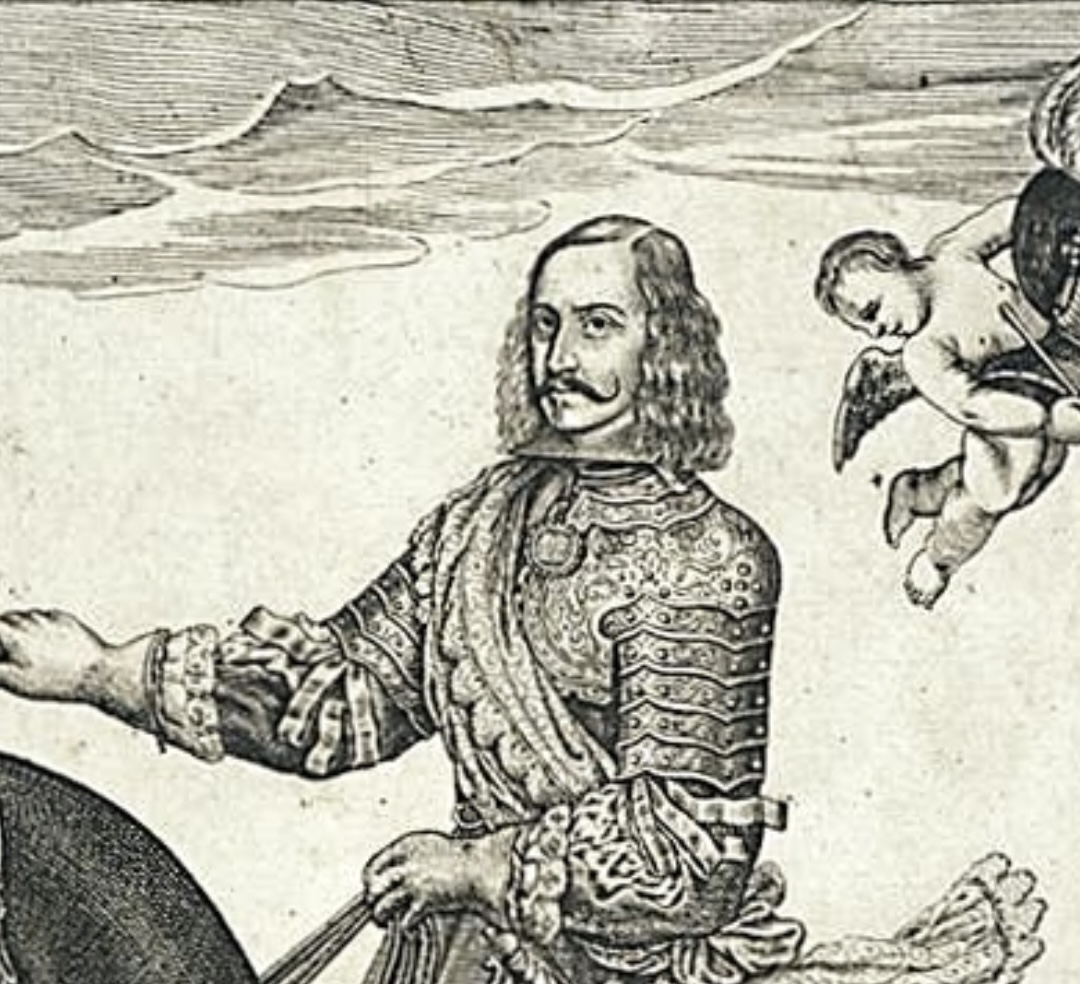
Pedro de Aragón
SpainBiografía
Pedro de Aragón was born in Salamanca around 1545 and died in 1592. A Dominican formed in the intellectual environment after Francisco de Vitoria, he taught theology at the University of Salamanca at the height of the Second Scholasticism. He belongs to the generation that no longer faces the discovery of America as a novelty, but rather systematizes the philosophical consequences of this new legal and economic world.
His major work, the Commentaries on Thomas Aquinas' Summa Theologiae (especially on Justice and Dominion), develops a central question of modern political thought: what it means to legitimately possess something. Aragón analyzes property not as a mere physical occupation, but as a legal relationship founded on the social nature of man.
For him, dominion does not arise from the power of the strongest nor from the privilege of the ruler, but from the rational order of the community. Human society needs a stable distribution of goods to exist, and that is why property is legitimate as long as it fulfills a social function aimed at the common good. Political power does not create property: it recognizes it.
This approach radically limits the authority of the ruler. The prince is not the owner of the kingdom or the property of his subjects; manages a prior order. The political community has its own rights against power. Aragon thus contributes to transforming the monarchy from personal patrimony into a legal institution.
Its historical importance lies in developing the legal dimension of natural law: it converts the moral theory of the community into institutional architecture. Political authority is subordinated to a framework of pre-existing rights, anticipating the modern idea of constitutional order.
Aportación Filosófica
Conceptualized property as a social function and limited the prince's authority over subjects' rights.
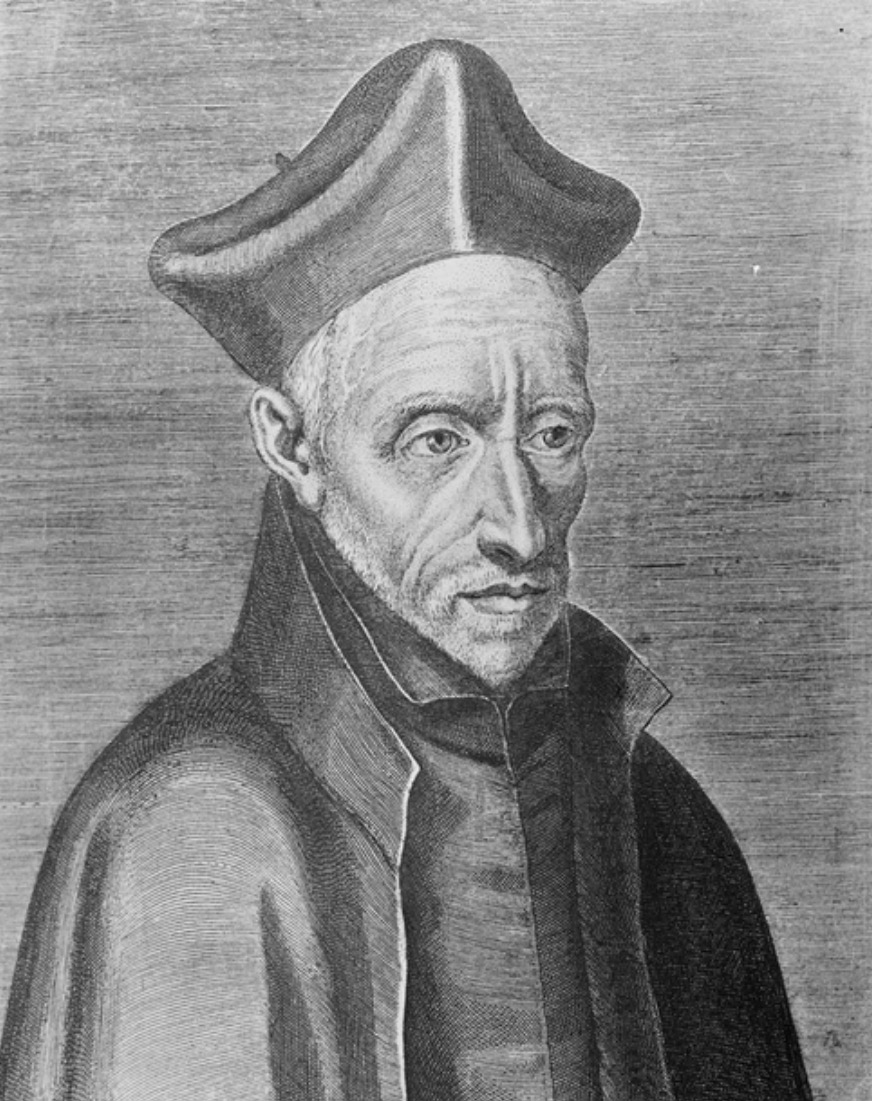
Francisco Suárez
SpainBiografía
Francisco Suárez was born in Granada on January 5, 1548 and died in Lisbon on September 25, 1617. A Jesuit, professor in Salamanca, Rome, Alcalá, Coimbra and Évora, he was one of the greatest systematic philosophers of the Modern Age and probably the last great scholastic metaphysician with direct influence on European politics. His work encompasses metaphysics, moral theology, and legal philosophy, but his political impact was especially concentrated in Defensio Fidei Catholicae adversus Anglicanae sectae errors (1613).
The Defensio Fidei was written in a very specific context: the English political-religious crisis after the Anglican Reformation. King James I of England had imposed the Oath of Allegiance (1606), which required the denial of any supratemporal authority over the monarch and consolidated a doctrine of absolute divine right of the king. Suárez's work sought to refute that position, but his response ended up having much broader consequences than mere confessional controversy.
Suárez precisely formulated a revolutionary thesis: political power comes from God as the ultimate foundation of the moral order, but it is not delivered directly to the king, but first to the political community, which delegates it to the ruler through consent. The king is not the owner of power; He is your administrator. Therefore, civil authority is essentially fiduciary.
This doctrine implied three decisive consequences:
The origin of power is social, not personal.
The ruler is limited by the common good and natural law.
A community can resist the tyrant if he destroys the legal order.
James I immediately understood the political significance of the work. In 1614 he ordered the public burning of the Defensio Fideien London and Oxford. The text was considered not only theologically dangerous but also constitutionally subversive: it denied the intellectual basis of English absolutism at a time of growing tensions between Crown and Parliament.
Paradoxically, the English condemnation favored its dissemination. European universities—including those in the Protestant sphere—debated the Suarezian thesis, and its arguments indirectly passed into the British political vocabulary. In the following decades, during the controversies of the 17th century (English Civil War, Commonwealth, and Glorious Revolution), the central question would no longer be whether power comes from God—that was accepted—but rather who it immediately belongs to: the king or the people.
In that sense, Suárez did not influence England as a massively read author, but as an inevitable political problem. The defenders of absolutism had to refute him; The constitutionalists ended up assuming its conceptual structure: mediate popular sovereignty, limited government and delegated power. The Anglo-Saxon political philosophy of consent—which will culminate in Locke—develops within that previously defined polemical framework.
Thus, Suárez's contribution was not simply theological. By transferring sovereignty from the person of the monarch to the political community, he provided the conceptual architecture on which modern theories of constitutionalism would be built: power as a revocable trust and subordinate to a higher legal order.
Aportación Filosófica
Systematized the theory of delegated power: sovereignty resides in the people and the ruler is a fiduciary administrator.
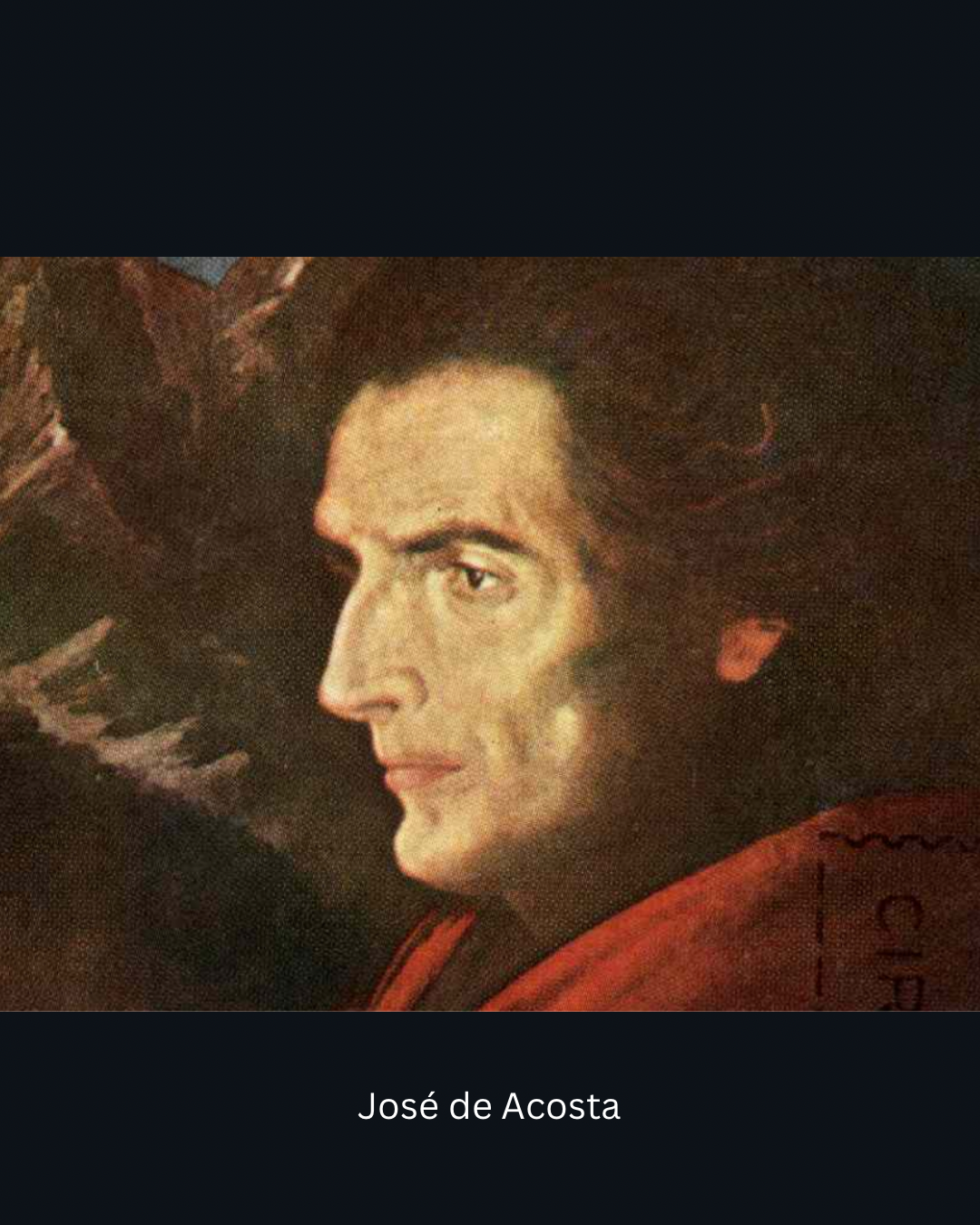
José de Acosta
Spain / Viceroyalty of PeruBiografía
José de Acosta was born in Medina del Campo in 1540 and died in Salamanca in 1600. A Jesuit, missionary in Peru and Mexico, he was one of the first thinkers to philosophically analyze non-European societies from rational and not merely theological criteria.
His best-known works, De Procuranda Indorum Salute (1588) and the Natural and Moral History of the Indies (1590), are not only missionary texts, but authentic treatises of philosophical anthropology. Acosta maintains that indigenous peoples have their own political rationality and legitimate forms of social organization.
He rejects the idea of natural inferiority and argues that cultural differences do not invalidate human dignity. Political authority must adapt to the nature of communities, not destroy them.
This principle implies a universalist notion of humanity: natural law is common to all, but its institutional realization may vary. Civilization is not imposition but internal development.
Acosta thus contributes to the birth of modern political anthropology: cultural diversity is compatible with the moral unity of humanity. Legitimate politics recognizes that plurality.
Aportación Filosófica
Defended indigenous political rationality and the moral unity of humanity against cultural diversity.
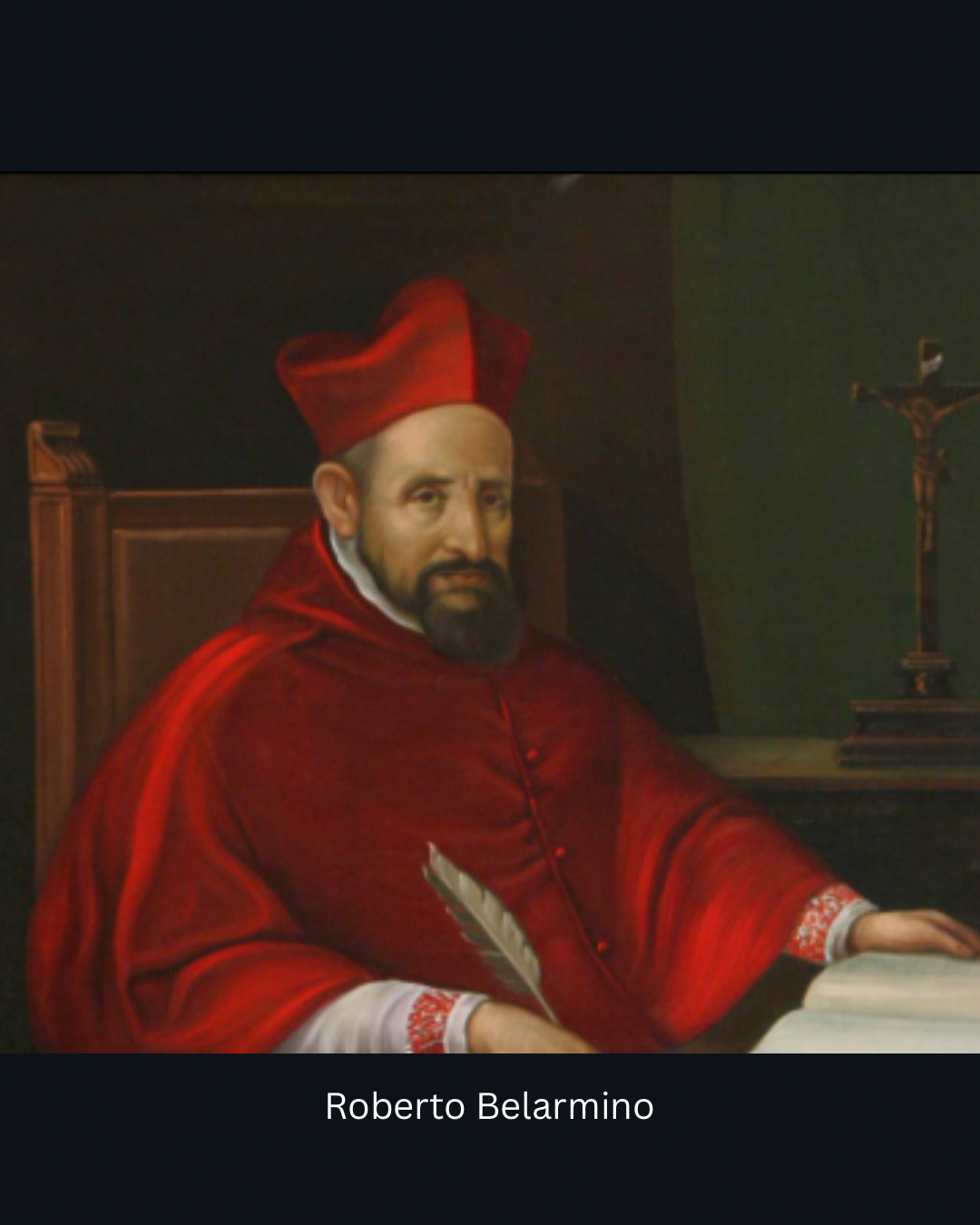
Roberto Belarmino
Papal StatesBiografía
Roberto Francisco Rómulo Belarmino was born in Montepulciano (Grand Duchy of Tuscany) on October 4, 1542 and died in Rome on September 17, 1621. He entered the Society of Jesus at a very young age and was trained in Rome, Padua and Leuven, soon becoming one of the great theologians of the Counter-Reformation. He was a professor at the Roman College, cardinal since 1599 and doctrinal advisor to the papacy in an era marked by the European religious wars, the crisis of authority after the Protestant Reformation and the rise of absolute monarchies.
Although his historical fame is often linked to the controversy with Protestantism—his monumental Disputationes de Controversiis Christianae Fidei (1586–1593) was the most influential theological treatise of modern Catholicism—his philosophical-political importance is equally profound. In works such as De Laicis (1610), De potestate summi pontificis in rebus temporalibus (1610), and in several previous political texts integrated into the Controversies, Bellarmine formulated a theory of civil power that transformed the European debate on sovereignty.
Its central thesis is based on a key distinction: political power comes from God in terms of its moral origin—because human sociability is part of nature—but is not granted directly to any specific ruler. It resides first in the political community, which decides the form of government and delegates authority. The king, therefore, does not rule by personal divine right, but through the mediation of the people.
This position frontally attacked the doctrine of the divine right of kings defended by English and French absolutist theorists. Against the idea that the monarch is the immediate vicar of God, Bellarmine maintains that the ruler is a derived authority: the political community is the immediate subject of power and the prince its administrator.
From this premise it introduces a decisive consequence: if authority comes from the consent of the community, it can be modified when it no longer fulfills its purpose—the common good. He does not develop the direct defense of tyrannicide as Mariana will do, but he establishes the legal basis of later constitutionalism: political authority is conditional.
His thinking had an enormous impact precisely among his adversaries. The Anglican Robert Filmer wrote Patriarcha (published in 1680) to refute him, and in doing so spread his ideas in England. The historical paradox is that, by attacking Bellarmine, he introduced his theory of popular sovereignty into the English political debate that would lead to the Glorious Revolution and Locke.
Belarmino also contributed a structural reflection on the forms of government. He considered that no pure system—monarchy, aristocracy, or democracy—was perfect, and defended a mixed constitution capable of balancing stability and freedom. This idea anticipates the model of combined government that will characterize modern constitutionalism and that will later appear in British and American political thought.
His influence was particularly important in the Iberian scholastic tradition: Suárez systematized his theory, and Mariana radicalized its consequences. In this way, Bellarmine occupies a decisive intermediate position: he translates medieval Thomism into modern political language and provides the conceptual basis that will allow us to think of power as representation and not as property.
Ultimately, his philosophical contribution consists of having definitively separated political legitimacy and absolutism. For Bellarmine, authority is not a sacred force inherent to the ruler, but rather a moral function delegated by the community to preserve justice. With this he contributed to the intellectual transition that would lead from medieval political theology to contemporary constitutionalism: power is legitimate only as long as it remains ordered to the common good and sustained by the consent of those who obey it.
Aportación Filosófica
Held that civil authority is mediate and derived from popular consent, influencing constitutionalism.
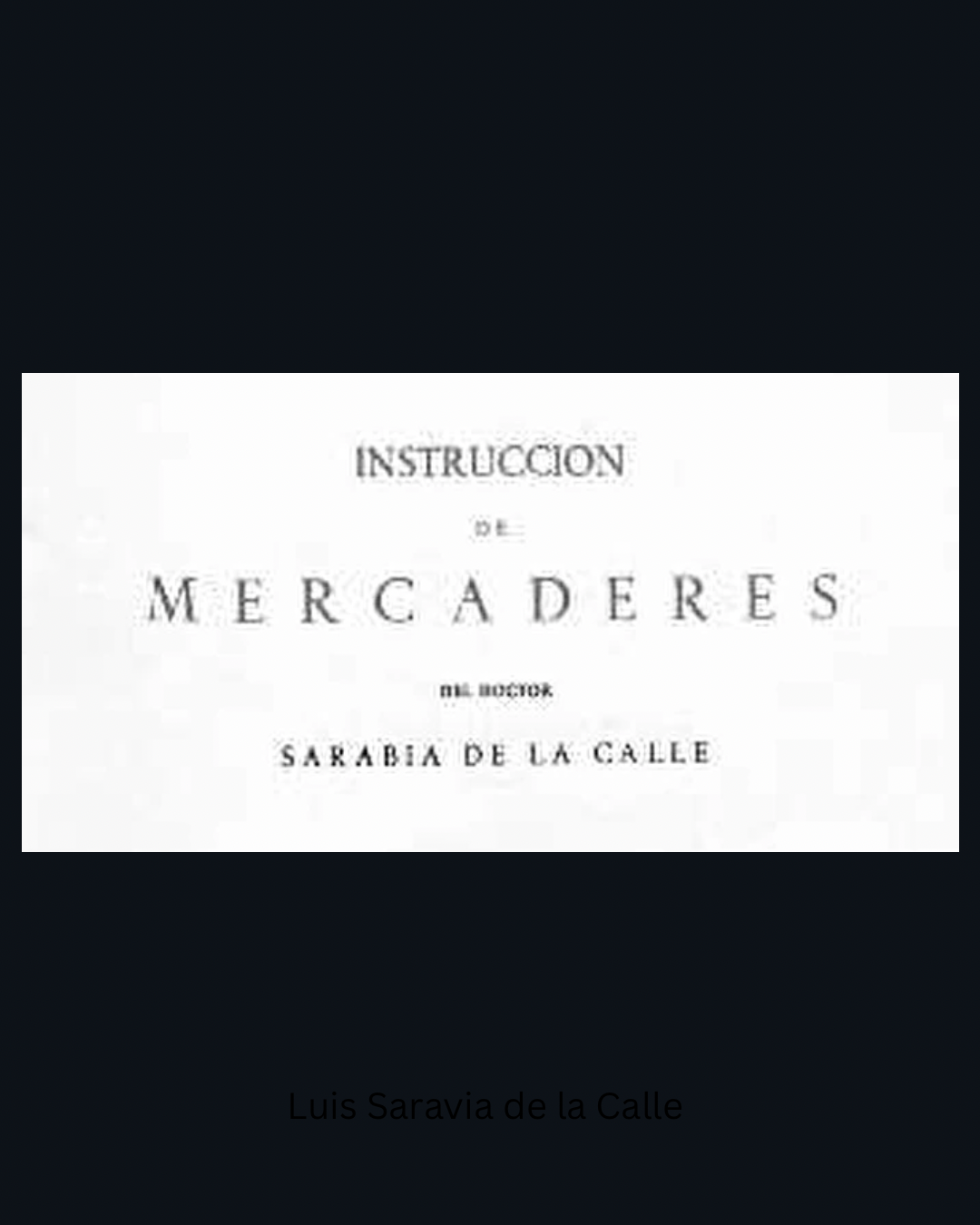
Luis Saravia de la Calle
SpainBiografía
Luis Saravia de la Calle was a Castilian jurist and economist active around the middle of the 16th century. Little is known about his personal life, but his work had great relevance in the early economic debate.
In his treatise on trade and prices he defended that the value of goods does not depend on their objective essence or political decree, but on the common estimation of men in exchange. It is one of the first explicit formulations of market value.
His argument attacked the medieval tradition of prices set by authority. The ruler cannot determine economic value because it arises from social interaction. The economy has its own logic prior to power.
Saravia thus introduces the idea of spontaneous order: prices coordinate dispersed information without central planning. This principle will be essential in later economics.
Although his name is rarely mentioned, he represents a decisive link in the transition from medieval moral economy to modern social economy.
Aportación Filosófica
In his treatise on commerce and prices, he argued that the value of goods does not depend on their objective essence or political decree, but on the common estimation of men in exchange. It is one of the first explicit formulations of market value. His argument attacked the medieval tradition of prices fixed by authority. The ruler cannot determine economic value because it arises from social interaction. Economics has its own logic prior to power. Saravia thus introduces the idea of spontaneous order: prices coordinate dispersed information without central planning. This principle will be essential in later economics.
Juan de Salas
SpainBiografía
Juan de Salas was born in 1553 in Castile and died in 1612. Jesuit and professor in Salamanca, he belongs to the generation after Suárez and participated in the maturation of scholastic legal-economic thought.
His major work, Commentarii in Secundam Secundae Divi Thomae, discusses contracts, property, restitution, and distributive justice in detail. Salas studies economic exchange as an interpersonal relationship based on rational trust.
It develops a key idea: contractual justice depends on actual knowledge of the conditions. Deception invalidates the contract because it breaks the moral equality between the parties. Economics thus becomes an extension of the ethics of human communication.
This implies that the market is neither morally neutral nor arbitrary: it works correctly when the rules are general and consent is free. Political power must protect these conditions, not replace them.
Salas thus contributes to the institutional conception of the market: an order of general rules rather than specific decisions. His thinking anticipates the modern notion of legal security as the foundation of economic prosperity.
Aportación Filosófica
Defined the market as an order of norms based on rational trust and legal certainty.
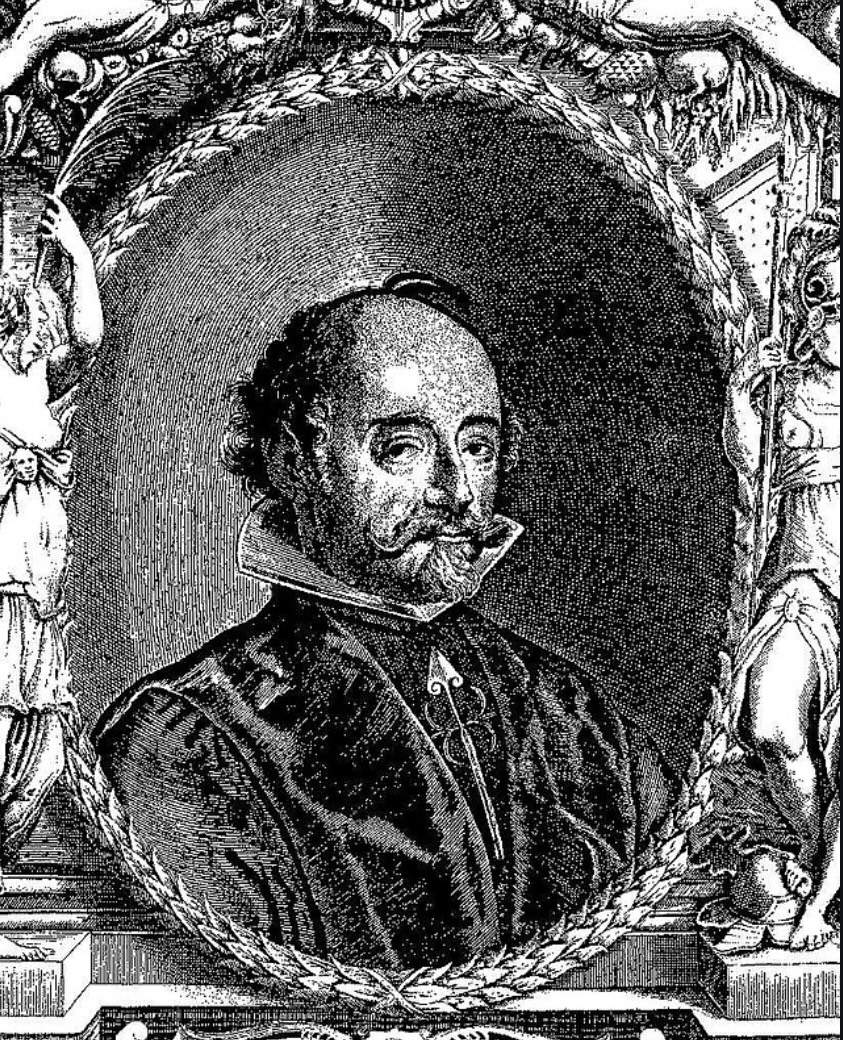
Juan de Solórzano Pereira
Spain / Viceroyalty of PeruBiografía
Juan de Solórzano Pereira was born in Madrid in 1575 and died in 1655. Jurist and high official of the Hispanic monarchy, he was an oidor in Lima and a member of the Council of the Indies. It represents the practical application of scholastic thought to the government of a world empire.
His main work, De Indiarum Iure (1629–1639), is a vast systematization of Indian law. In it he tries to solve an unprecedented problem: how to legally govern culturally different territories and peoples without converting domination into mere force.
Solórzano develops the idea of legal pluralism within a common order. Local communities retain their norms as long as they do not contradict natural law. The empire does not completely standardize; integrate
This approach anticipates modern multinational constitutionalism: political authority does not destroy communities, it coordinates them under higher principles of justice. Legitimate power is not homogenizing but articulating.
His thinking transforms natural law into global administrative law. Politics stops being a territorial domain and becomes a legal system of coexistence between peoples.
Aportación Filosófica
Proposed a legal pluralism where communities retain their norms under superior principles of justice.
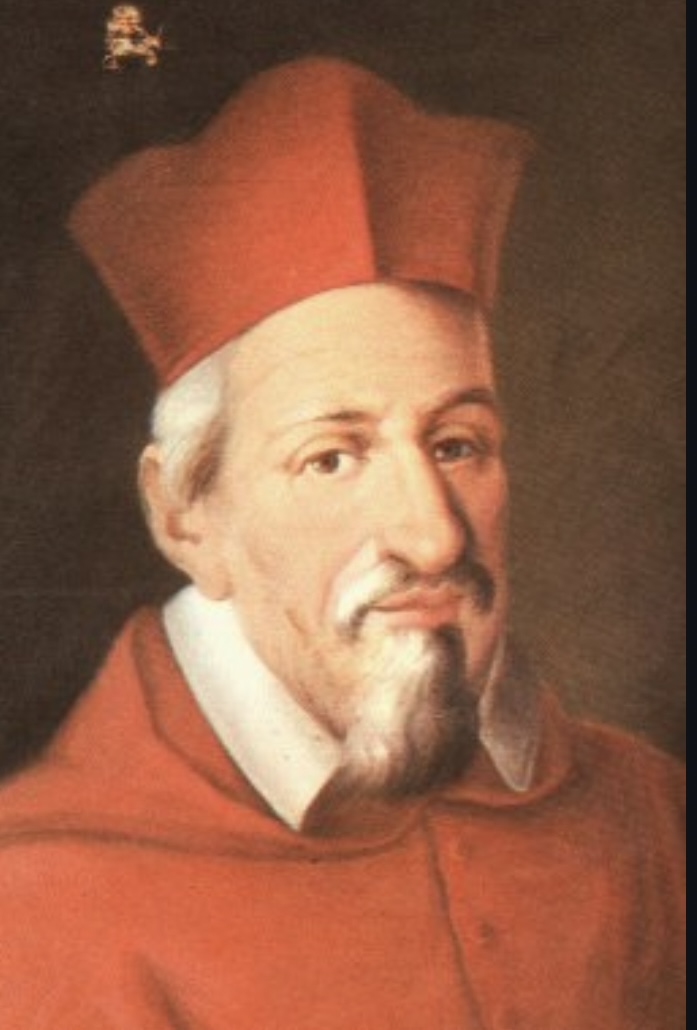
Juan de Lugo
SpainBiografía
Juan de Lugo was born in Madrid in 1583 and died in Rome in 1660. Jesuit, professor in Salamanca and later cardinal in the Roman Curia, he belongs to the late phase of the Second Scholasticism, when Salamanca thought had already spread throughout Europe and America. His work represents a final synthesis of the system before the enlightened turn.
His main treatise, De Iustitia et Iure (1642), is one of the most refined analyzes of economic value in the scholastic tradition. Lugo deepens the notion of fair price developed by Soto and Molina and formulates a theory surprisingly close to modern economics: the value does not reside in the thing or in the labor incorporated, but in the utility estimated by people.
It states that the price depends on subjective appreciation within a specific social context. Two individuals can value a good differently without either of them being wrong. The market does not discover an objective essence of value, but rather coordinates human expectations.
This idea directly anticipates the subjective theory of value developed centuries later by marginalist economics. But in Lugo the conclusion is philosophical: the economy is a process of social knowledge. Political power cannot set prices because it does not have the dispersed information of the community.
Thus, the market appears as a collective cognitive order, a social institution that transforms individual preferences into coordinated results. Economic justice consists of allowing this process under general rules.
With Lugo, scholasticism reaches an almost modern understanding of the economy as a spontaneous information system, anticipating central elements of contemporary economic thought.
Aportación Filosófica
Formulated a subjective theory of value based on estimated utility, anticipating marginalist economics.
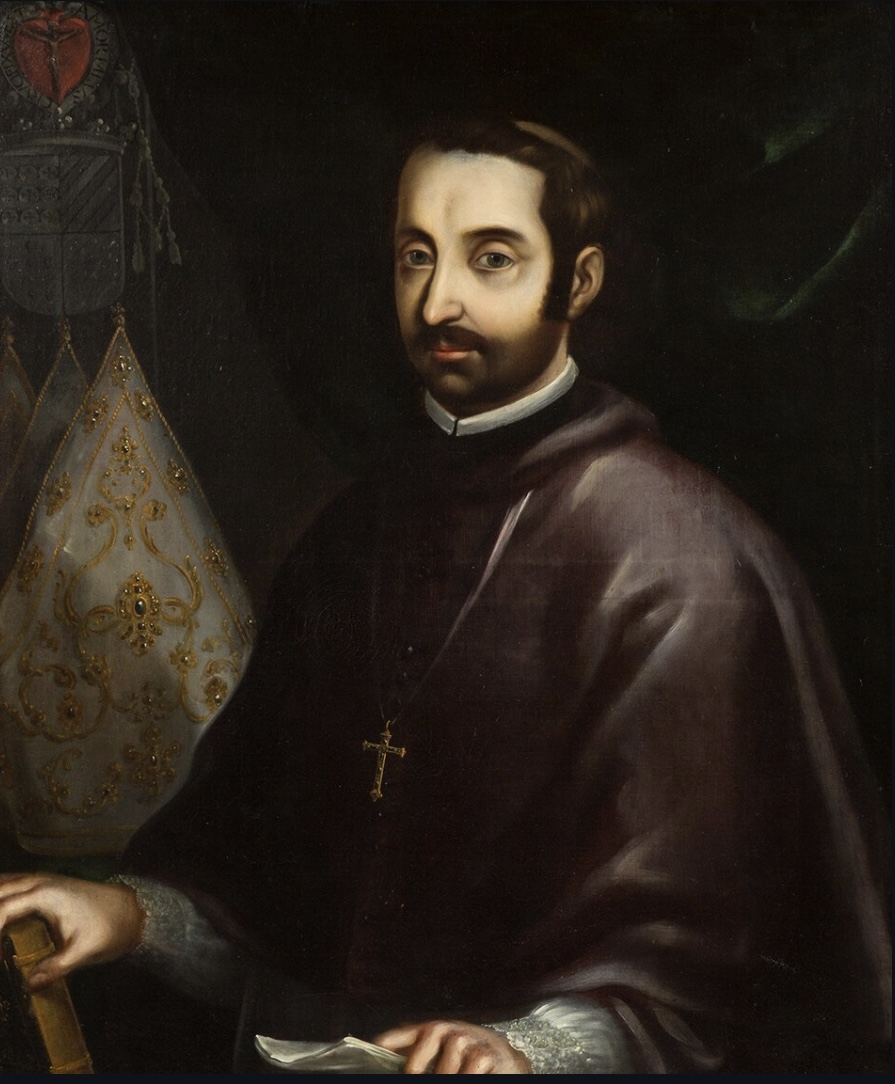
Juan de Palafox y Mendoza
Spain / Viceroyalty of New SpainBiografía
Juan de Palafox y Mendoza was born on June 24, 1600 in Fitero, in the Kingdom of Navarra, natural son of Jaime de Palafox, Marquis of Ariza. Recognized by his father years later, he received a complete humanist education: he studied at the universities of Huesca, Alcalá and Salamanca, where he came into contact with the legal and theological tradition of the Second Scholasticism. That education definitively marked his conception of political power: not as dominion, but as moral responsibility.
After an administrative career at the court of Philip IV - where he worked in the Council of the Indies - he was named bishop of Puebla de los Ángeles and visitor general of New Spain in 1639. He arrived in Mexico in 1640 at a time of structural corruption in the colonial administration. His actions were not merely pastoral: he applied legal principles derived from natural law to the concrete government of American society.
During his brief period as interim viceroy (1642) he attempted to reform the tax system, limit the exploitation of indigenous people, and discipline local elites. He considered that the empire was only legitimate if it acted in accordance with the common good and natural justice. This position brought him into conflict with both civil officials and religious orders—especially the Jesuits—whom he accused of exercising economic and jurisdictional power incompatible with the unity of the political order.
His thoughts appear in memorials, pastoral letters and texts such as Inner Judgment and Secret of the Monarchy for Me Alone. In them he develops a surprisingly modern conception of power: authority is a fiduciary office. The king is not the owner of the kingdom, but rather the administrator of a moral order prior to him.
Palafox understood the Catholic monarchy as a plural political community regulated by common laws, not as personal domination. For this reason, he insisted on the moral responsibility of the ruler: administrative abuse is equivalent to tyranny even if there is no open violence.
He died in 1659 as bishop of Osma after being separated from America. His beatification process—concluded in 2011—reflects the moral dimension of his figure, but its historical importance is also political: it represents the effective translation of scholastic constitutionalism to the real government of complex societies.
Aportación Filosófica
Defended authority as a fiduciary office and the moral responsibility of the ruler to the community.
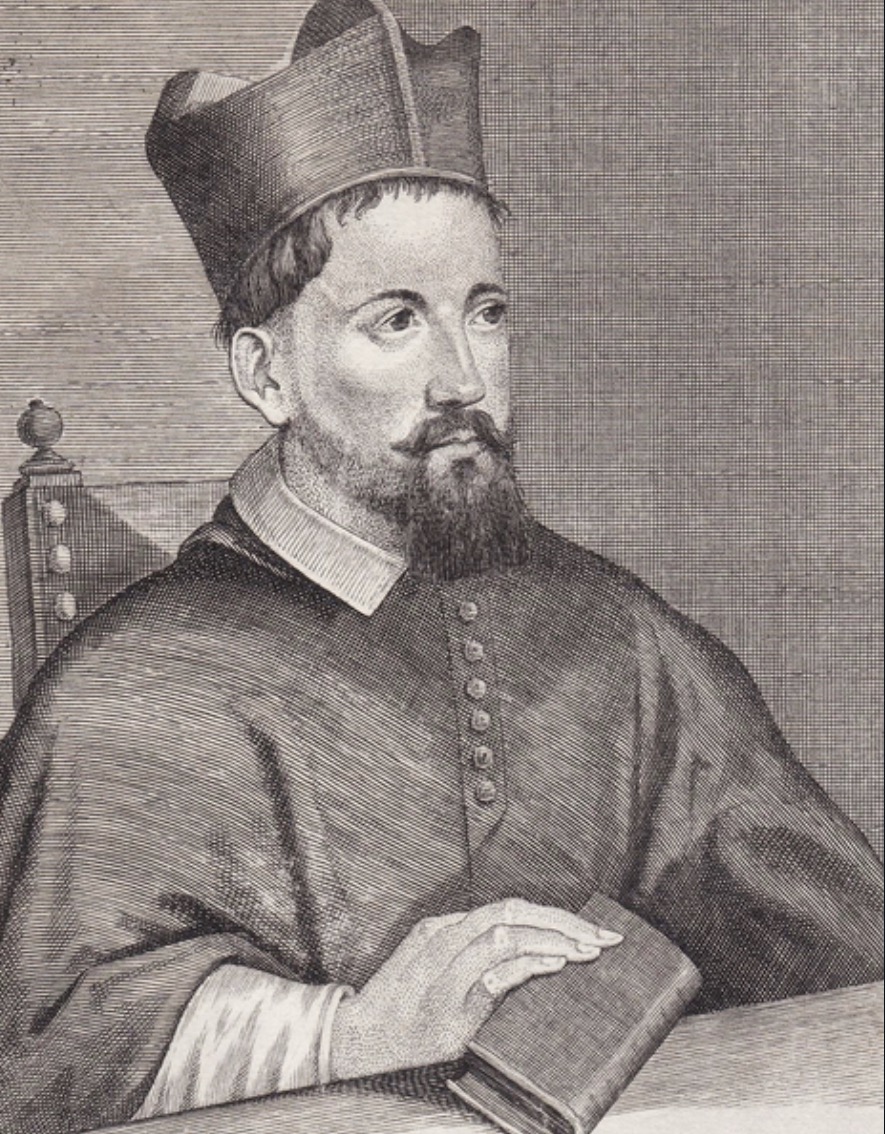
Juan Caramuel y Lobkowitz
SpainBiografía
Juan Caramuel was born in Madrid in 1606 and died in Vigevano (Italy) in 1682. Cistercian, mathematician, logician and theologian, he was one of the most original minds of the European Baroque. It represents the transition between scholasticism and scientific modernity.
His monumental work, Theologia moralis fundamentalis (1652) and later treatises on logic and probability, attempt to mathematize moral reasoning. Caramuel develops an advanced probabilism in which human decisions are made under rational uncertainty.
This has political consequences: the law cannot provide for all specific cases. Social order requires general rules and room for prudential decision-making. The government does not completely control society because human action is inherently contingent.
Caramuel thus anticipates a modern vision of the social order as a complex system. Politics must manage probabilities, not impose determinism.
His thought marks the passage from classical scholasticism to modern awareness of social complexity: order is not mechanical but adaptive.
Aportación Filosófica
Applied probabilistic reasoning to morals and politics, viewing the social order as a complex system.

Pedro Murillo Velarde
Spain / Captaincy General of the PhilippinesBiografía
The Jesuit Pedro Murillo Velarde was born in Laujar de Andarax (Almería) in 1696 and was assigned to the Philippines at a very young age, where he developed most of his intellectual career. There he taught canon law and theology at the University of Santo Tomas in Manila—the oldest university institution in Asia—and became the archipelago's leading jurist.
His fundamental work, Cursus Iuris Canonici Hispani et Indici (1743), constitutes one of the most ambitious attempts to systematize the legal order of the Hispanic monarchy overseas. It was not a practical manual of colonial administration, but a theoretical reflection on the legitimacy of political power in distant territories: the Philippines was not a possession of the king, but a political community integrated into a universal legal order governed by natural law.
Murillo Velarde applied the Salamancan tradition to a multicultural Asian context. The authority had to govern according to the common good of the local communities and respect their rational customs. Consequently, imperial power was limited by objective justice. The empire was legitimate only to the extent that it acted as a guarantor of the legal order, not as an owner of the territory.
His thinking shows how scholasticism became a global public law: a political theory capable of integrating different peoples under common legal principles without the need for cultural homogeneity. This idea will be fundamental in subsequent Philippine constitutional reflection.
Aportación Filosófica
Applied the Salamanca tradition to the Asian context, defending a universal legal order based on natural law.
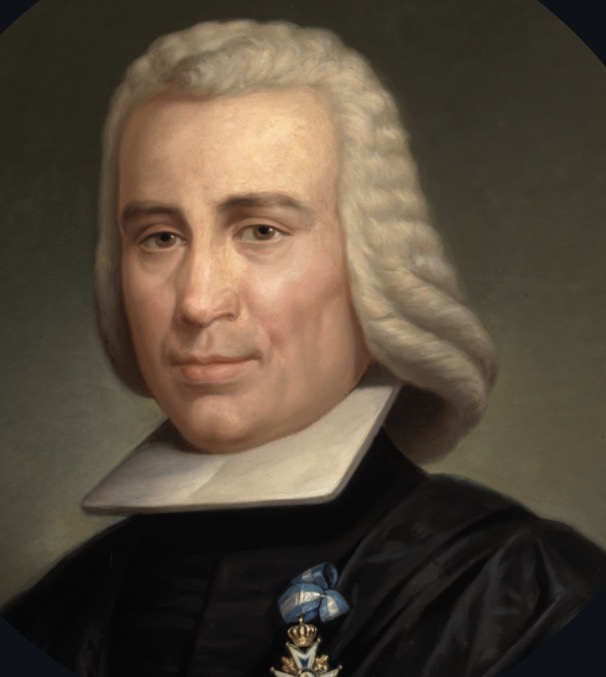
Pedro Rodríguez de Campomanes
SpainBiografía
Born in Santa Eulalia de Sorriba (Asturias) in 1723, Campomanes was a lawyer, economist and prosecutor for the Council of Castile. A brilliant self-taught person, he trained in legal history and natural law at a time when the Bourbon monarchy was trying to modernize its economic structures.
In Discourse on the Promotion of Popular Industry (1774) and Discourse on the Popular Education of Artisans (1775), he argues that prosperity does not depend on monopolies or guild privileges, but on the productive freedom of society. His criticism of mercantilism is notable: the State does not create wealth; it can only remove obstacles for society to generate it.
Although his language is enlightened, his philosophy is the heir of scholastic economic thought. Considers that the economic order arises spontaneously from human activity and that legislation must adapt to it, not impose artificial forms on it. Excessive intervention generates poverty because it contradicts the social nature of exchange.
Campomanes represents the economic reformism that prepares the ground for later liberalism, but without revolutionary rupture: he reforms the monarchy from its own legal tradition.
Aportación Filosófica
Defended productive freedom against monopolies, seeing the economic order as a spontaneous social phenomenon.
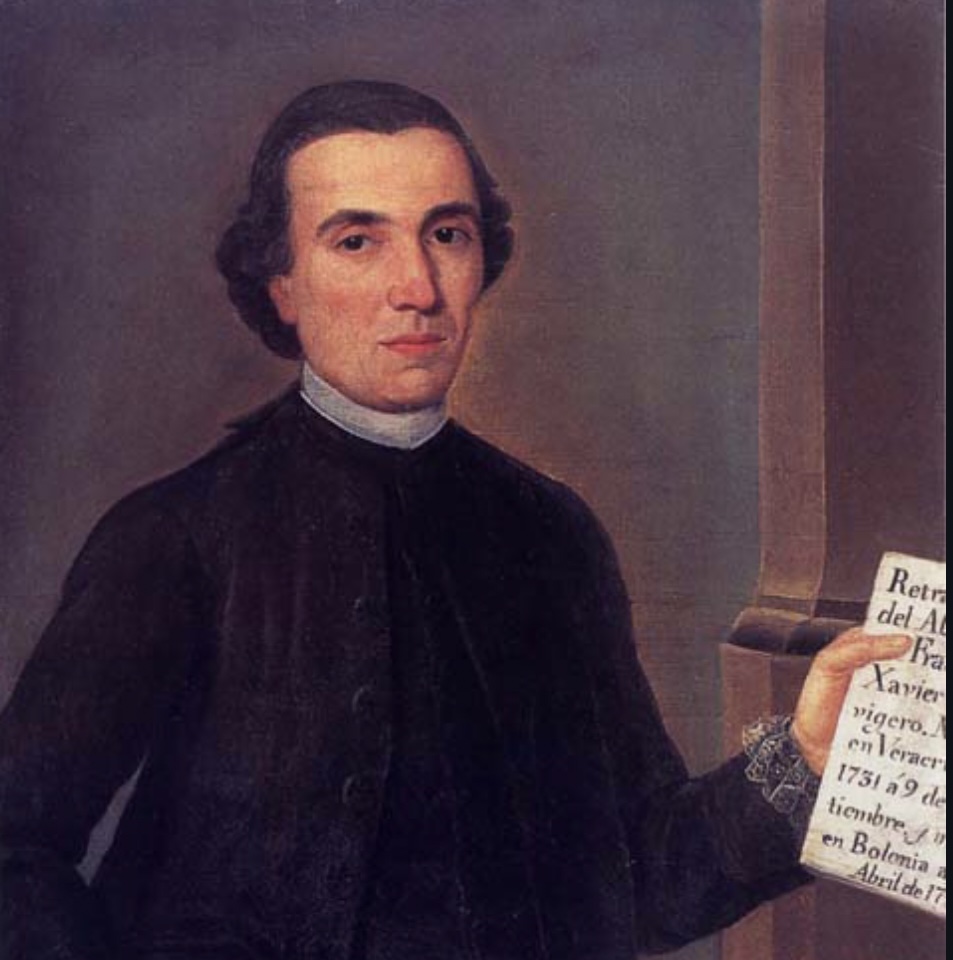
Francisco Javier Clavijero
Viceroyalty of New SpainBiografía
Francisco Javier Clavijero was born on September 9, 1731 in Veracruz, into a Creole family deeply linked to the colonial administration. He entered the Society of Jesus in 1748 and received a solid humanistic and philosophical training in the Jesuit schools of Puebla, Oaxaca and Mexico City. His education was marked by the late scholastic tradition—especially Suarez—but also by the intellectual openness toward modern science that characterized the Jesuits of the 18th century.
The decisive event in his life was the expulsion of the Jesuits from the Spanish dominions in 1767 by order of Charles III. Like thousands of religious, he was deported to Italy and finally settled in Bologna. Exile transformed his thinking: far from America, he became aware of the deeply negative image that the European Enlightenment spread about the New World.
Authors such as Buffon, De Pauw and Robertson described America as a degenerate, biologically inferior and culturally backward continent. Clavijero responded with a monumental work: Ancient History of Mexico (published in Italian between 1780 and 1781). In it he not only narrates pre-Hispanic history with scholarly rigor, but also articulates a philosophical defense of indigenous political rationality.
Its central thesis is radical: American societies had complex political institutions, customary law, civil organization, and educational structures comparable to those in Europe. They were not “natural” peoples in the primitive sense, but rather complete political communities according to the classic criteria of political philosophy.
Clavijero thus transfers scholastic universalism to the historical-cultural terrain. If all men participate in the same natural reason, all civilizations can also develop legitimate forms of political order. This statement has decisive consequences: it questions European civilizational superiority and redefines the legitimacy of colonial rule.
His work is not pro-independence in the direct sense, but it does prepare the conceptual ground for emancipation. By affirming American cultural and historical autonomy, it establishes the moral foundation for future political autonomy.
He died in Bologna on April 2, 1787, shortly before the French Revolution. His remains were repatriated to Mexico in the 20th century, a symbol of his status as the intellectual father of Mexican cultural nationalism. Philosophically, it represents the passage from universal scholasticism to American historical consciousness, a key link in the transformation of natural law into political identity.
Aportación Filosófica
Articulated a philosophical defense of indigenous political rationality, laying foundations for American autonomy.
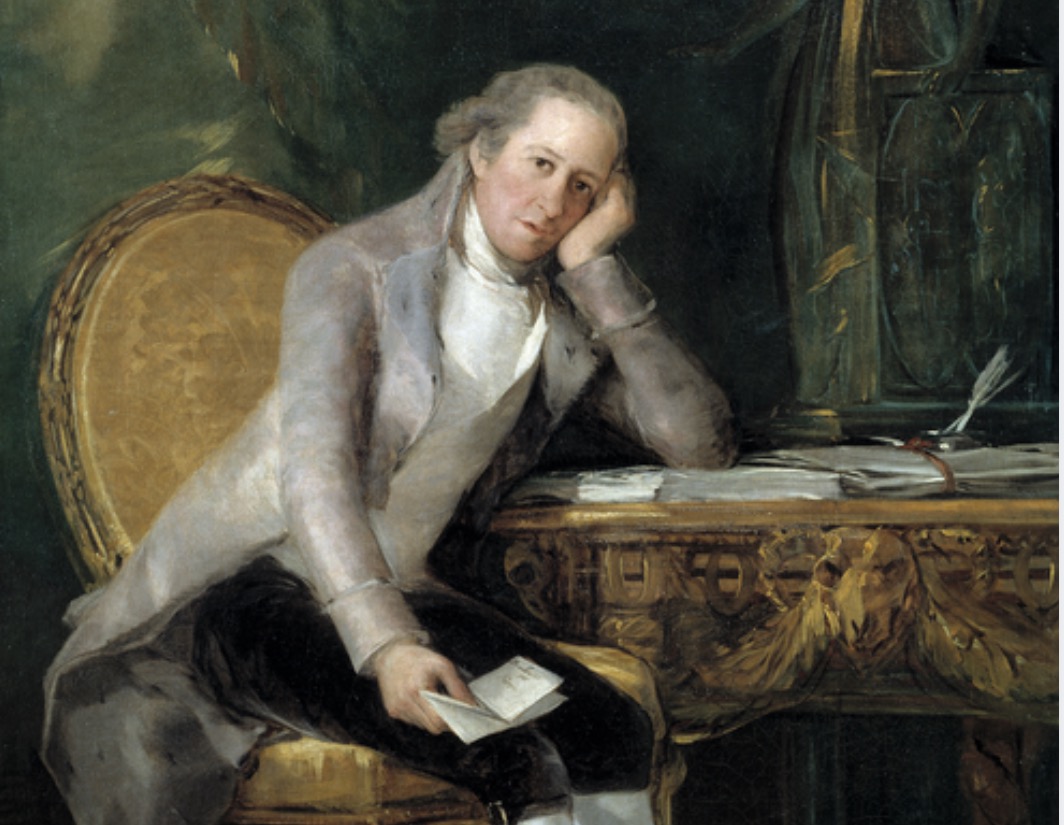
Gaspar Melchor de Jovellanos
SpainBiografía
Gaspar Melchor de Jovellanos was born in Gijón on January 5, 1744, into an Asturian noble family. He was trained in Oviedo, Ávila and Alcalá de Henares within an environment still deeply marked by classical natural law, which in Spain continued to be taught in continuity with the scholastic tradition. His career began as a magistrate and prosecutor of the Council of Orders, which allowed him to learn first-hand about the institutional structure of the Spanish monarchy.
Although he is usually classified as enlightened, Jovellanos did not share French constructivist rationalism. His thinking was based on a different conviction: political institutions are not designed from abstraction, but rather slowly emerge from social life. This idea appears clearly in his most influential work, Report on the Agrarian Law (1795). There he maintains that wealth does not come from privilege or state planning, but from the free interaction of men within a stable legal framework. The Spanish economic problem was neither moral nor technical, but institutional: the legislation prevented the natural development of society.
His defense of private property and economic freedom is not utilitarian, but moral. For Jovellanos, property fulfills a civilizing function: it creates responsibility, foresight and personal autonomy. The government should protect it, not direct it. This vision connects directly with the Salamanca tradition, where the social order was understood as a result of the social nature of man.
During the crisis of 1808 he supported the convening of the Cortes, not as a revolutionary innovation, but as a historical recovery of traditional political representation. He died in 1811 after years of political persecution. His work constitutes the intellectual bridge between late scholasticism and moderate liberal constitutionalism.
Aportación Filosófica
Defended that institutions sprout from social life and that private property is a moral pillar of civilization.
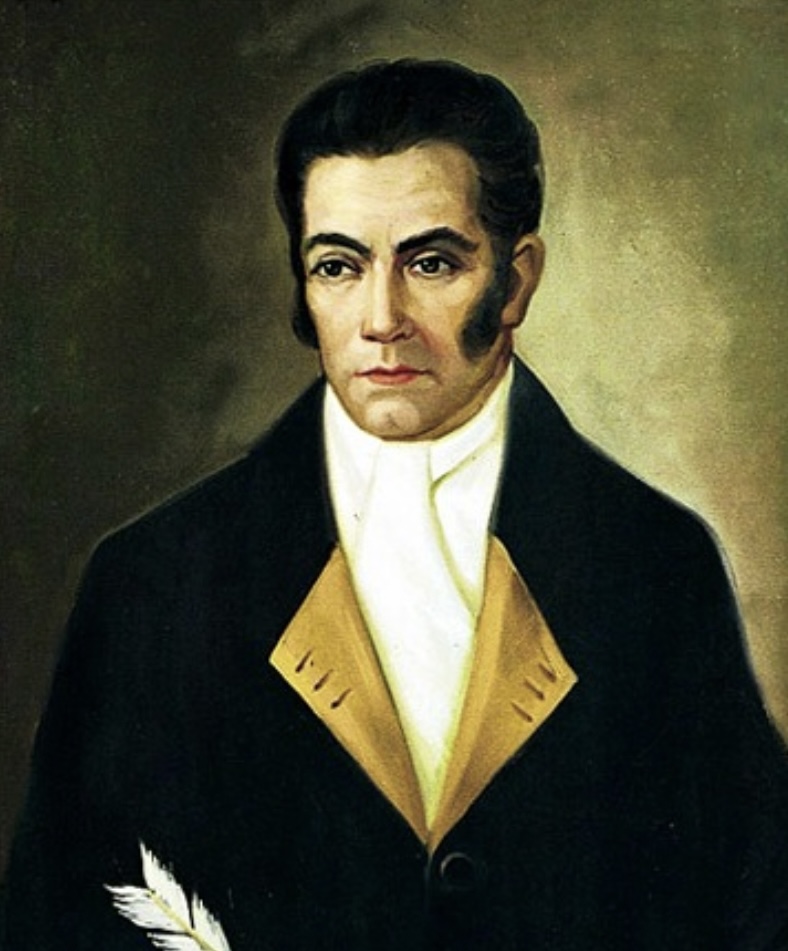
Juan Pablo Viscardo y Guzmán
Viceroyalty of PeruBiografía
Juan Pablo Viscardo y Guzmán was born in 1748 in Pampacolca, in the viceroyalty of Peru, into a Creole family fully integrated into the legal culture of the Hispanic monarchy. Educated by the Jesuits, he received a typical training of the Iberian intellectual tradition: moral theology, Thomistic natural law and scholastic political thought. His intellectual horizon was not that of modern contractualism that was beginning to spread in Europe, but that of the historical pactism typical of the Hispanic world, according to which political authority is exercised as a delegation from a previous community.
The expulsion of the Jesuits in 1767 led him to exile in Italy and later to England. There, far from his homeland, he began to reflect on the situation of America within the Spanish monarchy. He did not interpret the problem in revolutionary terms, but in legal terms: America had not been acquired as property of the crown, but incorporated through political and moral ties. Obedience, therefore, depended on the fidelity of power to its legitimate purpose.
His Letter to the Spanish Americans of 1791 constitutes the first great political manifesto of Spanish American emancipation. In it it does not appeal to the abstract sovereignty of the individual or the general will, but to the breaking of a legal bond. When power stops protecting the common good, political obligation disappears. Independence does not appear as a rupture of order, but as its restoration. Viscardo thus transforms the university language of Suárez and Mariana into American historical consciousness: the political community is not born of power, but precedes it.
He died in London in 1798, but his work was spread by Miranda and read by the first patriots. In him, scholasticism ceases to be an academic doctrine and becomes the foundation of a new political legitimacy.
Aportación Filosófica
Transformed scholastic pactism into independence consciousness: if power does not serve the common good, the bond is broken.
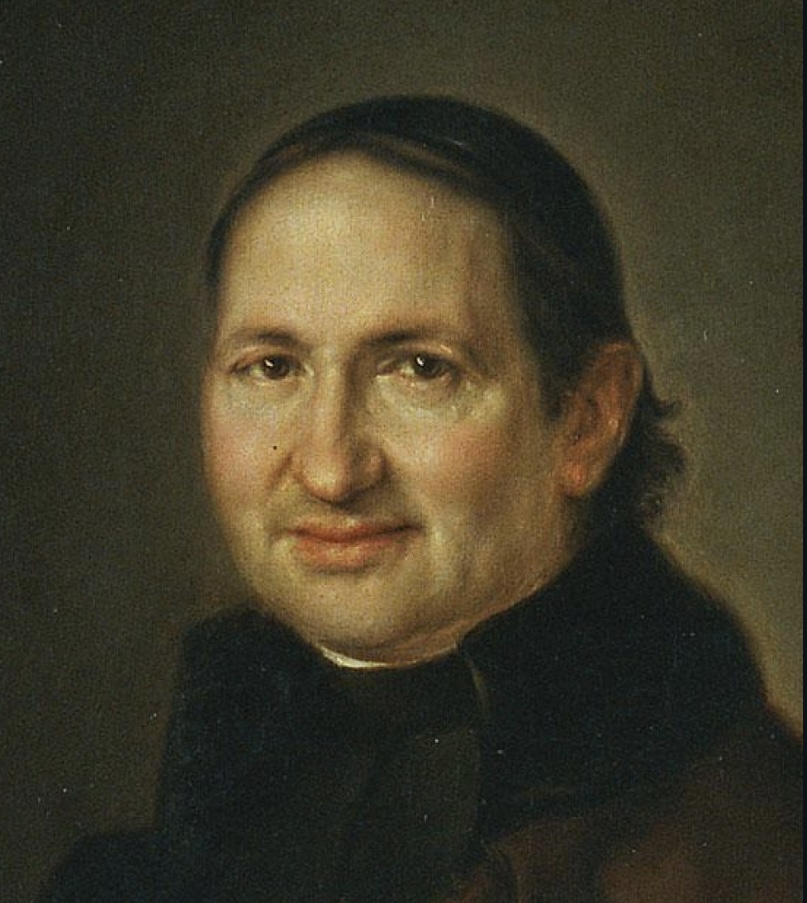
Francisco Martínez Marina
SpainBiografía
Born in Oviedo in 1754, a priest and historian, he dedicated his life to studying medieval Spanish institutions. In Teoría de las Cortes (1813) he argues that political representation existed in the Hispanic monarchy centuries before modern liberalism.
For Marina, the national sovereignty proclaimed in Cádiz was not a revolutionary principle, but the modern formulation of a historical pact. Real power had always been limited by the political community.
His work was decisive in legitimizing the Constitution of 1812 as historical continuity and not as a rupture.
Aportación Filosófica
In Teoría de las Cortes (1813) he argues that political representation existed in the Hispanic monarchy centuries before modern liberalism. For Marina, the national sovereignty proclaimed in Cádiz was not a revolutionary principle, but the modern formulation of a historical pact. Royal power had always been limited by the political community. His work was decisive in legitimizing the Constitution of 1812 as historical continuity and not as a rupture.
Juan Pablo Forner
SpainBiografía
Forner was born in Mérida in 1756 and trained as a jurist in Salamanca. He was a prosecutor of the Council of Castile and a tireless polemicist against the uncritical imitation of French philosophy. He considered that abstract rationalism ignored the historical experience of institutions.
He defended that law is not born from universal theories created by philosophers, but from social practice sedimented over time. The political community is prior to political theory. This position places him close to scholastic legal realism, where human law must reflect concrete social nature.
His writings prepare the intellectual ground for Spanish historical constitutionalism: freedoms are not invented, they are recognized.
Aportación Filosófica
Defended that law is born from sedimented social practice and not from invented universal theories.
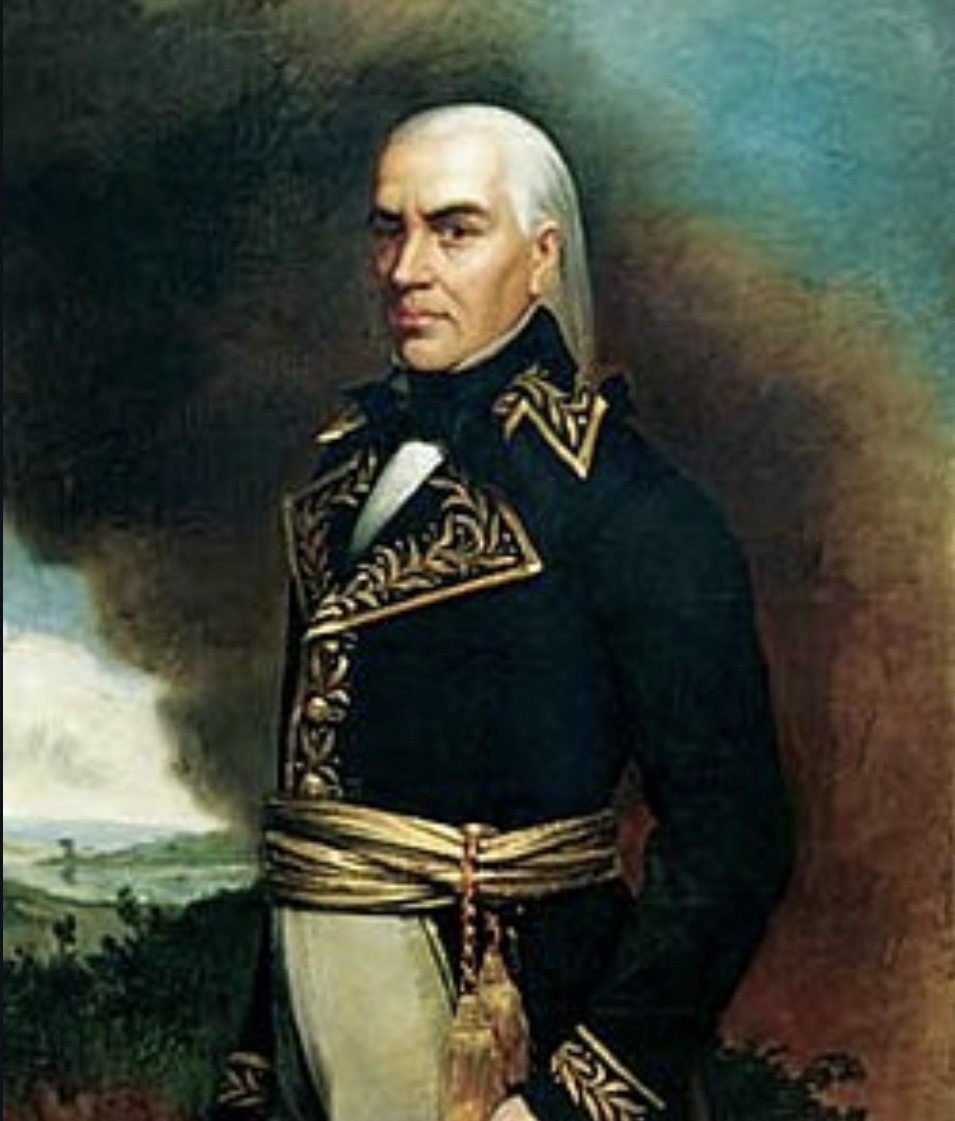
Francisco de Miranda
Captaincy General of VenezuelaBiografía
Sebastián Francisco de Miranda was born in Caracas on March 28, 1750, in a colonial society still organized according to legal hierarchies inherited from the Hispanic world. His education at the University of Caracas was marked by the late scholastic curriculum: Aristotelian logic, natural law and moral theology. That training is decisive, because Miranda will never start from abstract rationalism or pure enlightened contractualism; Its initial horizon is that of legal pactism of the Iberian tradition, where authority exists as a delegation and not as property of power.
After joining the Spanish army, his life became a continuous journey across the revolutionary Atlantic. He toured Europe and America, fought in the United States War of Independence, lived with figures such as Washington and Hamilton and later participated in the French Revolution, where he reached the rank of general. Few biographies condense in such a direct way the political experience of the 18th century: imperial monarchy, American revolution and European revolution literally crossed the same life.
However, Miranda did not simply adopt the political model he found in each place. Its originality consists precisely in trying to reconcile them. He observed in England a constitutional balance, in the United States an organized sovereignty, and in France a revolutionary energy; but he believed that none could be transferred intact to the Hispanic world. America should not imitate: it should continue its own political tradition.
When the Spanish monarchy collapsed in 1808, it interpreted the crisis with categories very close to Suárez's doctrine: if the legitimate king disappears, sovereignty returns to the peoples who had made an agreement with the crown. Independence did not mean breaking the legal order, but rather preserving it in the absence of the holder of power.
Here appears the actual Miranda contribution. Unlike other revolutionaries, he does not limit himself to justifying emancipation; attempts to design its institutional form. He studies British parliamentarism, North American federalism and the classical republican tradition to project Colombia, an American continental constitutional monarchy. It was not a utopian gesture, but an attempt to found a new political order without destroying its historical legitimacy.
His thought is thus a singular synthesis: the scholastic heritage of delegated power, English constitutionalism, American federalism and classic republican citizenship converge in the same political architecture. His revolution was not intended to erase the past, but to make it viable in a modern world.
He died as a prisoner in Cádiz in 1816, but his project survived in the Spanish-American constitutional imagination and in the work of his disciples, especially Bolívar. Philosophically, Miranda represents the moment in which the scholastic theory of popular sovereignty stops being a legal argument and becomes a concrete institutional design: the transition from legitimacy to the State.
Aportación Filosófica
Synthesized scholastic popular sovereignty with modern constitutionalism to design American freedom.
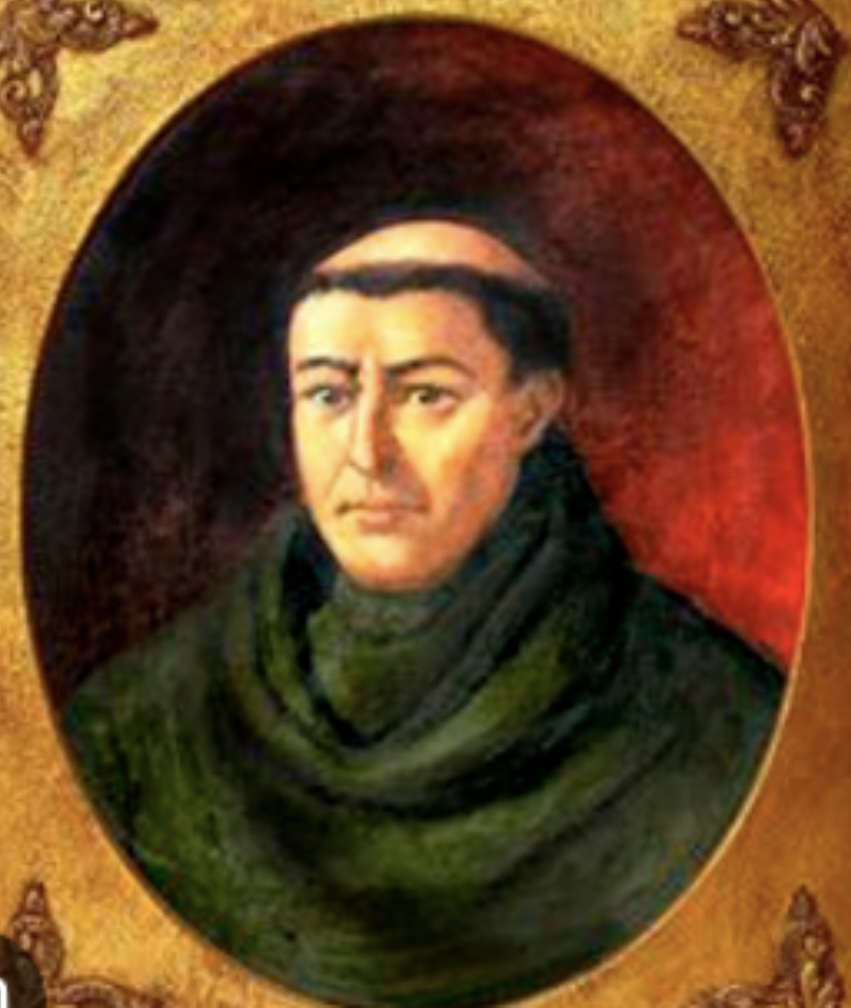
Melchor de Talamantes
Viceroyalty of Peru / Viceroyalty of New SpainBiografía
Melchor de Talamantes was born in Lima in 1765 and entered the Mercedarian order. After settling in New Spain, he became one of the most lucid jurists of the period prior to independence. When the Spanish monarchy collapsed in 1808, it rigorously applied the classical doctrine of sovereignty.
He maintained that, in the absence of the monarch, political power returns to the social body that had delegated it. It was not about creating a new power, but about preventing its disappearance. The New Spain community had to govern itself to preserve legal legitimacy.
His writings constitute one of the purest applications of Suárez's thought in political practice. He was arrested and died in prison in 1809 before the outbreak of independence, but his reasoning reappeared in subsequent American meetings. In it, independence is formulated as legal continuity of the Hispanic order.
Aportación Filosófica
Applied Suárez's doctrine to the crisis of 1808: power returns to the people when legitimate authority disappears.
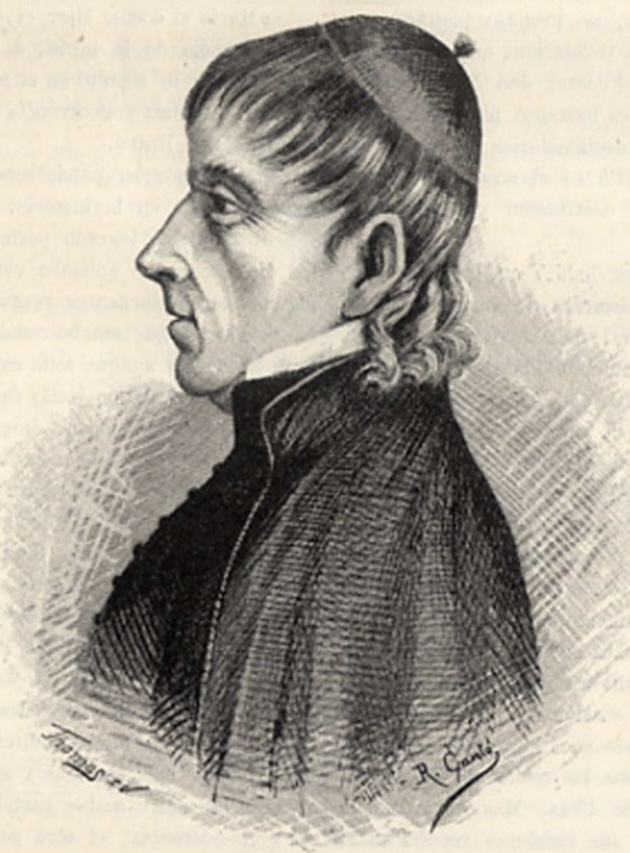
Servando Teresa de Mier
Viceroyalty of New Spain / MexicoBiografía
José Servando Teresa de Mier y Noriega was born in Monterrey on October 18, 1765. He entered the Order of Preachers (Dominicans) and stood out from a young age for his intellectual brilliance. He was a professor of theology and a renowned preacher, but his life took a decisive turn in 1794 when he delivered a famous sermon in which he questioned the traditional narrative about the appearance of the Virgin of Guadalupe.
That sermon earned him persecution, imprisonment and long years of exile in Spain, France, England and Italy. During this journey he came into contact with Enlightenment political thought and European constitutional debates, without abandoning his scholastic training.
The event that definitively transformed his political thinking was the crisis of 1808: the Napoleonic invasion of Spain and the forced abdication of Ferdinand VII. Here the Suarezian doctrine of sovereignty directly applies.
Following the thesis formulated by Francisco Suárez in Defensio Fidei (1613), Mier maintains that political power comes from God but resides immediately in the political community, which delegates it to the ruler. If the legitimate king disappears or loses the capacity to govern, sovereignty returns to the people.
For Mier, this means that the American territories are not obliged to obey illegitimate peninsular authorities. Independence is not rebellion, but restoration of the natural legal order.
In works such as History of the Revolution of New Spain (1813), he develops this argument with legal clarity: America does not separate arbitrarily, but rather exercises a pre-existing political right.
What is original about Mier is the fusion between scholasticism and modern constitutionalism. It does not abandon classical natural law, but articulates it with concepts such as representation, written constitution and division of powers.
He actively participated in Mexican political life after independence, was a deputy in the Constituent Congress and defended moderate republican models against centralist or monarchical tendencies.
He died in Mexico City on December 3, 1827. His philosophical legacy lies in having converted the scholastic tradition of popular sovereignty into a revolutionary legal argument. In it, American emancipation appears not as an ideological break with Europe, but as a coherent consequence of the Iberian legal tradition itself.
Aportación Filosófica
Used Suárez's doctrine to justify independence as a restoration of the natural legal order.
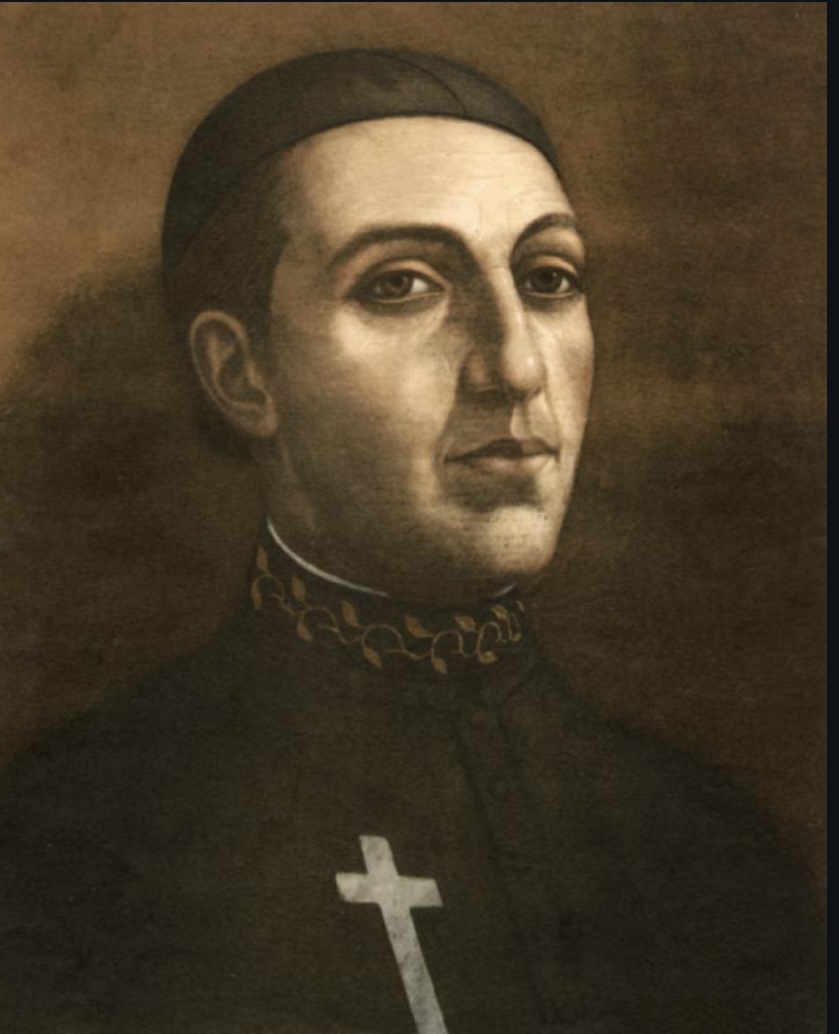
Camilo Henríquez
Captaincy General of Chile / ChileBiografía
Camilo Henríquez was born in Valdivia in 1769 and was educated in Lima within traditional theological training. Priest, journalist and political agitator, he was the great mediator between legal doctrine and public opinion. While other thinkers formulated arguments in treatises, he turned them into political language.
Through La Aurora de Chile he spread the idea that the political community retains its sovereignty when legitimate authority disappears. This thesis was not a borrowing from French revolutionary philosophy, but rather an adaptation to the popular language of the Suarezian doctrine of delegated power. For Henríquez, independence did not create a new society: it allowed the existing society to govern itself according to its nature.
Its importance lies in having demonstrated that the scholastic tradition was not a university speculation but a shared political culture. He died in Santiago in 1825 after contributing decisively to legitimizing Chilean independence.
Aportación Filosófica
Adapted Suarecian pactism to popular language, legitimizing self-government as a demand of social nature.
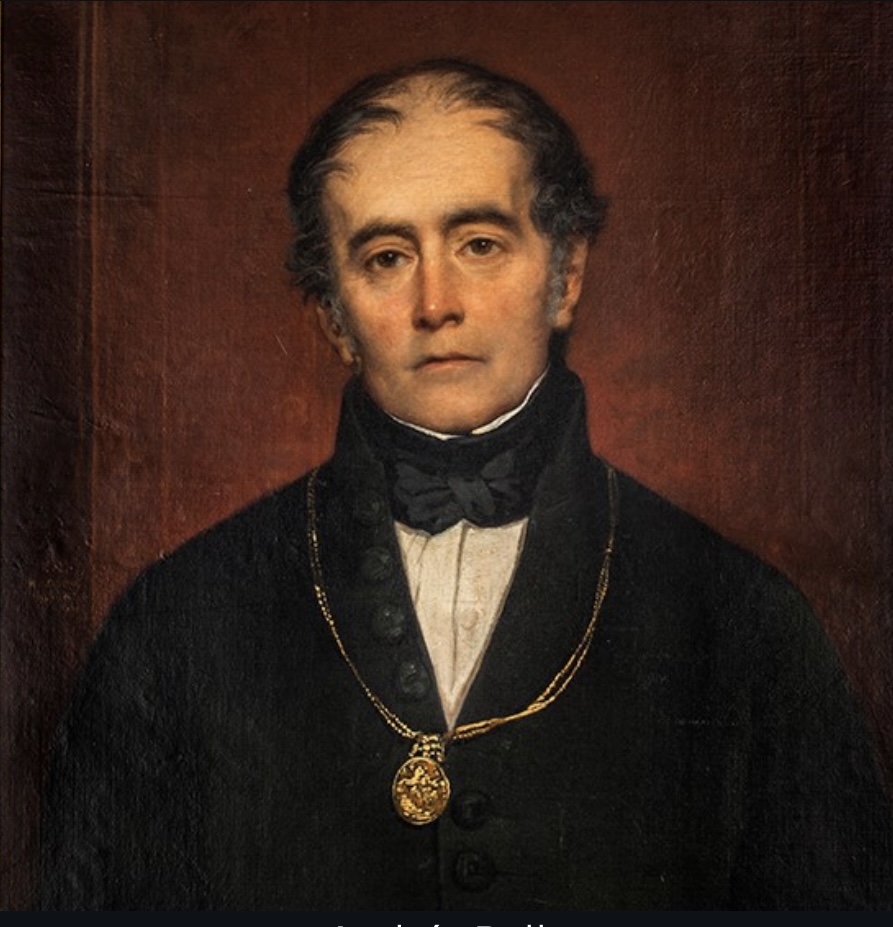
Andrés Bello
Captaincy General of Venezuela / ChileBiografía
Andrés Bello was born in Caracas in 1781 and later lived in London and Chile. A universal humanist, he received an education deeply marked by classical natural law before coming into contact with British thought. His mature work seeks to politically stabilize the new republics through institutions consistent with their legal tradition.
Its Chilean Civil Code of 1855 does not imitate the French revolutionary model, but rather integrates Roman law, Hispanic tradition and modern rationality. Bello understands that political freedom requires legal security and institutional continuity. Positive law must express moral principles prior to the State.
Thus, the process initiated by the scholastics culminates: popular sovereignty ceases to be an argument for resistance and becomes a permanent civil order. He died in Santiago in 1865, leaving behind the most enduring legal architecture in Latin America.
Aportación Filosófica
Stabilized republics by integrating the Hispanic legal tradition with modern rationality and legal certainty.
Lucas Alamán
Viceroyalty of New Spain / MexicoBiografía
Lucas Ignacio Alamán was born in Guanajuato in 1792, into a wealthy Creole family linked to the viceregal administration. He directly experienced the founding trauma of Latin America: independence not as a romantic liberation but as a civilizational rupture. Unlike the revolutionaries of his time, Alamán interpreted the process not in terms of ideological emancipation, but as a breakdown of a previous legal order.
His historical work—especially History of Mexico (1849–1852)—does not seek to glorify the colonial past, but rather to explain why the new republics fell into permanent instability. His conclusion is profoundly scholastic: the problem is not who governs, but the disappearance of the moral foundation of power. The Hispanic monarchy worked because authority was legally limited by charters, corporations and customs. The revolutionary republic fails because it replaces that plural order with abstract sovereignty.
Alamán rejects both absolutism and Jacobinism: both share the same root, the concentration of sovereignty. The Hispanic tradition, on the other hand, had developed a polycentric political structure where municipalities, guilds, the Church and provinces structurally limited power. This conception coincides with the scholastic idea of power as potestas limited by the previous social order.
For this reason, his thinking is not reactionary but institutional: he tries to reconstruct a political regime compatible with the historical nature of Mexican society. He is one of the first in Latin America to formulate that constitutionalism only works if it is supported by a previous moral tradition, a thesis that will reappear in the 20th century in contemporary political theory.
Aportación Filosófica
Affirmed that freedom requires a prior moral foundation, criticizing abstract sovereignty without limits.
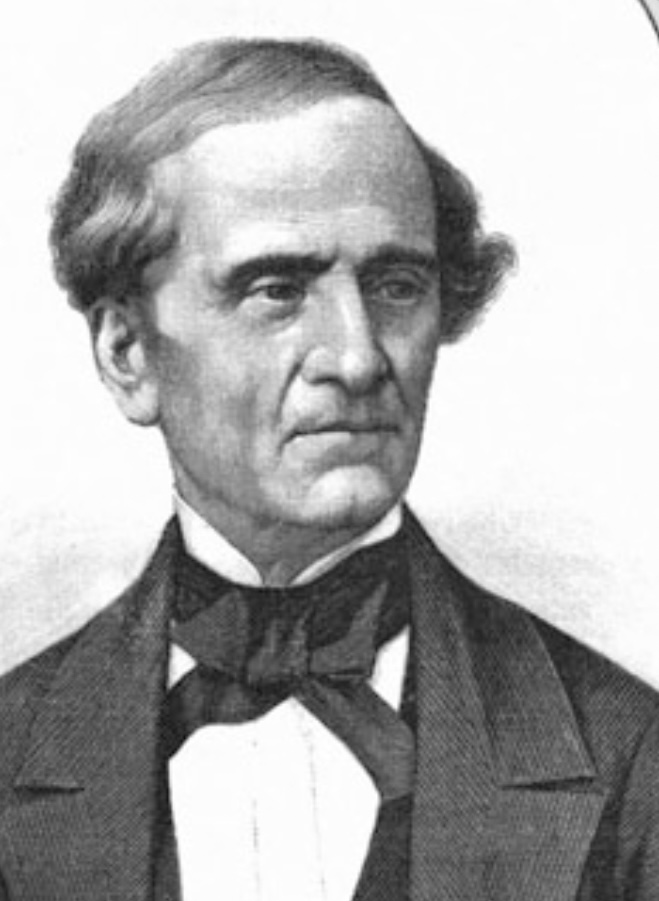
José María Gutiérrez de Estrada
MexicoBiografía
Born in Campeche in 1800, Gutiérrez de Estrada was a diplomat, jurist, and one of Mexico's most misunderstood political thinkers. His Essay on the Future of Mexico (1840) caused scandal by proposing a constitutional monarchy for the country. However, his argument was neither dynastic nor nostalgic: it was philosophical.
He argued that absolute popular sovereignty produces instability because it turns politics into unlimited will. The political community is not an instantaneous contractual creation but a historical reality that requires institutional continuity. At this point he returns to Hispanic pactism: legitimate authority does not arise from a specific election, but from the articulation between social tradition and representation.
His criticism anticipates the problem of modern plebiscitary democracy: when power derives only from the majority, it is no longer limited by the objective common good. Thus, his monarchical proposal was a means to ensure the institutional neutrality of power, not a return to absolutism.
Aportación Filosófica
Proposed institutions that would ensure the neutrality of power and its subordination to the common good.
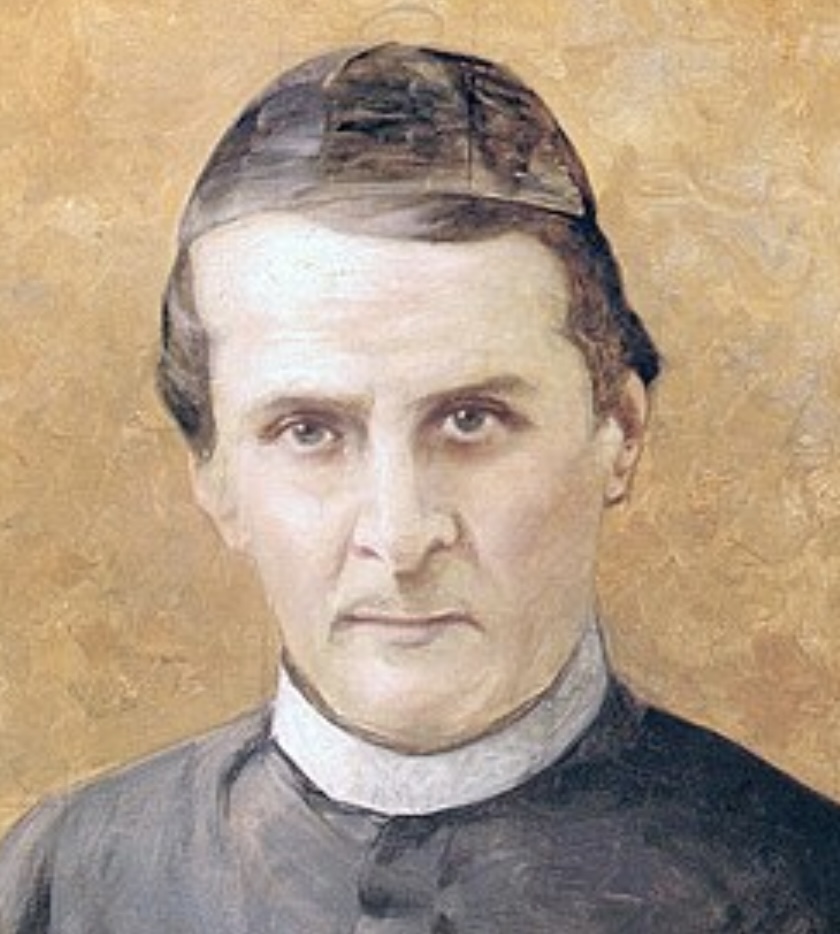
Bartolomé Herrera
PeruBiografía
Bartolomé Herrera was born in Lima in 1808, just a few years before Peruvian independence. He was trained at the San Carlos Convictory – a direct heir to the viceregal university tradition – of which he would become rector. He was a priest, jurist, educator and one of the intellectual architects of the early Peruvian State.
Its best-known doctrine, “intelligence sovereignty,” has frequently been misinterpreted as political elitism. In reality, Herrera intended to solve a philosophical problem that arose after independence: if sovereignty resides unmediated in the popular will, power has no internal limits. Politics becomes a changing majority will.
Herrera responds with categories inherited from scholasticism: sovereignty belongs to the political community, but its exercise must be guided by reason and the common good. Legitimacy does not come from numbers but from adaptation to justice. The community delegates power not to express desires but to realize objective human ends.
It is, in essence, the doctrine of Francisco Suárez transferred to the republic: power comes from God, originally resides in the community and is conferred on the ruler to achieve the moral order. It is not the property of the ruler nor is it a pure aggregation of wills.
His thinking was decisive because he tried to prevent independence from degenerating into caudillismo. He proposed an organic constitutionalism where intermediate institutions, moral education and natural law limited political power. The republic had to replace the monarchy without destroying its legal foundation.
Aportación Filosófica
Transferred Suárez's doctrine to the republic, defending that sovereignty must be oriented toward the common good.
Juan Donoso Cortés
SpainBiografía
Juan Francisco María de la Salud Donoso Cortés was born in Don Benito (Badajoz) on May 6, 1809 and died in Paris on May 3, 1853. Initially trained in doctrinal liberalism, he was a professor, journalist, deputy and finally a diplomat—ambassador of Spain in Berlin and Paris. He lived from within the European revolutionary crisis of 1848, which decisively marked his intellectual evolution.
His culminating work, Essay on Catholicism, Liberalism and Socialism (1851), is one of the most influential political texts of the European 19th century. Donoso formulates a radical thesis there: all politics rests on a prior theology. When a society abandons the doctrine of original sin, it ends up absolutizing man—first in parliamentary liberalism, then in revolutionary socialism. The inevitable result is the total State.
Its relationship with the scholastic tradition is profound. Donoso does not constantly cite Suárez or Mariana, but his conceptual structure is the same: power is not sovereign in itself, but is limited by a prior objective moral order. Without natural law, freedom becomes pure will and ends up being destroyed. Hence his famous thesis that societies that lose their moral foundation oscillate between anarchy and dictatorship.
Donoso would decisively influence later thinkers such as Carl Schmitt, but also European conservatism by reinterpreting the classical tradition in the context of mass politics.
Aportación Filosófica
Warned that without natural law or a moral foundation, politics degenerates into anarchy or state absolutism.
Alexandre Herculano
PortugalBiografía
Alexandre Herculano was born in Lisbon in 1810 in the midst of the Napoleonic crisis. He fought in the Portuguese liberal wars and later dedicated himself to history and political thought. His historiographical work—especially the History of Portugal (1846–1853)—was not mere scholarly reconstruction, but rather an intellectual intervention in the debate on modern political legitimacy.
Faced with the revolutionary liberal interpretation that identified constitutionalism with the break of 1789, Herculano maintained that the Iberian Peninsula had known constitutional forms long before. Medieval municipalities, estate courts and charters structurally limited the king: the monarch ruled within a prior legal order.
His thesis involved an indirect criticism of both absolutism and Jacobinism. The modern political problem was not the absence of a constitution but the loss of the historical tradition that limited power. Absolute sovereignty – outside of the king or the people – was a modern anomaly unknown to Iberian civilization.
Herculano thus recovers the continuity between medieval law, scholasticism and constitutionalism: political freedom is not born from the revolution, but from historical institutions that recognize the priority of society over the State.
He died in Santarém in 1877.
Aportación Filosófica
Recovered the tradition of municipalities and charters as the origin of constitutionalism against the Jacobin model.
Jaime Balmes
SpainBiografía
Jaime Luciano Balmes was born in Vic on August 28, 1810 and died prematurely in 1848. Priest, philosopher and publicist, he was the great systematizer of Spanish Catholic thought in the 19th century.
His main work, Protestantism compared with Catholicism in its relations with European civilization (1842–1844), attempts to demonstrate that European freedoms were not born against the Church, but within its conception of the person. Faced with the illustrated story, Balmes maintains that the limitation of political power comes from Christian anthropology: if man has moral dignity, no power can be absolute.
Balmes represents the intellectual continuity of the Second Scholasticism adapted to modern constitutionalism. It defends parliaments, representation and freedoms, but within an objective moral order. Freedom is not radical autonomy, but social harmony founded on human nature.
It could be said that Balmes anticipates the European social constitutionalism of the 20th century and offers a middle way between absolutism and revolution.
Aportación Filosófica
Argued that European freedoms were born from the Christian conception of the person and the limitation of power.
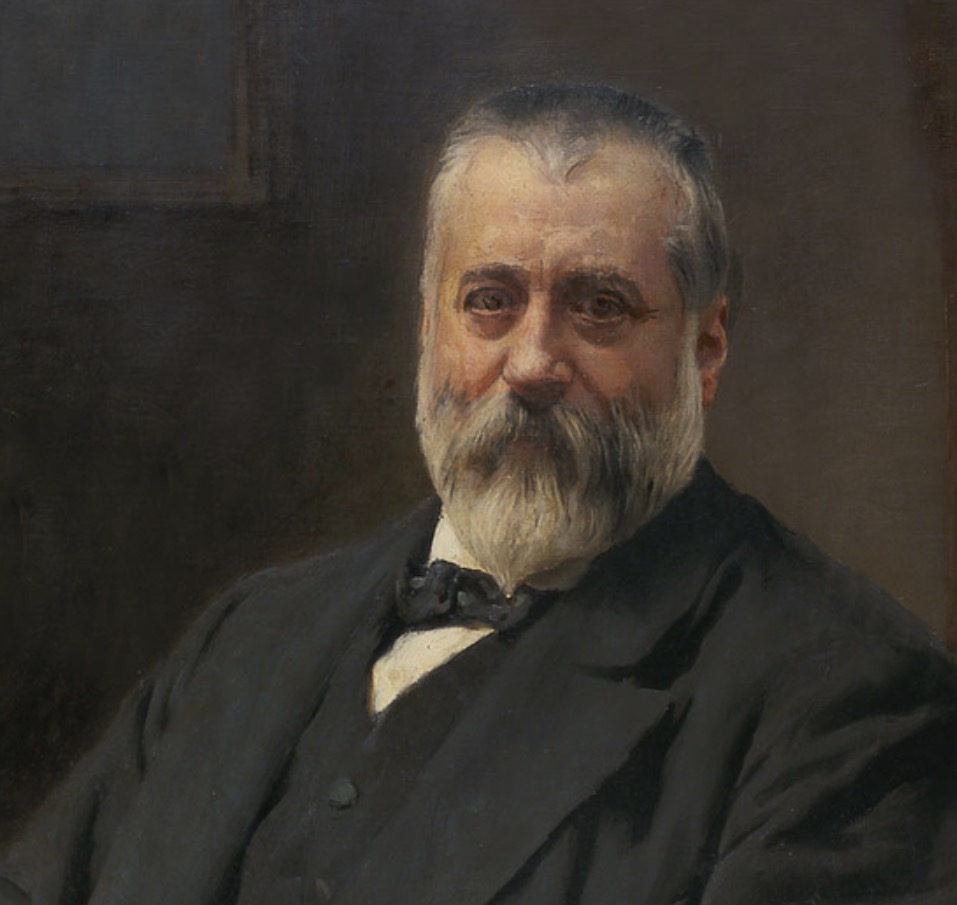
Marcelino Menéndez Pelayo
SpainBiografía
Born in Santander on November 3, 1856 and died in 1912, he was a philologist, historian and one of the great European scholars of his time. Its philosophical importance lies in having reconstructed the intellectual continuity of Spain.
In History of the Spanish Heterodoxes (1880–1882) and other works he showed that Spanish culture was not marginal with respect to Europe, but rather the bearer of its own philosophical tradition based on theology, natural law and Christian humanism. He rescued Vitoria, Suárez and scholasticism as central authors of European modernity.
Menéndez Pelayo does not develop a systematic political philosophy, but he fulfills a decisive function: he restores historical consciousness to the Hispanic tradition of freedom. Thanks to him, the Salamanca School once again enters the intellectual canon.
Aportación Filosófica
Rescued the scholastics as central authors of modernity and returned historical consciousness to the Hispanic tradition.
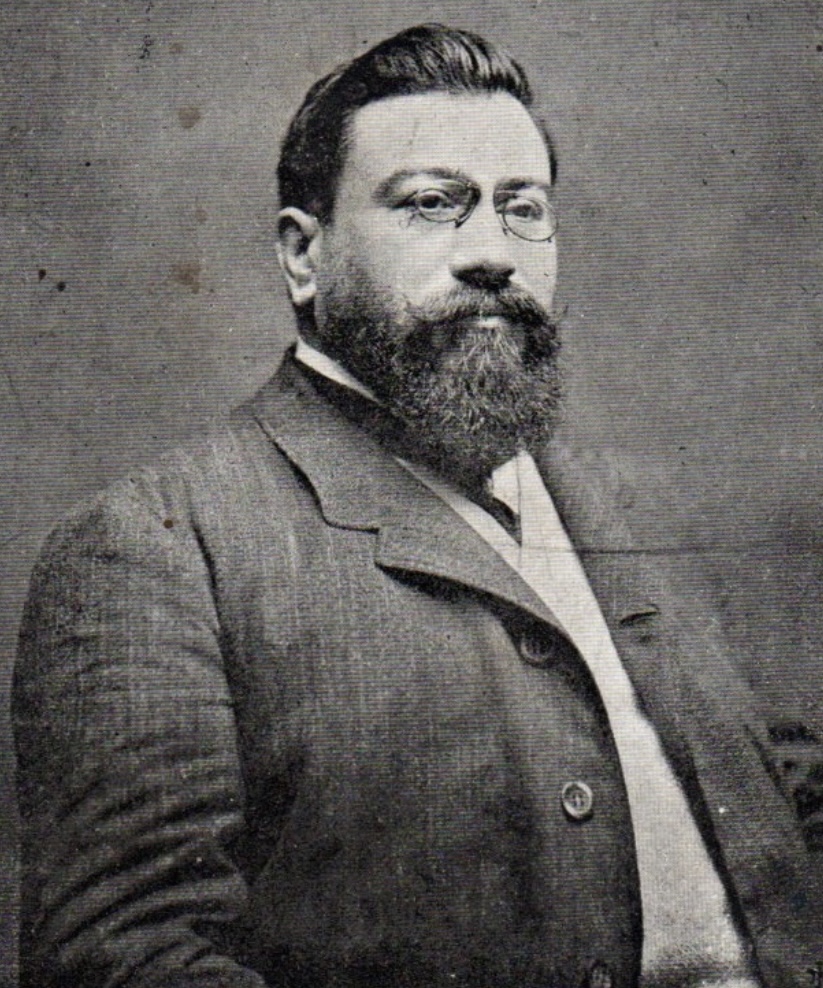
Juan Vázquez de Mella
SpainBiografía
Born in Cangas de Onís on June 8, 1861, he was the main theorist of Spanish political traditionalism. Extraordinary speaker and systematic thinker, he converted old Hispanic pactism into modern political theory.
For Vázquez de Mella, society is not born from the contract or the State, but from previous historical communities: family, municipality, guild and region. The abstract sovereignty of the State is a modern fiction. Authority comes from the community and is delegated to power—an almost direct formulation of Suarezian doctrine.
His thinking moves scholasticism from theology to sociopolitical analysis: political freedom requires institutional plurality. Anticipates contemporary theories about intermediate bodies and subsidiarity.
Aportación Filosófica
Defended a society of historical communities where authority is delegated by the living community and is not absolute.
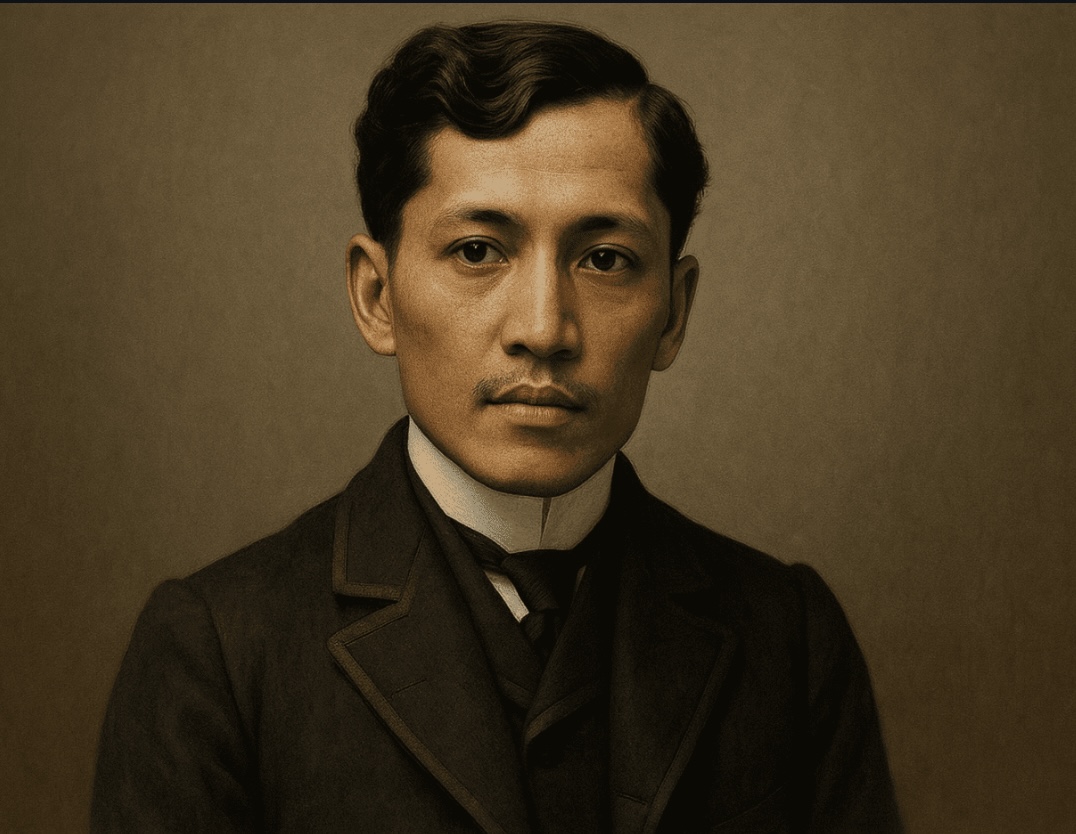
José Rizal
Captaincy General of the PhilippinesBiografía
José Rizal was born in Calamba (Luzon) in 1861, among the enlightened Filipino elite trained in the Spanish educational system. He studied medicine and philosophy in Manila and later in Madrid, Paris and Heidelberg. He was executed by the colonial authorities in 1896 and became the main intellectual symbol of the Filipino nation.
Unlike contemporary European revolutionaries, Rizal did not think in terms of absolute revolutionary rupture. His novels Noli me tangere (1887) and El filibusterismo (1891) constitute a moral and legal critique of arbitrary power: he denounces administrative corruption because it contradicts the very laws of the Hispanic political order.
His argument is deeply scholastic: authority loses legitimacy when it violates justice. The problem is not Spain as a political principle, but the degeneration of power with respect to its moral foundation. Rizal demands rights in the name of legality, not against it.
Thus, the Philippine national consciousness is born within a legal logic: the people have rights prior to the ruler. This conception will later facilitate the transition to modern constitutionalism without the need for a complete philosophical break with the previous tradition.
Aportación Filosófica
Demanded rights in the name of Hispanic legality, arguing that authority loses legitimacy when it violates justice.
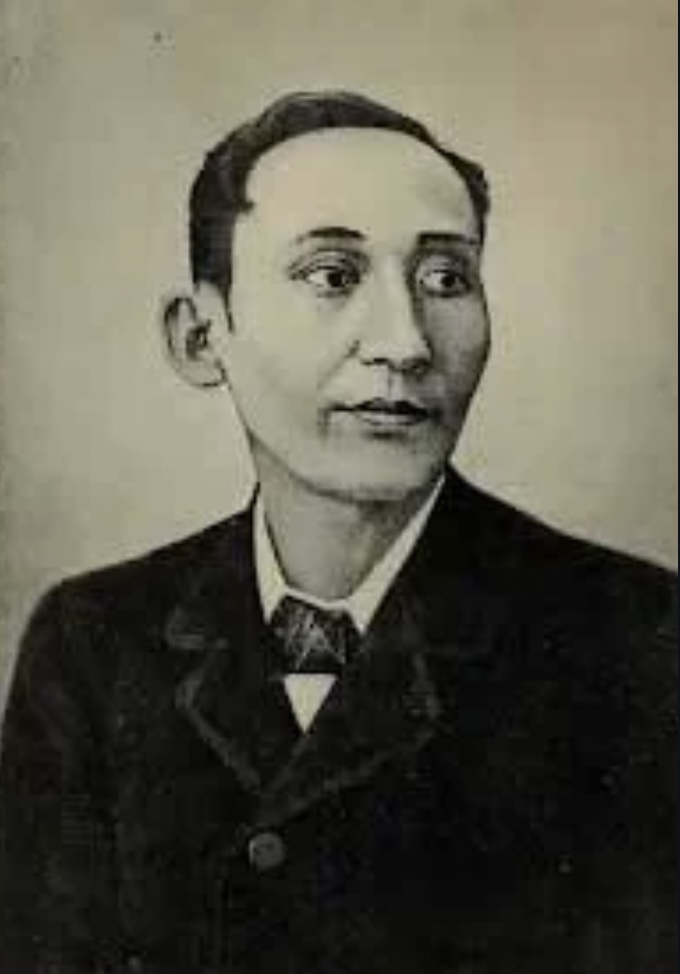
Apolinario Mabini
Captaincy General of the Philippines / PhilippinesBiografía
Apolinario Mabini, born in Tanauan in 1864, was the main political theorist of the first Philippine republic and advisor to President Emilio Aguinaldo. Paralyzed since he was young, he developed intense intellectual work during the independence process.
In texts such as The True Decalogue (1898) and The Philippine Revolution (1899), he developed a theory of the State based on the moral sovereignty of the community. Government exists to serve the common good and is morally limited by justice. The unjust law does not bind conscience.
Although influenced by European liberalism, its conceptual structure clearly comes from the Spanish legal tradition: power does not create law, it administers it. Philippine independence is thus conceived as the restoration of political legitimacy and not as the arbitrary creation of a new order.
Mabini represents the final step from scholasticism to the republican constitution in Asia.
Aportación Filosófica
Elaborated a theory of the State based on moral sovereignty: government exists for the common good and is limited by justice.
Miguel de Unamuno
SpainBiografía
Miguel de Unamuno was born in Bilbao in 1864 and studied at the University of Madrid, where he studied philosophy and literature. He was a professor of Greek in Salamanca and later rector of its university, a symbolic place for the Spanish intellectual tradition. His work is not scholastic in the technical sense, but it constantly dialogues with the spiritual heritage of Hispanic culture.
Faced with the positivist rationalism of the 19th century, Unamuno defended that human life cannot be reduced to abstract systems. In books such as On the Tragic Sentiment of Life (1913) and The Agony of Christianity (1925), he argues that modern political reason fails when it attempts to organize society as a mechanism. The community is not born from a contract or social engineering: it is born from shared moral conscience.
This approach indirectly connects with the tradition of natural law. Human dignity does not depend on the State or history, but on the specific person. For Unamuno, the political problem of the West consists of having forgotten the primacy of conscience over power. In that sense, his thought recovers the anthropological core of scholasticism: politics must serve real man and not collective abstractions.
During the crisis of the Restoration and the Second Republic he defended an idea of the nation as a living historical community, not as an ideological construction. Political freedom had to be based on moral responsibility, not on mere formal legality. He died in Salamanca in 1936, becoming a symbol of an intellectual tradition that understands politics as an extension of ethical life.
Aportación Filosófica
Recovered the scholastic anthropological core: politics must serve the real man and conscience must prevail over power.
Ramiro de Maeztu
SpainBiografía
Ramiro de Maeztu was born in Vitoria in 1874 and began his career within regenerationism and European liberal thought. He lived for many years in London, where he studied British parliamentarism and modern industrial society. However, his experience of World War I radically transformed his political thinking.
In The Crisis of Humanism (1919) and, above all, in Defensa de la Hispanidad (1934), Maeztu argues that the modern world has confused freedom with absolute autonomy. Western freedom, he claims, was not born of individualism but of a moral tradition that limited political power by principles superior to it.
Maeztu interprets the history of Spain as a legal civilization rather than an ethnic one. Hispanidad would be a community articulated by the idea of person, dignity and natural law. It is not imperial nostalgia, but political theory: authority is only legitimate if it recognizes rights prior to the State.
The scholastic heritage clearly appears in his reflection. Power does not create justice; recognizes her. Society is not born from an arbitrary agreement; rests on a shared moral nature. Faced with contemporary relativism, it proposes a freedom linked to objective responsibility.
He died in Madrid in 1936, assassinated at the beginning of the Civil War. His work represents the most explicit modern formulation of the Hispanic political tradition as an intellectual alternative within the West.
Aportación Filosófica
Interpreted Hispanidad as a legal civilization centered on the dignity of the person and natural law.
Víctor Andrés Belaúnde
PeruBiografía
Born in Arequipa in 1883, Belaúnde was a diplomat, professor, essayist and president of the UN General Assembly. His work is set in the 20th century, but his intellectual horizon is clearly heir to the Hispanic tradition.
In books such as Peruanidad (1942) and La crisis presente (1941), he attempts to answer a fundamental question: why Latin America lives in permanent tension between European imitation and rejection of its own history. His answer is philosophical: America is the daughter of a civilization that combined Roman law, Christianity and medieval municipalism.
For Belaúnde, Hispanic political culture is neither authoritarian nor individualistic; It is personalistic. The person is not understood isolated or absorbed by the State, but rather integrated into historical communities. This conception comes from classical natural law.
Thus he transforms scholasticism into cultural theory: politics is not just a legal structure, it is a form of moral coexistence. Constitutionalism works when it reflects a living tradition, not when it copies an abstract model. Freedom needs historical roots.
Aportación Filosófica
Defined Hispanic political culture as personalist, integrating human rights with roots in historical communities.
José Ortega y Gasset
SpainBiografía
José Ortega y Gasset was born in Madrid in 1883 into a family linked to the journalistic and intellectual world. Trained in Madrid and Germany, he introduced contemporary European philosophy to Spain, especially neo-Kantianism and phenomenology. However, his historical reflection on Spain led him to reconsider the Hispanic intellectual tradition from a new perspective.
Ortega was neither a scholastic nor a traditionalist, but he understood that Spanish modernity could not be explained using the same scheme as northern European modernity. In works such as Invertebrate Spain (1921) and La Rebellion of the Masses (1930), he maintained that Western political life depends on the existence of governing minorities capable of articulating a common project. This conception, centered on the historical community as a political subject, indirectly approaches the classic idea of community prior to power.
His reflection on the nation and political coexistence reinterprets the Hispanic tradition of social order not as an artificial contract, but as a shared historical reality. For Ortega, the State does not create society: it organizes it. This priority of social life over the political structure connects with the old intuition of scholastic thought, although expressed in modern philosophical language.
Thus, Ortega contributes to integrating the Spanish tradition into European intellectual history not as an anomaly, but as an alternative path to modernity, based on historical continuity rather than revolutionary rupture. He died in Madrid in 1955, leaving behind a philosophy that, without explicitly claiming scholasticism, recovers its fundamental intuition: politics is based on a social reality prior to power.
Aportación Filosófica
Understood that the State does not create society but organizes it, prioritizing social life over political structure.
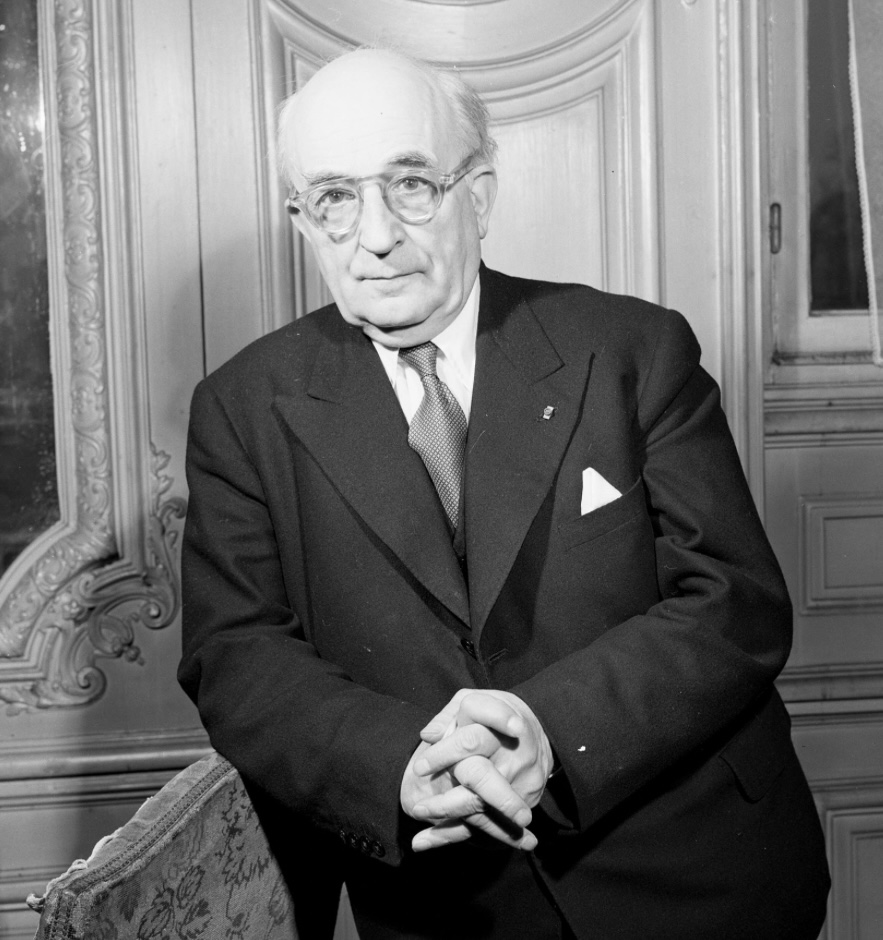
Salvador de Madariaga
SpainBiografía
Salvador de Madariaga was born in A Coruña on July 23, 1886 into an enlightened liberal family linked to the administration of the State. He initially trained as an engineer in Paris, but very soon he oriented his life towards diplomacy, literature and political thought. This double training—technical and humanistic—would mark his work: Madariaga was not a systematic philosopher in an academic manner, but rather a historical essayist concerned with the moral foundation of international politics.
During the first decades of the 20th century he held positions at the League of Nations in Geneva, a decisive experience. There he faced the central problem of contemporary politics: how to organize coexistence between nations without permanently resorting to war. This context led him to reflect on the origin of the very idea of the international community. Contrary to the usual view that attributed it exclusively to the Enlightenment or Anglo-Saxon liberalism, Madariaga found its roots in Spanish legal thought of the 16th century.
In works such as Englishmen, Frenchmen, Spaniards (1928) and Spain (1930), he argued that Spain's great historical contribution had not been the conquest, but rather the moral doubt about the legitimacy of the conquest. In his opinion, the discovery of America forced Europe to consider for the first time whether all men belonged to the same legal community. The debates on the rights of indigenous people, developed by theologians and jurists such as Vitoria or Las Casas, introduced the idea that human dignity did not depend on religion, civilization or political belonging. That statement constituted the intellectual background of modern human rights.
His diplomatic career reinforced this interpretation. As Spain's ambassador to Washington and Paris during the Second Republic, and later as an exiled intellectual after the Civil War, Madariaga observed the birth of contemporary international institutions—the United Nations, universal declarations of rights—as the culmination of a much longer process. For him, the modern language of universal rights was not a break with the European Christian past, but rather its secularization. The legal equality proclaimed in the 20th century extended the scholastic affirmation that every person has rights by nature.
In his biographies of historical figures such as Columbus, Cortés or Bolívar he insisted on this continuity: Atlantic history should not be understood as a clash between civilizations, but as the progressive development of a universal consciousness of humanity. America, in his vision, was the scene where Europe discovered that politics had to be morally justified before all men. That demand—not to govern simply because you can, but because it is fair—constitutes the core of universal rights.
Madariaga died in Locarno on December 14, 1978. His intellectual contribution can be summarized as follows: he interpreted the Hispanic tradition as one of the historical origins of the modern idea of common legal humanity. For him, human rights are not born solely from the modern political revolution, but from a previous tradition that affirmed the dignity of the person in the face of power. With this he placed the Spanish experience within the moral genealogy of contemporary Western civilization.
Aportación Filosófica
Placed the origin of modern human rights in scholastic moral doubts about the legitimacy of conquest.
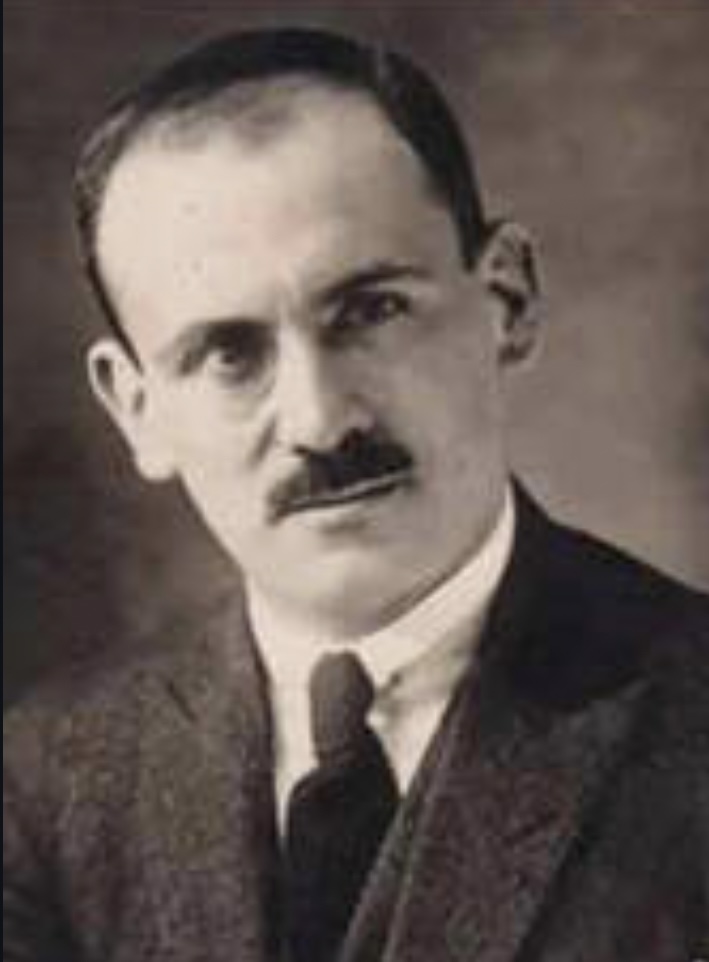
António Sardinha
PortugalBiografía
António Sardinha was born in Monforte in 1887 and was the main thinker of Lusitanian integralism. His work appears in the context of the crisis of the First Portuguese Republic, perceived by him as a consequence of the importation of the French Jacobin model.
In A Aliança Peninsular (1924) he argued that Spain and Portugal form the same political civilization characterized by municipalism, social corporatism and historical limitation of power. For Sardinha, the Iberian tradition did not know absolute sovereignty: neither the king nor the nation were omnipotent; both were subordinated to a previous moral and social order.
His thinking radically distinguishes authority and power: authority emerges from the living community, while modern power seeks to create itself. In this he explicitly takes up scholastic political anthropology: society is not born of contract or will, but of the social nature of man.
He died prematurely in 1925, but his work anticipates much of the contemporary criticism of the ideological State.
Aportación Filosófica
Defended that Iberian civilization did not know absolute sovereignty, with power always subordinated to society.
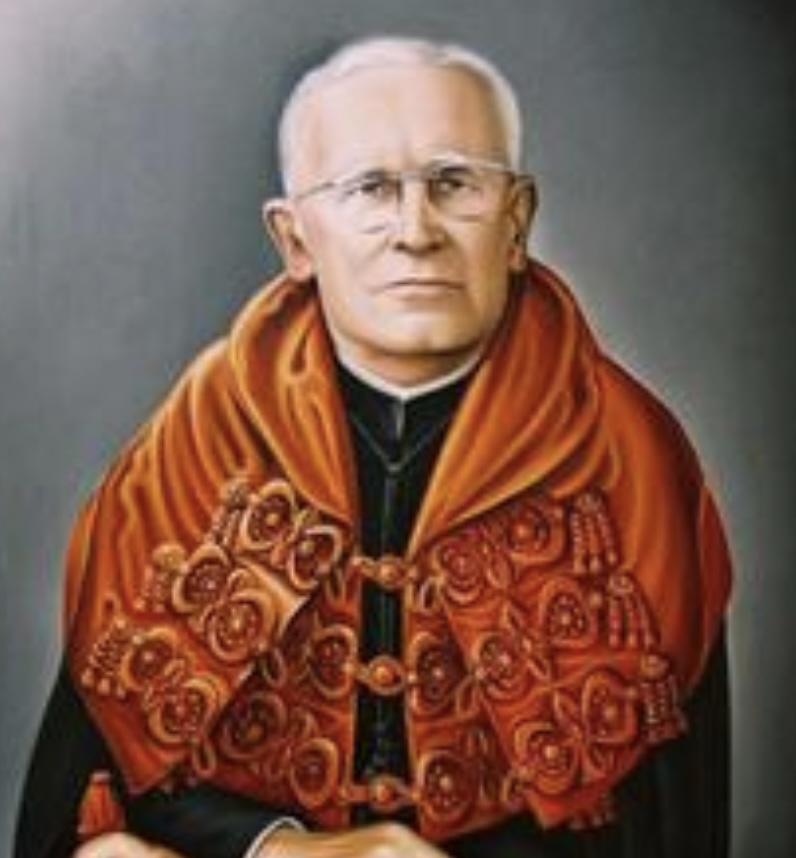
Cabral de Moncada
PortugalBiografía
Luís Cabral de Moncada was born in Lisbon in 1888 and was one of the great Portuguese legal philosophers of the 20th century. Professor in Coimbra, he developed a systematic critique of the dominant legal positivism in Europe.
For Moncada, the law is not legitimate because it is formally valid, but because of its conformity with objective justice. Thus he recovers the classic scholastic principle: the law is not born from the legislator, but rather the legislator must recognize a prior order.
This thesis implied a complete revision of modern sovereignty. The State is not a source of law, but rather an instrument of the legal order. Politics becomes a prudential activity subordinated to morality.
His work constitutes one of the clearest bridges between the Second Scholasticism and contemporary legal philosophy, restoring natural law in a context dominated by Kelsenian normativism.
He died in 1974.
Aportación Filosófica
Recovered the principle that the legislator does not create law, but must recognize an objective order of justice.
Julio Meinvielle
ArgentinaBiografía
Argentine Thomist priest and philosopher. He interpreted modernity as a progressive emancipation of power from moral truth. His criticism is not sociological but metaphysical: when politics stops recognizing a natural order, it transforms into a pure technique of domination.
For Meinvielle, freedom does not consist of absolute autonomy but rather of the rational order of human action. The political community exists to facilitate virtuous living, not to produce collective wills. This conception directly extends the political anthropology of the Second Scholasticism.
Aportación Filosófica
Affirmed that politics must facilitate a virtuous life and that freedom is the rational order of human action.
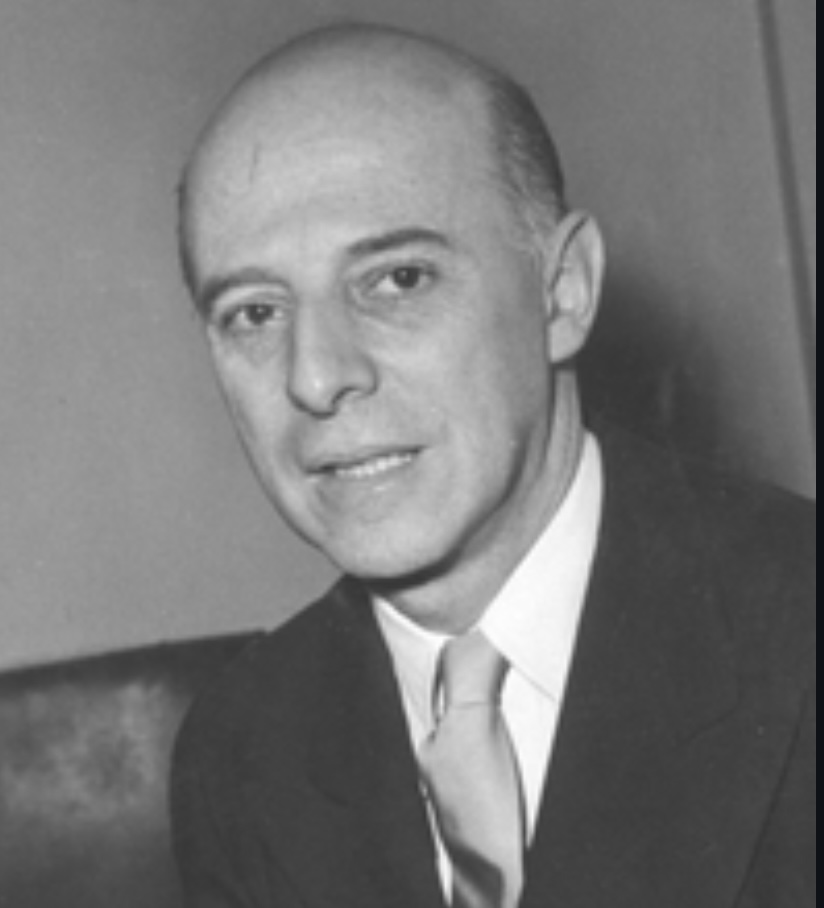
Jaime Eyzaguirre
ChileBiografía
Chilean historian trained at the Catholic University of Chile, he dedicated his work to reinterpreting American independence from legal categories instead of ideological ones.
Faced with the revolutionary narrative—the colonies are freed from absolutism—Eyzaguirre shows another logic: the governing boards are created because the king disappears. Monarchical legitimacy is not denied; The retroversion of sovereignty to the people is activated, a doctrine formulated by Suárez.
This completely changes the historical meaning: independence is not contractual rupture but legal continuity. America does not invent a new order; provisionally administers the old one.
His work reveals that Spanish American constitutionalism was born within the previous European legal tradition, not as a French revolutionary import. The policy is legitimized by institutional continuity.
Aportación Filosófica
Showed that emancipation was an activation of scholastic popular sovereignty and not a contractual rupture.
Marjorie Grice-Hutchinson
EnglandBiografía
Marjorie Grice-Hutchinson was born in London in 1909 and trained as an economist at the London School of Economics under the influence of Friedrich Hayek. His interest in Spain arose during his residence in Malaga after the Civil War, where he came into contact with archives and libraries that preserved economic treatises from the 16th century practically forgotten by European historiography.
In 1952 he published The School of Salamanca: Readings in Spanish Monetary Theory 1544–1605, a work that transformed the history of economic thought. Until then, it was considered that modern economics was born in the 18th century with Adam Smith; Grice-Hutchinson demonstrated that fundamental concepts—subjective value, quantitative theory of money, legitimacy of interest—had been formulated two centuries earlier by Spanish theologians and jurists.
His contribution did not consist only of editing texts, but also of changing the intellectual narrative of the West. He revealed that modern political economy does not emerge exclusively from the Protestant world or British empiricism, but also from scholastic moral reflection on justice, property, and freedom of exchange. Thanks to his work, the Salamanca tradition was once again integrated into the genealogy of liberalism.
In this way, Grice-Hutchinson made it possible to understand that many ideas present in modern constitutionalism—limitation of fiscal power, criticism of inflation, primacy of property—were not enlightened innovations, but developments of a previous legal and moral tradition. He died in Malaga in 2003, after having restored Hispanic scholasticism to its place in European intellectual history.
Aportación Filosófica
Demonstrated that Spanish scholastics formulated the principles of a free economic order centuries before Adam Smith.
Mariano Navarro Rubio
SpainBiografía
Mariano Navarro Rubio was born in Burbáguena (Teruel) on September 8, 1913 and died in Madrid on November 23, 2001. He was one of the most decisive economic figures in 20th century Spain and, at the same time, a little-recognized representative of the intellectual continuity between classical Spanish economic thought and contemporary institutional modernization. Graduated in Law and a State commercial technician, he developed his career in the financial field until being appointed Minister of Finance (1957–1965) and later Governor of the Bank of Spain (1965–1970).
Its name is linked to the 1959 Stabilization Plan, which put an end to the autarkic model and opened the Spanish economy to international trade, monetary stability and budgetary discipline. But beyond its political or technical dimension, his thought reveals a deeply legal conception of the economic order: the economy had to be supported by stable institutions, a healthy currency and fiscal responsibility. In this sense, his approach was not merely technocratic but institutionalist.
Navarro Rubio defended that inflation constitutes a form of covert expropriation and that monetary stability is a condition of civil freedom, ideas that directly connect with the Salamanca tradition since Azpilcueta and Mariana. Money is not a discretionary instrument of power but rather a guarantee of commutative justice in society. His economic policy was aimed precisely at restoring confidence in the currency as a budget for social cooperation.
From this perspective, his figure can be interpreted as a contemporary translation of the scholastic principle of limitation of fiscal and monetary power: the State does not create wealth, but must preserve the institutional framework in which society generates it. Thus, his economic reform not only transformed Spain materially, but represented the modern application of a Hispanic tradition that understands the economy as a moral order rather than as political engineering.
Aportación Filosófica
Applied the principle of monetary stability and fiscal responsibility as guarantees of civil freedom.
Mario Góngora
ChileBiografía
One of the greatest historians of the State in Latin America. In a Historical Essay on the Notion of the State in Chile, he maintains that the Chilean State does not create the nation; arises from a previous historically organized society.
His thesis coincides with classical political philosophy: community precedes power. The State is not sovereign in an absolute sense, but rather an institutional expression of a previous social reality. When you try to redefine it ideologically, it produces a crisis.
Góngora represents a historical realism compatible with scholasticism: politics must recognize the historical nature of society, not reconstruct it theoretically.
Álvaro d’Ors (1915–2004)
Álvaro d’Ors Pérez-Peix was born in Barcelona on April 14, 1915 and died in Pamplona on February 1, 2004. Son of the essayist Eugenio d’Ors, he developed an exceptional intellectual career as a jurist, legal historian and political philosopher. Professor in Santiago de Compostela and later at the University of Navarra, he is considered one of the greatest Romanists of the 20th century.
His fundamental contribution was to reinterpret the European legal tradition from its Roman roots to modernity. Against the modern idea of sovereignty—a supreme power capable of producing law—d'Ors defended that law had historically been prior to political power. In Rome, in medieval Christianity and in the Hispanic tradition, the function of the ruler was to guard a received legal order, not to create it arbitrarily.
His distinction between authority and power summarizes his entire political philosophy. Authority convinces because it is recognized; Power rules because it can impose itself. When power attempts to replace authority, the absolute modern State appears.
This thesis connects directly with Suárez and Vitoria: power is a delegated function within a prior legal community. The ruler is not the source of the law but rather its first obligation. For d'Ors, political modernity begins when sovereignty replaces law as the organizing principle of the community.
In works such as Law and Common Sense (1956), Essays on Political Theory (1979) and numerous studies of Roman law, he argued that Europe was for centuries a jurisdictional civilization - ordered by courts, jurisdictions and intermediate bodies - and not sovereign. The contemporary State broke this continuity by identifying power with right.
D'Ors thus constitutes one of the clearest bridges between classical scholasticism and contemporary political theory: he does not recover his conclusions out of historical nostalgia, but rather by showing that the current problem of political legitimacy comes precisely from having abandoned that previous legal model.
Aportación Filosófica
Held that the State arises from a prior society and that its legitimacy depends on respecting the community's history.
Álvaro d’Ors
SpainBiografía
Prestigious Romanist and legal philosopher, defender of social authority.
Aportación Filosófica
Distinguished between authority (social) and potestas (political), warning that state absolutism is born by replacing law.
Carlos Stoetzer
ArgentinaBiografía
Carlos Alberto Stoetzer (1916–1997), Argentine jurist and historian trained between Buenos Aires, Europe and the United States, was one of the first researchers to systematically propose that American independence—both Anglo-American and Spanish-American—should be interpreted within the same intellectual genealogy. Faced with the dominant narrative that presented modern constitutionalism as the almost exclusive fruit of the Protestant Enlightenment, Stoetzer reconstructed the Atlantic circulation of legal ideas coming from the Second Scholasticism.
In The Scholastic Roots of the American Constitution (1986) he analyzed the library, correspondence, and intellectual environment of the British colonists and the Founding Fathers, showing that concepts such as popular sovereignty, fiduciary power, fiscal consent, and the right of resistance did not suddenly appear in Locke or the English Whig tradition. These principles had already been formulated with precision by Francisco de Vitoria, Francisco Suárez and Juan de Mariana between the 16th and 17th centuries. Stoetzer argues that such ideas penetrated the Anglo-Saxon world through European theological-political controversies—especially English anti-absolutist disputes—and that, once secularized, they became constitutional language. The result was that the American Revolution did not create a new political paradigm, but rather institutionalized a previous legal doctrine.
The author expanded this thesis in Political thought in Spanish America during the period of emancipation (1789–1825), where he studied how Spanish-American revolutionaries did not initially resort to French revolutionary contractualism, but to legal categories inherited from Hispanic public law. There he showed that the idea of “retroversion of sovereignty” – according to which, once the legitimate king has disappeared, power returns to the political community – comes directly from the Suarezian theory of delegated power. Independence was not conceived as a revolutionary rupture, but as the restoration of a previous legitimate order.
In Scholastic Roots of the Emancipation of Spanish America he delved even further into this doctrinal continuity, demonstrating that both in North America and Latin America the same fundamental notions were used: the political community is prior to the ruler, power is fiduciary and conditioned to the common good, and there is legitimacy to depose the tyrant. The difference between both processes would not be philosophical but institutional: while in the British colonies these ideas crystallized in a stable constitutionalism, in the Hispanic world they translated into more complex political processes.
Stoetzer's general conclusion is especially relevant: modern constitutionalism is not born from a break with the medieval-Catholic legal tradition, but from its historical evolution. The American revolution and the Spanish-American independence thus appear as parallel manifestations of the same intellectual matrix—that of the Second Scholasticism—later reinterpreted by the Enlightenment, but not originated by it. Consequently, Atlantic political history ceases to be the expansion of a single Anglo-Saxon model and becomes the plural development of a shared Western legal tradition.
Aportación Filosófica
Demonstrated that popular sovereignty and limited government in the Americas proceed from the matrix of Vitoria and Suárez.
Rafael Termes Carreró
SpainBiografía
Rafael Termes Carreró (Barcelona, 1918 – Madrid, 2005) was one of the most influential Spanish economists and thinkers of the 20th century in the articulation between market economy, social morality and Christian intellectual tradition. Doctor in Industrial Engineering and later doctor in Economic Sciences, he developed a good part of his career in the financial field - he became president of the Spanish Association of Private Banking - but his true intellectual relevance lies in having tried to reconstruct a philosophical and moral foundation of capitalism compatible with the European humanist tradition and, very particularly, with the Hispanic scholastic tradition.
Termes rejected the purely technocratic or utilitarian interpretation of economics. In works such as Anthropology of Capitalism (1987), Market Economy and Christian Morality (1996) or From Freedom (1997), he defended that the market economy is not simply an efficient system of resource allocation, but a social institution that presupposes a certain conception of the person: free, responsible, capable of spontaneous cooperation and endowed with dignity prior to political power. In this sense, the market does not create morality, but can only function if a moral order previously exists.
His most characteristic philosophical contribution consists of linking contemporary economic liberalism with the natural law tradition. For Termes, the market economy did not arise in the 18th century due to a break with Christian tradition, but rather due to its internal evolution. It thus returns to the interpretative line—also developed by Marjorie Grice-Hutchinson or later by Jesús Huerta de Soto—according to which the Spanish scholastics had already formulated the fundamental principles of the free economic order: subjective value, legitimacy of profit, social function of commerce and moral limits of fiscal and monetary power.
From this perspective, modern capitalism appears as a partial secularization of a previous anthropology. The market is possible because it recognizes private property as an extension of personal freedom, because it presupposes the moral obligation of the contract and because it limits the arbitrary intervention of power. For this reason, Termes insisted that criticism of the market from collectivist positions ignored its moral roots: destroying the market also implied destroying the sphere of personal responsibility.
Unlike other liberal economists, Termes did not defend the market in the name of individualism, but rather of sociability. He considered that free exchange is a form of rational social cooperation, close to the classical conception of the common good. The State had to guarantee the legal framework, but not replace social initiative; When it did, it transformed politics into social engineering and eroded civil liberty.
His thought thus recovers a long-standing intellectual thread: economics as part of moral philosophy. In continuity with scholasticism, economic freedom is not an unlimited license, but rather the space where the person exercises their responsibility in society. For this reason, Rafael Termes interpreted the liberal tradition not as a denial of Christian humanism, but as one of its modern historical expressions: an institutional way of limiting political power through the recognition of the dignity and autonomy of the person.
Aportación Filosófica
Linked the market economy with personal responsibility and the natural law tradition.
Francisco Canals Vidal
SpainBiografía
Francisco Canals Vidal was born in Barcelona on December 21, 1922 and died in the same city on February 7, 2009. A Thomist philosopher and professor for decades at the University of Barcelona, he was a central figure of Spanish Christian personalism of the 20th century. His thought developed in dialogue with the Aristotelian-Thomistic tradition and with modern philosophy, especially in the face of contemporary subjectivism.
Canals argued that the modern political crisis is actually an anthropological crisis: by losing the notion of human nature, politics stops being oriented towards the common good and becomes a pure technique for organizing power. Faced with this, he recovered the classic notion of political community as a moral reality rather than a contractual one.
In works such as On the Essence of Knowledge, Spanish Politics: Past and Future or his studies on social philosophy, he maintained that society is not born from an agreement between isolated individuals but from the natural sociability of the person. Political power then appears as a function at the service of that community, not as an absolute constituent instance.
This thesis reproduces in a contemporary key the intellectual structure of the Second Scholasticism: natural law → common good → political legitimacy. Freedom does not consist in the absence of limits, but in rational participation in a just order. Therefore, for Canals, European historical liberalism is not opposed to Thomism, but is one of its historical consequences when translated institutionally.
His philosophy represents one of the most coherent reworkings of classical political thought in the 20th century: authority is not legitimized by the will but by the truth about man. In that sense, Canals directly extends the Hispanic tradition that understood politics as an ethical dimension of social life and not as an autonomous creation of power.
Aportación Filosófica
Defended that society is born from the natural sociability of the person and that power must serve the common good.
Ismael Sánchez Bella
SpainBiografía
Ismael Sánchez Bella was born in Tordesillas (Valladolid) in 1922 and was one of the great historians of Indian law of the 20th century. Professor of Legal History and later rector of the University of Navarra, he dedicated most of his work to reconstructing the legal functioning of the Hispanic Monarchy in America, not as a colonial apparatus of domination, but as a complex regulatory order based on principles of natural law and the Castilian legal tradition.
His research focused especially on Indian institutions: audiences, councils, jurisdictions and appeals systems. In works such as The Financial Organization of the Indies (1968), Church and State in Spanish America and numerous studies on the Laws of the Indies, he showed that the Spanish empire was not structured as a modern centralized sovereign state, but as a community of legally articulated kingdoms. America was not considered the property of the monarch, but rather an integral part of the political community under a system of rights, privileges and institutional responsibilities.
Sánchez Bella's philosophical contribution lies precisely in this reinterpretation: political power in the Hispanic tradition was not absolute or proprietary, but jurisdictional. The king's authority appeared limited by previous norms—natural law, canon law and custom—and by the existence of social corporations with their own legal personality. The Catholic Monarchy functioned more as a plural legal order than as a unitary sovereign State.
This approach is directly linked to the scholastic tradition. The Indian jurists applied categories developed by Vitoria, Suárez or Solórzano Pereira: the political community is prior to power; government is administration of the common good; Unjust law lacks moral legitimacy. By empirically studying American archives, Sánchez Bella showed that these doctrines were not mere theological speculations, but operational principles of government.
His work had important historiographical consequences. Faced with the nineteenth-century vision of the empire as backward absolutism, he proposed understanding it as a different form of historical constitutionalism: a system of legal limitations on power prior to modern liberal constitutionalism. In this way, the Hispanic tradition appeared not as an obstacle but as one of the origins of the Western political culture of rights.
More than a political philosopher in the strict sense, Sánchez Bella was the historian who institutionally demonstrated the practical reality of scholastic theory. Thanks to his work, the School of Salamanca ceased to be a purely intellectual tradition and became an effective legal architecture in the Atlantic world.
Aportación Filosófica
Demonstrated that the Hispanic Monarchy in America functioned as a plural and jurisdictional legal order.
Gonzalo Fernández de la Mora
SpainBiografía
Gonzalo Fernández de la Mora was born in Barcelona on April 30, 1924 and died in Madrid on February 10, 2002. Doctor of Law, career diplomat and later Minister of Public Works (1970–1974), he was above all a political thinker of far-reaching intellectual scope. His work is situated in a very specific moment in European history: the exhaustion of the ideological language of the 19th century and the transformation of politics into administrative management of complex societies.
His most influential book, The Twilight of Ideologies (1965), is based on a provocative thesis: the great modern political worldviews—doctrinal liberalism, doctrinal socialism, romantic nationalism—had lost their explanatory capacity in technified societies. Real politics was no longer moved by absolute principles but by rational solutions to concrete problems. However, Fernández de la Mora did not defend a technocracy without principles, but rather the opposite: politics can only be rational if it recognizes that the truth is not born from political will.
Here its deep connection with the classical tradition appears. For him, the State does not produce legitimacy; manages it. Legitimacy comes from the adaptation of decisions to the objective common good, not from the emotional intensity of the majority or from ideological mobilization. This position refers directly to the Thomistic structure of natural law: political power does not create the moral order, but must respect it and apply it prudently.
In later works such as Partitocracy (1977) or Los Errors del Cambio (1986), he developed a systematic criticism of parliamentarism understood as a struggle of sovereign wills. The problem of political modernity, according to him, was not the lack of participation, but the replacement of prudential government by permanent ideological competition. Politics degenerated when it tried to be a creator of values instead of an administrator of realities.
Thus, Fernández de la Mora reformulated in contemporary language a central intuition of scholasticism: power is limited because reality is prior to the decision. His thinking anticipates many current criticisms of populism, political moralism and democratic decisionism, defending a conception of government as institutional prudence rather than as an expression of absolute sovereignty.
Aportación Filosófica
Defended a rational policy subordinated to the objective common good, referring to natural law.
Juan Velarde Fuertes
SpainBiografía
Juan Velarde Fuertes (1927–2023) was one of the most influential economists and historians of economic thought in contemporary Spain and a key figure in the intellectual recovery of the Hispanic economic tradition. Born in Salas (Asturias) on June 26, 1927 and died in Madrid on February 3, 2023, he developed an extensive academic career as a professor of Applied Economics at the Complutense University of Madrid, advisor to the Court of Accounts and member of the Royal Academy of Moral and Political Sciences.
Although initially trained in modern economics, Velarde directed much of his work toward reconstructing the historical genealogy of Spanish economic thought, questioning the idea—widespread in Anglo-Saxon manuals—that economic science was born exclusively in the 18th century with Adam Smith. In studies such as History of Spanish Economic Thought (1974), Contemporary Spanish Economists (several editions) or numerous essays published over decades, he showed that fundamental concepts of modern economic analysis had already been formulated in the 16th and 17th centuries by the School of Salamanca.
Velarde insisted that the economic reflection that emerged in the Hispanic world was neither marginal nor merely theological, but a true attempt to understand real economic phenomena caused by the first Atlantic globalization: monetary inflation, international trade, credit, banking and prices. In this sense, he argued that authors such as Azpilcueta, Soto or Mercado developed an economic theory based on empirical observation of the market, anticipating categories that classical economics would formulate centuries later. Economics thus did not appear as an enlightened invention, but as the secularization of a previous moral analysis of justice, exchange and property.
His main philosophical contribution consisted of emphasizing that the modern economy is born within a legal conception of the social order: the market is not an autonomous technical mechanism, but a human institution linked to natural law and civil liberty. For Velarde, the liberal economic tradition—including the Anglo-Saxon one—cannot be understood without that scholastic basis that understood property, contract and value as expressions of human sociability. Consequently, economic freedom would not be a modern ideological construction, but rather the historical evolution of a previously developed moral principle.
In this way, Velarde acted as a bridge between economic historiography, political philosophy and Spanish cultural tradition. His work helped to reintegrate the Salamanca School into the general history of Western thought and to show that the intellectual genesis of liberal constitutionalism—including that of the United States—also relies on a frequently forgotten Hispanic heritage.
Aportación Filosófica
Reintegrated the School of Salamanca into the history of economics, highlighting its moral analysis of the market.
Efraín González Morfín
MexicoBiografía
Intellectual and political of Mexican Christian humanism of the 20th century. Trained in Thomist philosophy, he developed a deeply classical conception of democracy: not as sovereignty of the will but as a moral method of social cooperation.
He defended that the State does not create rights, but rather recognizes them. Politics must organize the common good respecting the primacy of the person. His thought recovers the scholastic tradition in a modern context: political legitimacy does not depend only on procedures but on their adaptation to human nature.
Aportación Filosófica
Defended that the State does not create rights but recognizes them, organizing the common good according to human nature.
Dalmacio Negro Pavón
SpainBiografía
Dalmacio Negro Pavón (Madrid, 1931) is one of the contemporary Spanish political philosophers who has most systematically studied the transformation of power in European modernity. Trained in Law and Political Science and deeply influenced by the historical-political thought of Bertrand de Jouvenel, he developed his academic career at the Complutense University of Madrid. His work is situated at the intersection between the history of ideas, political philosophy and theory of the State, with a constant concern: to explain how the West went from a legal civilization to a state civilization.
In books such as The Liberal Tradition and the State (1995), The Myth of the New Man (2009), History of the Forms of the State (2010) or Government and the State (2012), Negro maintains that political modernity does not simply consist of the appearance of democracy, but of a deeper phenomenon: the autonomization of political power with respect to society. For him, the modern State is not only an administrative institution, but a new form of power that tends to expand unlimitedly because it no longer recognizes external limits to itself.
Here appears his central distinction between authority and power. Authority, in the classical and medieval European tradition, was a social principle prior to politics: it was born from custom, religion, family, intermediate bodies and law. The ruler exercised delegated power limited by an objective moral order. Power, on the other hand, is the capacity for autonomous decision-making that seeks to create the norm for itself. When power replaces authority, politics stops being the government of an order and becomes the production of an order.
Negro interprets that European civilization—and especially Hispanic civilization—functioned for centuries on the first model. Natural law, pactism, jurisdictions and the plurality of jurisdictions prevented the absolute concentration of sovereignty. This structure coincides with the scholastic conception: power originally belongs to the community and the ruler exercises it fiduciarily in order to the common good. Absolute sovereignty would, therefore, be a subsequent historical break, not the starting point of Western policy.
In modernity, however, sovereignty becomes identified with the State. From Bodin to contemporary theories of political will, power becomes the creator of law and no longer recognizes a higher moral law. For Negro, this change explains both absolutism and totalitarianism and also certain forms of unlimited democracy: they all share the same premise, that the ultimate source of legitimacy is organized political will.
That is why his reading of liberalism is unique. He does not understand it as individualistic exaltation or as a simple economic doctrine, but as the historical reaction of society to the expansion of the State. Constitutionalism, separation of powers, and civil liberties would be attempts to restore limits previously provided by classical natural law. In this sense, liberalism would not be an autonomous modern ideology, but rather the secularized survival of the ancient European conception of limited power.
Thus, Dalmacio Negro reconstructs an intellectual continuity that connects the scholastic tradition with Western constitutionalism: first there was a moral order that subordinated politics; later the State tried to emancipate itself from him; and finally liberalism tried to reintroduce legal limits to that power. His thinking turns the political history of the West into the history of the struggle between social authority and sovereign power, a tension that, in his opinion, continues to define contemporary politics.
Aportación Filosófica
Distinguished between social authority and autonomous state power, vindicating classic moral limits.
Carlos Alberto Sacheri
ArgentinaBiografía
Carlos Sacheri was born in Buenos Aires in 1933 and trained in philosophy at the Argentine Catholic University and later in Europe, where he came into contact with the Thomist renewal of the 20th century (Maritain, De Koninck, Fabro). He was a university professor, lecturer and one of the most systematic Argentine political thinkers of his generation. He was murdered in 1974, in a context of political violence that tragically symbolizes the type of civilizational crisis that he himself had analyzed: politics converted into a pure struggle of wills.
His most influential work, The Clandestine Church (1970), and his philosophical-political essays develop a profound criticism of the modern State understood as an instance that produces public morality. Sacheri maintains that political modernity has replaced the classical idea of law—rational order oriented to the common good—with the sovereign decision of authority. When power aims to create values, it stops being authority and becomes social engineering.
Here you can see its direct connection with the Suarez tradition. For Sacheri, sovereignty is neither absolute nor originating in the State: it is fiduciary. The political community has a prior moral structure—human nature, social purposes, order of justice—that power must recognize and safeguard. The government does not legitimize the truth; The truth legitimizes the government.
This has constitutional consequences: democracy is not a sufficient criterion of legitimacy. A law passed by a majority can be unjust if it contradicts human nature. Legality, therefore, does not exhaust legitimacy. This thesis reproduces in a contemporary key the scholastic distinction between lex and ius: the positive norm is only fair when it expresses the objective moral order.
Sacheri can thus be read as a bridge between Salamanca and the political crisis of the 20th century. Where scholasticism fought monarchical absolutism, it combats the ideological absolutism of the modern State. In both cases the problem is the same: the claim of unlimited sovereignty.
Constantino Ocha’a Mve Bengobesama (1936–2001)
An Equatoguinean jurist and intellectual trained in Spain, Ocha'a belongs to the generation that experienced the transition from the colonial territory to an independent State (1968). His political reflection focused on the fundamental problem of postcolonial Africa: how to create a legitimate state without destroying the traditional community.
Faced with revolutionary or ideological models, he defended a legal State based on rational norms and the recognition of the social community prior to political power. Power had to be institutional, not personal or tribal. Authority comes from society and must remain limited by it.
His approach reproduces, in the African context, the classic idea of fiduciary power typical of scholastic thought: the ruler administers an authority that does not belong to him. Legitimacy does not come from force or the single party, but from service to the common good.
Aportación Filosófica
Criticized the claim to unlimited sovereignty of the modern State, defending that power is fiduciary.
Constantino Ocha’a Mve Bengobesama
Spanish Guinea / Equatorial GuineaBiografía
Equatoguinean jurist trained in Spain, defender of the rule of law.
Aportación Filosófica
Proposed a State based on rational norms and recognition of the community against personal power.
Pedro Schwartz
SpainBiografía
Pedro Schwartz was born in Madrid in 1935 and is an economist, historian of economic thought and academic at the Royal Academy of Moral and Political Sciences. Trained in London, his work is situated in classical European liberalism, but with a strong concern for Spanish intellectual history.
Schwartz has insisted that liberalism should not be understood as a late foreign import in Spain. In his works on economic and constitutional history he maintains that the Spanish tradition already contained elements of limitation of power, protection of property and representative government before the Enlightenment.
Unlike Huerta de Soto—more focused on doctrinal continuity—Schwartz emphasizes institutional continuity: jurisdictions, courts, pactism and legal tradition. His contribution consists of showing that Spanish liberalism was neither anomaly nor imitation, but rather the evolution of a tradition interrupted in the 19th century.
Aportación Filosófica
Highlighted the institutional continuity of Spanish charters and pactism as the origin of Hispanic freedoms.
Bernardino Bravo Lira
ChileBiografía
Jurist and legal historian, intellectual disciple of Góngora. For decades he has investigated the institutional continuity between the Hispanic monarchy and the American republics.
His work empirically demonstrates something that philosophy affirmed theoretically: American constitutionalism was not born in 1776 or 1810, but in the medieval and scholastic jurisdictional tradition. Town councils, audiences and jurisdictions already limited political power.
Bravo Lira thus shows the Atlantic transmission of a non-sovereign model of power: the ruler administers a legal order prior to him. The republic inherits that structure even if its form changes.
Aportación Filosófica
Demonstrated that American constitutionalism inherits the medieval and scholastic tradition of power limitation.
Rafael Alvira
SpainBiografía
Rafael Alvira Domínguez was born in Zaragoza in 1942 and has been one of the most influential Spanish philosophers in the contemporary recovery of the classical and Christian tradition in the field of practical philosophy. Professor of Philosophy at the University of Navarra and intellectual disciple of Leonardo Polo, his work is situated at the intersection between metaphysics, social ethics and political philosophy.
Alvira has developed a theory of society focused on the idea of community as a reality prior to political power. Faced with modern contractualist individualism, he maintains that the human person is constituted in relationships of coexistence—family, friendship, university, business—that have their own rationality that is irreducible to the State. This conception takes up the classic principle of man's natural sociability formulated by Aristotle and reworked by Thomas Aquinas, the anthropological core of the Second Scholasticism.
In works such as The Reason for Being a Man, Civil Society and Political Society or Philosophy of Everyday Life, Alvira explains that legitimate authority arises from social life and not from abstract sovereign will. Political power is a subordinate entity to the common good, not its creator. In this way he recovers the scholastic notion of power as a fiduciary delegation: the community precedes the State and limits it morally.
His philosophical contribution consists of having reformulated that tradition for the contemporary world: the crisis of political modernity is not due to an excess of freedom, but to the replacement of social authority with administrative power. At this point, Alvira directly links with the intellectual line that goes from Vitoria and Suárez to current debates on civil society and constitutionalism, showing that the Hispanic tradition is not a historical vestige but rather a conceptual framework that is still operational to understand the relationship between person, community and State.
Aportación Filosófica
Developed a theory of society centered on the community as a reality prior to the State.
Jaime Nogueira Pinto
PortugalBiografía
Jaime Nogueira Pinto was born in Lisbon in 1946. He is one of the most influential Portuguese essayists, historians of ideas, and political analysts of the second half of the 20th and early 21st centuries. With a degree in Law from the University of Lisbon, he developed intense intellectual activity as a professor, lecturer, and director of cultural institutions, notably as director of the Institute for Political Studies at the Catholic University of Portugal.
His work is situated within the tradition of European conservatism, with a strong awareness of Lusitanian-Hispanic historical specificity. Unlike the purely national-state conservatisms of the 20th century, Nogueira Pinto has defended a historical and civilizational conception of Portugal within a broader Atlantic and Peninsular framework.
His most prominent works include Ideologia e Razão de Estado (1976), Portugal Contemporâneo (1985), A Direita e as Direitas (1996), and Novos Portugueses (2009). He is also the author of Nação e Defesa and numerous essays on political history, geopolitics, and European identity.
Philosophically, his thought centers on a classic distinction between power and legitimacy. For Nogueira Pinto, the modern State tends to absolutize sovereignty and decouple it from any prior moral order. In response, he claims a historical conception of power as a reality limited by traditions, intermediate bodies, cultural community, and legal heritage. This perspective brings him indirectly closer to the Iberian scholastic tradition, where power is not the source of law but an instrument subordinated to an objective moral order.
Aportación Filosófica
He claims a historical conception of power limited by traditions and intermediate bodies against modern statism, connecting Lusitanian-Hispanic identity with the tradition of objective natural law.
António José de Brito
PortugalBiografía
António José de Brito was born in Porto in 1947 and was one of the main contemporary Portuguese political philosophers. A specialist in Aristotle and the classical tradition of natural law, he dedicated his work to analyzing the moral crisis of the modern State.
He argued that political modernity had replaced legitimacy with legality: power is no longer justified by its adaptation to the common good, but by its normative capacity. Faced with this, he defended the recovery of the classical tradition in which politics is an ethical activity oriented toward objective human ends.
Brito does not propose a historical return, but rather a philosophical one: Western civilization can only sustain free institutions if it recognizes moral limits to power. In this sense, his work connects directly with Suárez, Vitoria and the Iberian scholastic tradition, reinterpreting it for contemporary political theory.
He died in 2023, being one of the last representatives of the living continuity of classical natural law in the Iberian world.
Aportación Filosófica
Defended that Western civilization can only sustain itself if it recognizes moral limits on power.
Francisco Cabrillo Rodríguez
SpainBiografía
Francisco Cabrillo was born in Madrid in 1948 and is one of the contemporary Spanish economists and jurists who have contributed to reinterpreting the Spanish economic and legal tradition from an institutional and liberal perspective. Professor of Applied Economics and professor for decades at the Complutense University of Madrid, his work is situated at the intersection between the history of economic thought, economic analysis of law and institutional theory.
Although his academic training belongs to the modern economic field—influenced by the Law & Economics school and the neo-institutional tradition—, Cabrillo has insisted on recovering the historical depth of Spanish economic thought, showing that many current problems about regulation, market and political power were already formulated in the Hispanic tradition of the 16th century. In works such as History of Economic Thought (several editions since 1996) and numerous studies on the economic analysis of law, he emphasizes that economics cannot be understood as a pure technique, but as a theory of social order: a system of norms, incentives, and expectations that limits arbitrary power.
From this perspective, Cabrillo indirectly approaches the Salamanca School. His interest in the institutional framework of the market—secure property, compliance with contracts, legal predictability—connects with the scholastic idea that the economy depends on justice and not on political will. In his works on regulation and competition he insists that state intervention usually generates effects contrary to those intended when it ignores the dispersed knowledge of society, an intuition that recalls the Salamancan notion of the fair price as a result of common estimation and not of the imposition of authority.
He has also developed analysis on the function of law as a structure of social cooperation. Law, for Cabrillo, does not create wealth or economic order; channels them. This approach brings it closer to the classic conception of power as an instrument subordinate to the social order, in intellectual continuity with the Hispanic legal-natural tradition: political power is effective when it recognizes limits prior to it.
His philosophical contribution, therefore, does not consist in explicitly reconstructing scholasticism, but in showing in contemporary language—economic and legal—the permanence of its central intuition: economic freedom and legal security are conditions of social life, not concessions of power. Thus, Cabrillo represents one of the current translations of the old problem from Salamanca to the framework of modern institutions: how to prevent administrative authority from replacing the spontaneous order of civil society.
Aportación Filosófica
Linked economic freedom with the Hispanic institutional tradition of arbitrary power limitation.
José Manuel Moreira
PortugalBiografía
José Manuel Moreira was born in Lisbon in 1949. He has a degree in Economics and Philosophy, a master's degree in Modern and Contemporary Philosophy from the Universidade Católica Portuguesa (Braga) and a doctorate in Philosophy from the Universidad Pontificia Comillas (Madrid). He has developed his academic career as a professor of Social and Political Sciences at the University of Aveiro and was director of the Master's Degree in Public Administration and Management at the Universidade Católica Portuguesa (Porto).
Intellectually, Moreira has played a central role in the recovery and updating in Portugal of four main lines of thought: economic and business ethics, the Austrian economic tradition, the economic analysis of politics and the theory of governance. His approach combines moral philosophy, institutional theory and political economy, always placing the problem of power within a prior normative framework, in clear continuity with the tradition of natural law.
One of his most relevant contributions to the Hispanic tradition is the book The Salamanca School, written together with André Azevedo Alves and published within the collection Major Conservative and Libertarian Thinkers Series. In this work, Moreira and Azevedo systematically reconstruct the contribution of the Salamanca School to modern economic and political theory, showing how authors such as Vitoria, Soto, Azpilcueta and Mariana formulated fundamental concepts about subjective value, market, money, popular sovereignty and limitation of political power long before the British Enlightenment. The book explicitly places the Second Scholasticism within the genealogy of Western liberalism, breaking the narrative that reduces its origins to the Anglo-Saxon tradition.
In his work on business ethics and political economy, Moreira insists that the market is not a simple technical allocation mechanism, but a moral institution based on contractual freedom, personal responsibility, and the limitation of state power. This perspective is directly linked to the Iberian scholastic tradition, where economic activity is part of the natural moral order and where political authority lacks legitimacy to intervene arbitrarily in free exchanges.
He has collaborated with the Institute of Political Studies of the Portuguese Catholic University, the National Institute of Administration, the Escola de Administração do Porto, the Escola de Administração de Empresas and the Ordem dos Engenheiros. He is a member of the Mont Pelerin Society, of the Board of Trustees of the +Liberdade Institute and of the Research Council of the “Center for Ethics, Business and Economy” of the Universidade Católica Portuguesa. In the past, he was part of the governing bodies of the Portuguese Association of Political Science.
Author and co-author of more than forty books and more than one hundred academic articles in national and international journals, Moreira has contributed decisively to consolidating in the Lusophone space a reading of liberalism compatible with the classical and scholastic tradition. In his thinking, economic freedom is not a break with tradition, but rather its coherent development: political power is instrumental and derived, while human dignity and moral order are prior to the State.
Within the Hispanic tradition of political thought, José Manuel Moreira thus represents a contemporary continuity that connects Salamanca with the current debate on constitutionalism, market economy and limits of public power.
Aportación Filosófica
Placed the Second Scholasticism in the genealogy of Western liberalism, breaking the Anglo-Saxon narrative.
Donato Ndongo-Bidyogo
Equatorial GuineaBiografía
Donato Ndongo-Bidyogo was born in 1950 in Niefang, in what was then Spanish Guinea. Belonging to the Fang ethnic group and educated in the late Hispanic school system, his intellectual training was developed in the Spanish language and within a cultural framework where the peninsular legal tradition—civil law, moral responsibility of power and ethical conception of authority—continued to be the dominant political language. After the independence of Equatorial Guinea in 1968, the country quickly entered into a process of personalization of power that forced many intellectuals into exile; Ndongo was one of them, settling in Spain and developing his literary, essayistic and historiographic work from there.
Although known mainly as a novelist (The Darkness of Your Black Memory, 1987; The Powers of the Tempest, 1997), his work has a deep philosophical-political dimension. His writings revolve around a central question: what happens when the State attempts to replace the historical community it claims to represent. In his analysis of the Equatoguinean experience, the problem is not the existence of the modern State itself, but rather its conversion into an autonomous power detached from the moral and social order. Power then ceases to be authority – based on recognition and legitimacy – and becomes domination.
This diagnosis is remarkably close to classic categories of the Hispanic legal tradition. Political authority, implicitly, appears as a fiduciary delegation: it exists to guard a prior social order, not to create it arbitrarily. When the ruler appropriates the political community, he breaks the very foundation of legitimacy. Ndongo thus describes the contemporary African crisis not only as an institutional problem, but as a rupture between power and justice, between formal legality and moral legitimacy.
His reflection also has a historical dimension: he interprets the Spanish colonial period not only as external domination, but also as the introduction of a legal language—administrative responsibility, appeal to norms, the idea of the common good—that later allowed him to articulate a rational critique of postcolonial authoritarianism. The paradox that runs through his work is that political independence does not in itself guarantee freedom if power is emancipated from all moral limits.
In this sense, Ndongo-Bidyogo extends in the African context an intuition characteristic of classical European political thought: the legitimate State is one that recognizes that it is not sovereign in an absolute sense. His literature and his essay show how personal dignity and social community constitute realities prior to power, and how any policy that forgets this fact degenerates into arbitrariness. Thus, even without formulating a systematic theory, his work can be read as a contemporary reflection on the old scholastic question of the origin and limits of authority, transferred to the African postcolonial experience.
Aportación Filosófica
Reflected on personal dignity as a reality prior to the State and on the limits of authority.
Juan Belda Plans
SpainBiografía
Juan Belda Plans is a Spanish priest and historian of theology born in 1950, specialized in scholastic thought and, in particular, in the so-called Second Iberian Scholasticism of the 16th and 17th centuries. Professor for decades at the University of Navarra, he belongs to the generation of researchers who, after the pioneering work of Menéndez Pelayo and later authors such as Carlos Stoetzer or Marjorie Grice-Hutchinson, undertook the systematic reconstruction of the School of Salamanca not only as a theological phenomenon but as a complete intellectual school: philosophical, legal, economic and political.
His most influential work is The School of Salamanca and the renewal of theology in the 16th century, where he demonstrates that the Salamanca authors were not isolated commentators on Thomas Aquinas, but participants in a coherent intellectual program aimed at responding to the great problems of the first globalization: the discovery of America, the Atlantic commercial expansion, the formation of modern States and the crisis of European Christianity. In this sense, Belda shows that Vitoria, Soto, Cano, Molina, Suárez or Mariana do not elaborate mere academic disputes, but rather a general theory of social order based on three pillars: rational natural law, dignity of the person and fiduciary nature of political power.
One of Belda's most important contributions consists of dismantling the dominant historiographic interpretation according to which political modernity was born in a break with medieval scholasticism. Based on the philological and doctrinal analysis of the relections, legal treatises and theological comments, he maintains that modern constitutionalism inherits categories already fully developed by the scholastics: original sovereignty of the community, fiscal consent, moral limitation of power, legitimacy of resistance to the tyrant and relative autonomy of the economic order. The Enlightenment—especially the Anglo-Saxon one—would not have created these ideas ex nihilo, but would have secularized and reformulated them.
Belda also highlights the university dimension of this process. The academic network formed by Salamanca, Alcalá, Coimbra, Valladolid, Évora and the American centers was not only an educational system, but a space for transatlantic intellectual circulation. Through manuals, public disputes, libraries and religious orders, these doctrines passed to the European world and later to the Anglo-American world. From this perspective, the Atlantic constitutionalism of the 18th century appears as a later phase of an intellectual development that began two centuries earlier.
Philosophically, his work has an important consequence: it restores the historical continuity between classical natural law and modern freedoms. Political freedom does not arise against theological tradition, but from within it when it affirms that the person has a dignity prior to any power. For this reason, the School of Salamanca ceases to be a scholarly episode and becomes a founding moment of the Western theory of limited government.
In short, Juan Belda Plans is not so much an original political thinker as the great contemporary reconstructor of a tradition. His work allows us to understand that the Second Scholasticism constitutes a true bridge between classical philosophy and modern constitutionalism, providing the conceptual architecture that would later make possible the liberal theory of the limited State.
Aportación Filosófica
Reconstructed the School of Salamanca as an intellectual program that responded to global challenges.
Jesús Huerta de Soto
SpainBiografía
Jesús Huerta de Soto was born in Madrid in 1956 and is a professor of Political Economy at Rey Juan Carlos University. An intellectual disciple of the Austrian School of Economics, especially Mises and Hayek, his main contribution has been to show that many of the theses considered characteristic of modern liberalism were already formulated by Hispanic scholastics.
In Money, Bank Credit and Economic Cycles (1998) and in numerous historical studies, he maintains that authors of the Salamanca School had developed a surprisingly sophisticated monetary and banking theory: inflation as a hidden tax, the illegitimacy of monetary manipulation, and the moral function of private property. For Huerta de Soto, the market is not a technical mechanism, but a spontaneous social process derived from human freedom, exactly as understood by the Salamancan jurists.
His central thesis is both historical and philosophical: liberalism was not born against the European Catholic tradition, but within it. Limited constitutionalism and the market economy are the institutional secularization of principles previously elaborated by scholastic natural law.
Aportación Filosófica
He demonstrates the Hispanic genealogy of economic liberalism, linking the Austrian School with the Salamanca School, especially in the defense of the market as a spontaneous order and the critique of inflation as a violation of justice.
Olavo de Carvalho
BrazilBiografía
Olavo Luiz Pimentel de Carvalho was born in Campinas (Brazil) on April 29, 1947, and died in Richmond (Virginia, USA) on January 24, 2022. A journalist, essayist, and self-taught philosopher, he developed most of his work outside the university but exercised considerable cultural influence in Brazil and in sectors of the contemporary Ibero-American political debate.
His central work, The Garden of Afflictions (1995), already contains the intuition that runs through all his production: political modernity has separated intellectual life from moral experience and turned politics into a technique of power. In later texts such as The Collective Imbecile (1996) and The Minimum You Need to Know Not to Be an Idiot (2013), he argued that Western culture can only sustain freedom if it maintains an objective notion of truth.
Although Olavo did not present himself as a scholastic, his thought is situated within the same intellectual structure. His critique of positivism reproduces the classical distinction between legality and legitimacy developed by the Iberian natural law tradition. Politics, for him, does not create the moral order; it must recognize it. His insistence that personal conscience and objective truth precede any political order recalls the doctrine according to which power is fiduciary.
Aportación Filosófica
He recovered the classical distinction between legality and legitimacy in contemporary public debate, arguing that political freedom depends on a philosophical culture that recognizes objective moral limits to power.
James Brown Scott
United StatesBiografía
American jurist James Brown Scott was the first major Anglo-Saxon scholar to systematically recover Francisco de Vitoria. In The Spanish Origin of International Law: Francisco de Vitoria and His Law of Nations (1934) and The Catholic Conception of International Law (1934), he argued that international law was not born with Grotius but with the Salamanca School.
Aportación Filosófica
He identified the Salamanca School as the true origin of modern international law, decisively influencing Anglo-American legal historiography.
Carl Schmitt
GermanyBiografía
In Political Theology (1922) and The Nomos of the Earth (1950), Schmitt criticizes the modern fiction of the State's unlimited sovereignty. He recognizes that the pre-modern European political order did not function on absolute sovereignty but on jurisdictions, charters, and limited authority—a model that coincides with the scholastic theory of delegated power.
Aportación Filosófica
He historically confirmed the existence of a classical European legal order where power was not original or unlimited, recognizing the relevance of the political architecture of the Hispanic Monarchy.
Heinrich Rommen
GermanyBiografía
German jurist Heinrich A. Rommen placed Suarez and Vitoria at the origin of Western constitutionalism in The Natural Law (1936). He taught at American universities and his manual formed generations of jurists, explaining that limited popular sovereignty and delegated power were developed by the scholastics.
Aportación Filosófica
He was key in introducing the Salamanca tradition into 20th-century American legal theory as a root of limited power constitutionalism.
Friedrich A. Hayek
Austria / United KingdomBiografía
In The Road to Serfdom (1944) and Law, Legislation and Liberty (1973), Hayek develops the theory of spontaneous order. His conception of law as discovery and not as creation by the legislator coincides with the scholastic legal tradition: just law derives from a prior moral order and not from the sovereign will of the ruler.
Aportación Filosófica
He contributed indirectly to rediscovering the scholastics as antecedents of limited constitutionalism and an economy based on general abstract rules.
Eric Voegelin
Germany / United StatesBiografía
In The New Science of Politics (1952) and Order and History, Voegelin argues that the political community does not create moral truth but participates in a prior order. His conception of power as a reality limited by truth coincides with the scholastic doctrine of fiduciary power and authority subordinated to the common good.
Aportación Filosófica
He provided the conceptual framework to reinterpret the relevance of Salamanca in Western political history as the institutionalization of a moral order prior to the State.
Joseph Schumpeter
Austria / United StatesBiografía
In History of Economic Analysis (1954), Schumpeter identifies the Spanish scholastics as the first scientific economists. He recognized that they formulated, before classical economics, theories on subjective value, market price, and the nature of money, changing the intellectual genealogy of economic liberalism.
Aportación Filosófica
He restored the importance of Spanish scholastics as founders of modern economic science, recognizing their priority over British classical economics.
John Courtney Murray
United StatesBiografía
In We Hold These Truths (1960), Murray interprets the American First Amendment in light of natural law and recognizes the heritage of Suarez and Bellarmine. He argues that the American experiment works because it institutionalizes classical principles: derived authority and a moral law superior to the State.
Aportación Filosófica
He linked American constitutionalism with the scholastic tradition of limited popular sovereignty and the subordination of power to natural law.
Michel Villey
FranceBiografía
French legal philosopher Michel Villey studied the Second Scholasticism in La formation de la pensée juridique moderne. He maintains that the modern notion of subjective right was born in late scholasticism, introducing Salamanca to the contemporary philosophical debate on human rights.
Aportación Filosófica
He introduced the Salamanca School into the modern European legal debate, identifying it as the cradle of subjective rights.
Murray Rothbard
United StatesBiografía
In Economic Thought Before Adam Smith (1995), Rothbard identifies Mariana, Azpilcueta, and Mercado as direct precursors of political and economic liberalism. He underlines their deep influence on Locke and the subsequent American constitutional tradition.
Aportación Filosófica
He popularized the Salamanca School in the contemporary Anglo-Saxon liberal world, placing it as the radical origin of the theory of liberty and property rights.