
Organizer: Fe y Libertad Institute (Guatemala)
Collaborator: Escuela Hispánica
Dates: October 12-15, 2025
Location: La Antigua, Guatemala
From October 12 to 15, the "Echo of Salamanca" colloquium was held in La Antigua Guatemala, organized by the Fe y Libertad Institute, an international academic meeting dedicated to reflecting on the historical and intellectual relevance of the School of Salamanca and its contribution to contemporary Western thought. The event brought together researchers from various disciplines—philosophy, law, economics, theology, and history—in a dialogue marked by academic rigor and a plurality of approaches.
Among the participants were figures linked to Escuela Hispánica, such as its honorary president, Alejandro Chafuen, and two of its academic vice presidents: Carroll Ríos, president of the Fe y Libertad Institute and direct promoter of the conference, and León Gómez Rivas. The presence of these speakers helped to articulate the colloquium within a broader intellectual effort to recover the Hispanic tradition in the contemporary debate.
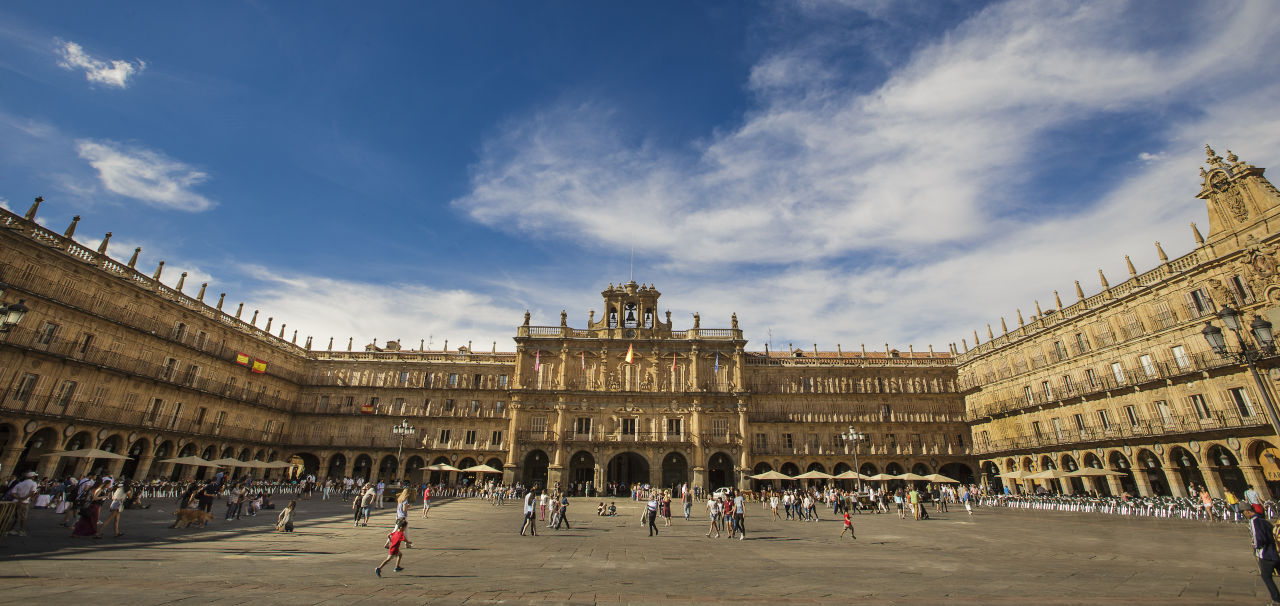
The sessions revolved around the legacy of the scholastics of the 16th and 17th centuries, whose starting point is located in Francisco de Vitoria's chair in Salamanca (1526), within the Thomistic tradition inspired by Saint Thomas Aquinas. The speakers underscored how these authors integrated faith and reason by recovering Aristotelian philosophy, allowing the systematic use of logic in Christian moral and legal reflection. Far from being merely speculative, the scholastics responded to concrete problems of their time: the humanity and rights of indigenous people after the discovery of America, the legitimacy of political power, private property, price justice, inflation caused by the massive arrival of American silver, or the fiscal limits of the State.
Special attention was paid to the figure of Vitoria as a precursor of international law and the modern notion of human rights, as well as to Juan de Mariana—defender of the popular origin of political power and critic of monetary manipulation—and Diego de Covarrubias, whose theory of subjective value anticipated developments in economics centuries later. The historical context was also recalled: from Isabella the Catholic's concerns for the treatment of indigenous people to the debates of Valladolid, showing how the Salamancan tradition was born from the attempt to respond morally to an unprecedented reality.
Beyond the historical content, the colloquium emphasized three intellectual features of the school: its open attitude to the concrete problems of the time, its capacity for synthesis—the Catholic "et... et..." versus ideological exclusivism—and its defense of human dignity as a permanent limit of power. In this sense, it was insisted that the Salamancan tradition does not constitute a scholarly relic, but a useful framework for thinking about current issues: from political legitimacy and economic justice to the relationship between freedom, culture, and moral responsibility.
The meeting was also linked to the Fe y Libertad Institute's editorial project on the West in Crisis (volume 8), in which you participate as a guest editor, thus integrating the colloquium into a broader research program oriented towards recovering Hispanic humanism without falling into either the black legend or idealization.
The closing left a shared conclusion: the School of Salamanca was not just a historical episode, but an intellectual method—realistic, moral, and open—that can continue to illuminate the debates of the 21st century.
Echo of Salamanca will take place again this year in La Antigua Guatemala, consolidating itself as a periodic forum for reflection on the Hispanic intellectual tradition and its contemporary projection.