Agreement with Instituto de Fe y Libertad

Escuela Hispánica has begun working jointly with the Instituto Fe y Libertad on various initiatives aimed at the research and dissemination of Hispanic thought on liberty. In this context, we would like to announce the open call for submissions to the Institute's academic journal, whose next edition will be dedicated to topics related to Project 1776 and the influence of the Hispanic tradition on the development of modern political thought.
The initiative seeks to continue expanding the study of the Hispanic tradition and its influence on the development of modern political thought, while promoting new spaces for academic dialogue and international intellectual cooperation. We invite all those interested in contributing articles or research related to this topic to contact the Instituto Fe y Libertad for more information on the publication process.
Introduction
From Escuela Hispánica we have promoted Project 1776; an ongoing research project marking the 250th anniversary of the Declaration of Independence of the United States of America (1776–2026). This project explores the influence of the political thought of the Second Scholasticism—especially the School of Salamanca—on the intellectual origins of American constitutionalism and the defense of individual freedom against absolute power.
Various authors have shown that many of the principles we today consider pillars of modern democracies and, in particular, of the American republic—such as human dignity, popular sovereignty, the limitation of power, or respect for individual conscience—were formulated centuries earlier by Catholic theologians and jurists of the 16th and 17th centuries. A key example is the famous formula of the Jesuit Francisco Suárez (1548–1617): “Omnis potestas a Deo, populum consentientem” (“All power comes from God, but through the consent of the people”). This conception of political power as delegated by the community—and not as an absolute authority granted directly to the monarch—dismantles the cliché that modern Catholic thought supported absolutism. In fact, it was often Protestant reformers, both Lutheran and Anglican, who sustained monarchical models "by the grace of God".
The leading exponents of the School of Salamanca, influenced by Thomas Aquinas and headed by figures such as Francisco de Vitoria, Juan de Mariana, Robert Bellarmine, and Suárez himself, developed a theological-juridical vision of the political order based on natural law, moral law, and rationality. These ideas spread through universities, seminaries, and libraries, both in the Iberian Peninsula and in Hispanic America, constituting what we might today call an authentic “Hispanic tradition of liberty”.
Traditionally, academic studies have focused on the impact of this tradition during the Hispanic American independence processes (1810–2010). Researchers such as Carlos Stoetzer, Fr. Furlong, or institutes and research centers like the Fe y Libertad Institute (Guatemala) have demonstrated how the scholastics influenced the emerging republican doctrines in Hispanic America, especially through the Jesuit educational network.
However, Project 1776 broadens this horizon to also analyze its possible influence on the independence of the United States. Although the Anglo-Saxon world did not have a scholastic institutional infrastructure as developed as in Hispanic America, there are growing indications of the circulation and reception of authors from the Hispanic tradition—especially Suárez and Bellarmine—in the British colonies. This is suggested by works such as those of Rafael Termes, recent research on George Mason, and reflections like those of Professor Karl Maurer, who noted:
“It is undeniable that Thomas Jefferson, author of the Declaration of Independence, and George Mason, author of the Virginia Declaration of Rights, were well acquainted with the great classical and contemporary thinkers since Aristotle. And it is not unreasonable to conclude that they were also familiar with writers who defended popular sovereignty and opposed the absolute power of kings.”
Source: Catholic CultureA decade ago, the president of Escuela Hispánica, Alejandro Chafuen, proposed this line of research in an article published in Forbes: “Hispanics Finding Roots and Helping Build Our America”. More recently, José Sáenz Crespo took up this issue in an interview for the Intercollegiate Studies Institute with Juan A. Soto and Enrique Pallares, where the need to rediscover a “Hispanic tradition of liberty”, unjustly forgotten in Anglo-Saxon narratives, is defended.
Thus, the objective of this project is not only to recover an intellectual genealogy alternative to the Enlightenment-Protestant narrative of the origins of the United States, but also to show how Catholic political philosophy—when based on the dignity of the person, natural law, and moral freedom—can contribute to the universal ideals of justice and limited government.
Just as in recent decades the historical role of Spain in military terms in the independence of the United States has been vindicated—let us remember that it was Bernardo de Gálvez, and not Lafayette, who marched alongside George Washington in the victory parade—it is now time to also investigate the intellectual plane: the relationship between the political traditions that contributed to the philosophical pillars of those incipient united states of North America.
The Hispanic tradition should not, therefore, be understood as an antagonist to the Anglo-American one, but as complementary and necessary to sustain the enormous weight of the Western project. It is a vast, rich, and chronologically earlier tradition, whose impact is increasingly evident both indirectly—through the Scottish Enlightenment—and directly on the Founding Fathers of the United States themselves. The West is not the exclusive product of a single intellectual current, but the sum of the Hispanic tradition, the Anglo-American one, and a constellation of minor continental European traditions; all of them necessary to support its moral, juridical, and political architecture. In this sense, Project 1776 aspires to vindicate the indispensable role of the Hispanic tradition, its deep connection with the Anglo-American one, and its responsibility in the intellectual and philosophical support of the West, frequently minimized over the last two centuries.
This is, therefore, a history to be rediscovered, on the 250th anniversary of the Declaration of Independence and beyond.
Project 1776 seeks not only to recover a forgotten intellectual genealogy, but also to offer an alternative vision—Hispanic, humanist, and Catholic—of the birth of modern constitutionalism.

"THE MARCH OF GÁLVEZ" - AUGUSTO FERRER-DALMAU
This painting represents General Bernardo de Gálvez leading his troops through a swamp during the American Revolutionary War campaign. Carrying both a Spanish and an American flag, Gálvez on horseback guides his men as they advance with difficulty through water and vegetation. Soldiers of different races, including Native Americans, participate in the march, reflecting the diversity and determination of the army fighting for freedom.
Milestones of Thought
Red universitaria ibérica y nacimiento de la economía moderna
In the universities of Salamanca, Alcalá, Valladolid, Coimbra, and Évora, a systematic reflection on economics, law, and politics develops in the context of Atlantic expansion. This academic network explores fundamental theological and philosophical concepts—such as human dignity, social sovereignty, or natural rights—and describes the market as a spontaneous order arising from free human interaction. Their analyses of property, value, exchange, and currency will contribute to the birth of economic science itself. This intellectual affiliation was later recognized by the Austrian School of Economics: Joseph Schumpeter, in History of Economic Analysis (1954), described the scholastic doctors as founders of scientific economics; Friedrich Hayek, in Law, Legislation and Liberty (1973-1979) and Studies in Philosophy, Politics and Economics (1967), pointed out that they anticipated the theory of the spontaneous order of the market; and Murray Rothbard, in Economic Thought Before Adam Smith (1995), presented them as direct precursors of modern economic liberalism.
Francisco de Vitoria: Relectio de Indis
Vitoria affirms the natural equality of all men and formulates the law of nations, the basis of modern international law. He denies the legitimacy of dominion based solely on force and establishes universal principles of justice among peoples. These ideas would be developed later by the Second Scholasticism—especially by Juan de Mariana—and would pass to the Protestant world through authors like Hugo Grotius, who systemized modern international law in the 17th century taking the juridical-moral thought born in the Iberian universities as a reference.
Domingo de Soto: precio justo y mercado
In De Iustitia et Iure (1553–1554), De Soto argues that the just price is not fixed by authority but by the market, as a result of the common estimation of buyers and sellers. With this he legitimizes competitive commerce and limits political intervention in the economy. This notion anticipates the theory of spontaneous price formation that Adam Smith would systemize centuries later in classical economics, integrating it into his explanation of the economic order based on the free interaction of individuals.
Martín de Azpilcueta: teoría cuantitativa del dinero
In his Comentario resolutorio de cambios, Azpilcueta observes that the abundance of metals from the Americas causes inflation and formulates an early quantity theory of money: the value of currency depends on its relative scarcity. This explanation of purchasing power anticipates modern monetary theory and will reach European political economy, indirectly influencing the monetary debates of the Anglo-Saxon world. His insights into inflation, devaluation, and monetary stability would reappear in later discussions in the United States, especially in the controversies between Hamilton’s Federalists—who favored strong financial institutions—and positions more suspicious of monetary power, present in authors like John Adams.
Tomás de Mercado: comercio y crédito
In his Suma de tratos y contratos, Mercado studies international commerce, banking, and credit in an emerging global economy. He defends the moral legitimacy of mercantile activity and describes the market as a complex system of voluntary exchanges. His analyses of commerce, risk, and currency circulation anticipate fundamental elements of modern political economy and the commercial world that both British classical economics and the financial institutions of the young American state would inherit.
Juan de Mariana: De Rege et Regis Institutione
Mariana argues that power originally belongs to the people and is delegated to the ruler. He defends consent for taxation, the limitation of political power, and the legitimacy of resisting a tyrant, anticipating liberal constitutionalism. His theses circulated widely in Protestant Europe and were known by authors such as Grotius, Pufendorf, and especially John Locke, whose formulations on property, fiscal consent, and the right to rebellion present almost literal parallels with the work of the Spanish Jesuit. Through Locke, these ideas would pass to the Atlantic world: John Adams owned and actively sought Mariana’s work, Jefferson shared it with friends, and several Founding Fathers shared his books. Even from a broader Anglo-American perspective, it is difficult to explain the liberal tradition exclusively as a British product: if Adam Smith spent years in France in contact with the physiocrats—in an intellectual environment where Mariana was widely known after having taught at the Sorbonne—it is unlikely that he ignored his political-economic thought. It is no coincidence that the French republican allegory itself is named "Marianne" and appears represented in Eugène Delacroix's Liberty Leading the People, reflecting a European tradition of popular sovereignty prior to the Scottish Enlightenment.
El proceso contra Juan de Mariana: dinero, impuestos y tiranía
After publishing De Monetae Mutatione, Mariana is accused of treason for stating that monetary manipulation equals a hidden tax and that the king cannot appropriate the property of his subjects without consent. He defends that natural law is superior to the power of the State and that taxation without representation constitutes a form of theft. His theses—inflation as a tax, popular sovereignty, and the right of resistance—anticipate formulations that would appear later in the motto of the American Revolution: "No taxation without representation".
Roberto Belarmino: De Laicis
Bellarmine, formed in the intellectual environment of the Second Scholasticism and in direct dialogue with the theologians and jurists of the Hispanic tradition, develops and systematizes principles already present in the Iberian universities on the social origin of political power. He formulates that authority comes from God but resides originally in the political community, which decides to whom to delegate it. He thus rejects the absolute divine right of kings and maintains that civil power exists for the common good and can change forms if it ceases to fulfill that end. These theses circulated in European debate through his critics—especially Robert Filmer—whose refutations brought the doctrine of popular sovereignty to the forefront for English readers. Thomas Jefferson owned and annotated Patriarcha, where Bellarmine's arguments are quoted extensively, and the controversy helped transfer to the Anglo-Saxon world the idea that power derives from the consent of the governed. In this way, principles present in the Virginia Declaration of Rights and the Declaration of Independence reproduce formulations developed by the cardinal two centuries earlier.
Francisco Suárez: Defensio Fidei
Suárez, a central figure of the Second Scholasticism, systematizes the doctrine of the social origin of political power in Defensio Fidei (1613): authority proceeds from God, but resides first in the community and is only transmitted to the ruler by the consent of the people. With this, he rejects the absolute divine right of kings and grounds the legitimacy of limiting or deposing an unjust ruler. His work was read in England in the context of the controversies over the Stuart monarchy. These ideas would pass into English political thought and later appear systematized in Locke, conforming one of the intellectual bases of the British constitutional tradition.
Marchamont Nedham: The Excellencie of a Free-State
In the republican England following the Civil War, Nedham defends that sovereignty resides in the people and that political power must be permanently limited by representative institutions. His work is part of the anti-absolutist parliamentary tradition that had previously incorporated arguments from the Second Scholasticism. Through this republican literature, principles formulated by authors like Suárez, Bellarmine, or Mariana arrive at Anglo-Saxon political thought: John Adams would cite Nedham when discussing the separation of powers and resistance against arbitrary power.
Robert Filmer: Patriarcha
Filmer writes Patriarcha as a defense of the divine right of kings against the European anti-absolutist tradition. To refute it, he dedicates his first pages to directly attacking Robert Bellarmine and the Second Scholasticism, extensively quoting the thesis that civil authority resides originally in the community and is delegated by consent. The work was widely read in England and later in the American colonies—Thomas Jefferson owned and annotated a copy—so the controversy contributed to introducing into the Anglo-Saxon world precisely the ideas he sought to combat.
Revolución Gloriosa y John Locke: Two Treatises of Government
In the context of the Glorious Revolution, Locke formulates the political theory that legitimizes English parliamentarianism. These approaches present notable parallels with the Hispanic scholastic tradition—especially with Juan de Mariana. Evidence of intellectual transmission exists: Locke knew and recommended works by Mariana, possessed his texts in his library, and shared with him theses on the origin of society, the nature of property, and the limitation of political power.
Fundamental Orders of Connecticut
Considered one of the first constitutional texts of the modern world, it establishes a government based on the consent of the political community and the institutional limitation of power. This approach reflects the English constitutional tradition after the anti-absolutist controversies of the 17th century, in which scholastic theses on popular sovereignty had already been incorporated.
Recepción estadounidense del pensamiento escolástico
The works of Juan de Mariana circulated widely in England and the American colonies. His defense of political consent, limited power, and inviolable property dialogued with Locke's thought and passed into colonial political culture. Thomas Jefferson discovered Mariana and even gifted copies of his work, and John Adams included at least two of his works in his library.
Declaración de Independencia
The principle of natural rights granted by the Creator and the consent of the governed reflects the doctrine developed by Francisco de Vitoria and Francisco Suárez, where political power is understood as delegated authority. The idea that an unjust government loses legitimacy coincides with Juan de Mariana's formulation on the legitimacy of resisting the tyrant.
Virginia Declaration of Rights
The right to alter an unjust government and popular sovereignty find direct precedents in Mariana and Suárez. The colonial critique of taxation without representation also reproduces the scholastic argument against taxes without consent developed in the Salamancan tradition.
Constitución de Estados Unidos
The establishment of a limited government with separation of powers and popular sovereignty reflects the juridical tradition developed by Suárez and Bellarmine, where political authority is conceived as delegated power oriented to the common good.
Bill of Rights
The guarantee of individual liberties and the protection of private property relate to the defense of natural rights formulated by Vitoria and the inviolability of property in Mariana. The limitation of state power follows the theoretical framework developed by the Second Scholasticism.
Founding Fathers
Key figures of the American Revolution whose intellectual training and personal library reveal a significant connection with the scholastic tradition.
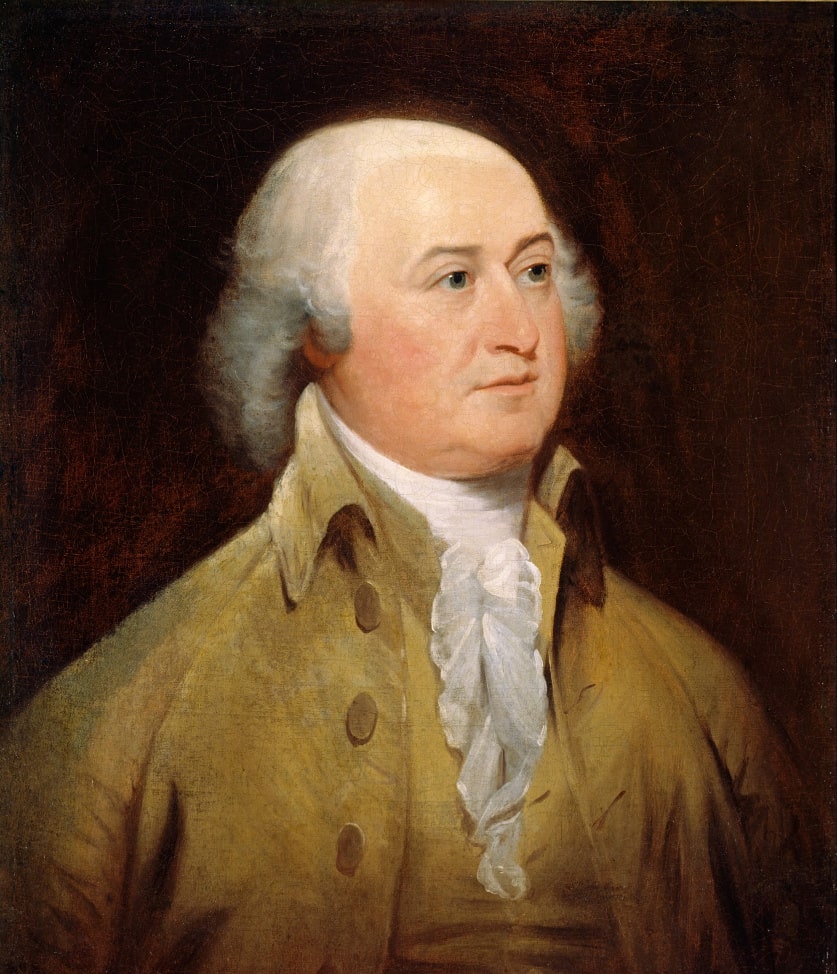
John Adams
Adams read and cited Juan de Mariana, incorporating him into his constitutional reflection alongside the English republican tradition. Through these readings, Adams assumed the superiority of natural law over arbitrary power, incorporating into American thought the idea of a fiduciary power, limited and subordinated to the common good, typical of Iberian scholasticism.
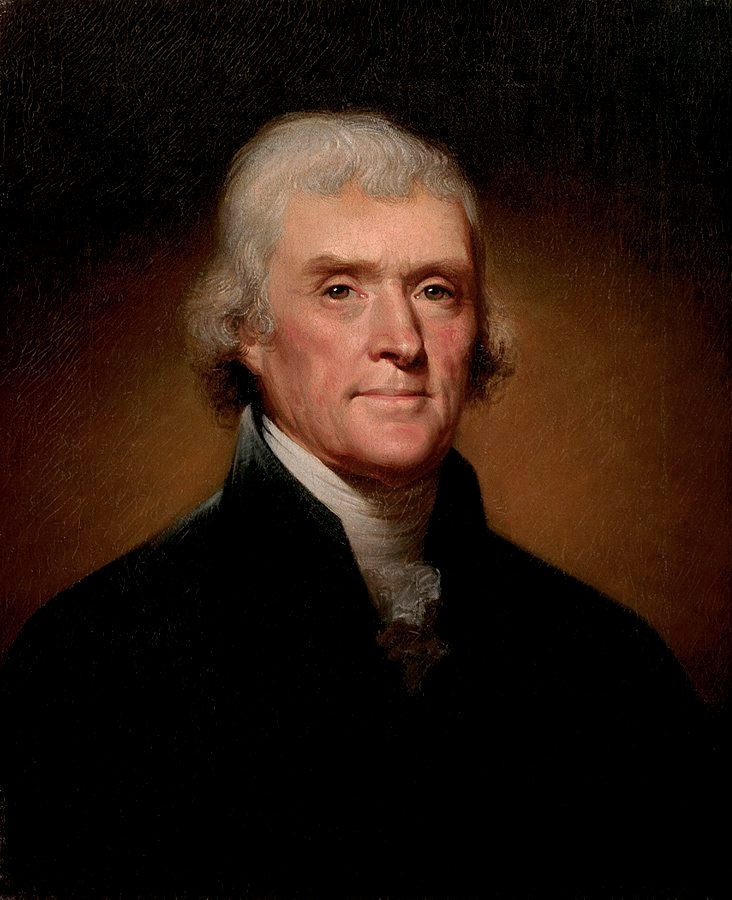
Thomas Jefferson
Jefferson showed a sustained interest in Hispanic culture: he acquired and read Don Quixote. During his diplomatic stay in Europe, he expanded his political library—including works by Juan de Mariana—and also took interest in Juan de Palafox y Mendoza. In Jefferson's library, there is a look toward Spain not only literary but also political, connecting natural law, human dignity, and the limitation of power with American republicanism.
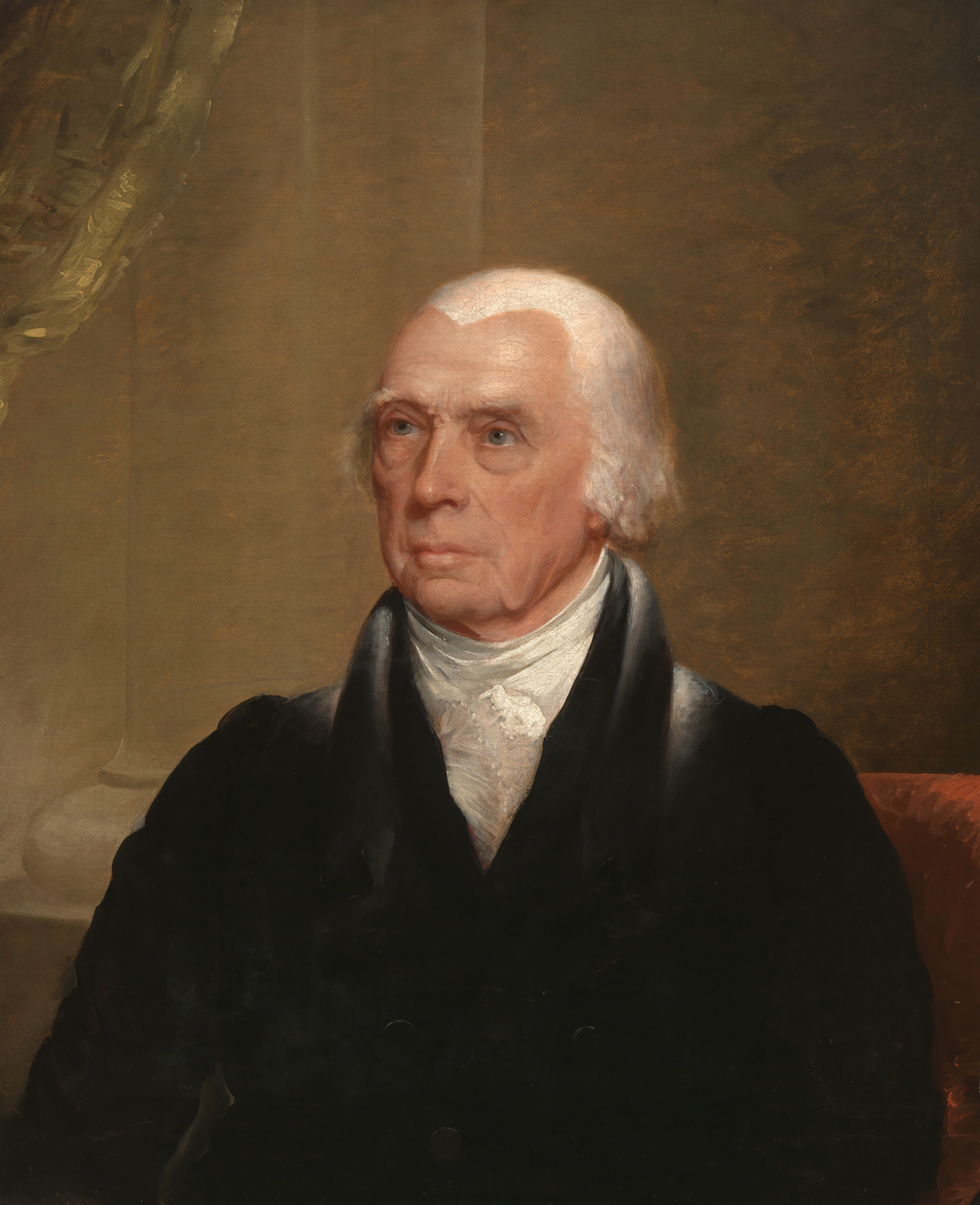
James Madison
In The Federalist Papers, Madison develops the idea that sovereignty resides in the people but must be exercised through institutions that channel and limit political power. His defense of representative government reproduces—although without explicit citation—the scholastic tradition of a prudential mixed order. The Constitution appears as the stable institutional form of popular sovereignty, an indirect heir to Iberian political theory.
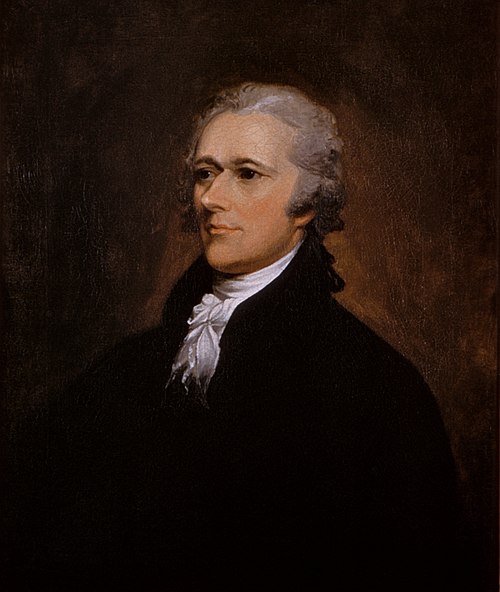
Alexander Hamilton
In the Report on Public Credit (1790) and the Report on a National Bank (1790), Hamilton links monetary stability, public trust, and political liberty. This concern connects with Juan de Mariana's critique in De Monetae Mutatione (1609), where currency manipulation is described as a hidden tax contrary to political consent. The economic architecture of the young republic incorporated debates originated two centuries earlier in Iberian moral theory.
Reception and Rediscovery
Orestes Brownson
(1803–1876)
The American Catholic political thinker defended that the Constitution is not an artificial contract but the juridical form of a prior political community. In The American Republic (1865) he maintains that sovereignty belongs to the people as a moral community and not to isolated individuals, a formulation extraordinarily close to Francisco Suárez.
John Courtney Murray
1960
In We Hold These Truths (1960), Murray interprets the First Amendment in light of the natural law tradition and recognizes the heritage of Suárez and Bellarmine in limited popular sovereignty.
Heinrich A. Rommen
1967
In The Natural Law (1947), Rommen presents the School of Salamanca as the origin of modern constitutionalism. His work becomes a manual in American law schools.
Carlos Stoetzer
1986
In The Scholastic Roots of the American Constitution (1986), Stoetzer systematically documents the influence of Vitoria, Suárez, and Mariana on the intellectual formation of American constitutionalism.
Project Axes
This project is organized around several operational and research axes:
Comparative studies between Hispanic American and United States emancipations.
Studies on the influence of the Hispanic tradition on the Founding Fathers of the United States.
Publications on the influence of the Hispanic tradition on the Anglo-American political tradition.
In-person and virtual events on the previous points.
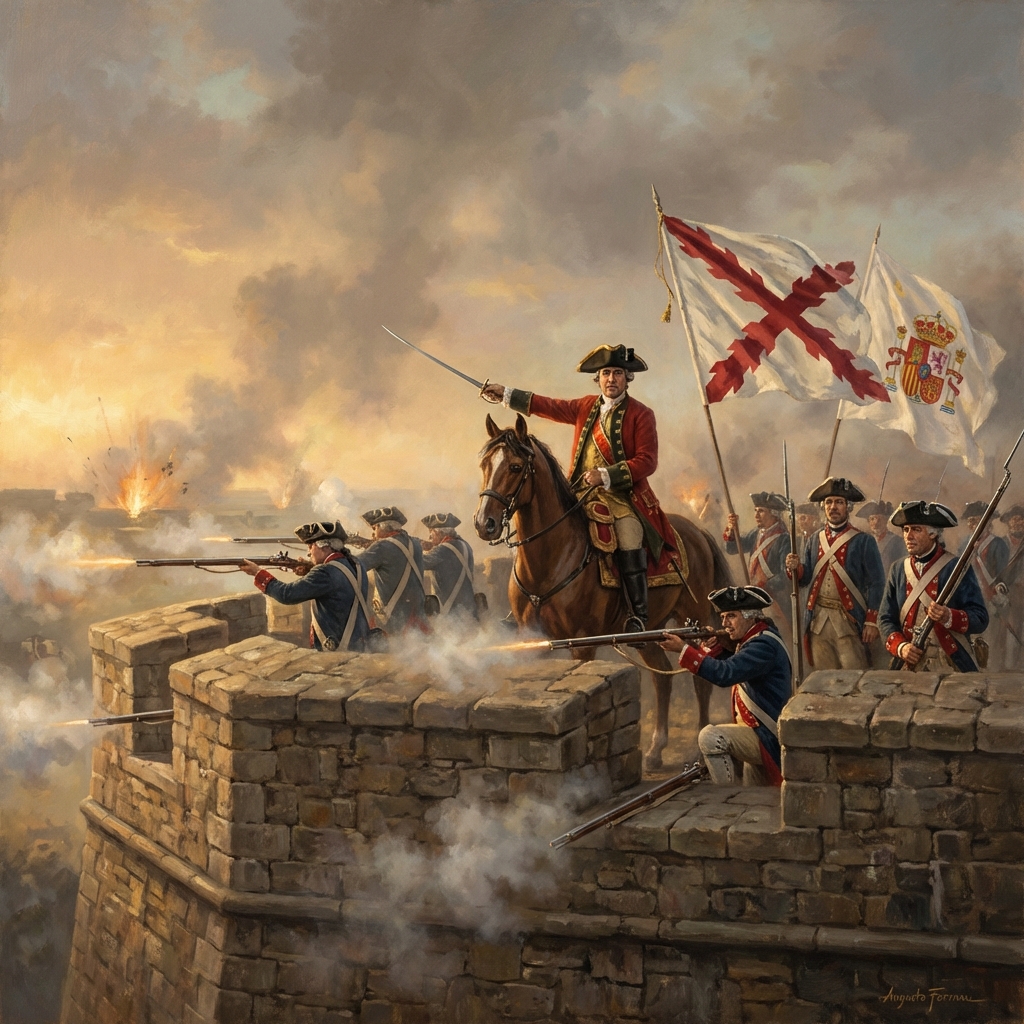
"FOR SPAIN AND FOR THE KING" - AUGUSTO FERRER-DALMAU
The painting portrays a battle scene during the American Revolutionary War, highlighting Spanish participation.
Vision and Foundations
Project 1776 seeks to dust off the Hispanic tradition, unknown or forgotten by many, update it, and place it at the service of our societies and the West, as a complementary and necessary vision to the Anglo-American one.
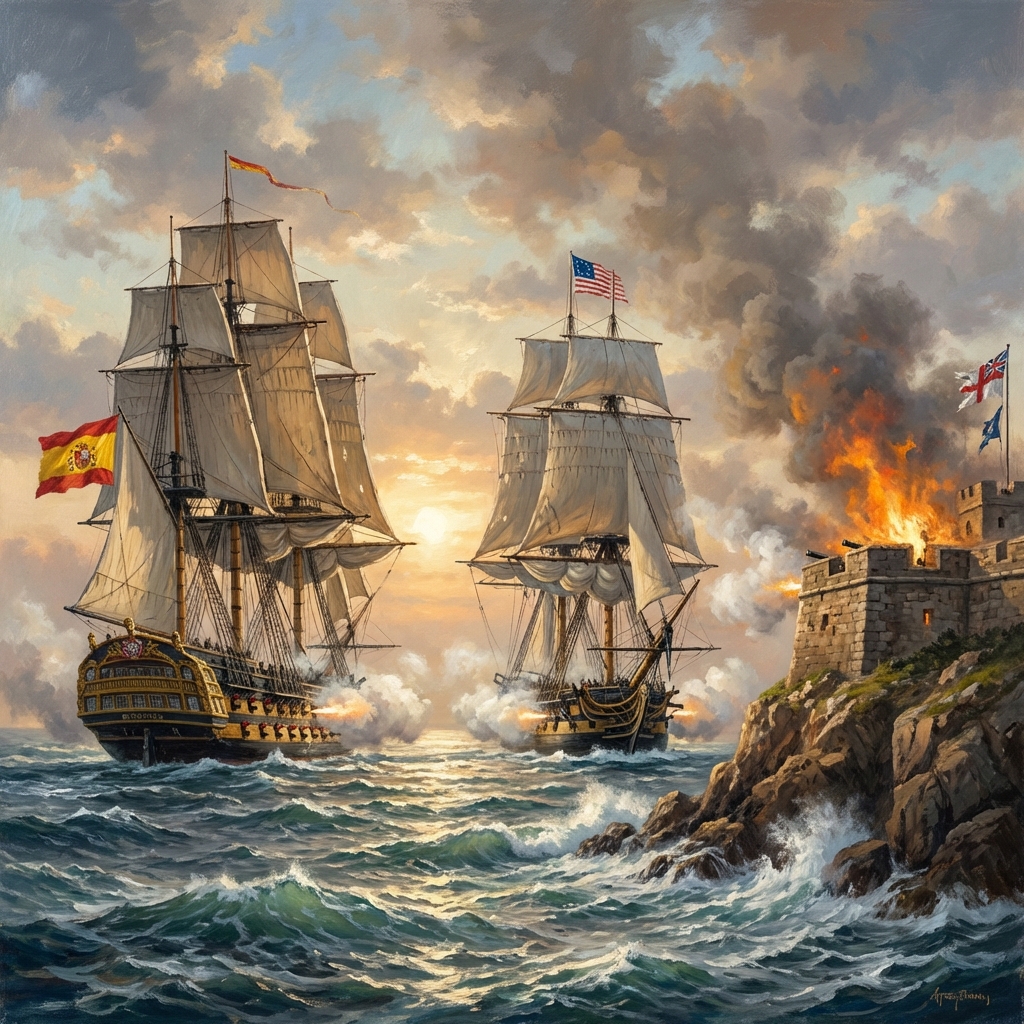
"SISTER FLAGS" - AUGUSTO FERRER-DALMAU
This painting shows two majestic ships, one Spanish and one American, sailing together.
Bibliographic References
Gómez Rivas, L. (2026). ‘Orígenes escolásticos de la libertad individual en los EE. UU. en el aniversario de la Declaración de Independencia (1776-2026)’. Instituto Fe y Libertad
Graf, E.-C. (2019). ‘Escolásticos: Francisco Suárez, Juan de Mariana y las revoluciones en América. Bicentenario de la independencia 1810-30’. Credencial Historia, Bogotá, pp. 42-51
Gómez Rivas, L. (2017). ‘¿Conoció George Mason a los escolásticos españoles?’. Instituto Juan de Mariana
Gómez Rivas, L. (2021). ‘Escolástica e independencia: Las bibliotecas jesuitas al tiempo de la emancipación’.
Rager, J.C. (1925). ‘The Blessed Cardinal Bellarmine's Defense of Popular Government in the Sixteenth Century’. The Catholic Historical Review, Vol. 10, No. 4
Stoetzer, C. (1981). ‘Las raíces escolásticas de la Revolución Americana’. Ponencia en las XV Jornadas de la Asociación Argentina de Estudios Americanos
Stoetzer, C. (1986). ‘The Scholastic Roots of the American Constitution’. Washington D.C.
Termes, R. (2000). ‘Francisco Suárez y The Fundamental Orders de Connecticut’. Cuadernos de Ciencias Económicas y Empresariales, 37 pp. 161-168
Termes, R. (2005). ‘La tradición hispana de libertad’. Conferencia en el Instituto Acton, Orlando
PARTICIPATE IN THE PROJECT
If you are a researcher, academic or wish to support this line of research for the 250th anniversary of the United States, contact us.